Featured image for are cruise lines american businesses
Image source: images.ntmllc.com
Most major cruise lines are not American-owned or operated, despite popular belief; many are incorporated in foreign countries like Bermuda, the Bahamas, or Panama to benefit from lower taxes and relaxed regulations. This strategic use of “flags of convenience” allows companies like Carnival and Royal Caribbean—headquartered in the U.S.—to minimize costs and bypass stricter U.S. labor and environmental laws, revealing a complex truth behind their American branding.
Key Takeaways
- Most cruise lines are foreign-flagged: Avoid U.S. taxes and labor laws via international registration.
- Headquarters don’t equal nationality: Many are based in the U.S. but incorporated overseas for legal benefits.
- U.S. passengers dominate bookings: Americans drive demand despite foreign ownership and operations.
- Jones Act restricts U.S. cruises: Only U.S.-built ships can sail directly between American ports.
- Economic impact is global: Profits often flow abroad, not to U.S. shareholders or governments.
- Consumer perception vs. reality: “American” branding often masks foreign registration and ownership structures.
📑 Table of Contents
- Are Cruise Lines American Businesses The Truth Behind the Flag
- The Flag of Convenience: Why Cruise Ships Fly Foreign Flags
- Corporate Structure: Headquarters vs. Legal Incorporation
- The Jones Act and U.S. Passenger Ship Restrictions
- Labor Practices and Crew Nationality: Who Really Works on Cruise Ships?
- Environmental and Safety Regulations: Who’s in Charge?
- Conclusion: The Truth Behind the Flag
Are Cruise Lines American Businesses The Truth Behind the Flag
When you picture a cruise vacation, you likely imagine a massive ship adorned with a familiar red, white, and blue flag, sailing from a bustling American port like Miami or Fort Lauderdale. You might assume that these vessels—packed with American tourists, staffed by crew from around the world, and offering everything from Broadway-style shows to all-you-can-eat buffets—are quintessentially American businesses. After all, brands like Carnival, Royal Caribbean, and Norwegian Cruise Line are household names across the U.S., with headquarters in cities like Miami, Florida, and Seattle, Washington. Their advertising dominates American media, and their ships depart from U.S. ports more frequently than any other nationality.
But here’s the twist: most cruise lines are not American businesses in the traditional sense. Despite their strong American branding, customer base, and corporate offices, the vast majority of cruise lines are incorporated in foreign countries and operate under foreign flags. This practice, known as flagging, is a cornerstone of the global maritime industry and has profound implications for taxation, labor laws, safety regulations, and even consumer rights. So, are cruise lines American businesses? The answer is far more complex than it appears—and the truth behind the flag reveals a fascinating blend of globalization, legal strategy, and international trade. In this article, we’ll dive deep into the legal structures, corporate strategies, and real-world implications of how cruise lines operate, separating myth from reality and uncovering what it truly means to be an “American” cruise line in today’s interconnected world.
The Flag of Convenience: Why Cruise Ships Fly Foreign Flags
What Is a Flag of Convenience?
The term flag of convenience refers to the practice of registering a ship under a foreign country’s flag, typically one with lenient regulations, low taxes, and minimal oversight. While this may sound like a loophole, it’s a legal and widely accepted practice in international maritime law, governed by the United Nations Convention on the Law of the Sea (UNCLOS). Cruise lines often choose to flag their ships in countries like Liberia, the Bahamas, Bermuda, and Panama—all of which are known as “open registries” or “flags of convenience.”
Visual guide about are cruise lines american businesses
Image source: ik.imgkit.net
For example, Carnival Corporation & PLC, the world’s largest cruise operator, is incorporated in Panama and the U.K., and its ships are flagged in the Bahamas and the U.K. Royal Caribbean Group, headquartered in Miami, is incorporated in Liberia and flies its ships under the flags of the Bahamas and Norway. This means that even though you board a Royal Caribbean ship in Port Canaveral, Florida, the vessel is legally a Bahamian ship governed by Bahamian maritime law.
Why Do Cruise Lines Choose Foreign Flags?
There are several strategic reasons why cruise lines opt for foreign flags:
- Lower Taxes: The U.S. imposes high corporate taxes on businesses, including those in the maritime sector. By incorporating and flagging ships abroad, cruise lines avoid U.S. corporate income taxes. For instance, Panama and the Bahamas do not tax income earned outside their borders.
- Reduced Regulation: Open-registry countries often have less stringent labor, safety, and environmental regulations. This allows cruise lines to operate with greater flexibility and lower compliance costs.
- Operational Flexibility: Foreign-flagged ships can hire crew from around the world without being bound by U.S. labor laws, such as the Jones Act or the Fair Labor Standards Act. This enables cruise lines to recruit globally and set wages based on international standards.
- Legal Protection: When incidents occur at sea, the ship’s flag state governs legal jurisdiction. By choosing a foreign flag, cruise lines can often limit liability and avoid U.S. courts in personal injury or class-action lawsuits.
For example, after the infamous Costa Concordia disaster in 2012, the Italian-flagged ship was subject to Italian law, despite being owned by Carnival. The legal proceedings, compensation claims, and criminal charges all fell under Italian jurisdiction—highlighting how flagging affects accountability.
Corporate Structure: Headquarters vs. Legal Incorporation
Headquarters in America, Incorporation Abroad
One of the biggest misconceptions about cruise lines is that a U.S. headquarters equals an American business. In reality, corporate structure is defined by legal incorporation, not physical location. A company can have its main offices in Miami, employ thousands of Americans, and serve millions of U.S. customers—but if it’s incorporated in Liberia or Panama, it’s not an American corporation.
Take Norwegian Cruise Line Holdings Ltd., which trades on the NASDAQ under the ticker NCLH and is headquartered in Miami. Despite its strong American presence, the company is incorporated in Bermuda and is not subject to U.S. corporate taxes on its global earnings. Similarly, MSC Cruises, though Italian-owned, has a U.S. headquarters in Fort Lauderdale but operates under the Swiss flag and is incorporated in Switzerland.
Why Incorporation Matters
Legal incorporation determines:
- Tax Obligations: U.S. corporations pay federal and state taxes on worldwide income. Foreign-incorporated companies only pay U.S. taxes on income earned within the U.S., often through subsidiaries.
- Regulatory Oversight: The Securities and Exchange Commission (SEC) regulates publicly traded companies, but only those incorporated in the U.S. or listed on U.S. exchanges with full compliance. Foreign-incorporated firms may have different reporting standards.
- Investor Protections: U.S. incorporation provides stronger legal protections for shareholders, including access to U.S. courts and stricter corporate governance rules.
- Political and Economic Risk: Companies incorporated in stable jurisdictions (e.g., Bermuda, Luxembourg) may be less vulnerable to domestic political shifts or economic instability.
Tip for Travelers: If you’re concerned about corporate accountability, research a cruise line’s incorporation status. You can find this information in their annual reports (10-K filings for public companies) or on their corporate website under “Investor Relations.”
The Jones Act and U.S. Passenger Ship Restrictions
What Is the Jones Act?
The Merchant Marine Act of 1920, commonly known as the Jones Act, is a U.S. federal law that regulates maritime commerce. It requires that all goods transported between U.S. ports be carried on ships that are:
- Built in the United States
- Owned by U.S. citizens
- Flown under the U.S. flag
- Staffed by a U.S. crew
While the Jones Act primarily applies to cargo, it also affects passenger vessels. This means that a foreign-flagged cruise ship cannot pick up passengers in one U.S. port and drop them off in another without first visiting a foreign port.
How Cruise Lines Circumvent the Jones Act
To operate “closed-loop” cruises (e.g., Miami to Key West), cruise lines must comply with the Jones Act. But most do not. Instead, they use a workaround: adding a foreign port of call. For example:
- A “Caribbean cruise” might depart Miami, visit Nassau (Bahamas), then return to Miami. Even though the itinerary starts and ends in the U.S., the stop in a foreign country legally breaks the domestic journey, allowing the cruise line to use its foreign-flagged ship.
- Alaska cruises from Seattle often include stops in Vancouver, Canada, for the same reason.
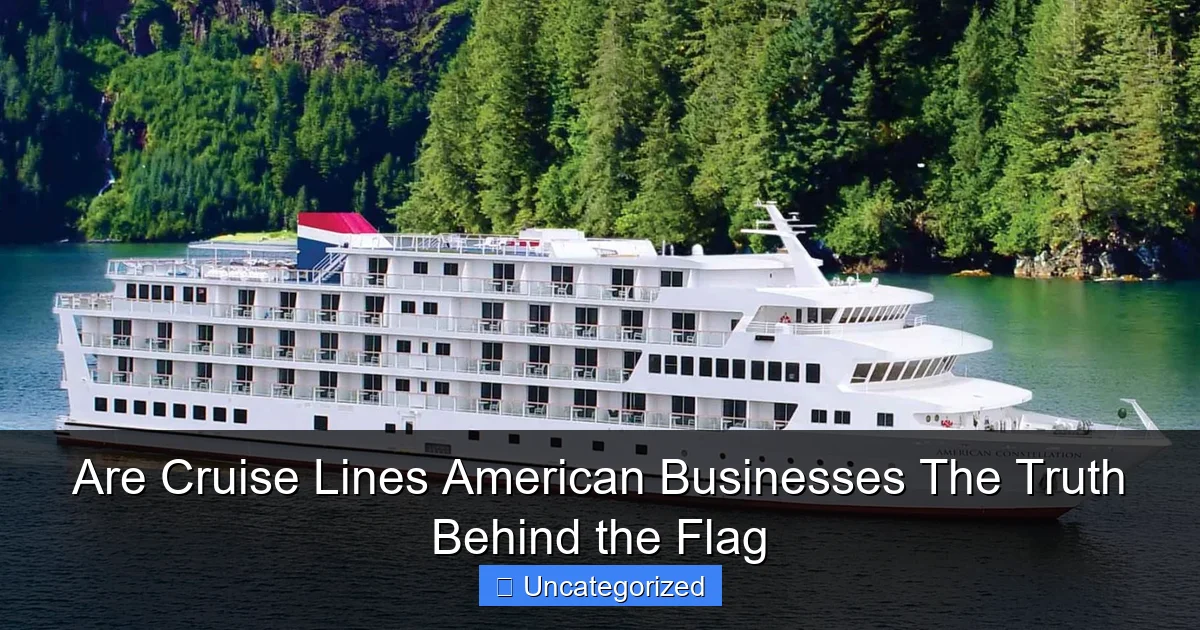
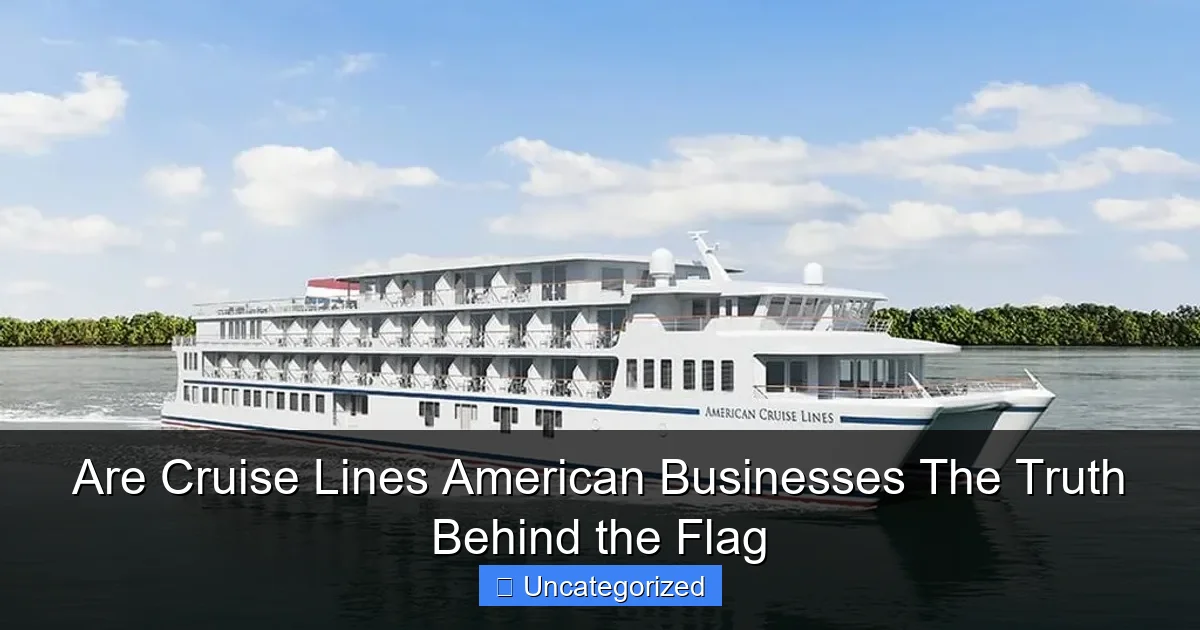
There are exceptions. Norwegian Cruise Line briefly operated the Norwegian Sky under the U.S. flag for a Miami-Key West route, but the venture was short-lived due to high operational costs. American Cruise Lines is one of the few companies that operates U.S.-flagged, U.S.-crewed ships, offering river and coastal cruises on vessels built in American shipyards. These cruises are significantly more expensive due to higher labor and compliance costs.
Tip for Travelers: If you want to support a truly American maritime business, consider booking with American Cruise Lines or exploring niche operators like UnCruise Adventures, which operate smaller U.S.-flagged vessels in Alaska and the Pacific Northwest.
Labor Practices and Crew Nationality: Who Really Works on Cruise Ships?
Global Crew, American Passengers
Walk the deck of any major cruise ship, and you’ll hear dozens of languages. The crew on a typical Carnival or Royal Caribbean vessel may include staff from the Philippines, India, Indonesia, Ukraine, and the Caribbean. In fact, over 80% of cruise ship crew members are non-American, according to the International Transport Workers’ Federation (ITF).
This global workforce is a direct result of foreign flagging. Because the ship is not U.S.-flagged, cruise lines are not required to hire U.S. citizens or pay U.S. minimum wage. Instead, they negotiate labor contracts under the laws of the flag state or through international agreements like the Maritime Labour Convention (MLC), which sets baseline standards for working conditions but allows for significant variation.
Wages, Working Conditions, and Legal Protections
While cruise lines often advertise “fair” wages, the reality is more complex:
- Wages: Crew members may earn between $1,000 and $3,000 per month, depending on role and nationality. For comparison, a U.S. minimum wage worker would earn about $2,000/month for 40 hours/week—but cruise staff often work 10–12 hour shifts, six or seven days a week.
- Living Conditions: Crew quarters are typically small, with shared cabins and limited privacy. While modern ships have improved amenities, the divide between passenger and crew areas remains stark.
- Legal Protections: Injuries at sea are governed by the ship’s flag state. If a crew member is injured on a Bahamian-flagged ship, they may have to file a claim in a Bahamian court—a process that can be difficult for foreign nationals.
However, cruise lines have made strides in improving conditions. Many now offer:
- Free Wi-Fi for crew
- Onboard medical care
- Training and career advancement programs
- Partnerships with labor unions like the ITF
Tip for Travelers: If crew welfare matters to you, research a cruise line’s labor practices. Look for companies that are signatories to the ITF’s Blue Charter, which promotes fair wages and safe working conditions.
Environmental and Safety Regulations: Who’s in Charge?
Flag State vs. International Standards
Safety and environmental regulations for cruise ships are a patchwork of international, flag state, and port state rules. The International Maritime Organization (IMO) sets global standards, but enforcement is left to the ship’s flag state. This creates a potential conflict: if a flag state has weak oversight, the ship may not fully comply with IMO standards.
For example, the IMO’s International Convention for the Safety of Life at Sea (SOLAS) requires ships to have lifeboats for 125% of passengers and crew, conduct regular drills, and maintain emergency systems. But inspections are conducted by the flag state. A ship flagged in Liberia is inspected by Liberian authorities, not U.S. Coast Guard.
Environmental Impact and Port Regulations
Environmental regulations are even more fragmented. While the IMO has introduced rules like the 2020 sulfur cap (limiting sulfur content in fuel), enforcement varies. Some cruise lines, like Royal Caribbean, have invested in scrubbers (devices that clean exhaust) or switched to LNG (liquefied natural gas) to reduce emissions. Others rely on cheaper, high-sulfur fuel and pay fines or avoid strict ports.
Port states can impose additional rules. For example:
- California requires ships to use shore power (plug into land-based electricity) while docked to reduce emissions.
- Alaska has strict wastewater discharge limits.
- The EU’s Monitoring, Reporting, and Verification (MRV) system tracks CO2 emissions from ships.
Despite these efforts, environmental groups like Friends of the Earth have given many major cruise lines failing grades for air pollution, water quality, and waste management.
Tip for Travelers: Choose cruise lines with strong environmental commitments. Look for certifications like Green Marine or membership in the Cruise Lines International Association (CLIA) Environmental Program.
Conclusion: The Truth Behind the Flag
So, are cruise lines American businesses? The answer is: not in the way most people think. While they are deeply embedded in the American tourism economy—departing from U.S. ports, marketing to U.S. consumers, and employing U.S. staff in corporate offices—their legal, tax, and operational structures are overwhelmingly international. Most are incorporated abroad, fly foreign flags, and operate under foreign laws. This isn’t illegal or unethical; it’s a strategic choice rooted in globalization, tax optimization, and the realities of maritime law.
Understanding this complexity empowers travelers to make informed decisions. If you value American labor practices, consider booking with U.S.-flagged operators like American Cruise Lines. If you’re concerned about environmental impact, research a cruise line’s sustainability initiatives. And if you’re simply looking for a fun vacation, remember that behind the glitzy brochures and onboard amenities lies a global network of regulations, flags, and corporate strategies that shape your experience.
The cruise industry is a mirror of our interconnected world—one where nationality is more about legal jurisdiction than geography. The next time you step onto a cruise ship, take a moment to look up at the flag. It might not be stars and stripes, but it tells a story of international trade, legal innovation, and the evolving definition of what it means to be an “American” business in the 21st century.
| Cruise Line | Headquarters | Legal Incorporation | Primary Flag(s) | U.S. Flag Ships? |
|---|---|---|---|---|
| Carnival Corporation & PLC | Miami, FL | Panama & U.K. | Bahamas, U.K. | No |
| Royal Caribbean Group | Miami, FL | Liberia | Bahamas, Norway | No |
| Norwegian Cruise Line Holdings | Miami, FL | Bermuda | Bahamas, Bermuda | No |
| MSC Cruises | Fort Lauderdale, FL | Switzerland | Switzerland, Italy | No |
| American Cruise Lines | Guilford, CT | U.S. | U.S. | Yes |
| UnCruise Adventures | Seattle, WA | U.S. | U.S. | Yes |
Frequently Asked Questions
Are cruise lines American businesses?
While many major cruise lines like Carnival, Royal Caribbean, and Norwegian are headquartered in the U.S., they often incorporate in foreign countries (e.g., Panama or Liberia) for tax and regulatory advantages. This means their legal structure may not be fully “American,” despite being led by U.S. executives.
Why do American cruise lines sail under foreign flags?
Cruise lines operate under foreign flags to take advantage of more lenient maritime regulations and lower labor costs, known as “flags of convenience.” This practice is legal but often leads to the misconception that these American cruise businesses aren’t truly U.S.-based.
Do American cruise lines pay U.S. taxes?
Most major cruise lines minimize U.S. tax obligations by incorporating abroad, though they still generate significant revenue from American customers and employees. Their tax strategies are a key reason they’re considered global, not purely American, entities.
Can a cruise line be both American and foreign-owned?
Yes. For example, Carnival Corporation is a British-American dual-listed company, while Royal Caribbean is based in Miami but incorporated in Liberia. Ownership and operations can span multiple countries, blurring the line for what counts as an American cruise business.
Why are cruise ship crews mostly non-American?
Because cruise lines register ships in foreign countries, they’re not required to hire U.S. workers, allowing them to employ lower-cost international crew. This further distances their operations from traditional American business models.
Are any cruise lines 100% American-owned and operated?
Rarely. Even U.S.-based cruise lines like Disney Cruise Line (a subsidiary of The Walt Disney Company) use foreign-flagged ships to comply with international maritime laws. True 100% American-owned and operated lines are exceptions, not the norm.