Featured image for are any cruise lines us owned
Image source: c8.alamy.com
Most major cruise lines operating in the U.S. are not American-owned, with giants like Carnival, Royal Caribbean, and Norwegian registered under foreign flags for tax and regulatory benefits. However, U.S.-based companies like American Cruise Lines and Victory Cruise Lines are fully American-owned, offering domestic itineraries and supporting local jobs—making them rare but valuable choices for patriotic travelers.
Key Takeaways
- Most cruise lines are foreign-owned due to international maritime laws and tax benefits.
- Carnival Corporation is US-based but incorporated in Panama for operational flexibility.
- Norwegian Cruise Line is Bermuda-incorporated despite major US operations and branding.
- Royal Caribbean is US-headquartered but legally based in Liberia for tax efficiency.
- American Cruise Lines is truly US-owned, operating small ships under US flag and laws.
- US-flagged ships are rare but required for domestic-only routes like Alaska or Mississippi.
📑 Table of Contents
- The Great American Cruise Line Question: Are Any Cruise Lines US Owned?
- Understanding Cruise Line Ownership: What Does “US Owned” Really Mean?
- Top Cruise Lines with US Headquarters and Operations
- Why So Few Cruise Lines Are Fully US-Owned and US-Flagged
- US-Owned Cruise Lines: A Closer Look at True American Companies
- Data Table: Cruise Line Ownership and Flagging Overview
- Conclusion: The Truth About US-Owned Cruise Lines
The Great American Cruise Line Question: Are Any Cruise Lines US Owned?
When you think of a luxury cruise vacation, images of crystal-clear waters, tropical destinations, and world-class amenities likely come to mind. But have you ever wondered who owns the massive floating resorts that make these experiences possible? The cruise industry is dominated by a few global giants, many of which are based in Europe or operate under foreign flags. This raises an important question for many Americans: Are any cruise lines US owned? If you’re someone who prefers to support American-owned businesses, or you’re curious about the nationality of your favorite cruise line, you’re not alone. The answer is more complex than a simple “yes” or “no” — and it’s a topic worth exploring in depth.
The cruise industry is a fascinating blend of global business, maritime law, and international ownership structures. While several cruise lines have headquarters in the United States, their ownership, registration, and operational control are often spread across multiple countries. This can make it difficult to determine whether a cruise line is truly “American” in the traditional sense. In this article, we’ll dive into the nuances of cruise line ownership, explore which companies are genuinely US-owned, and examine the legal, financial, and logistical reasons behind the industry’s globalized nature. Whether you’re a seasoned cruiser or planning your first voyage, understanding who owns your cruise line can give you valuable insight into the company’s values, customer service approach, and long-term sustainability.
Understanding Cruise Line Ownership: What Does “US Owned” Really Mean?
Defining Ownership in the Cruise Industry
The term “US owned” can mean different things depending on the context. In the cruise industry, ownership is typically evaluated through several key dimensions: corporate headquarters location, parent company nationality, stock exchange registration, and vessel registration (flagging). A cruise line may be incorporated in the United States, but its parent company could be based in Europe. Conversely, a company may be headquartered in Miami but operate under a foreign flag for tax and regulatory reasons. This complexity is why the answer to “Are any cruise lines US owned?” isn’t always straightforward.
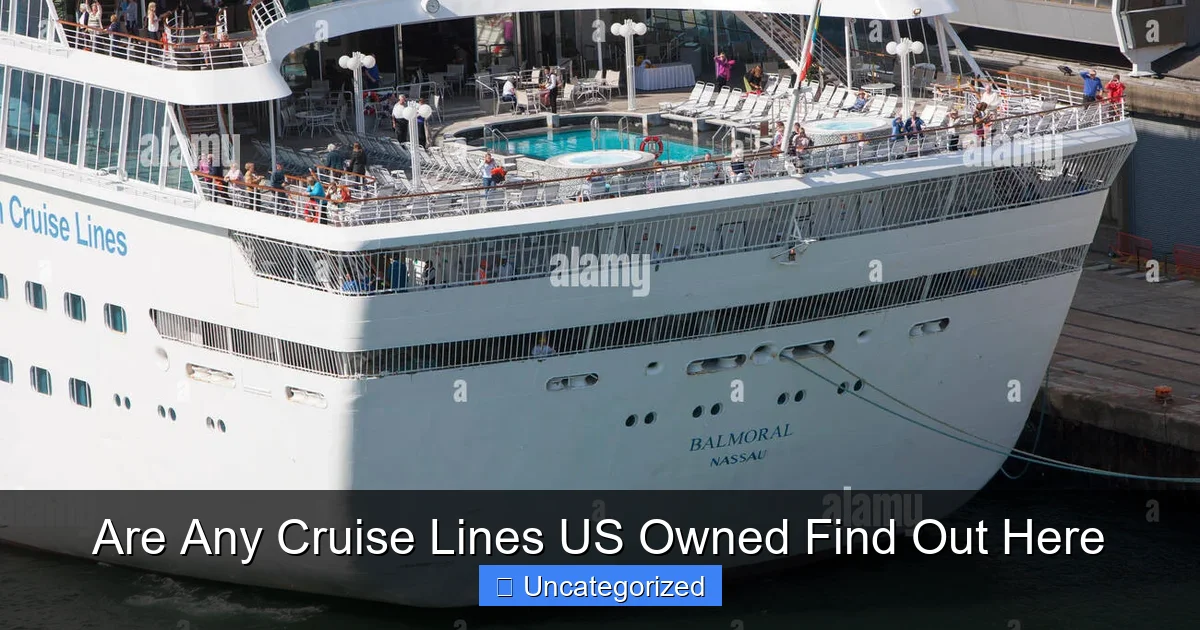
Visual guide about are any cruise lines us owned
Image source: cruiseradio.net
For example, a cruise line might have its operational headquarters in Fort Lauderdale, employ thousands of US workers, and serve primarily American passengers — but still be a subsidiary of a European multinational. In such cases, the company is American-based or American-operated, but not necessarily American-owned at the highest corporate level. To truly assess ownership, we must look beyond the brand name and examine the corporate structure.
Corporate Structures and Subsidiaries
Many well-known cruise brands are actually subsidiaries of larger parent companies. For instance, Carnival Corporation & plc — the world’s largest cruise company — owns Carnival Cruise Line, Princess Cruises, Holland America Line, and several other brands. While Carnival Cruise Line is headquartered in Miami and serves millions of American travelers, the parent company is a dual-listed entity incorporated in both the US and the UK. This structure allows the company to benefit from regulatory advantages in both jurisdictions.
Similarly, Royal Caribbean Group, which owns Royal Caribbean International, Celebrity Cruises, and Silversea, is incorporated in the United States (Delaware) but has major operations and shareholders in multiple countries. The company is listed on the New York Stock Exchange (RCL), which gives it strong US market presence, but its ownership is global. In fact, institutional investors from Europe and Asia hold significant stakes.
Why Ownership Matters to Consumers
For many travelers, knowing who owns their cruise line can influence their decision-making. Some passengers prefer to support companies that contribute to the US economy through jobs, taxes, and domestic operations. Others may care about corporate ethics, environmental policies, or customer service standards, which can vary based on ownership and corporate culture.
- Economic Impact: US-owned or US-headquartered companies often pay more in US taxes and employ more American workers, both shoreside and onboard.
- Customer Service: Some travelers believe that American-owned brands offer better English-language support and are more responsive to US consumer expectations.
- Corporate Responsibility: Ownership can influence sustainability initiatives, labor practices, and community engagement — areas where US-based companies may face stricter scrutiny.
Top Cruise Lines with US Headquarters and Operations
Royal Caribbean Group: A US-Based Global Giant
Royal Caribbean Group is one of the most prominent cruise companies with strong American roots. Headquartered in Miami, Florida, the company operates Royal Caribbean International, Celebrity Cruises, and Silversea Cruises. Incorporated in Delaware and publicly traded on the NYSE, Royal Caribbean Group is often considered a US-owned company in practice, even though its ownership is international.
The company employs over 90,000 people worldwide, with a significant portion of its shoreside workforce based in the US. It also contributes heavily to the American economy through port fees, supplier contracts, and tourism partnerships. In 2023, Royal Caribbean Group reported over $13 billion in revenue, with the majority of passengers originating from North America.
While the company operates under a Bermuda flag for many of its vessels (a common practice for tax efficiency), its corporate leadership, marketing, and customer service are deeply rooted in the US. For travelers seeking a cruise line with strong American operational ties, Royal Caribbean Group is a top contender.
Carnival Corporation & plc: Dual Incorporation, American Presence
Carnival Corporation & plc is another major player with deep US connections. The company owns Carnival Cruise Line — the most popular cruise brand among Americans — along with Princess, Holland America, Seabourn, and several European brands. Carnival Cruise Line is headquartered in Miami, and the company has a major operational footprint in Florida and California.
However, Carnival is structured as a dual-listed company, meaning it is incorporated in both the US (Delaware) and the UK (England and Wales). This structure allows it to access capital markets in both countries and optimize its tax obligations. While the company is listed on both the NYSE and the London Stock Exchange, its US operations generate the bulk of its revenue.
Despite its dual incorporation, Carnival employs tens of thousands of Americans, supports US-based suppliers, and pays significant US taxes. For all practical purposes, Carnival is an American cruise company with global reach — even if its ownership is technically shared.
Norwegian Cruise Line Holdings: The American Alternative
Norwegian Cruise Line Holdings (NCLH) is another major cruise company with a strong US presence. The parent company is incorporated in the US (Delaware) and headquartered in Miami. It operates Norwegian Cruise Line, Oceania Cruises, and Regent Seven Seas Cruises — all of which serve primarily American and international travelers.
NCLH is listed on the NYSE (NCLH) and has a predominantly American executive team. The company has invested heavily in US-based infrastructure, including a $250 million terminal at PortMiami, one of the busiest cruise ports in the world. In 2023, NCLH reported over $8 billion in revenue, with 70% of passengers originating from the US.
Unlike Carnival, which has a dual incorporation model, Norwegian Cruise Line Holdings is fully incorporated in the US, making it one of the most genuinely American-owned cruise companies among the “big three” (Carnival, Royal Caribbean, Norwegian).
Smaller US-Based Cruise Lines
Beyond the major players, several smaller cruise lines are fully US-owned and operated. These companies often focus on niche markets, such as river cruising, expedition voyages, or luxury experiences.
- Viking Cruises: While Viking is incorporated in the US (Florida) and has a major US headquarters in Los Angeles, it is actually owned by Viking Holdings Ltd., a Bermuda-based company. However, its brand, marketing, and customer experience are heavily tailored to American travelers.
- American Cruise Lines (ACL): This is one of the few truly American-owned cruise companies. ACL is privately owned and headquartered in Guilford, Connecticut. It operates small ships on US rivers and coastal routes, including the Mississippi, Columbia, and Alaska. All of its vessels are US-flagged and crewed by American workers — a rarity in the industry.
- UnCruise Adventures: Based in Seattle, UnCruise offers small-ship expeditions in Alaska, the Pacific Northwest, and Central America. The company is privately owned by a US citizen and operates under the US flag.
These smaller lines offer a more authentic “American” cruise experience, with US-flagged ships, American crews, and a focus on domestic destinations.
Why So Few Cruise Lines Are Fully US-Owned and US-Flagged
The Role of International Flagging
One of the biggest reasons why so few cruise lines are fully US-owned and US-flagged is the practice of flagging vessels in foreign countries, such as the Bahamas, Bermuda, or Panama. This is known as “flagging out,” and it’s a standard practice in the global shipping industry — including cruise lines.
Why do companies do this? The answer lies in cost, regulation, and labor laws. The United States has some of the strictest maritime regulations in the world, including the Jones Act, which requires US-flagged ships to be built in the US, owned by US citizens, and crewed by US citizens. These requirements make it extremely expensive to operate a US-flagged cruise ship.
- US-built ships cost 2–3 times more than foreign-built vessels.
- US labor laws mandate higher wages, benefits, and working conditions.
- US-flagged ships are subject to more frequent inspections and stricter safety standards.
As a result, most cruise lines register their ships in countries with more favorable maritime laws, such as the Bahamas or Liberia. This allows them to hire international crews, reduce labor costs, and operate more efficiently — but it means the ships are not technically “American” vessels.
Tax Optimization and Global Capital
Another key factor is tax optimization. Companies like Carnival and Royal Caribbean use complex corporate structures to minimize their tax burden. By incorporating in low-tax jurisdictions (e.g., Bermuda) and flagging ships in tax-friendly countries, they can reduce their effective tax rate.
Additionally, cruise lines rely on global capital markets to fund new ships, which can cost over $1 billion each. Investors from Europe, Asia, and the Middle East play a major role in financing these projects. This global investment model means that ownership is inherently international — even if the company has a strong US presence.
Labor and Crewing Practices
The cruise industry relies heavily on international crew. While shoreside employees in the US may be American, the onboard staff — from deckhands to waiters — often come from countries like the Philippines, India, Indonesia, and the Caribbean. This is due to cost savings and the availability of skilled maritime workers in those regions.
US labor laws make it difficult and expensive to hire American crew for international voyages. For example, a US-flagged ship must pay American wages, which are significantly higher than international standards. As a result, even US-based companies opt for foreign-flagged ships to remain competitive.
US-Owned Cruise Lines: A Closer Look at True American Companies
American Cruise Lines (ACL): The Gold Standard
American Cruise Lines is arguably the most authentically American cruise line in operation today. Founded in 1991, ACL is privately owned by a US citizen and operates exclusively in the United States. Its ships sail on the Mississippi River, Columbia and Snake Rivers, Puget Sound, and Alaska’s Inside Passage.
All of ACL’s vessels are US-flagged, US-built, and US-crewed — a rare trifecta in the cruise industry. The company complies with the Jones Act and invests heavily in American shipyards, such as Chesapeake Shipbuilding in Salisbury, Maryland. ACL’s focus on domestic routes, American history, and local cuisine makes it a favorite among travelers who want a truly “Made in America” experience.
For example, ACL’s American Harmony and American Jazz are modern paddlewheelers designed to navigate the Mississippi River, offering themed cruises that highlight regional music, food, and history. The company also partners with local businesses and employs hundreds of Americans — both shoreside and onboard.
UnCruise Adventures: Small Ships, Big American Values
UnCruise Adventures is another fully US-owned and operated company. Based in Seattle, UnCruise offers small-ship expeditions (12–86 passengers) in Alaska, the Pacific Northwest, Hawaii, and Central America. The company is owned by a US citizen and operates under the US flag.
UnCruise differentiates itself by focusing on sustainability, adventure, and authentic experiences. Its ships are designed for exploration, with features like kayak launch platforms, Zodiacs, and expert naturalist guides. All crew members are US citizens or legal residents, and the company supports American conservation initiatives.
Travelers who choose UnCruise are not just supporting a US-owned company — they’re also investing in responsible tourism and local communities.
Other US-Owned Niche Operators
- Lindblad Expeditions: While Lindblad partners with National Geographic, the company is publicly traded on the NASDAQ (LIND) and headquartered in New York. It operates expedition cruises in Alaska, the Galápagos, and Antarctica. Though it uses foreign-flagged ships, its corporate structure and leadership are American.
- Pearl Seas Cruises: This small company operates on the Great Lakes and Canadian Maritimes. It is US-owned and operates US-flagged vessels, though it is currently inactive due to fleet retirement.
Data Table: Cruise Line Ownership and Flagging Overview
| Cruise Line | Parent Company | Headquarters | Incorporation | Primary Flag | US-Owned? | Notes |
|---|---|---|---|---|---|---|
| Norwegian Cruise Line | Norwegian Cruise Line Holdings | Miami, FL | Delaware, USA | Bahamas | Yes (fully) | Fully US-incorporated; NYSE-listed |
| Royal Caribbean International | Royal Caribbean Group | Miami, FL | Delaware, USA | Bermuda | Mostly | NYSE-listed; global shareholders |
| Carnival Cruise Line | Carnival Corporation & plc | Miami, FL | USA & UK | Bahamas | Partially | Dual incorporation; major US operations |
| American Cruise Lines | American Cruise Lines (Private) | Guilford, CT | USA | USA | Yes (fully) | US-flagged, US-built, US-crewed |
| UnCruise Adventures | UnCruise (Private) | Seattle, WA | USA | USA | Yes (fully) | Small-ship expeditions; US crew |
| Viking Cruises | Viking Holdings Ltd. | Los Angeles, CA | Bermuda | Bahamas | No | Bermuda-owned; US brand presence |
Conclusion: The Truth About US-Owned Cruise Lines
So, are any cruise lines US owned? The answer is: Yes, but with important caveats. While several major cruise companies — including Norwegian Cruise Line Holdings, Royal Caribbean Group, and Carnival Corporation — have strong American headquarters and serve millions of US passengers, their ownership, incorporation, and vessel flagging are often international. This is due to a combination of tax optimization, labor cost savings, and regulatory efficiency.
However, there are a few truly American-owned and operated cruise lines, such as American Cruise Lines and UnCruise Adventures, which go the extra mile to be US-flagged, US-built, and US-crewed. These companies offer a more authentic “American” cruise experience and support the US economy in meaningful ways.
For travelers who want to support American-owned businesses, the best approach is to look beyond the brand name and research the company’s corporate structure, flagging practices, and labor policies. Ask questions like: Where is the parent company incorporated? Are the ships US-flagged? Are the crews primarily American? By doing so, you can make more informed decisions and align your cruise choices with your values.
The cruise industry is global, but that doesn’t mean there aren’t American success stories. Whether you’re sailing down the Mississippi on a paddlewheeler or exploring Alaska on a small expedition ship, there are options that reflect American ownership, innovation, and pride. So the next time you book a cruise, remember: the answer to “Are any cruise lines US owned?” is not just yes — it’s a journey worth taking the time to understand.
Frequently Asked Questions
Are any cruise lines US owned?
Yes, several major cruise lines are US-owned, including Carnival Corporation (parent company of Carnival Cruise Line), Royal Caribbean Group, and Norwegian Cruise Line Holdings. These companies are incorporated in the US and headquartered in Florida, though they operate globally.
Which major cruise lines are headquartered in the United States?
Carnival Cruise Line, Royal Caribbean International, and Norwegian Cruise Line are all headquartered in Miami, Florida, making them US-based operations. While their parent companies may have international registrations, their core management and operations are US-owned and operated.
Is Carnival Cruise Line a US-owned company?
Yes, Carnival Cruise Line is a US-owned cruise line under Carnival Corporation, which is incorporated in Panama but headquartered in Doral, Florida. The company’s primary operations, executive leadership, and major decisions are based in the US.
Do US-owned cruise lines hire American workers?
Yes, US-owned cruise lines employ thousands of Americans in shoreside roles like customer service, marketing, and management at their US headquarters. However, shipboard crew often come from diverse international backgrounds due to maritime industry practices.
Why do some US-owned cruise lines register ships in other countries?
Many US-owned cruise lines register ships under foreign flags (like the Bahamas or Bermuda) for tax benefits, regulatory flexibility, and lower operational costs. This practice, called “flagging out,” doesn’t change the company’s US ownership or headquarters location.
Are US-owned cruise lines required to follow American laws?
US-owned cruise lines must comply with federal regulations like the Americans with Disabilities Act and US Coast Guard safety standards while operating in US waters. However, international maritime laws apply when ships sail outside US jurisdiction, even if the company is US-owned.