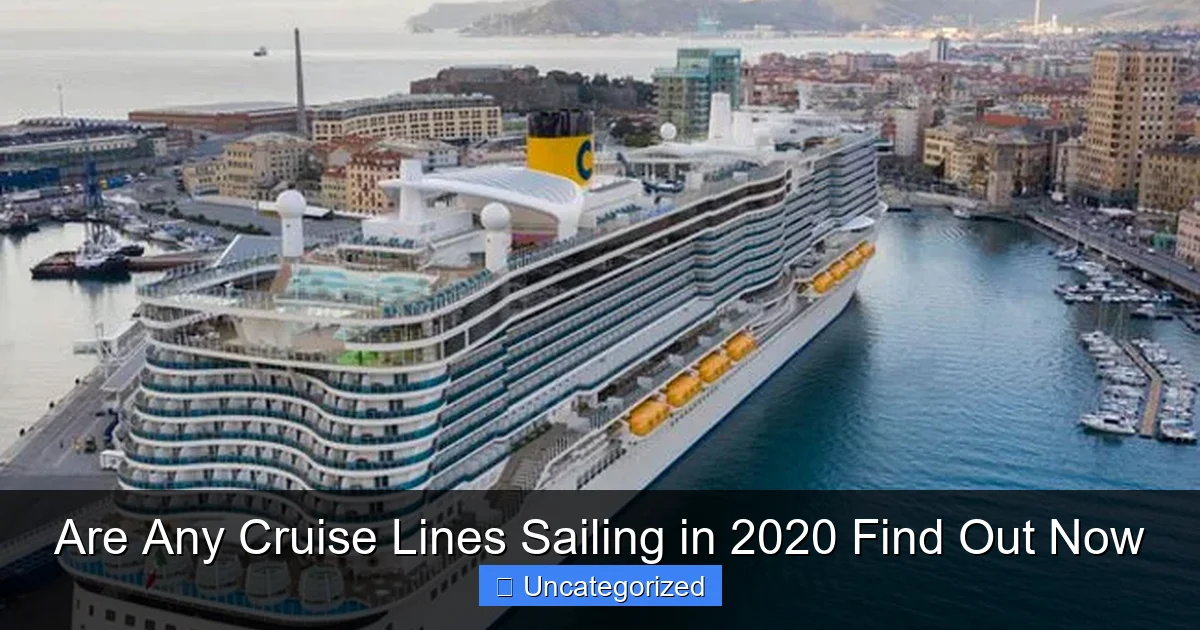
Featured image for are any cruise lines sailing in 2020
Image source: cruise.jobs
Most major cruise lines halted all sailings in 2020 due to the global pandemic, with operations suspended worldwide for the first time in decades. Limited exceptions included a few short, domestic voyages in regions like China and Germany under strict health protocols, but no large-scale international cruising resumed until late 2020. This unprecedented pause reshaped the industry and delayed travel plans for millions.
Key Takeaways
- Most cruises were suspended in 2020 due to global pandemic restrictions.
- Check official cruise line updates for real-time sailing status and safety protocols.
- Select river cruises operated in Europe with strict health measures.
- Repatriation voyages occurred to return crew and passengers stranded at sea.
- Future bookings surged as travelers planned post-pandemic trips confidently.
- Refunds and credits were widely offered for canceled 2020 sailings.
📑 Table of Contents
- Are Any Cruise Lines Sailing in 2020? The State of the Industry Amidst Global Challenges
- The Global Cruise Shutdown: A Timeline of Events
- Which Cruise Lines Actually Sailed in 2020?
- Health and Safety: How Cruise Lines Adapted in 2020
- Regional Differences: Where Cruising Was Possible in 2020
- The Data: Cruise Line Operations in 2020 – A Snapshot
- Looking Ahead: Lessons from 2020 and the Future of Cruising
Are Any Cruise Lines Sailing in 2020? The State of the Industry Amidst Global Challenges
The cruise industry, a vibrant and dynamic sector of global tourism, faced an unprecedented challenge in 2020. As the coronavirus pandemic spread across continents, governments implemented strict travel restrictions, borders closed, and health advisories urged people to avoid large gatherings—including cruise ships. For the first time in modern history, the majority of cruise lines worldwide suspended operations, leaving passengers stranded, itineraries canceled, and the future of cruising shrouded in uncertainty. But the question on everyone’s mind was: Are any cruise lines sailing in 2020? The answer is nuanced, shaped by evolving regulations, regional differences, and the resilience of a $150 billion industry determined to survive.
While the iconic images of empty ports, docked megaships, and canceled voyages dominated headlines, a closer look reveals that not all cruise lines halted operations entirely. Some smaller, niche operators adapted quickly, while others in specific regions resumed limited sailings under strict health protocols. This blog post dives deep into the state of cruise lines in 2020, exploring which companies continued sailing, how they adapted, and what it meant for travelers, the industry, and the future of maritime tourism. Whether you’re a seasoned cruiser or planning your first voyage, understanding the landscape of 2020’s cruising environment is essential for navigating post-pandemic travel decisions.
The Global Cruise Shutdown: A Timeline of Events
March 2020: The Industry Grounds to a Halt
In early March 2020, the World Health Organization (WHO) declared the coronavirus a global pandemic. By mid-March, the U.S. Centers for Disease Control and Prevention (CDC) issued a No Sail Order for all cruise ships operating in U.S. waters. This order, initially set for 100 days, effectively shut down major North American cruise lines such as Carnival Cruise Line, Royal Caribbean International, Norwegian Cruise Line, and MSC Cruises. The order was extended multiple times, with the final phase ending in October 2020, replaced by the Conditional Sailing Order that allowed for phased resumption with strict health and safety protocols.

Visual guide about are any cruise lines sailing in 2020
Image source: globalmunchkins.com
Simultaneously, other nations followed suit. The UK, Canada, Australia, and several European countries banned cruise operations. The Cruise Lines International Association (CLIA), representing over 95% of global ocean-going cruise capacity, announced a voluntary suspension of operations for its member lines, affecting more than 300 ships. This coordinated shutdown was unprecedented—never before had the entire industry paused at once.
April–June 2020: Stranded Passengers and Financial Fallout
As ships were ordered to remain at port, thousands of passengers were already at sea. The Grand Princess, Diamond Princess, and Ruby Princess became infamous for onboard outbreaks, with hundreds of cases and multiple fatalities. These incidents triggered widespread media coverage, public fear, and government scrutiny. Cruise lines scrambled to repatriate guests, often under chaotic conditions, with some ships denied entry to multiple ports.
The financial impact was staggering. Carnival Corporation reported a $4.4 billion loss in the second quarter of 2020. Royal Caribbean lost $1.1 billion in the same period. Many lines furloughed staff, canceled new ship deliveries, and sought government aid. The industry faced existential questions: Could cruise travel ever return? And if so, how?
July–September 2020: Regional Exceptions and Limited Resumptions
While the U.S. and much of Europe remained closed, some countries with lower infection rates began to cautiously reopen. In the Baltic Sea region, small-scale domestic cruises resumed. For example, Tallink Silja in Estonia and Silja Line in Finland launched short, domestic itineraries between Helsinki, Tallinn, and Stockholm for residents only. These “cruises to nowhere” or “closed-loop” sailings carried no international passengers and followed strict health protocols, including pre-departure testing and reduced capacity.
In Asia, Dream Cruises (Genting Hong Kong) operated limited sailings from Taiwan and Hong Kong under government-approved “cruise bubbles” with Singapore. These sailings were restricted to local residents and required negative PCR tests, temperature checks, and contactless boarding. Though small in scale, they demonstrated that controlled cruising could be possible under the right conditions.
Which Cruise Lines Actually Sailed in 2020?
Smaller, Niche Operators: The First to Adapt
While major cruise lines remained docked, smaller, specialized operators found ways to sail. These companies typically operate smaller vessels (under 500 passengers), focus on regional markets, and have greater operational flexibility. In 2020, several such lines resumed limited operations:
- Hurtigruten (Norway): This Norwegian line, known for its coastal voyages along the fjords, resumed domestic sailings in May 2020. Operating under Norway’s strict health guidelines, Hurtigruten carried local passengers only, enforced mask mandates, and introduced enhanced sanitation. Their ships were allowed to sail as they serve as a critical transport link for remote communities.
- Ponant (France): The luxury French cruise line launched a “cruise bubble” in the Mediterranean in July 2020. Operating with 50% capacity, pre-departure testing, and no port calls, Ponant offered short voyages between French ports for French residents only.
- Lindblad Expeditions (USA): In partnership with National Geographic, Lindblad resumed limited Alaskan expeditions in August 2020. These small-ship cruises (under 100 passengers) were restricted to U.S. residents, required pre-travel testing, and followed CDC-approved protocols.
- Scenic Luxury Cruises & Tours (Australia): Scenic operated short river cruises in Europe (e.g., Danube, Rhine) for Australian and European citizens under bilateral health agreements. These were “closed-loop” sailings with no international port calls.
River and Coastal Cruises: A Safer Bet
River and coastal cruise lines, with smaller vessels and fewer passengers, were better positioned to resume operations. In Europe, AmaWaterways, Viking River Cruises, and Tauck launched limited domestic river cruises in Germany, France, and the Netherlands starting in June 2020. These cruises followed EU health guidelines, including:
- Mandatory pre-departure testing (PCR or antigen)
- Reduced capacity (40–60% occupancy)
- Enhanced cleaning and air filtration
- Contactless boarding and dining
- No international port stops
For example, Viking’s “River of Gold” itinerary on the Rhine operated for German residents only, with all excursions conducted in private, socially distanced groups. These sailings were fully booked within days of announcement, indicating strong pent-up demand.
Private Yachts and Charter Operators
Another segment that saw activity in 2020 was private yacht charters. Companies like BoatBureau, Fraser Yachts, and Burgess Yachts reported increased bookings for private, self-contained voyages in the Mediterranean and Caribbean. Wealthy clients opted for “quarantine cruises”—extended private charters where they could isolate with family and crew, avoiding commercial flights and crowded ports. These charters often included:
- Pre-departure quarantine for crew
- Private chefs and medical staff
- Remote destinations (e.g., Greek islands, British Virgin Islands)
- Onboard PCR testing kits
Health and Safety: How Cruise Lines Adapted in 2020
New Protocols: The “New Normal” at Sea
For cruise lines that resumed operations, health and safety became the top priority. In 2020, the industry introduced a suite of new protocols, many of which were developed in collaboration with governments and health experts. Key measures included:
- Pre-Departure Testing: All passengers and crew required negative PCR or antigen tests within 72 hours of boarding. Some lines, like Royal Caribbean, began offering on-site testing at embarkation terminals.
- Reduced Capacity: Ships operated at 30–50% capacity to allow for social distancing. Cabins were booked with only immediate family groups.
- Enhanced Cleaning: Electrostatic sprayers, hospital-grade disinfectants, and increased cleaning frequency for high-touch areas (elevators, railings, dining tables).
- Ventilation Upgrades: Installation of MERV-13 or HEPA filters in HVAC systems to reduce airborne transmission.
- Contactless Technology: Mobile check-in, digital menus, app-based service requests, and touchless payments.
- Onboard Medical Preparedness: Ships carried additional medical staff, isolation cabins, and PCR testing kits.
CLIA’s Global Framework for Safe Sailing
In June 2020, CLIA released a Framework for Responsible Restart, a 17-point plan outlining best practices for safe cruising. The framework was adopted by member lines and endorsed by health authorities. It emphasized:
- Multi-layered testing (pre-departure, during, and post-cruise)
- Contact tracing via wearable devices or mobile apps
- Emergency response plans for outbreaks
- Transparency with public health authorities
While not mandatory, most major cruise lines committed to following these guidelines when they resumed operations in 2021.
Real-World Examples: Successes and Setbacks
Not all sailings went smoothly. In August 2020, a MSC Grandiosa cruise in the Mediterranean was cut short after a passenger tested positive. The ship returned to port, and all guests were quarantined. However, MSC reported that the outbreak was contained due to rapid testing and isolation protocols.
In contrast, TUI Cruises (Germany) successfully completed multiple sailings on the Mein Schiff 1 in the Baltic Sea with no cases, thanks to strict testing and limited passenger numbers. These examples highlighted that with the right protocols, cruising could be safe—but required constant vigilance.
Regional Differences: Where Cruising Was Possible in 2020
Europe: Gradual Reopening with Caution
Europe saw the most activity in 2020, with countries reopening at different paces. Germany, France, and the Nordic nations were among the first to allow domestic cruises. The EU’s Green List of safe countries enabled limited cross-border river cruises. For example, Uniworld Boutique River Cruises operated a Danube itinerary from Vienna to Budapest for EU residents in September 2020, with all ports in green-listed countries.
However, the situation remained fluid. A second wave in October 2020 led to new lockdowns, forcing many lines to suspend operations again. By year-end, most European river and coastal cruises had halted until 2021.
Asia: Strict Controls and Local Focus
Asia took a more cautious approach. China banned all cruise operations throughout 2020. Japan and South Korea followed suit. However, Dream Cruises and Costa Cruises operated limited sailings in Taiwan and Singapore under government-approved “cruise bubbles.” These were strictly for local residents, with no international ports and mandatory testing.
Singapore’s “CruiseSafe” certification, launched in November 2020, set a gold standard for health protocols and became a model for other nations.
North America: The Longest Shutdown
The U.S. remained the most restricted market. The CDC’s No Sail Order was only lifted in October 2020, replaced by a Conditional Sailing Order that required:
- Simulated voyages to test protocols
- At least 95% of passengers and crew fully vaccinated
- Onboard medical facilities capable of handling outbreaks
As a result, no major U.S.-based cruise lines resumed sailings in 2020. The first U.S. cruise, MSC Meraviglia, departed from Miami in August 2021.
Caribbean and South America: Limited Activity
The Caribbean, heavily reliant on cruise tourism, struggled. Most islands closed to international visitors until late 2020. However, Royal Caribbean operated a few “crew-only” sailings to repatriate staff, and Celebrity Cruises launched a private island experience on Perfect Day at CocoCay for crew and select guests in December 2020.
In South America, Azamara and Oceania Cruises
Below is a summary of major cruise lines and their operational status in 2020: The question “Are any cruise lines sailing in 2020?” has a layered answer: Yes, but not in the way we knew before. The year 2020 forced the cruise industry to reinvent itself. From the total shutdown of megaships to the quiet resurgence of small, flexible operators, the pandemic revealed both vulnerabilities and strengths in maritime tourism. One key takeaway is that size matters. Smaller ships, regional focus, and niche markets proved more adaptable. Lines like Hurtigruten, Ponant, and Lindblad could pivot quickly because they served domestic or local audiences, operated in less restrictive regions, and had the agility to implement new protocols without massive infrastructure changes. In contrast, megaships designed for mass tourism faced insurmountable logistical challenges. Another lesson is the importance of public trust. The cruise industry’s reputation was damaged by early outbreaks, but 2020 also saw a commitment to transparency. By publishing detailed health plans, partnering with health experts, and investing in technology (like contact tracing apps and air filtration), cruise lines began rebuilding confidence. The CLIA framework, while not perfect, laid the groundwork for a safer, more resilient future. For travelers, 2020 underscored the value of flexibility and preparation. Cruise itineraries became unpredictable, cancellations were common, and health requirements changed rapidly. Savvy cruisers who booked with lines offering flexible cancellation policies, purchased travel insurance with pandemic coverage, and stayed informed about local regulations fared better. As one traveler noted, “I canceled my Mediterranean cruise in March, but I rebooked a private charter in Croatia in August—smaller ship, fewer people, and it felt safer.” Looking ahead, the cruise industry is unlikely to return to pre-2020 norms. Health and safety will remain central. Expect: While 2020 was a year of pause and reflection, it also sparked innovation. The cruise lines that adapted—through technology, regional partnerships, and a focus on health—emerged stronger. As global vaccination rates rise and travel restrictions ease, the industry is poised for a comeback—not as a return to the past, but as a transformation for the future. So, were any cruise lines sailing in 2020? Absolutely—but the journey was different, and the destination is evolving. For those ready to set sail again, the seas are waiting, with new protocols, new destinations, and a renewed commitment to safety and sustainability. Yes, some cruise lines resumed limited sailings in late 2020, including Royal Caribbean, MSC Cruises, and Norwegian Cruise Line, primarily in regions with eased restrictions. Most voyages were short, domestic trips with enhanced health protocols. Cruise lines like Carnival and Celebrity Cruises offered select 2020 sailings with mandatory testing, mask policies, and reduced capacity. Destinations were limited to nearby locations like the Caribbean and Mediterranean. A few late-year 2020 sailings remained available through fall, but options were limited due to phased restarts. Travelers were advised to book refundable fares due to ongoing itinerary changes. Larger companies with private islands (e.g., Royal Caribbean) restarted faster, while others waited for clearer international guidelines. Smaller luxury lines like Regent Seven Seas paused until 2021. No, all 2020 sailings required health screenings, social distancing, and enhanced sanitation. Some lines also enforced pre-cruise quarantines for crew and passengers. Yes, many cruise lines slashed prices on remaining 2020 sailings to attract travelers, with deals up to 50% off. However, last-minute cancellations remained a risk.The Data: Cruise Line Operations in 2020 – A Snapshot
Cruise Line
Region
Status in 2020
Key Protocols
First Sailing Date (if applicable)
Carnival Cruise Line
North America
Full suspension
CDC Conditional Sailing Order (post-Oct 2020)
August 2021
Royal Caribbean
North America
Full suspension
Pre-departure testing, reduced capacity
August 2021
Norwegian Cruise Line
North America
Full suspension
Enhanced cleaning, contactless tech
August 2021
MSC Cruises
Europe
Limited sailings (Mediterranean)
PCR testing, isolation cabins
August 2020 (Mediterranean)
Hurtigruten
Norway
Domestic sailings
Local passengers only, mask mandates
May 2020
Ponant
France
Limited “bubble” cruises
50% capacity, no port calls
July 2020
Viking River Cruises
Europe
Domestic river cruises
June 2020
Dream Cruises
Asia
Cruise bubbles (Taiwan, Singapore)
Local residents, government approval
July 2020
Lindblad Expeditions
Alaska
Limited expeditions
U.S. residents, CDC protocols
August 2020
Looking Ahead: Lessons from 2020 and the Future of Cruising
Frequently Asked Questions
Are any cruise lines sailing in 2020 after the pandemic pause?
Which cruise lines are sailing in 2020 with safety measures?
Are there any 2020 cruises still available to book?
Why did some cruise lines resume sailings in 2020 while others didn’t?
Are any cruise lines sailing in 2020 without COVID-19 restrictions?
Can I find affordable 2020 cruises due to low demand?