Featured image for are any cruise lines registered in the united states
Image source: grandlinerlounge.com
Most major cruise lines are not registered in the United States due to tax and regulatory advantages offered by foreign flags of convenience, such as those from Panama, the Bahamas, and Liberia. While U.S.-based companies like Carnival Corporation and Royal Caribbean Group operate globally, their ships are typically registered abroad to reduce operational costs and avoid stringent American maritime laws. This setup allows them to maintain flexibility and competitive pricing.
Key Takeaways
- Most cruise lines are foreign-registered: Avoid assuming U.S. registration for legal or tax purposes.
- U.S.-based operations ≠ U.S. registration: Cruise companies can operate domestically without being legally registered here.
- Check the flag state: Vessel registration is public; verify via the ship’s flag or maritime databases.
- Legal implications matter: Foreign registration affects labor laws, taxes, and liability for passengers.
- Norwegian Cruise Line is a rare exception: One of few with partial U.S. corporate ties—research specifics.
📑 Table of Contents
- Why Cruise Line Registration Matters to Travelers
- Understanding Cruise Line Registration and the Concept of “Flagging”
- Are Any Cruise Lines Registered in the United States?
- Why Major Cruise Lines Choose Foreign Registration
- Implications for Consumers: What You Need to Know
- Data Table: Major Cruise Lines and Their Flag States
- Conclusion: Making Informed Cruise Choices
Why Cruise Line Registration Matters to Travelers
When you’re planning your next dream vacation, the last thing on your mind might be where your cruise line is legally registered. After all, isn’t the destination more important than where a company is incorporated? While the sun, sea, and ports of call are undoubtedly the stars of any cruise, the legal registration of the cruise line plays a critical role in safety, consumer rights, taxation, and even the quality of your onboard experience. If you’ve ever wondered, “Are any cruise lines registered in the United States?”, you’re not alone. This is a surprisingly complex and often misunderstood topic in the travel industry.
The answer isn’t as straightforward as you might think. Most major cruise lines—despite having U.S.-based headquarters, marketing offices, and millions of American customers—are not actually registered in the United States. Instead, they are incorporated in foreign countries such as the Bahamas, Bermuda, Panama, and Liberia. This practice, known as flagging or flag registration, is common in the maritime industry and has significant implications for everything from labor laws to environmental regulations. Understanding where a cruise line is registered can empower you as a consumer, helping you make more informed decisions about your travel, safety, and even financial protection. In this comprehensive guide, we’ll explore the reasons behind this phenomenon, which cruise lines are U.S.-registered (if any), and what it means for you as a traveler.
Understanding Cruise Line Registration and the Concept of “Flagging”
What Is Ship Flagging and Why Does It Matter?
Ship flagging refers to the legal process by which a vessel is registered under the flag of a particular country, known as the “flag state.” This registration determines the legal framework under which the ship operates. The flag state is responsible for enforcing international maritime laws, conducting safety inspections, regulating crew labor conditions, and ensuring compliance with environmental standards. In essence, the flag a ship flies isn’t just a symbol—it’s a legal jurisdiction.
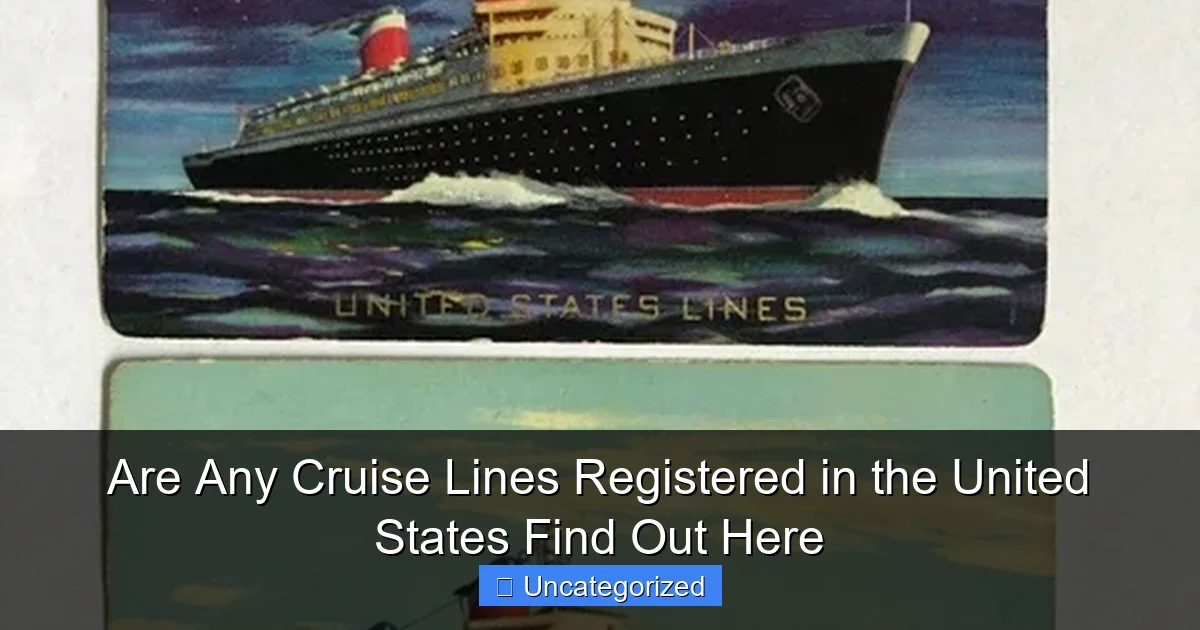
Visual guide about are any cruise lines registered in the united states
Image source: picclickimg.com
For cruise lines, choosing a flag state is a strategic decision influenced by a combination of legal, financial, and operational factors. While many cruise ships sail in U.S. waters and dock at American ports, their legal “home” may be thousands of miles away. This is why you’ll often see cruise ships flying the Bahamian or Panamanian flag, even though they depart from Miami or Fort Lauderdale.
Common Flag States for Cruise Ships
Several countries are known as flags of convenience—nations that offer open registries with favorable tax, labor, and regulatory environments. These countries include:
- Panama: One of the largest ship registries in the world, Panama offers low registration fees and minimal crew nationality requirements.
- Liberia: Despite its small size, Liberia has one of the most modern and well-regulated open registries, often used by major cruise lines.
- Bahamas: A popular choice for cruise lines due to its proximity to the U.S. and English-speaking legal system.
- Marshall Islands: Known for strong safety standards and a reputable registry.
- Malta: A European Union member, Malta offers EU compliance while maintaining a competitive registration system.
These countries allow foreign-owned vessels to register under their flag, often with fewer restrictions than traditional “closed” registries like the U.S. or the U.K. This flexibility makes them highly attractive to global cruise operators.
Why Don’t More Cruise Lines Choose U.S. Registration?
The United States maintains a closed ship registry, meaning that only vessels that are majority-owned by U.S. citizens and built in U.S. shipyards can fly the American flag. This is governed by the Jones Act (Merchant Marine Act of 1920), which restricts domestic maritime transport to U.S.-built, U.S.-owned, and U.S.-crewed vessels. For cruise lines, complying with the Jones Act would require:
- Building new ships in U.S. shipyards (which are limited and expensive)
- Hiring American crews at U.S. wage rates (often significantly higher than international standards)
- Paying U.S. corporate income taxes on global operations
These requirements make U.S. registration economically unfeasible for most global cruise operators. As a result, even cruise lines with strong American ties—like Carnival Corporation, Royal Caribbean Group, and Norwegian Cruise Line—opt for foreign flagging to remain competitive.
Are Any Cruise Lines Registered in the United States?
The Short Answer: Very Few
Despite the dominance of U.S.-based cruise brands, there are virtually no major cruise lines registered in the United States as their primary flag state. The few exceptions are niche operators that specialize in domestic or river cruising, where the Jones Act applies and foreign flagging is not permitted.
For example, American Cruise Lines and Cruise West (now defunct) were U.S.-flagged because they operated exclusively within U.S. waters, including rivers, intracoastal waterways, and the Alaskan coast. These companies were required by law to comply with the Jones Act, meaning they used U.S.-built ships, employed American crews, and paid U.S. taxes.
Case Study: American Cruise Lines – A True U.S.-Flagged Operator
American Cruise Lines (ACL) is one of the few remaining cruise lines that is fully U.S.-registered. Founded in 1991, ACL operates small, luxury river and coastal cruise ships that sail entirely within the United States. Their fleet includes vessels like the American Constitution, American Star, and American Harmony, all built in U.S. shipyards and crewed by American mariners.
Because ACL operates under the Jones Act, they benefit from:
- Exemption from foreign competition in domestic routes
- Higher customer trust due to U.S. labor and safety standards
- Stronger environmental compliance with U.S. EPA and Coast Guard regulations
However, these advantages come at a cost. ACL’s ships are smaller and less numerous than those of foreign-flagged competitors, and their itineraries are limited to U.S. waters. This niche positioning allows them to maintain U.S. registration while offering a unique product: a truly American cruising experience.
Other Domestic and River Cruise Operators with U.S. Ties
Other U.S.-based operators with partial or full U.S. registration include:
- American Queen Voyages (now part of Hornblower Group): Operated river cruises on the Mississippi, Ohio, and Tennessee Rivers using U.S.-built paddlewheelers. The company was U.S.-flagged due to its domestic operations.
- Blount Small Ship Adventures: A smaller operator focused on U.S. coastal and river cruises, with U.S.-built vessels and American crews.
- Alaska Dream Cruises: Offers small-ship expeditions in Alaska, with U.S.-flagged vessels due to the Jones Act.
These companies represent a small but growing segment of the U.S. cruise market, appealing to travelers who value domestic ownership, American jobs, and stricter regulatory oversight.
Why Major Cruise Lines Choose Foreign Registration
Tax Advantages and Financial Incentives
One of the most compelling reasons cruise lines choose foreign registration is tax avoidance. The U.S. corporate tax rate is among the highest in the world, and cruise lines with global operations would face significant tax liabilities if registered in the U.S. By incorporating in countries like the Bahamas or Liberia, cruise lines benefit from:
- Low or zero corporate income taxes on international operations
- No capital gains taxes on ship sales
- Favorable depreciation and amortization rules
For example, Carnival Corporation is incorporated in Panama but has its operational headquarters in Miami. This structure allows Carnival to legally avoid U.S. corporate taxes on its global cruise revenue, which exceeds $20 billion annually. The savings from this arrangement run into the hundreds of millions of dollars per year.
Labor Flexibility and Crew Management
Foreign flag states also offer more flexibility in hiring international crew members. U.S.-flagged ships must employ U.S. citizens or permanent residents, which can be logistically challenging and expensive. In contrast, foreign-flagged cruise lines can recruit crew from countries like the Philippines, Indonesia, India, and Eastern Europe, where labor costs are significantly lower.
This doesn’t mean that foreign-flagged ships compromise on safety or service. In fact, many cruise lines maintain high standards of crew training and welfare. However, the ability to hire globally gives them greater operational flexibility and cost control.
Regulatory and Environmental Considerations
While foreign flag states have historically been criticized for lax enforcement, many—like Liberia and the Marshall Islands—have improved their regulatory oversight in recent years. The International Maritime Organization (IMO) sets global standards for safety, pollution, and security, which all flag states must follow. Cruise lines, regardless of flag, are subject to:
- International Safety Management (ISM) Code
- International Convention for the Prevention of Pollution from Ships (MARPOL)
- International Convention on Standards of Training, Certification, and Watchkeeping (STCW)
That said, enforcement varies. The U.S. Coast Guard conducts rigorous inspections of all ships calling at U.S. ports through its Port State Control program. Ships with poor safety records can be detained, fined, or banned from U.S. waters—regardless of their flag. This creates a strong incentive for foreign-flagged cruise lines to maintain high standards when operating in the U.S. market.
Brand Identity vs. Legal Reality
Many travelers assume that because a cruise line is headquartered in the U.S. and markets heavily to Americans, it must be a U.S. company. But legally, this isn’t always the case. For example:
- Carnival Cruise Line (a subsidiary of Carnival Corporation) is based in Miami but operates under the Bahamian flag.
- Norwegian Cruise Line is based in Miami but registered in the Bahamas.
< Royal Caribbean International is headquartered in Miami but incorporated in Liberia.
This disconnect between brand identity and legal registration can be confusing, but it’s a common practice in global business. The cruise lines maintain their U.S. presence for marketing, logistics, and customer service, while leveraging foreign flags for financial and operational benefits.
Implications for Consumers: What You Need to Know
Safety and Liability: Are Foreign-Flagged Ships Less Safe?
A common concern among travelers is whether foreign-flagged cruise ships are less safe than U.S.-registered ones. The short answer: not necessarily. While the flag state sets the legal framework, cruise lines are global brands with reputations to protect. A major safety incident—such as a fire, collision, or outbreak—can lead to massive financial losses, lawsuits, and reputational damage, regardless of the ship’s flag.
Moreover, cruise ships calling at U.S. ports are subject to strict U.S. Coast Guard inspections. The U.S. Centers for Disease Control and Prevention (CDC) also monitors sanitation and disease outbreaks through its Vessel Sanitation Program (VSP). These oversight mechanisms help ensure that foreign-flagged ships meet high safety and health standards when operating in U.S. waters.
Consumer Rights and Legal Protection
When something goes wrong on a cruise—such as an injury, medical emergency, or contract dispute—jurisdiction can become complicated. Most cruise tickets include a choice-of-law clause and forum selection clause that specify which country’s laws apply and where lawsuits must be filed. For example, a Carnival cruise ticket might state that disputes must be litigated in a court in Miami, even though the ship is Bahamian-flagged.
Tips for protecting your rights:
- Read your cruise contract carefully: Look for clauses about jurisdiction, liability, and medical care.
- Understand the flag state: While it doesn’t determine your legal rights, it can affect how quickly the ship can respond to emergencies or regulatory issues.
- Purchase travel insurance: A good policy should cover medical evacuation, trip cancellation, and legal assistance.
- Know your rights under U.S. law: The Cruise Vessel Security and Safety Act of 2010 mandates certain protections for U.S. passengers, including sexual assault reporting and emergency response plans.
Environmental and Ethical Considerations
Environmental performance varies across cruise lines, but the flag state plays a role in enforcement. Some foreign flags have stronger environmental regulations than others. For example, the Marshall Islands and Liberia are IMO member states with active environmental programs, while smaller flags may have fewer resources for enforcement.
Travelers concerned about sustainability should look for:
- Green ship certifications (e.g., Green Marine, Blue Star)
- Investments in LNG-powered ships or shore power
- Transparency in environmental reporting
Brands like Royal Caribbean Group and Norwegian Cruise Line Holdings have committed to net-zero emissions by 2050, regardless of their flag state.
Data Table: Major Cruise Lines and Their Flag States
| Cruise Line | Parent Company | Headquarters | Flag State | Notes |
|---|---|---|---|---|
| Carnival Cruise Line | Carnival Corporation & plc | Miami, FL | Bahamas | One of the largest fleets; all ships Bahamian-flagged |
| Royal Caribbean International | Royal Caribbean Group | Miami, FL | Liberia | Liberia offers strong IMO compliance |
| Norwegian Cruise Line | Norwegian Cruise Line Holdings | Miami, FL | Bahamas | Operates under Bahamian flag; U.S.-based marketing |
| Princess Cruises | Carnival Corporation | Santa Clarita, CA | Bahamas | Long history; all vessels Bahamian-flagged |
| American Cruise Lines | American Cruise Lines Inc. | Guilford, CT | United States | U.S.-flagged due to Jones Act compliance |
| American Queen Voyages | Hornblower Group | Chicago, IL | United States | River cruises; U.S.-built ships |
Conclusion: Making Informed Cruise Choices
So, are any cruise lines registered in the United States? The answer is nuanced. While the vast majority of major cruise lines are not U.S.-flagged, a small but growing number of domestic and river cruise operators proudly fly the American flag. These companies offer a unique value proposition: U.S.-built ships, American crews, and compliance with strict U.S. regulations. For travelers who prioritize domestic ownership, labor standards, and environmental accountability, these U.S.-flagged options are worth considering.
However, for most global cruise vacations, foreign-flagged ships are the norm—and that’s not necessarily a bad thing. Thanks to international maritime laws, U.S. port inspections, and the self-interest of global brands, safety, service, and consumer protection remain high across the industry. The key is to look beyond the flag and evaluate each cruise line based on its track record, transparency, sustainability efforts, and customer service.
As a traveler, you have the power to make informed choices. Whether you’re booking a transatlantic voyage on a Bahamian-flagged mega-ship or a scenic river cruise on a U.S.-flagged vessel, understanding the registration landscape empowers you to ask the right questions, protect your rights, and enjoy a safer, more rewarding cruise experience. The next time you set sail, remember: the flag on the stern tells only part of the story. The real journey begins with knowledge.
Frequently Asked Questions
Are any cruise lines registered in the United States?
Yes, a few cruise lines are registered in the United States, including American Cruise Lines and Pearl Seas Cruises, which operate under U.S. flags. However, most major global cruise lines choose foreign registrations for tax and regulatory benefits.
Why aren’t most major cruise lines registered in the United States?
Most major cruise lines opt for foreign registrations (like the Bahamas or Panama) to take advantage of lower taxes, fewer labor regulations, and more flexible maritime laws. This practice, known as “flagging out,” is common in the global cruise industry.
Which U.S.-registered cruise lines should I consider for a domestic trip?
For a U.S.-flagged cruise experience, consider American Cruise Lines or UnCruise Adventures, both registered in the United States. These lines focus on domestic itineraries, including Alaska, the Mississippi River, and the Pacific Northwest.
Is it safer to book with a cruise line registered in the United States?
Safety standards are regulated internationally by the IMO, so U.S.-registered and foreign-flagged cruise lines must meet similar requirements. However, U.S.-registered lines may offer more familiar labor laws and passenger protections under American jurisdiction.
Do U.S.-registered cruise lines follow different environmental rules?
U.S.-registered cruise lines must comply with strict EPA and Coast Guard environmental regulations, often exceeding international standards. Foreign-flagged ships follow their flag state’s rules but must still meet U.S. standards when operating in American waters.
How can I verify if a cruise line is registered in the United States?
Check the cruise line’s website or the U.S. Coast Guard’s Maritime Information Exchange database for official registration details. Alternatively, contact the line directly—reputable companies will disclose their flag state upfront.