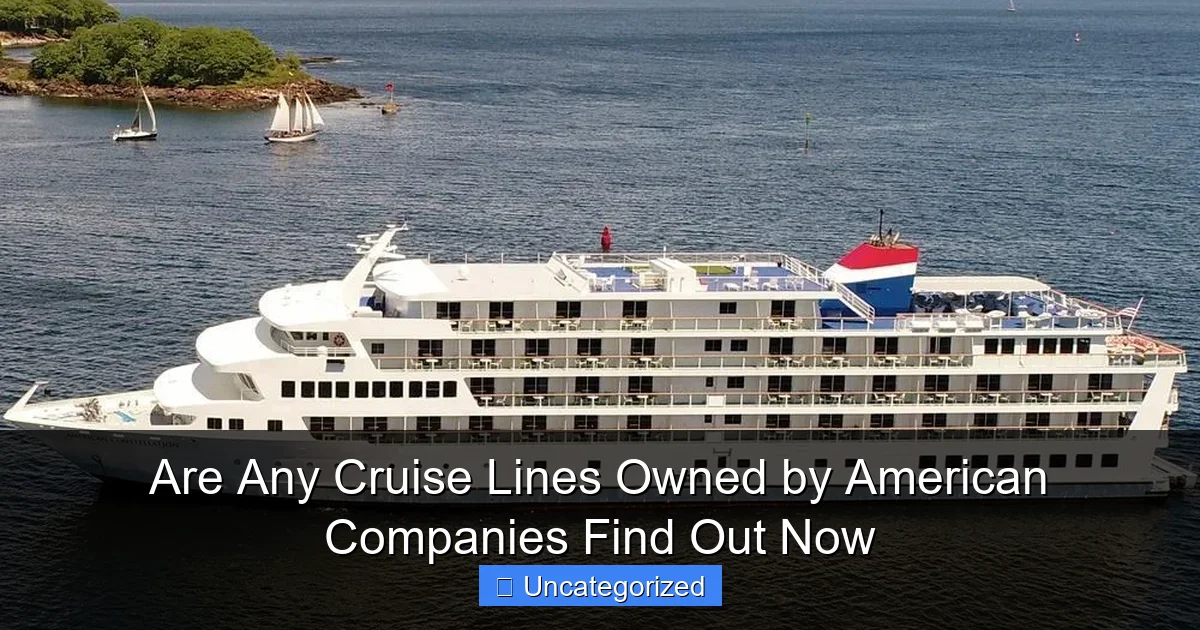
Featured image for are any cruise lines owned by american companies
Image source: cruisemapper.com
Yes, several major cruise lines are owned by American companies, including industry giants like Carnival Corporation (which operates Carnival Cruise Line, Princess, and Holland America) and Royal Caribbean Group (owner of Royal Caribbean International, Celebrity, and Silversea). These U.S.-based parent companies dominate the global market, combining American business leadership with international operations to deliver world-class cruising experiences.
Key Takeaways
- Carnival Corporation is American-owned but operates global brands.
- Royal Caribbean is headquartered in the U.S. and fully American-owned.
- Norwegian Cruise Line is U.S.-based but incorporated in Bermuda.
- American Cruise Lines offers 100% U.S.-flagged river and coastal cruises.
- Disney Cruise Line is a subsidiary of The Walt Disney Company.
- Check ownership via SEC filings or company investor relations pages.
📑 Table of Contents
- Are Any Cruise Lines Owned by American Companies? Find Out Now
- 1. The Big Picture: Major American-Owned Cruise Companies
- 2. American-Owned Luxury and Premium Cruise Lines
- 3. The Role of Foreign Flags and International Operations
- 4. American-Owned Cruise Lines: A Data-Driven Overview
- 5. Benefits of Choosing American-Owned Cruise Lines
- 6. The Future of American Cruise Line Ownership
Are Any Cruise Lines Owned by American Companies? Find Out Now
When planning a dream vacation on the high seas, many travelers wonder about the ownership of the cruise lines they choose. Are they American, European, or something else entirely? The answer might surprise you. While cruise ships often sail under foreign flags and operate in international waters, several major cruise lines are, in fact, owned by American companies. This blog post will dive deep into the world of cruise line ownership, exploring which brands are American-owned, how corporate structures work, and what this means for passengers.
Understanding cruise line ownership is more than just a matter of national pride. It can impact everything from customer service standards to onboard experiences, safety regulations, and even tax implications. For travelers prioritizing U.S.-based customer support, American employment practices, or simply wanting to support domestic businesses, knowing which cruise lines are owned by American companies can be a crucial factor in decision-making. Let’s set sail into the fascinating world of cruise line ownership and uncover the truth behind the flags.
1. The Big Picture: Major American-Owned Cruise Companies
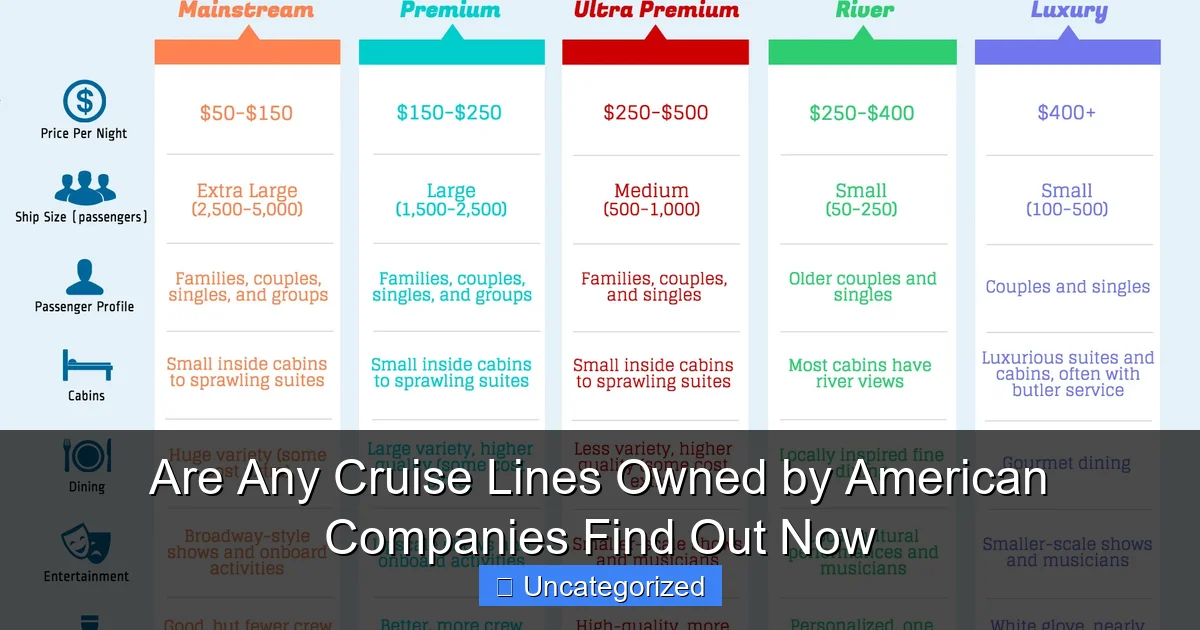
The cruise industry is dominated by a handful of global players, and many of the most recognizable names are ultimately owned by American parent companies. These corporations operate multiple brands under one umbrella, creating diversified portfolios that cater to different market segments. Below, we explore the key American-owned cruise companies and their subsidiaries.
Visual guide about are any cruise lines owned by american companies
Image source: d3s9bgz0ch5ert.cloudfront.net
Carnival Corporation & PLC: The Largest Cruise Operator
Carnival Corporation & PLC is the largest cruise company in the world by market share and fleet size. While it’s structured as a dual-listed company (incorporated in Panama and the UK), its operational headquarters are in Miami, Florida, and it is widely considered an American-owned entity. Carnival Corporation owns and operates 10 major cruise brands, including:
- Carnival Cruise Line
- Princess Cruises
- Holland America Line
- Seabourn
- AIDA Cruises (Germany)
- Costa Cruises (Italy)
- Cunard Line (UK)
- P&O Cruises (UK)
- P&O Cruises Australia
- Oceania Cruises
Despite operating international brands, Carnival Corporation is listed on the New York Stock Exchange (NYSE: CCL) and reports to U.S. investors. Its leadership team is primarily based in the U.S., and its corporate culture reflects American business practices. For example, Carnival Cruise Line—its flagship brand—is headquartered in Doral, Florida, and employs thousands of Americans in shoreside roles.
Tip: If you’re booking a cruise with any of the above brands, you’re supporting a company with deep American roots. Carnival’s U.S. ownership means English-speaking customer service, adherence to U.S. labor standards for shoreside staff, and frequent partnerships with American-based travel agencies.
Royal Caribbean Group: Innovation and Scale
The Royal Caribbean Group is another American-owned giant, headquartered in Miami, Florida. It trades on the NYSE under the ticker RCL and is led by a predominantly American executive team. The group owns three major cruise lines:
- Royal Caribbean International
- Silversea Cruises
- Hapag-Lloyd Cruises (Germany)
Royal Caribbean International is one of the most innovative cruise lines, known for its massive ships like the Wonder of the Seas and cutting-edge amenities. Silversea, acquired in 2018, is a luxury brand with smaller, all-suite ships. While Hapag-Lloyd is German, the parent company’s American ownership ensures that U.S. passengers receive familiar booking processes, English-language support, and access to U.S.-based loyalty programs.
Practical Example: When booking a Royal Caribbean cruise, you’ll interact with U.S.-based call centers, use an English-language website, and receive documentation in American English. This is a direct result of American ownership and operational control.
2. American-Owned Luxury and Premium Cruise Lines
For travelers seeking upscale experiences, American ownership extends into the luxury and premium cruise segments. These brands often emphasize personalized service, fine dining, and exclusive destinations—all under the umbrella of U.S.-based parent companies.
Norwegian Cruise Line Holdings (NCLH): The “Freestyle” Innovator
Norwegian Cruise Line Holdings is headquartered in Miami, Florida and trades on the NYSE (NCLH). It owns three cruise lines:
- Norwegian Cruise Line
- Oceania Cruises
- Regent Seven Seas Cruises
Norwegian Cruise Line is famous for its “Freestyle Cruising” concept, which allows guests to dine anytime, anywhere—a model that revolutionized the industry. Oceania Cruises and Regent Seven Seas cater to luxury travelers, offering gourmet cuisine, spacious accommodations, and immersive destination experiences.
Despite operating international fleets, NCLH’s American ownership means that:
- Customer service is primarily English-based and U.S.-oriented.
- Onboard currency is typically U.S. dollars.
- Marketing and promotions are tailored to the American market.
Tip: If you’re a U.S. citizen or resident, booking with NCLH brands often means seamless integration with American travel insurance providers, credit card reward programs, and loyalty points systems.
Celebrity Cruises: Premium Innovation Under Royal Caribbean
While Celebrity Cruises is not a standalone company, it is a wholly owned subsidiary of the Royal Caribbean Group. Headquartered in Miami, Florida, Celebrity is known for its modern luxury, wellness-focused amenities, and sustainability initiatives.
Key features of Celebrity’s American ownership:
- U.S.-based leadership and decision-making.
- English as the primary language onboard and in customer support.
- Partnerships with American chefs, artists, and wellness experts.
For example, Celebrity’s “Celebrity Revolution” program—a $500 million fleet upgrade—was spearheaded by American executives and involved U.S. contractors for technology and design work.
3. The Role of Foreign Flags and International Operations
One of the most common misconceptions is that cruise ships flying foreign flags (like the Bahamas, Bermuda, or Panama) are not American-owned. In reality, the flag of registry—the country where a ship is legally registered—is often chosen for tax, regulatory, and operational reasons, not ownership.
Why Cruise Ships Fly Foreign Flags
Most cruise ships, regardless of ownership, are registered in foreign countries because:
- Lower taxes: Many flag states (e.g., the Bahamas, Liberia) offer tax incentives for ship registration.
- Labor flexibility: International flags allow cruise lines to hire crews from around the world under different labor laws.
- Regulatory ease: Some flag states have more streamlined safety and environmental regulations.
However, flagging is not ownership. A ship flying the Bahamian flag can still be owned and operated by an American company. For example, Carnival Cruise Line’s Mardi Gras is registered in the Bahamas but is fully owned and managed by Carnival Corporation, a U.S. company.
Ownership vs. Flag: A Practical Guide
To determine if a cruise line is American-owned, look beyond the flag. Ask:
- Where is the parent company headquartered?
- Is it listed on a U.S. stock exchange?
- Does it have major operations (e.g., headquarters, call centers) in the U.S.?
- Are its primary customers U.S. travelers?
Example: MSC Cruises, a Swiss-based company, operates ships under the Panamanian flag and targets the American market. Despite its European roots, it has a U.S. headquarters in Fort Lauderdale, Florida, and offers American-style amenities. However, it is not American-owned.
4. American-Owned Cruise Lines: A Data-Driven Overview
To help travelers make informed decisions, here’s a comparative table of major cruise lines, their ownership, and key details:
| Cruise Line | Parent Company | Headquarters | Flag of Registry | American-Owned? | Key U.S. Features |
|---|---|---|---|---|---|
| Carnival Cruise Line | Carnival Corporation & PLC | Miami, FL | Bahamas | Yes | U.S. customer service, English language, U.S. loyalty programs |
| Royal Caribbean International | Royal Caribbean Group | Miami, FL | Bahamas | Yes | U.S. marketing, English support, American dining options |
| Norwegian Cruise Line | NCL Holdings | Miami, FL | Bahamas | Yes | Freestyle dining, U.S. entertainment, American crew |
| Celebrity Cruises | Royal Caribbean Group | Miami, FL | Bahamas | Yes | U.S.-led innovation, English language, luxury American amenities |
| Princess Cruises | Carnival Corporation & PLC | Santa Clarita, CA | Bermuda | Yes | U.S. headquarters, English service, American-themed ships |
| Holland America Line | Carnival Corporation & PLC | Seattle, WA | Bahamas | Yes | U.S. operations, English language, American culinary focus |
| Oceania Cruises | NCL Holdings | Miami, FL | Bahamas | Yes | U.S.-based luxury, English service, American gourmet dining |
| Regent Seven Seas Cruises | NCL Holdings | Miami, FL | Liberia | Yes | U.S. ownership, English language, American luxury standards |
| Silversea Cruises | Royal Caribbean Group | Miami, FL | Bahamas | Yes | U.S. management, English service, American luxury partnerships |
| MSC Cruises | MSC Group (Switzerland) | Geneva, Switzerland | Panama | No | U.S. marketing office, American amenities, but foreign ownership |
| Cunard Line | Carnival Corporation & PLC | Southampton, UK | Bermuda | Yes | U.S. ownership, English language, American booking support |
Note: The “American-Owned?” column refers to the parent company’s ownership, not the flag of registry. For example, Cunard is British in heritage but American-owned via Carnival.
5. Benefits of Choosing American-Owned Cruise Lines
Booking with an American-owned cruise line offers several advantages, especially for U.S. travelers. Here’s why it matters:
Customer Service and Communication
American-owned cruise lines prioritize English-speaking customer service, with call centers, websites, and onboard staff trained to serve U.S. passengers. For example:
- Carnival’s customer service is available 24/7 via U.S. toll-free numbers.
- Royal Caribbean’s website is optimized for American users, with U.S. pricing and currency.
Legal and Financial Protections
U.S. ownership means adherence to American consumer protection laws. If a cruise line is sued or declares bankruptcy, U.S. courts may have jurisdiction. Additionally:
- Credit card disputes are handled under U.S. regulations.
- Travel insurance claims are processed through American providers.
Employment and Labor Standards
While crews are international, shoreside operations (e.g., reservations, marketing, management) are staffed by Americans. American-owned companies are more likely to follow U.S. labor laws for these employees, including minimum wage, overtime, and workplace safety.
Marketing and Amenities
American-owned cruise lines tailor their offerings to U.S. tastes:
- Onboard dining features American favorites (e.g., BBQ, pizza, coffee).
- Entertainment includes Broadway-style shows and American pop culture.
- Promotions often align with U.S. holidays (e.g., Thanksgiving, Fourth of July).
Tip: If you’re a U.S. veteran, check for American-owned cruise lines that offer military discounts (e.g., Carnival, Royal Caribbean, Norwegian).
6. The Future of American Cruise Line Ownership
The cruise industry is evolving, and American ownership remains a dominant force. Here’s what to expect:
Consolidation and Growth
American companies are acquiring smaller brands to expand their portfolios. For example, Royal Caribbean’s acquisition of Silversea and Norwegian’s purchase of Prestige Cruises (Oceania and Regent) reflect a strategy to dominate the luxury market.
Environmental and Safety Standards
American-owned cruise lines are increasingly adopting U.S. environmental regulations, even on foreign-flagged ships. Carnival, for instance, has committed to reducing carbon emissions by 40% by 2030, aligning with U.S. climate goals.
Technology and Innovation
U.S.-based cruise lines are investing in American technology, such as:
- Royal Caribbean’s “Excalibur” app for contactless check-in.
- Norwegian’s “Haven” suite complex with U.S.-designed amenities.
These innovations are developed and managed by American engineers and designers.
Market Expansion
While American-owned companies operate globally, they continue to target the U.S. market. For example, Carnival’s new LNG-powered ships are designed to meet U.S. port requirements, ensuring they can sail from American homeports.
In conclusion, yes, many cruise lines are owned by American companies. From Carnival and Royal Caribbean to Norwegian and Celebrity, U.S. ownership shapes everything from customer service to onboard experiences. By choosing an American-owned cruise line, travelers gain access to English-speaking support, familiar amenities, and adherence to U.S. standards. Whether you’re a first-time cruiser or a seasoned traveler, understanding cruise line ownership empowers you to make informed, confident choices. So, the next time you book a cruise, remember: the flag on the ship might be foreign, but the company behind it could very well be American. Bon voyage!
Frequently Asked Questions
Are any cruise lines owned by American companies?
Yes, several major cruise lines are owned by American companies. For example, Carnival Corporation & plc (which includes Carnival Cruise Line) and Royal Caribbean Group (owner of Royal Caribbean International) are both headquartered in the U.S.
Which popular cruise brands are American-owned?
Cruise lines like Carnival Cruise Line, Royal Caribbean International, and Norwegian Cruise Line are operated by companies with American corporate ownership. These brands are known globally but maintain their headquarters and primary operations in the United States.
Is Carnival Cruise Line owned by an American company?
Yes, Carnival Cruise Line is owned by Carnival Corporation & plc, a dual-listed company with headquarters in Miami, Florida. Despite its global presence, it’s one of the most recognizable American-owned cruise lines.
Do any American companies own luxury cruise lines?
Absolutely. The U.S.-based company Norwegian Cruise Line Holdings owns Regent Seven Seas Cruises and Oceania Cruises, both premium brands. These cater to the luxury market while being managed from their Miami headquarters.
Are there small-ship cruise lines owned by American companies?
Yes, American companies like Lindblad Expeditions (partnered with National Geographic) and American Cruise Lines operate small-ship and river cruises. These focus on domestic and eco-friendly itineraries, all under U.S. ownership.
Why does it matter if a cruise line is American-owned?
American-owned cruise lines often prioritize U.S. regulations, customer service standards, and English-speaking staff. This can appeal to travelers seeking familiarity and compliance with U.S. labor and safety laws during their voyage.