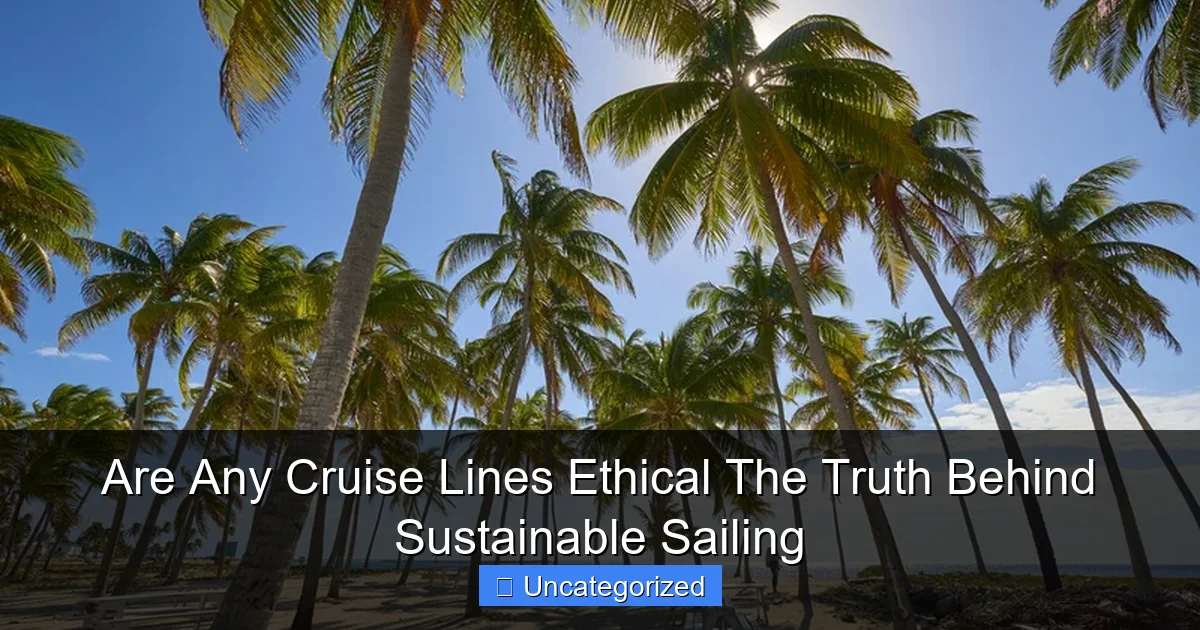
Featured image for are any cruise lines ethical
Image source: cruisingknowitall.com
Most cruise lines still fall short on true ethical practices, with environmental harm, poor labor conditions, and misleading “green” claims rampant across the industry. However, a few leaders like Hurtigruten and Ponant are setting new standards with carbon-neutral sailings, zero single-use plastics, and transparent supply chains—proving sustainable cruising is possible. The truth? While no line is perfect, discerning travelers can now choose operators making measurable, ethical strides.
Key Takeaways
- Ethical cruising is possible: Choose lines with verified sustainability certifications and transparent practices.
- Prioritize eco-tech: Opt for ships using LNG, scrubbers, or shore power to cut emissions.
- Support crew welfare: Pick brands with fair labor policies and third-party worker protections.
- Demand transparency: Avoid vague claims—look for public ESG reports and carbon disclosures.
- Minimize overtourism: Select smaller ships or off-season sailings to reduce local impact.
- Pack responsibly: Bring reef-safe sunscreen and reusable items to align with eco-goals.
📑 Table of Contents
- The Ethical Dilemma of Cruising: Are Any Cruise Lines Ethical?
- The Environmental Impact of Cruising: A Deep Dive
- Labor and Human Rights in the Cruise Industry
- Which Cruise Lines Are Leading the Way?
- How to Choose an Ethical Cruise: A Traveler’s Guide
- The Future of Ethical Cruising: Trends and Innovations
- Conclusion: The Path to Truly Ethical Cruising
The Ethical Dilemma of Cruising: Are Any Cruise Lines Ethical?
When you imagine a cruise vacation, what comes to mind? Sun-kissed decks, endless buffets, Broadway-style shows, and stops at tropical ports? For many, cruising represents the ultimate escape—a floating paradise where every whim is catered to. But beneath the glittering surface of this multibillion-dollar industry lies a growing concern: are any cruise lines ethical? As travelers become more conscious of their environmental footprint, labor practices, and cultural impact, the cruise industry faces increasing scrutiny. With massive ships that can carry over 7,000 passengers and crew, the potential for harm to ecosystems, local communities, and even human rights is staggering.
The cruise industry has long been criticized for its environmental impact. From air pollution and wastewater discharge to coral reef destruction and carbon emissions, the ecological toll of cruising is hard to ignore. Yet, in recent years, some cruise lines have begun to pivot toward more sustainable practices—investing in cleaner fuels, waste reduction technologies, and even carbon offset programs. But how much of this is genuine sustainability, and how much is greenwashing? The truth behind sustainable sailing is complex, nuanced, and often contradictory. In this deep dive, we’ll explore the ethical challenges facing cruise lines, examine which ones are leading the charge toward responsibility, and offer travelers practical tools to make informed, ethical choices. Whether you’re a seasoned cruiser or considering your first voyage, understanding the ethics behind the industry is more important than ever.
The Environmental Impact of Cruising: A Deep Dive
Carbon Footprint and Air Pollution
Cruise ships are among the largest mobile sources of pollution on Earth. A single large cruise ship can emit as much particulate matter as 1 million cars per day, according to the European Federation for Transport and Environment. These emissions stem primarily from heavy fuel oil (HFO), a cheap but highly polluting fuel that contains sulfur, nitrogen oxides, and black carbon. When burned, HFO releases not only greenhouse gases like CO2 but also toxic compounds that contribute to smog, acid rain, and respiratory illnesses.
Visual guide about are any cruise lines ethical
Image source: helpfulprofessor.com
While some cruise lines have begun transitioning to liquefied natural gas (LNG), which emits less CO2 and sulfur, LNG is not a perfect solution. It still produces methane, a greenhouse gas 80 times more potent than CO2 over 20 years. Moreover, LNG infrastructure remains limited, and retrofitting ships is costly. As of 2023, only about 5% of the global cruise fleet uses LNG, with companies like Carnival Corporation and Royal Caribbean Group leading the charge. However, the long-term sustainability of LNG is debated, and critics argue it’s merely a transitional fuel that delays the shift to truly zero-emission solutions like hydrogen or battery-powered vessels.
Water and Waste Management
Beyond air pollution, cruise ships generate enormous amounts of waste. A single vessel can produce up to 15 gallons of oily bilge water, 210,000 gallons of sewage, and 1 million gallons of graywater (from sinks, showers, and laundries) per week. Historically, much of this waste was dumped into the ocean under lax international regulations. While the International Maritime Organization (IMO) has established rules under MARPOL Annex IV (sewage) and Annex V (garbage), enforcement remains inconsistent, and loopholes allow for discharges beyond certain distances from shore.
Ethical cruise lines are investing in advanced wastewater treatment systems (AWTS) that meet or exceed the IMO’s “no discharge” standards. For example, Norwegian Cruise Line (NCL) has installed AWTS on all its new ships, capable of treating sewage to levels safe for discharge in sensitive areas like Alaska’s Inside Passage. Similarly, Hurtigruten, a Norwegian expedition cruise line, uses a “zero discharge” policy in the Arctic and Antarctic, meaning no waste is released into the ocean. These efforts are commendable, but they are not universal. Many older ships still rely on outdated systems, and some operators skirt regulations by discharging at night or in remote areas.
Impact on Marine Ecosystems
Cruise ships also threaten marine biodiversity through ballast water discharge, anchor damage, and noise pollution. Ballast water, used to stabilize ships, can carry invasive species that disrupt local ecosystems. The IMO’s Ballast Water Management Convention, enforced since 2017, requires ships to treat or exchange ballast water, but compliance varies. Meanwhile, anchoring in shallow waters—especially in coral-rich regions like the Caribbean—can destroy fragile reefs. In 2019, a Carnival ship damaged over 14,000 square feet of coral in the Dominican Republic, sparking global outrage.
Some cruise lines are taking proactive steps. Princess Cruises partners with the Coral Reef Conservation Program to monitor reef health and avoid sensitive areas. Lindblad Expeditions, known for its eco-tourism focus, uses small ships and avoids anchoring in coral zones, opting instead for mooring buoys. However, the industry as a whole still struggles with accountability. A 2022 report by Transport & Environment found that over 60% of cruise ships still use anchors in protected marine areas, often due to lack of alternative infrastructure at ports.
Labor and Human Rights in the Cruise Industry
Working Conditions and Wages
While environmental concerns dominate the conversation, the human cost of cruising is equally critical. Cruise ships operate under a complex web of international labor laws, with crew members often employed under flags of convenience (FoC)—registries in countries like Panama, Liberia, or the Bahamas that offer lower taxes and lax labor regulations. This system can lead to exploitative conditions. According to the International Transport Workers’ Federation (ITF), some crew earn as little as $1.50 per hour, work 12-16 hour days, and face limited access to legal recourse.
Ethical cruise lines are challenging this model. Hurtigruten and Silversea Cruises (a subsidiary of Royal Caribbean) have adopted the ITF’s “Fair Transport” certification, which guarantees fair wages, rest periods, and grievance mechanisms. Oceania Cruises and Regent Seven Seas Cruises (both part of Norwegian Cruise Line Holdings) have also committed to transparent crew contracts and on-board unions. However, these efforts are not industry-wide. A 2021 investigation by The Guardian revealed that crew on Carnival ships faced overcrowded living conditions and delayed pay, with some reporting months of unpaid overtime.
Diversity, Inclusion, and Cultural Sensitivity
Beyond wages, the cruise industry faces criticism for lack of diversity and cultural insensitivity. Many ships are staffed by workers from developing nations, while leadership and management roles are dominated by Western nationals. This power imbalance can perpetuate systemic inequities. Additionally, some cruise lines have been accused of “cultural commodification”—staging inauthentic performances or excursions that reduce local traditions to entertainment.
Leading ethical lines are addressing these issues. UnCruise Adventures, a small-ship operator, employs a majority of local guides in Alaska and the Galápagos, ensuring that cultural narratives are shared authentically. Atlas Ocean Voyages partners with indigenous communities in the Arctic to co-create excursions, sharing profits and decision-making power. These models demonstrate that ethical labor practices and cultural respect can go hand in hand. Travelers can support such initiatives by choosing lines that prioritize local employment and community engagement.
Which Cruise Lines Are Leading the Way?
Top Performers in Sustainability
Not all cruise lines are created equal. A few stand out for their commitment to sustainability, transparency, and innovation. Here are the industry leaders:
- Hurtigruten: This Norwegian line is a pioneer in eco-cruising, with hybrid-electric ships, a “zero discharge” policy, and partnerships with scientists for Arctic research. They’ve banned single-use plastics and offer carbon-neutral voyages through verified offsets.
- Lindblad Expeditions-National Geographic: Known for its educational focus, Lindblad operates small ships with low environmental impact. Their vessels use advanced waste systems, and 1% of revenue supports the National Geographic Society’s conservation efforts.
- Silversea Cruises: Silversea’s “Ocean Stewardship” program includes LNG-powered ships, advanced wastewater treatment, and a partnership with Ocean Unite to advocate for marine protection. They also offer “eco-certified” shore excursions.
- UnCruise Adventures: With a maximum of 86 passengers, UnCruise prioritizes small-scale, low-impact travel. Their “Leave No Trace” policy includes reusable water bottles, solar-powered tenders, and strict wildlife viewing guidelines.
- Virgin Voyages: A newcomer with a bold sustainability vision, Virgin uses scrubber systems to reduce sulfur emissions, recycles 100% of waste, and offers vegan dining options. Their ships are designed to minimize energy use through smart HVAC systems.
Greenwashing vs. Genuine Change
However, not all sustainability claims are trustworthy. Greenwashing—making exaggerated or misleading environmental claims—is rampant in the industry. For example, a cruise line might advertise “eco-friendly” ships while still relying on HFO or discharging waste illegally. To avoid falling for greenwashing, travelers should:
- Check third-party certifications: Look for labels like Green Marine, Blue Flag, or EarthCheck, which audit environmental performance.
- Review sustainability reports: Reputable lines publish annual reports with measurable goals (e.g., “reduce emissions by 40% by 2030”).
- Research fleet age: Older ships are less likely to have modern eco-features. Prioritize lines with newer vessels.
- Ask about fuel sources: LNG is better than HFO, but hydrogen or battery-powered ships are the gold standard.
How to Choose an Ethical Cruise: A Traveler’s Guide
Research Before You Book
Choosing an ethical cruise requires diligence. Start by researching a line’s environmental and labor practices. Use resources like:
- Oceanic Society’s Cruise Ship Report Card: Rates lines on air pollution, sewage treatment, and transparency.
- Greenpeace’s Guide to Greener Cruising: Highlights top performers and laggards.
- ITF Seafarers’ Trust: Provides insights into crew welfare and labor conditions.
Pay attention to fleet details. For example, Carnival Corporation owns multiple brands (Carnival, Princess, Holland America), but sustainability efforts vary by ship. A newer Princess ship may have better tech than an older Carnival vessel. When comparing itineraries, prioritize lines that avoid ecologically sensitive areas (e.g., Arctic, coral reefs) or partner with conservation NGOs.
Onboard Actions Matter
Your behavior as a passenger also impacts a cruise’s ethics. To minimize harm:
- Reduce waste: Use refillable water bottles, avoid single-use plastics, and opt for digital tickets.
- Choose responsible excursions: Book tours that support local communities, avoid animal exploitation (e.g., elephant rides), and respect cultural sites.
- Conserve energy: Turn off lights and AC in your cabin when not in use.
- Support ethical dining: Eat at restaurants that source seafood sustainably (look for MSC/ASC certifications) and offer plant-based options.
Finally, use your voice. If you notice unsustainable practices (e.g., crew working excessive hours, waste dumping), report them to the cruise line or organizations like Friends of the Earth.
The Future of Ethical Cruising: Trends and Innovations
Zero-Emission Ships
The next frontier in ethical cruising is zero-emission vessels. Companies like Mitsubishi Heavy Industries and Fincantieri are developing hydrogen-powered and battery-electric ships. Norway’s Hurtigruten plans to launch a fully electric coastal cruise ship by 2025, while MSC Cruises is testing hydrogen fuel cells on its LNG-powered ships. These innovations could revolutionize the industry, but scalability remains a challenge.
Port Partnerships and Local Impact
Ports are critical to ethical cruising. Lines like Royal Caribbean are investing in “green ports” with shore power (allowing ships to turn off engines while docked) and waste recycling facilities. In the Caribbean, MSC Cruises partners with local governments to fund coral restoration and community projects. These partnerships ensure that tourism benefits, rather than harms, host communities.
Another trend is “slow cruising”—longer itineraries with fewer stops, reducing emissions and allowing deeper cultural immersion. Windstar Cruises and Ponant are leaders in this space, offering 7- to 14-day voyages focused on sustainability and authenticity.
Data Table: Cruise Line Sustainability Comparison (2023)
| Cruise Line | Primary Fuel | Wastewater Treatment | Labor Certification | Notable Sustainability Initiative |
|---|---|---|---|---|
| Hurtigruten | Hybrid-electric/LNG | Zero discharge (Arctic/Antarctic) | ITF Fair Transport | Carbon-neutral voyages, plastic-free ships |
| Lindblad Expeditions | Marine gas oil (low-sulfur) | Advanced AWTS | Local hiring | 1% for conservation, science partnerships |
| Silversea Cruises | LNG | Advanced AWTS | ITF Fair Transport | Ocean Stewardship program, eco-certified excursions |
| Virgin Voyages | Scrubber-equipped HFO | 100% waste recycling | Onboard unions | Vegan dining, solar tenders |
| Carnival Cruise Line | HFO/LNG (new ships) | Partial AWTS | Mixed (ITF on some ships) | LNG-powered AIDAnova, shore power in select ports |
| UnCruise Adventures | Marine gas oil | “Leave No Trace” policy | Local hiring | Small-ship focus, reusable water bottles |
Conclusion: The Path to Truly Ethical Cruising
So, are any cruise lines ethical? The answer is a cautious “yes”—but with caveats. While no cruise is entirely free of environmental or social costs, some lines are making meaningful strides toward sustainability, transparency, and accountability. Hurtigruten, Lindblad, Silversea, and UnCruise stand out as leaders, but even they face challenges in scaling their efforts. Meanwhile, giants like Carnival and Royal Caribbean are investing in cleaner tech but lag in labor practices and waste management.
The future of ethical cruising depends on three key factors: innovation (zero-emission ships, circular waste systems), regulation (stronger international laws), and consumer demand (travelers voting with their wallets). As a passenger, you have power. By choosing lines with third-party certifications, supporting community-based tourism, and holding companies accountable, you can help shape a more sustainable industry.
Ultimately, ethical cruising isn’t about perfection—it’s about progress. It’s about recognizing the impact of your choices and demanding better. Whether you’re sailing the Arctic or the Caribbean, the journey toward sustainable sailing is a collective one. The next time you book a cruise, ask not just “Where will I go?” but “How will I get there?” The truth behind sustainable sailing is that it’s possible—but only if we all commit to the voyage.
Frequently Asked Questions
Are any cruise lines ethical when it comes to environmental impact?
While no cruise line is entirely free of environmental impact, some like Hurtigruten and Royal Caribbean are leading with LNG-powered ships, advanced wastewater treatment, and carbon offset programs. Their sustainability reports show measurable progress, though critics argue the industry still has far to go.
Which ethical cruise lines prioritize fair labor practices?
Cruise lines such as Lindblad Expeditions and UnCruise Adventures emphasize crew welfare, offering fair wages, reasonable working hours, and transparent hiring. Third-party audits and partnerships with labor rights groups help these companies maintain better accountability than industry averages.
How do I know if a cruise line’s sustainability claims are genuine?
Look for verifiable certifications like Green Marine, Science-Based Targets initiative (SBTi) alignment, or annual sustainability reports with third-party verification. Beware of vague terms like “eco-friendly” without data—ethical cruise lines back claims with transparent metrics.
Are any cruise lines ethical in protecting marine ecosystems?
Companies like Ponant and Seabourn avoid sensitive areas (e.g., coral reefs) and use low-emission technologies like hybrid engines. Some partner with NGOs for coral restoration and whale-safe speed limits, though enforcement varies across regions.
Do ethical cruise lines support local communities?
Yes—smaller lines like Variety Cruises and Aqua Expeditions collaborate with local guides, source food from regional farms, and donate to coastal conservation. This contrasts with mass-market ships that often displace local businesses in port towns.
Is sustainable sailing possible with large cruise ships?
Even major lines like Carnival are testing biofuels, LNG, and shore power to cut emissions, but their sheer scale makes full sustainability challenging. Opting for newer, smaller vessels with advanced tech (e.g., AIDAnova) reduces per-passenger impact.