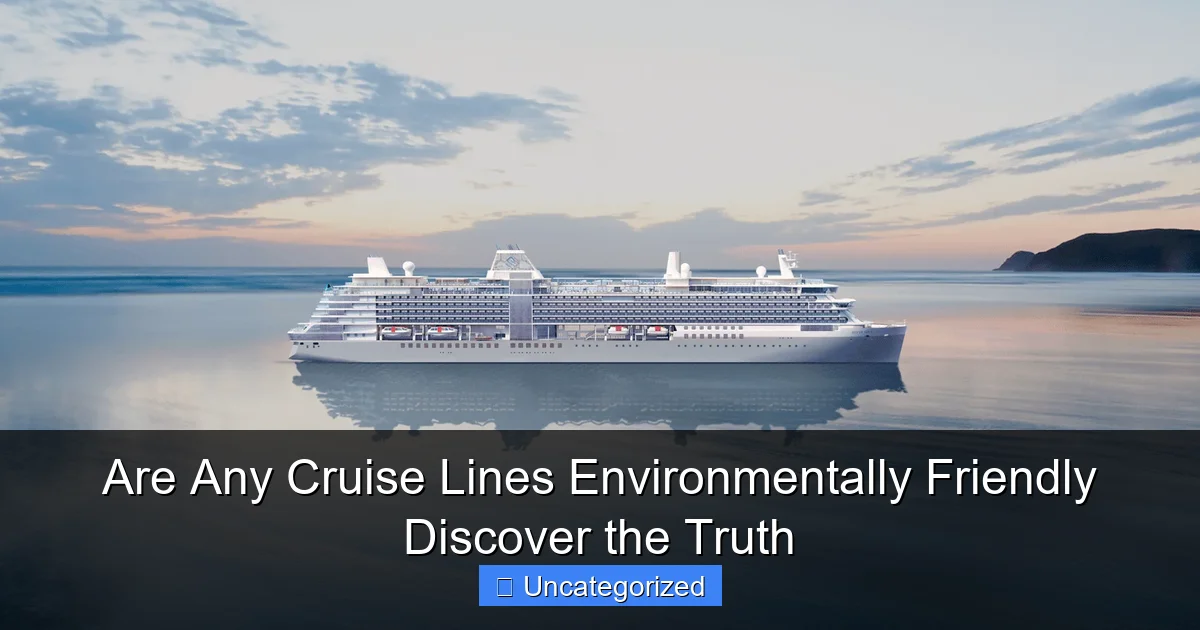
Featured image for are any cruise lines environmentally friendly
Image source: oceanevent.com
Yes, some cruise lines are making significant strides toward environmental sustainability, adopting cleaner fuels, advanced wastewater treatment, and carbon-reduction initiatives. Leaders like Hurtigruten, Norwegian Cruise Line, and Royal Caribbean are investing in LNG-powered ships, shore power connections, and waste-to-energy systems, setting new industry benchmarks. While challenges remain, eco-conscious travelers now have greener options—without sacrificing comfort or itinerary.
Key Takeaways
- Choose eco-certified lines: Opt for cruise lines with recognized environmental certifications like Green Marine.
- Prioritize LNG-powered ships: Select ships using liquefied natural gas to reduce emissions significantly.
- Support waste reduction: Favor lines with zero-waste-to-landfill policies and advanced recycling programs.
- Look for shore power: Book cruises using shore-side electricity to cut docked ship emissions.
- Demand transparency: Support companies publishing annual sustainability reports and carbon reduction goals.
- Avoid single-use plastics: Pick lines committed to eliminating plastic straws, bottles, and packaging.
📑 Table of Contents
- Are Any Cruise Lines Environmentally Friendly? Discover the Truth
- Understanding the Environmental Impact of Cruise Ships
- Which Cruise Lines Are Leading the Green Revolution?
- Green Technologies Transforming the Industry
- How to Choose an Eco-Friendly Cruise: A Traveler’s Guide
- Challenges and Future Outlook: Can Cruising Be Truly Sustainable?
- Environmental Performance Comparison: Top Cruise Lines (2023 Data)
- Conclusion: The Truth About Eco-Friendly Cruising
Are Any Cruise Lines Environmentally Friendly? Discover the Truth
The open sea, the sound of waves, and the allure of distant shores have long made cruising one of the most popular vacation choices worldwide. Millions of travelers embark on cruise ships each year, drawn by the promise of luxury, entertainment, and exploration. Yet, beneath the glamour lies a growing concern: the environmental impact of cruise tourism. From massive carbon emissions to waste discharge and marine ecosystem disruption, the cruise industry has historically faced criticism for its ecological footprint. But is it all doom and gloom? Are any cruise lines environmentally friendly, or is the entire industry inherently unsustainable?
As climate change accelerates and travelers become more environmentally conscious, a shift is underway. Cruise lines are under increasing pressure—from governments, environmental groups, and eco-aware passengers—to adopt greener practices. Some have responded with bold sustainability initiatives, investing in cleaner technologies, alternative fuels, and waste reduction programs. Others lag behind, relying on outdated practices or greenwashing tactics. The truth is complex, nuanced, and evolving. In this comprehensive guide, we’ll dive deep into the environmental practices of modern cruise lines, explore which ones are leading the charge, and provide practical insights for travelers who want to make responsible choices without sacrificing the magic of a sea voyage.
Understanding the Environmental Impact of Cruise Ships
Carbon Emissions and Air Pollution
Cruise ships are often likened to floating cities, and with that comes a significant environmental footprint. The largest vessels can carry over 6,000 passengers and crew, requiring massive amounts of fuel to power engines, lighting, air conditioning, and onboard amenities. Traditionally, cruise ships have relied on heavy fuel oil (HFO), a low-cost but highly polluting fossil fuel. HFO contains high levels of sulfur and particulate matter, contributing to air pollution and acid rain. According to the International Council on Clean Transportation (ICCT), a single large cruise ship can emit as much particulate matter as a million cars in a day.

Visual guide about are any cruise lines environmentally friendly
Image source: d23n7ahjfnjotp.cloudfront.net
In addition to sulfur dioxide (SO₂), cruise ships emit nitrogen oxides (NOₓ), carbon dioxide (CO₂), and black carbon—all of which contribute to climate change and respiratory health issues. The European Environment Agency (EEA) reports that maritime transport, including cruise tourism, accounts for about 3% of global CO₂ emissions—a figure expected to rise without intervention.
Waste and Water Management
Beyond emissions, cruise ships generate substantial waste. A typical 4,000-passenger ship can produce up to 1 million gallons of sewage, 210,000 gallons of graywater (from sinks, showers, and laundries), and 25 tons of solid waste per week. While regulations like MARPOL (International Convention for the Prevention of Pollution from Ships) set standards for waste discharge, enforcement varies, and illegal dumping has been documented in sensitive marine areas.
Graywater and blackwater (sewage) are treated onboard using advanced wastewater treatment systems (AWTS), but not all systems meet the highest standards. Some older vessels still use outdated methods, and even treated effluent can contain traces of pharmaceuticals, microplastics, and pathogens that harm marine life.
Marine Ecosystem Disruption
The environmental toll extends beyond pollution. Cruise ships can damage coral reefs through anchoring, disturb marine mammals with noise pollution, and contribute to the spread of invasive species via ballast water. Ballast water, used to stabilize ships, can carry thousands of aquatic organisms from one region to another, potentially outcompeting native species and disrupting ecosystems.
Additionally, the sheer volume of passengers visiting popular destinations—like the Caribbean or Alaska—can overwhelm local infrastructure and ecosystems. Over-tourism in fragile areas, such as glaciers or coral atolls, exacerbates environmental degradation and cultural strain.
Which Cruise Lines Are Leading the Green Revolution?
Royal Caribbean Group: Pioneering Sustainability
Royal Caribbean Group, which includes Royal Caribbean International, Celebrity Cruises, and Silversea, has made significant strides in environmental stewardship. Their “Save the Waves” program, launched in 2014, focuses on reducing emissions, waste, and water usage. The company was the first to introduce Liquefied Natural Gas (LNG)-powered ships with Icon of the Seas (launched in 2024) and Utopia of the Seas (2024). LNG reduces sulfur emissions by 95%, NOₓ by 85%, and CO₂ by up to 25% compared to HFO.
Royal Caribbean also uses advanced wastewater treatment systems that exceed MARPOL standards, achieving up to 98% water purity. They’ve eliminated single-use plastics across all brands and implemented AI-driven energy management systems to optimize fuel consumption. In 2023, the company reported a 12% reduction in carbon intensity per passenger compared to 2019.
Carnival Corporation: A Mixed Record with Green Initiatives
As the world’s largest cruise company, Carnival Corporation (with brands like Carnival Cruise Line, Princess Cruises, and Holland America Line) has faced criticism for its environmental record but has also launched ambitious sustainability programs. Their “Sustainable from Ship to Shore” initiative includes a goal of reducing carbon intensity by 40% by 2030 (vs. 2008).
Carnival has invested in shore power connectivity for over 60% of its fleet, allowing ships to turn off engines while docked and draw electricity from land-based grids—reducing port emissions by up to 98%. The company also operates the “Eco-Smart” program, which includes waste-to-energy systems and onboard recycling. However, critics note that Carnival’s fleet still relies heavily on HFO, and progress has been uneven across its brands.
MSC Cruises: LNG and Beyond
MSC Cruises has positioned itself as a leader in sustainable innovation. Their “MSC for Me” sustainability program emphasizes carbon neutrality and environmental education. The company’s Meraviglia and World Class ships are powered by LNG, with plans to introduce hydrogen fuel cells and biofuels in the near future.
MSC also uses closed-loop scrubbers to capture sulfur emissions, preventing them from entering the atmosphere. The company has committed to achieving net-zero greenhouse gas emissions by 2050 and has partnered with environmental NGOs to protect marine biodiversity in key destinations like the Mediterranean.
Smaller Lines: Pioneers of Eco-Luxury
While large corporations make headlines, smaller cruise lines are often at the forefront of eco-friendly innovation. Lindblad Expeditions (in partnership with National Geographic) operates carbon-neutral voyages in remote regions like Antarctica and the Galápagos. Their ships use hybrid-electric engines and adhere to strict environmental protocols, including no single-use plastics and minimal anchoring.
Hurtigruten (now Hurtigruten Group) was the first cruise line to ban HFO and transition to LNG and battery-hybrid ships. Their MS Roald Amundsen and MS Fridtjof Nansen are designed for polar expeditions and feature advanced waste recycling and energy recovery systems. Hurtigruten also supports local conservation projects and offers carbon offset programs for passengers.
Green Technologies Transforming the Industry
Liquefied Natural Gas (LNG) and Alternative Fuels
Liquefied Natural Gas (LNG) is currently the most viable alternative to HFO. It burns cleaner, reducing SO₂ emissions to near zero and cutting NOₓ and CO₂ significantly. However, LNG is not a perfect solution—it’s still a fossil fuel, and methane leakage during production and transport can offset its climate benefits. To address this, cruise lines are exploring renewable LNG (bio-LNG), made from organic waste, and synthetic LNG, produced using green hydrogen and captured CO₂.
Other promising technologies include hydrogen fuel cells, which produce only water as a byproduct, and ammonia, a zero-carbon fuel currently in development. Norwegian Cruise Line Holdings has announced plans to trial ammonia-powered engines by 2030, while Carnival is testing methanol as a transitional fuel.
Battery-Hybrid and Shore Power
Hybrid propulsion systems, combining LNG or diesel engines with battery storage, are gaining traction. These systems allow ships to operate on electric power in sensitive areas (e.g., near ports or wildlife habitats), reducing noise and emissions. Hurtigruten and MSC have successfully deployed battery-hybrid technology in their polar and Mediterranean fleets.
Shore power (also called cold ironing) enables ships to connect to land-based electricity grids while docked. This eliminates the need to run auxiliary engines, cutting port emissions. As of 2023, over 50 major ports worldwide offer shore power, including Seattle, Los Angeles, and Barcelona. Cruise lines like Carnival and Royal Caribbean are investing heavily in retrofitting ships to use this technology.
Waste Reduction and Circular Economy
Modern cruise ships are adopting closed-loop systems to minimize waste. This includes:
- Onboard recycling: Separating paper, plastic, glass, and metal for recycling or reuse.
- Waste-to-energy plants: Converting non-recyclable waste into heat or electricity.
- Composting: Turning food waste into fertilizer for onboard gardens or local communities.
- Water reclamation: Treating and reusing graywater for cleaning or irrigation.
Norwegian Cruise Line has implemented a “Zero Waste to Landfill” initiative, diverting 95% of waste from landfills through recycling and energy recovery. Similarly, Princess Cruises uses AI-powered waste sorting systems to improve efficiency.
How to Choose an Eco-Friendly Cruise: A Traveler’s Guide
Research the Cruise Line’s Sustainability Claims
Not all “green” claims are created equal. Look for cruise lines that publish annual sustainability reports verified by third parties (e.g., Global Reporting Initiative or CDP). Avoid vague terms like “eco-conscious” or “green vacation” without specific data. Instead, focus on measurable goals:
- Carbon intensity reduction targets (e.g., “40% by 2030”).
- Use of alternative fuels (LNG, biofuels, hydrogen).
- Waste diversion rates (e.g., “90% recycling rate”).
- Certifications (e.g., Green Marine, EarthCheck, Blue Flag).
Prioritize Smaller Ships and Off-the-Beaten-Path Destinations
Smaller ships (under 1,000 passengers) have a lower environmental impact per capita and can access less crowded ports, reducing over-tourism. Lines like Lindblad Expeditions, Silversea, and Ponant specialize in small-ship cruising with strong sustainability practices.
Choose itineraries that visit lesser-known destinations or promote eco-tourism (e.g., Costa Rica, Iceland, or the Norwegian fjords). These regions often have stricter environmental regulations and support local conservation efforts.
Look for Onboard Eco-Practices
Ask about the cruise line’s onboard initiatives:
- Are single-use plastics banned?
- Is there a recycling program?
- Do they use energy-efficient lighting and HVAC systems?
- Is food sourced locally and sustainably?
For example, Oceania Cruises sources over 70% of its produce from local farms, reducing food miles and supporting regional economies.
Consider Carbon Offsetting and Shore Excursions
Many cruise lines offer carbon offset programs, allowing passengers to compensate for their emissions by funding reforestation or renewable energy projects. Choose reputable offset providers (e.g., Gold Standard, Verra) with transparent methodologies.
When booking shore excursions, opt for eco-friendly activities like kayaking, hiking, or cultural tours with local guides. Avoid high-impact activities like jet skiing or motorized tours in fragile ecosystems.
Challenges and Future Outlook: Can Cruising Be Truly Sustainable?
The Roadblocks to True Sustainability
Despite progress, the cruise industry faces significant challenges:
- Infrastructure limitations: Not all ports can support LNG bunkering or shore power.
- High costs: Retrofitting ships with green tech is expensive, and new builds take years.
- Regulatory gaps: International maritime laws (e.g., IMO 2020) are improving but still lag behind climate goals.
- Consumer demand: Many travelers prioritize price and luxury over sustainability, pressuring lines to cut corners.
Additionally, the lifespan of cruise ships (30–40 years) means that even new LNG-powered vessels will operate for decades, locking in emissions unless retrofitted with future technologies.
The Role of Innovation and Policy
The future of eco-friendly cruising depends on innovation and policy. Emerging technologies like ammonia engines, carbon capture systems, and AI-driven energy optimization could revolutionize the industry. Governments must enforce stricter regulations, such as mandating zero-emission ports and incentivizing green retrofits.
Collaboration is key. The Global Sustainable Tourism Council (GSTC) and World Travel & Tourism Council (WTTC) are developing industry-wide standards. Meanwhile, cruise lines are forming alliances (e.g., Cruise Lines International Association’s “Sustainability Action Plan”) to share best practices and accelerate progress.
Consumer Power: Voting with Your Wallet
Ultimately, travelers have the power to drive change. By choosing eco-friendly cruise lines, supporting green excursions, and demanding transparency, passengers can push the industry toward true sustainability. As one environmental advocate put it: “The most sustainable cruise is the one that doesn’t leave a trace—except in your heart.”
Environmental Performance Comparison: Top Cruise Lines (2023 Data)
| Cruise Line | LNG-Powered Ships | Shore Power Compatibility | Carbon Intensity Reduction (vs. 2008) | Waste Diversion Rate | Key Sustainability Initiative |
|---|---|---|---|---|---|
| Royal Caribbean Group | 3 (Icon, Utopia, Symphony) | 70% of fleet | 30% (2023) | 85% | “Save the Waves” program |
| Carnival Corporation | 6 (across brands) | 65% of fleet | 25% (2023) | 80% | “Sustainable from Ship to Shore” |
| MSC Cruises | 5 (World Class, Meraviglia) | 60% of fleet | 20% (2023) | 90% | “MSC for Me” |
| Norwegian Cruise Line | 0 (planning for 2025+) | 50% of fleet | 18% (2023) | 75% | “Sail & Sustain” |
| Hurtigruten Group | 3 (battery-hybrid) | 100% of fleet | 35% (2023) | 95% | “Zero Emission by 2050” |
Note: Data sourced from company sustainability reports and third-party audits (2023). Carbon intensity measured in grams of CO₂ per passenger per nautical mile.
Conclusion: The Truth About Eco-Friendly Cruising
So, are any cruise lines environmentally friendly? The answer is a resounding yes—but with caveats. While no cruise ship is entirely carbon-neutral or waste-free, several lines are making meaningful progress toward sustainability. Royal Caribbean, MSC, Hurtigruten, and smaller eco-focused operators are leading the charge with LNG-powered ships, advanced waste systems, and transparent reporting.
However, the industry as a whole still has a long way to go. Greenwashing remains a concern, and systemic challenges—like outdated infrastructure and consumer demand—slow the pace of change. As a traveler, your choices matter. By researching cruise lines, prioritizing eco-friendly practices, and supporting innovation, you can help shape a greener future for ocean travel.
The dream of sailing the high seas doesn’t have to come at the planet’s expense. With informed decisions and collective action, eco-friendly cruising isn’t just possible—it’s the future. So next time you pack your bags, ask not just “Where to?” but “How sustainably?” The waves will thank you.
Frequently Asked Questions
Are any cruise lines environmentally friendly?
Yes, several cruise lines have adopted eco-friendly practices such as LNG-powered ships, advanced wastewater treatment, and reduced single-use plastics. Companies like Hurtigruten, Royal Caribbean, and Carnival are leading the way with sustainability initiatives.
Which cruise lines have the best environmental policies?
Hurtigruten, Norwegian Cruise Line, and Princess Cruises stand out for their comprehensive environmental policies, including carbon offset programs and shore power usage. Look for Green Marine certification or CLIA’s Environmental Technologies & Practices guidelines.
How do cruise lines reduce their environmental impact?
Many environmentally friendly cruise lines use liquefied natural gas (LNG) fuel, install exhaust scrubbers, and recycle waste onboard. Advanced air lubrication systems and hull designs also improve fuel efficiency to reduce emissions.
Do any cruise lines ban single-use plastics?
Yes, major lines like Disney Cruise Line, Celebrity Cruises, and Royal Caribbean have eliminated or significantly reduced single-use plastics. They’ve replaced straws, cups, and cutlery with biodegradable or reusable alternatives.
Are there eco-certifications for sustainable cruise lines?
Absolutely. Certifications like Green Marine, EarthCheck, and ISO 14001 verify a cruise line’s commitment to environmental friendliness. These labels ensure adherence to strict sustainability standards for waste, emissions, and fuel use.
What makes a cruise line truly environmentally friendly?
Truly environmentally friendly cruise lines invest in clean fuels, zero-waste-to-landfill programs, and wildlife protection partnerships. They also prioritize transparency by publishing annual sustainability reports and setting clear carbon-neutral goals.