Featured image for are any cruise lines american companies
Image source: rivercruiseadvisor.com
Most major cruise lines are not American-owned, despite operating in the U.S. and catering to American travelers. Carnival Corporation, Royal Caribbean, and Norwegian Cruise Line are all headquartered overseas, primarily in Europe, meaning true American-owned cruise companies are rare—though a few smaller, niche lines like American Cruise Lines and Pearl Seas Cruises proudly fly the U.S. flag.
Key Takeaways
- Most cruise lines are foreign-owned despite operating in the U.S.
- Carnival Corporation is British-American, dual-headquartered in the U.S. and UK.
- Norwegian Cruise Line is incorporated in Bermuda, not U.S.-based.
- Royal Caribbean is publicly traded in the U.S. but incorporated in Liberia.
- Only small U.S.-flagged lines like American Cruise Lines are fully American.
- Check incorporation details to confirm true ownership of any cruise brand.
📑 Table of Contents
- Are Any Cruise Lines American Companies? Find Out Here
- Understanding the Definition of an “American” Cruise Line
- Major Cruise Lines That Are American Companies
- Why Are Most Cruise Ships Not U.S.-Flagged?
- Economic Impact of American Cruise Companies
- How to Choose an American Cruise Line: Tips for Travelers
- Data Table: American Cruise Lines at a Glance
- Conclusion
Are Any Cruise Lines American Companies? Find Out Here
When you picture a luxury cruise vacation, you might imagine a massive ship sailing across turquoise waters, with a tropical island on the horizon and a fruity drink in hand. But have you ever wondered about the origins of the cruise line you’re sailing with? Are any cruise lines American companies? It’s a surprisingly complex question that touches on maritime law, international business, and even tax regulations. While many of the most well-known cruise brands are based in the United States, the reality is that the cruise industry is a global enterprise with intricate corporate structures.
The cruise industry is dominated by a few major players, most of which are headquartered in the U.S. and listed on American stock exchanges. However, due to international maritime regulations, most cruise ships are registered under foreign flags—often in countries like the Bahamas, Panama, or Liberia. This means that while the parent companies may be American, the actual vessels and their operations are subject to foreign laws. In this article, we’ll explore the nuances of what makes a cruise line “American,” the reasons behind the global nature of the industry, and which cruise lines truly qualify as American companies. Whether you’re a cruise enthusiast, a business-minded traveler, or simply curious, this deep dive will help you understand the true ownership and operational structure of your favorite cruise brands.
Understanding the Definition of an “American” Cruise Line
What Makes a Company “American”?
To determine whether a cruise line is an American company, we need to look beyond the brand name and marketing. A company’s “nationality” in the business world is typically defined by three key factors:
Visual guide about are any cruise lines american companies
Image source: goawaytrav.com
- Headquarters location: Where the company’s executive leadership, corporate offices, and strategic decisions are based.
- Ownership and shareholders: Who owns the majority of the company’s stock and where those shareholders are located.
- Stock exchange listing: Where the company is publicly traded and regulated.
For example, a company headquartered in Miami, Florida, with its CEO and board of directors based in the U.S., listed on the New York Stock Exchange, and majority-owned by American shareholders is generally considered an American company—even if its ships fly foreign flags.
Why Ships Are Registered Abroad (Flag of Convenience)
One of the most misunderstood aspects of the cruise industry is the flag of convenience system. Despite being American-owned, nearly all cruise ships are registered (or “flagged”) in foreign countries. This isn’t a sign of being un-American; it’s a strategic business decision driven by international maritime law.
The United Nations Convention on the Law of the Sea (UNCLOS) allows ships to be registered in any country, regardless of where the owner is based. Cruise lines choose foreign flags—such as the Bahamas, Panama, or the Marshall Islands—for several reasons:
- Lower taxes: Many flag countries offer minimal or no corporate taxes on maritime operations.
- Flexible labor laws: Crew members are often employed under international contracts, avoiding strict U.S. labor regulations and higher wages.
- Reduced regulatory burden: Foreign-flagged ships are not subject to U.S. Coast Guard safety standards for domestic operations, though they must meet international safety codes.
- Operational flexibility: Easier to hire a global workforce and manage logistics across international waters.
For instance, a Carnival Cruise Line ship may be owned by a U.S.-based corporation but fly the Bahamian flag and employ crew from the Philippines, India, and Eastern Europe. This doesn’t make it less American—it just reflects the globalized nature of modern shipping.
American Brand, Global Operations
Think of cruise lines like American fast-food chains. McDonald’s is an American company, but its restaurants are located worldwide, employ local staff, and adapt menus to regional tastes. Similarly, American cruise lines operate globally, serving passengers from over 100 countries, hiring international crew, and visiting ports on every continent. The brand identity, customer service standards, and corporate culture are distinctly American, even if the ship itself isn’t registered in the U.S.
Major Cruise Lines That Are American Companies
Carnival Corporation & plc
Carnival Corporation & plc is the largest cruise company in the world and a quintessential American enterprise. Headquartered in Miami, Florida, it operates under a dual corporate structure (a “dual listed company”) with Carnival plc in the UK, but the U.S. entity is the dominant force. It trades on both the New York Stock Exchange (NYSE: CCL) and the London Stock Exchange (LSE: CCL).
Carnival owns several well-known cruise brands, all marketed and managed from the U.S.:
- Carnival Cruise Line – “The Fun Ships” brand, known for affordable, family-friendly vacations.
- Princess Cruises – Premium brand with a strong presence in Alaska and the Mediterranean.
- Holland America Line – Luxury and heritage-focused, with a 150-year history.
- Seabourn Cruise Line – Ultra-luxury, all-suite ships.
- AIDA Cruises – Germany-based but fully owned and strategically directed from the U.S. parent.
Despite operating 90+ ships, all under foreign flags, Carnival’s corporate culture, marketing, and executive leadership are deeply rooted in American business practices. The company is a major employer in South Florida and contributes significantly to the U.S. economy through taxes, tourism partnerships, and supply chain spending.
Royal Caribbean Group
Royal Caribbean Group (formerly Royal Caribbean Cruises Ltd.) is another American giant, headquartered in Miami, Florida. It is listed on the NYSE (RCL) and is majority-owned by American and international institutional investors. The company owns three major cruise brands:
- Royal Caribbean International – Known for innovation, mega-ships like Symphony of the Seas, and cutting-edge amenities.
- Norwegian Cruise Line – Acquired in 2020, now fully integrated under the Royal Caribbean Group umbrella.
- Silversea Cruises – Luxury brand focused on small-ship, high-end experiences.
Royal Caribbean is a leader in sustainability initiatives, investing in LNG-powered ships and advanced wastewater treatment systems. Its American identity is evident in its branding, customer service ethos, and partnerships with U.S. ports like Port Canaveral and PortMiami. The company also sponsors American sports teams and cultural events, reinforcing its domestic ties.
Norwegian Cruise Line Holdings Ltd.
Norwegian Cruise Line Holdings Ltd. (NCLH) is headquartered in Miami, Florida, and trades on the NYSE (NCLH). It owns three brands:
- Norwegian Cruise Line – Known for “Freestyle Cruising” with flexible dining and casual elegance.
- Oceania Cruises – Mid-tier luxury with gourmet dining and destination-focused itineraries.
- Regent Seven Seas Cruises – All-inclusive, ultra-luxury voyages.
NCLH is a fully American-owned and operated company. Its CEO, Frank Del Rio, is a Cuban-American entrepreneur who built the company into a global player. The company emphasizes American-style service, English as the primary onboard language, and partnerships with U.S. travel agencies and airlines.
Other American-Branded Cruise Lines
While smaller in scale, several niche cruise lines are also American companies:
- Viking Cruises – Founded by Torstein Hagen, a Norwegian-born entrepreneur, but headquartered in Woodland Hills, California, and publicly traded on the NYSE (VIK). Viking markets heavily to American retirees and operates river and ocean cruises with a focus on cultural enrichment.
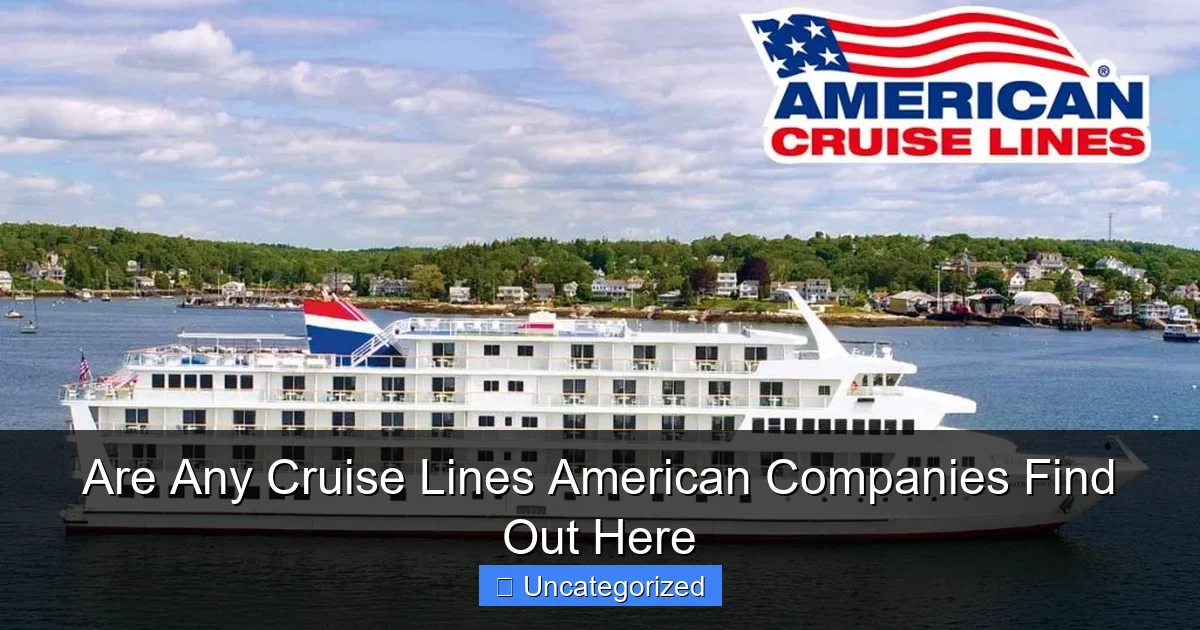
- American Cruise Lines – A true domestic player, operating small ships on U.S. rivers and along the East Coast. It is privately owned and headquartered in Guilford, Connecticut. All ships are registered in the U.S., making it one of the few cruise lines that is both American-owned and U.S.-flagged.
- American Queen Voyages – Focuses on river and coastal cruising in North America. Owned by Hornblower Group, which is American-based and operates in the U.S. market.
These companies cater to travelers seeking a more “homegrown” cruise experience, often with American crew, U.S. itineraries, and onboard entertainment tailored to domestic tastes.
Why Are Most Cruise Ships Not U.S.-Flagged?
Legal and Economic Barriers
The primary reason cruise ships aren’t registered in the U.S. is the Jones Act, a federal law passed in 1920. The Jones Act requires that any vessel transporting passengers or cargo between U.S. ports must be:
- Built in the United States
- Owned by U.S. citizens
- Operated by a majority-U.S. crew
- Registered under the U.S. flag
For cruise lines, this is economically unfeasible. U.S.-built ships cost 2–3 times more than those built in Asian or European shipyards. Additionally, U.S. maritime labor laws require higher wages and benefits, making crew costs significantly more expensive. For example, a U.S.-flagged ship might pay $8,000/month for a deckhand, compared to $3,000/month for a foreign-flagged ship.
Operational Limitations
U.S.-flagged ships can only sail between U.S. ports. This severely limits itinerary options. For instance, a cruise from Miami to the Bahamas would require the ship to leave U.S. waters, but the Jones Act prohibits a U.S.-flagged ship from picking up passengers in the Bahamas and returning to the U.S. without stopping at a foreign port first—a logistical nightmare. Most cruise lines avoid this by using foreign-flagged ships, which can freely sail between international destinations and U.S. ports.
Exceptions: The Few U.S.-Flagged Cruise Ships
Despite the challenges, a few cruise lines operate U.S.-flagged ships:
- American Cruise Lines – Operates 15+ small ships on U.S. rivers and coastal routes. All ships are U.S.-built, crewed, and flagged. Itineraries include the Mississippi River, Alaska (domestic ports), and the Pacific Northwest.
- National Geographic Expeditions (Lindblad Expeditions) – Partners with U.S.-based operators for domestic voyages, though some ships are foreign-flagged. The National Geographic Sea Bird and Sea Lion are U.S.-flagged and operate in Alaska and the Pacific.
These companies target niche markets: retirees, nature enthusiasts, and domestic tourists who value U.S. employment and regulatory compliance.
Economic Impact of American Cruise Companies
Job Creation and Local Economies
Even though cruise ships are foreign-flagged, American cruise companies are major U.S. employers. Carnival Corporation alone employs over 10,000 people in the U.S., primarily in Miami, Seattle, and Los Angeles. These jobs include:
- Corporate executives and managers
- Marketing and sales teams
- Port operations and logistics
- Customer service and reservations
- Legal, finance, and IT departments
Additionally, cruise lines spend billions annually on U.S.-based goods and services: food supplies, fuel, advertising, technology, and port fees. For example, PortMiami, the “Cruise Capital of the World,” generates over $43 billion in economic impact annually, much of it from American cruise companies.
Tax Contributions
American cruise lines pay U.S. corporate taxes on profits earned domestically. They also pay excise taxes on passenger tickets (the “cruise tax”) and contribute to state and local taxes. While foreign-flagged ships don’t pay U.S. income tax on international operations, the parent companies do pay taxes on U.S. income, including ticket sales, onboard spending, and port charges.
Supporting U.S. Tourism
Cruise lines drive tourism to U.S. destinations. Every time a cruise ship docks in Miami, Seattle, or New Orleans, thousands of passengers disembark to spend money on tours, hotels, restaurants, and shopping. American cruise companies also partner with local businesses, museums, and tour operators, creating a ripple effect in regional economies.
How to Choose an American Cruise Line: Tips for Travelers
Prioritize Corporate Ownership
If supporting American jobs and companies is important to you, choose cruise lines that are:
- Headquartered in the U.S.
- Listed on U.S. stock exchanges
- Owned by American investors or publicly traded in the U.S.
Look for companies like Carnival, Royal Caribbean, Norwegian, and Viking—they are American at the corporate level, even if their ships fly foreign flags.
Seek U.S.-Flagged Ships for Domestic Cruises
If you want a truly American-flagged experience, book with:
- American Cruise Lines – Ideal for river and coastal voyages.
- Lindblad Expeditions – Great for eco-tourism in Alaska and the Pacific.
These ships offer U.S. crew, American-style amenities, and itineraries that stay within domestic waters.
Support American-Made Experiences
Even on foreign-flagged ships, American cruise lines offer:
- English as the primary language
- American food and beverage options
- U.S.-based customer service
- Partnerships with American travel agents and airlines
By choosing an American-owned cruise line, you’re supporting U.S. innovation, employment, and tourism infrastructure.
Check for Sustainability and Labor Practices
American cruise companies are leaders in sustainability. Look for lines that invest in:
- LNG-powered ships
- Advanced wastewater treatment
- Fair wages for crew (many U.S.-based companies have better labor practices than foreign competitors)
Data Table: American Cruise Lines at a Glance
| Company | Headquarters | Stock Exchange | U.S.-Flagged Ships? | Major Brands | Key Fact |
|---|---|---|---|---|---|
| Carnival Corporation | Miami, FL | NYSE: CCL | No (all foreign-flagged) | Carnival, Princess, Holland America | Largest cruise company by fleet size |
| Royal Caribbean Group | Miami, FL | NYSE: RCL | No (all foreign-flagged) | Royal Caribbean, Norwegian, Silversea | Operates the world’s largest cruise ships |
| Norwegian Cruise Line Holdings | Miami, FL | NYSE: NCLH | No (all foreign-flagged) | Norwegian, Oceania, Regent | Leader in “Freestyle Cruising” |
| Viking Cruises | Woodland Hills, CA | NYSE: VIK | No (mostly foreign-flagged) | Viking Ocean, Viking River | Focus on cultural and river cruises |
| American Cruise Lines | Guilford, CT | Private | Yes (all U.S.-flagged) | American Cruise Lines | Only U.S.-flagged domestic cruise line |
Conclusion
So, are any cruise lines American companies? The answer is a resounding yes—but with important nuances. While the cruise industry operates on a global scale, with ships flying foreign flags and employing international crews, the major cruise companies that dominate the market are American at their core. Carnival, Royal Caribbean, Norwegian, Viking, and American Cruise Lines are all headquartered in the U.S., listed on American stock exchanges, and contribute significantly to the U.S. economy through jobs, taxes, and tourism.
The practice of registering ships under foreign flags is not a sign of being “un-American”—it’s a strategic business decision driven by maritime law, cost efficiency, and operational flexibility. What matters most is the corporate identity, brand values, and economic impact. When you sail with an American-owned cruise line, you’re supporting U.S. innovation, employment, and tourism infrastructure.
For travelers who want to go a step further, companies like American Cruise Lines offer the rare experience of a fully U.S.-flagged, U.S.-crewed, and U.S.-operated cruise. Whether you choose a foreign-flagged mega-ship or a domestic riverboat, understanding the ownership and operational structure of your cruise line empowers you to make informed, values-driven travel choices. So next time you book a cruise, remember: the flag on the ship may not be American, but the company behind it very well might be.
Frequently Asked Questions
Are any cruise lines American companies?
Yes, several major cruise lines are American companies, including Carnival Cruise Line, Royal Caribbean International, and Norwegian Cruise Line. While some are incorporated overseas for tax or regulatory reasons, their headquarters and primary operations are based in the U.S.
Which major cruise lines are headquartered in the United States?
Carnival Corporation (parent of Carnival Cruise Line), Royal Caribbean Group, and Norwegian Cruise Line Holdings all have headquarters in Miami, Florida. These American cruise companies operate globally but maintain strong U.S.-based leadership and employment.
Is Royal Caribbean an American cruise line?
Yes, Royal Caribbean International is an American cruise line under the Royal Caribbean Group, headquartered in Miami. Despite being incorporated in Liberia, it’s widely considered an American company due to its U.S. operations and ownership.
Do any American cruise lines operate under U.S. law?
Most American cruise companies incorporate in countries like Panama or Liberia for maritime law benefits, but they still follow U.S. labor, safety, and environmental standards. Their onboard operations and corporate policies align with American regulations.
Why aren’t all American-owned cruise lines incorporated in the U.S.?
Many American cruise lines incorporate overseas to take advantage of international maritime laws and tax structures. However, their core management, marketing, and customer service operations remain U.S.-based, making them functionally American companies.
Are there any cruise lines that are 100% American-owned and operated?
Smaller niche lines like American Cruise Lines and Blount Small Ship Adventures are 100% American-owned, with U.S. incorporation and operations focused on domestic itineraries. Larger brands often have global ownership structures despite their American roots.