
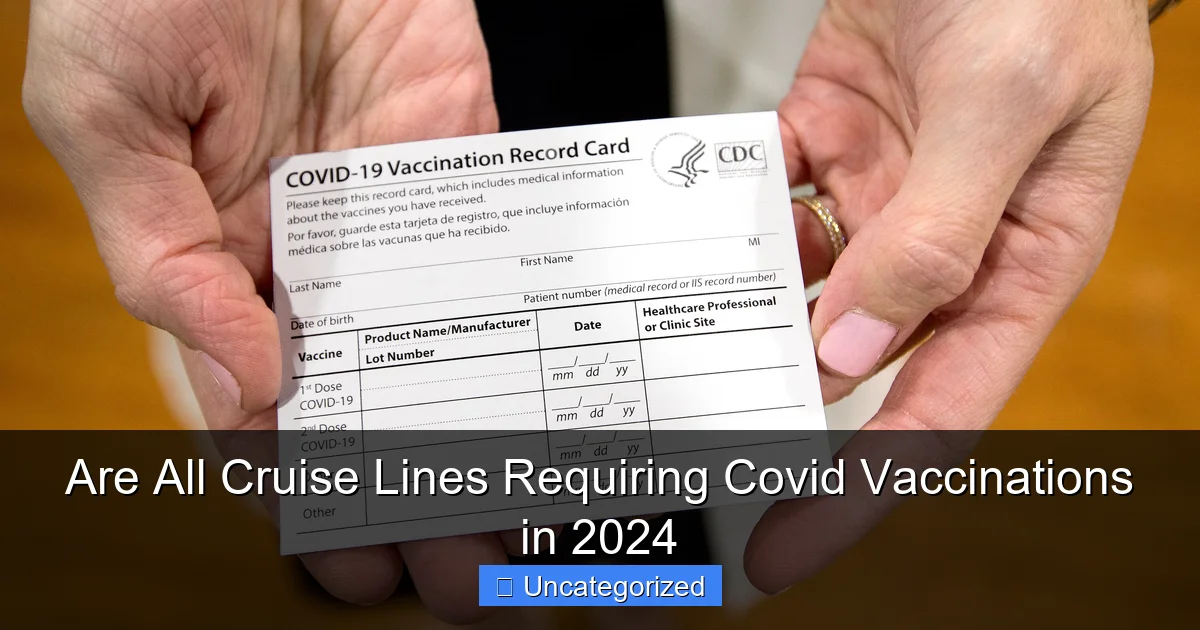
Featured image for are all cruise lines requiring covid vaccinations
Image source: static01.nyt.com
No, not all cruise lines require COVID-19 vaccinations in 2024, as policies vary widely by company, destination, and local regulations. Major lines like Carnival and Royal Caribbean have dropped mandatory vaccination rules, while others, especially luxury or international operators, may still enforce them depending on the itinerary and health guidelines. Always verify requirements directly with your cruise line before booking.
Key Takeaways
- Not all cruise lines require COVID vaccines in 2024—check individual policies before booking.
- Major lines like Carnival and Royal Caribbean no longer mandate vaccines but may test pre-boarding.
- Some luxury and river cruise lines still enforce strict vaccination rules—verify with providers.
- Unvaccinated travelers may face restrictions like testing, mask mandates, or denied boarding.
- Rules change frequently—monitor official cruise line updates until departure.
- Travel insurance is essential to cover cancellations due to health policy changes.
📑 Table of Contents
- The Cruise Comeback: Navigating Vaccine Policies in 2024
- Understanding the Current State of Cruise Line Vaccination Policies
- Major Cruise Lines and Their 2024 Vaccination Requirements
- Specialized Cruise Lines and Unique Vaccination Policies
- Navigating Exceptions, Exemptions, and Documentation
- Regional Variations and International Considerations
- Looking Ahead: The Future of Cruise Health Protocols
The Cruise Comeback: Navigating Vaccine Policies in 2024
After years of pandemic-induced disruptions, the cruise industry is sailing full steam ahead into 2024 with renewed vigor. Cruise ships, once symbols of COVID-19 outbreaks, have transformed into floating fortresses of health and safety. For travelers eager to explore the high seas once again, one burning question remains: Are all cruise lines requiring COVID vaccinations in 2024? The answer isn’t a simple “yes” or “no” – it’s a nuanced landscape shaped by evolving health guidelines, regional regulations, and corporate policies.
As we navigate this new era of cruising, understanding vaccination requirements has become as crucial as packing your swimsuit or booking shore excursions. Whether you’re a seasoned cruiser or planning your first voyage, this comprehensive guide will help you chart a course through the complex waters of cruise line COVID policies. From major players like Royal Caribbean to niche operators in the Galapagos, we’ll explore how different companies are adapting their health protocols, what exceptions exist, and how these policies might affect your travel plans. So grab your sunscreen and let’s set sail into the world of 2024 cruise vaccination requirements.
Understanding the Current State of Cruise Line Vaccination Policies
The Shift from Mandates to Recommendations
In the early days of the pandemic, most major cruise lines implemented strict vaccine mandates as a condition of sailing. Fast forward to 2024, and the landscape has significantly evolved. The Centers for Disease Control and Prevention (CDC) officially ended its COVID-19 Program for Cruise Ships in July 2022, removing the last major regulatory pressure for vaccine mandates. Since then, the cruise industry has shifted from universal requirements to a more nuanced approach.
Visual guide about are all cruise lines requiring covid vaccinations
Image source: static01.nyt.com
Today, most major cruise lines no longer mandate vaccinations for all passengers. Instead, they’ve adopted a hybrid approach where vaccines are strongly recommended but not always required. This shift mirrors broader trends in the travel industry, where vaccine requirements have been relaxed as case numbers have declined and new treatments have become available. However, some exceptions remain, particularly for certain destinations or specialized voyages.
Factors Influencing Cruise Line Policies
Several key factors continue to shape cruise line vaccination policies in 2024:
- Destination regulations: Some countries still require proof of vaccination for entry, which can affect cruise itineraries that include these ports
- Ship capacity: Lines with higher passenger densities may maintain stricter protocols to mitigate risk
- Target demographics: Senior-focused or health-conscious lines may be more likely to require vaccines
- Medical infrastructure: Ships with robust onboard medical facilities may be more comfortable accepting unvaccinated passengers
- Corporate philosophy: Some companies prioritize passenger safety above all, while others focus more on removing barriers to entry
For example, Crystal Cruises, which targets a more mature demographic, maintains stricter health protocols compared to Norwegian Cruise Line, which has positioned itself as more accessible to first-time cruisers. This demonstrates how a line’s target market significantly influences its approach to vaccination policies.
Major Cruise Lines and Their 2024 Vaccination Requirements
Royal Caribbean International
Royal Caribbean has taken a flexible approach in 2024. For most sailings from the U.S. and Europe, vaccination is recommended but not required for passengers 5 years and older. However, they maintain a few exceptions:
- All passengers 5+ must be vaccinated for sailings to Australia and New Zealand
- Unvaccinated passengers must provide a negative PCR test taken within 72 hours of embarkation
- Some specialty voyages (e.g., world cruises) may have additional requirements
Royal Caribbean also offers a “Vaccinated-Only” cruise option for those seeking maximum safety. These special sailings are clearly marked on their website and require all passengers 5+ to be fully vaccinated.
Carnival Cruise Line
Carnival has adopted one of the most relaxed policies among major lines. As of 2024:
- No vaccination requirement for any passenger age
- Unvaccinated passengers must complete a health questionnaire and may be subject to additional testing
- Mask wearing is optional in all areas
- Pre-cruise testing is recommended but not required
Interestingly, Carnival’s approach reflects its “Fun Ship” branding, focusing on removing barriers to entry rather than maintaining strict health protocols. This policy applies to all Carnival ships worldwide, making it one of the most consistently relaxed major cruise lines.
Norwegian Cruise Line (NCL)
NCL maintains a middle-ground approach with some important nuances:
- No vaccination requirement for most sailings
- Unvaccinated passengers must provide a negative antigen test taken within 24 hours of embarkation
- For sailings to Canada, Australia, and New Zealand, all passengers 5+ must be vaccinated
- Onboard medical facilities can accommodate unvaccinated passengers with pre-existing conditions
NCL also offers a “Vaccinated-Only” sailing option similar to Royal Caribbean, allowing passengers to choose their preferred level of health protection.
Princess Cruises
Princess has maintained slightly stricter protocols, particularly for its longer voyages:
- All passengers 5+ must be vaccinated for sailings of 15+ days
- For shorter cruises, vaccination is recommended but not required
- Unvaccinated passengers must provide a negative PCR test taken within 72 hours of embarkation
- Some specialty itineraries (e.g., Antarctica) may have additional requirements
Princess’s approach reflects its focus on extended voyages and international itineraries, where maintaining health protocols is particularly important.
Specialized Cruise Lines and Unique Vaccination Policies
Luxury and Expedition Lines
The luxury and expedition cruise sectors have maintained some of the strictest vaccination policies in 2024. This is driven by several factors:
- Smaller ships with less medical infrastructure
- Remote destinations with limited healthcare access
- Older clientele with higher health risks
- Longer voyages where outbreaks are more problematic
For example, Silversea Cruises requires all passengers 5+ to be vaccinated for all sailings. Similarly, Lindblad Expeditions maintains a strict vaccination policy for its Galapagos and Antarctica voyages. The rationale is clear: in remote locations, a COVID outbreak could have severe consequences, both for passenger health and the ability to continue the voyage.
Another interesting case is Regent Seven Seas Cruises, which offers a “Vaccinated-Only” guarantee for all sailings. This policy is part of their “Healthy Sail” program, which also includes enhanced cleaning protocols and reduced capacity on some ships.
River and Coastal Cruise Operators
River cruise lines have taken a varied approach to vaccination requirements in 2024. Most major operators, including Viking River Cruises and AmaWaterways, have relaxed their policies but maintain some precautions:
- Viking: Vaccination recommended but not required; pre-cruise testing for unvaccinated passengers on longer voyages
- AmaWaterways: No vaccination requirement; enhanced sanitation protocols maintained
- American Queen Voyages: Vaccination required for all passengers 5+ on Mississippi River cruises
The differences reflect the unique challenges of river cruising, where ships dock in multiple countries with varying regulations. For example, Viking’s European river cruises must comply with EU health regulations, which have been more permissive than U.S. requirements.
Specialty and Themed Cruises
Some specialty cruise operators maintain unique vaccination policies based on their target audience:
- Holland America Line’s Alaska cruises require vaccination for all passengers 5+ due to state regulations
- Disney Cruise Line requires vaccination for all passengers 5+ on all sailings, reflecting Disney’s conservative health approach
- Virgin Voyages requires vaccination for all passengers 12+ as part of its “Sailor” health pledge
These policies demonstrate how niche markets and corporate philosophies can lead to different approaches even within the same parent company. For instance, Carnival (which owns Holland America) has no vaccination requirements for its main brand but maintains them for certain subsidiary lines.
Navigating Exceptions, Exemptions, and Documentation
Medical Exemptions and Special Cases
Even cruise lines with vaccination requirements typically provide processes for medical exemptions. However, the criteria and procedures vary significantly:
- Documentation: Most lines require a letter from a licensed physician detailing the medical contraindication
- Review process: Exemption requests are often reviewed by onboard medical teams or third-party health consultants
- Additional requirements: Unvaccinated passengers with exemptions may face additional testing, quarantine protocols, or travel restrictions
- Approval timelines: Some lines require exemption requests 30-60 days before sailing
For example, Oceania Cruises requires exemption requests to be submitted at least 45 days before departure and includes a detailed questionnaire about the medical condition. In contrast, MSC Cruises handles exemptions on a case-by-case basis but requires additional testing for unvaccinated passengers.
Documentation and Verification Processes
For vaccinated passengers, cruise lines have streamlined documentation requirements in 2024. Most now accept:
- Digital vaccine cards through their mobile apps
- Photocopies of physical vaccine cards
- Official government-issued vaccine certificates
- Electronic health records from providers
The verification process typically involves:
- Uploading documents during online check-in (usually 30-60 days before sailing)
- Secondary verification at the cruise terminal
- Random spot checks by onboard staff
An important tip: Always carry your original vaccine documentation even if you’ve uploaded digital copies. Some ports of call may require physical proof of vaccination for entry, and having the original can save you from last-minute complications.
Testing Requirements and Protocols
For unvaccinated passengers, testing has become the primary alternative to vaccination. Cruise lines have adopted various testing approaches:
- Pre-cruise testing: Most require PCR tests 72 hours before embarkation or antigen tests 24-48 hours before
- Onboard testing: Some lines offer rapid testing at embarkation for a fee
- Mid-cruise testing: A few lines require additional testing during longer voyages
- Post-disembarkation testing: Rare, but some destinations require this
Practical example: If you’re unvaccinated and booked on a 7-day Royal Caribbean cruise from Miami, you would need to:
- Take a PCR test within 72 hours of embarkation
- Upload the negative result to the Royal Caribbean app
- Be prepared for possible additional testing if symptoms develop during the cruise
- Follow any mask requirements that may be in place for unvaccinated passengers
Regional Variations and International Considerations
Destination-Specific Requirements
One of the most complex aspects of cruise vaccination policies is how they interact with destination regulations. In 2024, several regions maintain unique requirements that affect cruise itineraries:
| Destination | Vaccination Requirement | Testing Requirement | Special Notes |
|---|---|---|---|
| Australia & New Zealand | All passengers 5+ must be vaccinated | None for vaccinated passengers | Some ports require additional documentation |
| Canada | All passengers 5+ must be vaccinated | None for vaccinated passengers | Alaska cruises must comply with Canadian regulations |
| European Union | No requirement for most countries | None for vaccinated passengers | Individual countries may have specific rules |
| United States | No requirement for most ports | None for vaccinated passengers | Some states (e.g., Hawaii) may have additional rules |
| Galapagos Islands | All passengers must be vaccinated | PCR test 72 hours before arrival | Strict enforcement by Ecuadorian authorities |
| Antarctica | All expedition cruise passengers must be vaccinated | Multiple tests required | IAATO guidelines apply to all operators |
This table illustrates why cruise lines must maintain flexible policies. A ship sailing from Miami to the Caribbean may have no vaccination requirements, but the same ship on an Alaska itinerary must comply with Canadian regulations, requiring all passengers to be vaccinated.
Port-of-Call Considerations
Even when the home port has relaxed requirements, individual ports of call may enforce stricter rules. Cruise lines typically handle this in several ways:
- Itinerary adjustments: Removing ports with conflicting requirements
- Passenger notifications: Informing guests of destination-specific rules before booking
- Onboard briefings: Providing updates about port requirements during the cruise
- Alternative activities: Offering onboard options for passengers who can’t disembark
For example, a Carnival cruise from New York to Bermuda must comply with Bermuda’s entry requirements, which include proof of vaccination for all passengers 12+. Carnival handles this by requiring all passengers to be vaccinated for these specific sailings, even though their general policy has no vaccination mandate.
Changing Policies and Last-Minute Updates
One of the most important things to remember about 2024 cruise vaccination policies is that they can change rapidly. Cruise lines monitor:
- Local case rates and variants of concern
- New government regulations
- Industry health guidelines
- Passenger demographics and feedback
Best practices for staying informed include:
- Checking the cruise line’s website 30 days before sailing
- Signing up for email updates from the cruise line
- Reviewing the cruise contract for policy change clauses
- Contacting customer service with specific questions
- Following the cruise line’s social media for real-time updates
Pro tip: Always have a contingency plan if policies change after you book. Some cruise lines offer flexibility for policy-related cancellations, but this varies by company and sailing.
Looking Ahead: The Future of Cruise Health Protocols
As we navigate through 2024, the cruise industry’s approach to health and safety continues to evolve. While vaccination requirements have relaxed for most mainstream operators, the underlying infrastructure for pandemic response remains intact. Cruise lines have invested millions in enhanced sanitation, improved air filtration, and expanded medical facilities – changes that will likely persist regardless of future vaccination policies.
Looking ahead, we can expect several trends to shape cruise health protocols in the coming years:
- Personalized health options: More lines will offer “vaccinated-only” sailings alongside standard voyages, giving passengers choice in their level of protection
- Advanced testing technology: Rapid PCR tests and digital health passports will become more common, allowing for more nuanced policies
- Regional flexibility: Policies will continue to vary by destination, with cruise lines adapting to local regulations in real-time
- Health-focused amenities: Enhanced medical facilities and wellness programs will become standard features, not just pandemic responses
- Transparent communication: Cruise lines will provide clearer, more accessible information about health risks and protocols
For travelers, the key takeaway is that vaccination requirements are no longer a one-size-fits-all proposition. Whether you’re fully vaccinated, partially vaccinated, or unvaccinated, there are cruise options available in 2024. The important thing is to research your specific itinerary, understand the policies that apply to your situation, and make informed decisions about your health and safety.
Ultimately, the cruise industry’s approach to health protocols reflects a broader shift in how we think about travel in a post-pandemic world. Rather than blanket requirements, the focus is shifting to informed choice, personal responsibility, and adaptable policies that can respond to changing circumstances. As cruise lines continue to innovate and adapt, passengers can look forward to a more flexible, transparent, and personalized cruising experience – one where health and safety are priorities, but not barriers to the joy of exploration.
So whether you’re planning a Caribbean getaway, a European river cruise, or an expedition to Antarctica, take the time to understand the vaccination policies that apply to your specific sailing. With the right preparation and information, you can set sail with confidence, knowing that the cruise industry has learned valuable lessons from the pandemic and is better prepared than ever to provide safe, memorable voyages on the high seas.
Frequently Asked Questions
Are all cruise lines requiring COVID vaccinations in 2024?
No, not all cruise lines require COVID vaccinations in 2024. Policies vary by company, destination, and local regulations, so some lines may have dropped mandates while others still enforce them.
Which cruise lines still require the COVID vaccine?
A few cruise lines, like Viking and Crystal Cruises, still require full vaccination for most sailings, especially on longer or international voyages. Check each line’s health protocols before booking.
Do I need a booster shot to cruise in 2024?
It depends on the cruise line. Some, like Princess Cruises, may require a booster if your last dose was over a year ago, while others don’t. Always confirm the specific vaccination requirements.
Can I cruise without a COVID vaccination?
Yes, many cruise lines now allow unvaccinated passengers, but you might need to provide a negative COVID test or pay for extra insurance. Policies change frequently, so verify before traveling.
Are there different rules for kids on cruise ships?
Most cruise lines follow the same vaccination rules for all passengers, but some offer exemptions for children under a certain age (e.g., under 5). Unvaccinated kids may need to test pre-departure.
Do I need to show proof of COVID vaccination for port stops?
Even if your cruise line doesn’t require it, some countries you visit might. For example, Canada and Australia still have entry rules tied to vaccination status, so always check your itinerary’s requirements.