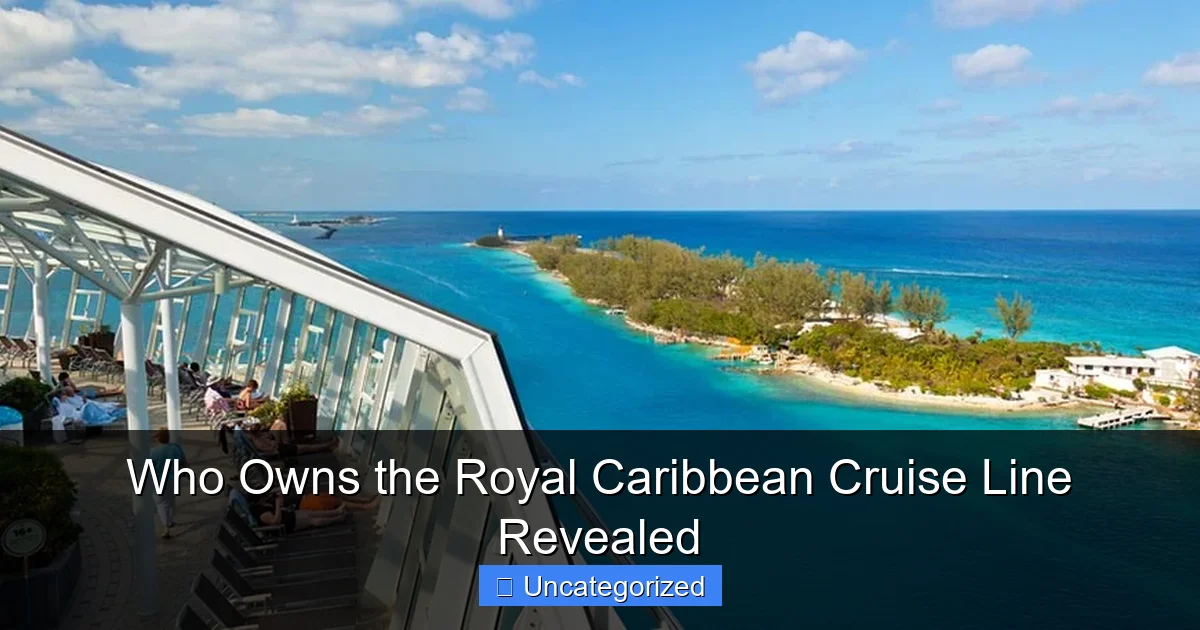
Featured image for who owns the royal caribbean cruise line
Image source: cruisedeals.expert
Royal Caribbean Group is the sole owner and parent company of the Royal Caribbean Cruise Line, operating the world’s largest cruise brand by fleet size and innovation. Headquartered in Miami, Florida, the publicly traded company (NYSE: RCL) also oversees Celebrity Cruises and Silversea Cruises, solidifying its dominance in the luxury and adventure travel markets. This powerhouse continues to redefine ocean travel with groundbreaking ships and global itineraries.
Key Takeaways
- Royal Caribbean Group owns the cruise line as a publicly traded company.
- Majority shareholders include institutional investors like Vanguard and BlackRock.
- CEO Jason Liberty leads operations and strategic direction since 2022.
- Founded in 1968 by Norwegian investors, now headquartered in Miami, Florida.
- Operates 27 ships under multiple brands, including Celebrity Cruises and Silversea.
- Stock trades on NYSE as RCL, offering public investment opportunities.
📑 Table of Contents
- Who Owns the Royal Caribbean Cruise Line Revealed
- The Founding and Early Ownership: A Norwegian Dream
- Public Ownership and the Stock Market: RCL Goes Global
- Corporate Restructuring and Brand Portfolio Expansion
- Leadership and Governance: Who Calls the Shots?
- Global Operations and Economic Impact: Beyond Ownership
- Conclusion: The Many Faces of Ownership
Who Owns the Royal Caribbean Cruise Line Revealed
When you step aboard a Royal Caribbean International cruise ship, you’re not just embarking on a vacation—you’re entering a floating city of innovation, luxury, and adventure. From the gravity-defying surf simulators on the Perfect Day at CocoCay to the sky-high North Star observation capsule, Royal Caribbean has redefined what a cruise experience can be. But behind this global empire of entertainment, engineering, and hospitality lies a fascinating corporate story. Who owns the Royal Caribbean Cruise Line? The answer isn’t as straightforward as you might think. It’s not a single billionaire or a lone corporation—it’s a complex blend of international ownership, public shareholders, strategic partnerships, and a legacy rooted in Norwegian entrepreneurship.
Understanding who owns Royal Caribbean goes beyond stock tickers and annual reports. It’s about tracing the journey of a company that began as a modest venture in the 1960s and evolved into one of the world’s most influential cruise operators. Whether you’re a frequent cruiser, an investor eyeing the travel and leisure sector, or simply curious about the corporate structure of a global brand, this deep dive into Royal Caribbean’s ownership will reveal the key players, the financial backbone, and the strategic decisions that keep this maritime giant sailing smoothly through economic tides and industry storms. From its founding roots to its current status as a publicly traded powerhouse, we’ll uncover the full picture—no life vest required.
The Founding and Early Ownership: A Norwegian Dream
The story of Royal Caribbean Cruise Line begins not in the Caribbean, but in Norway—a country known for its seafaring heritage and shipbuilding expertise. In 1968, three Norwegian shipping companies came together with a bold vision: to create a new kind of cruise line that would cater to the growing American market for affordable, fun, and accessible ocean travel. This collaboration laid the foundation for what would become Royal Caribbean International.
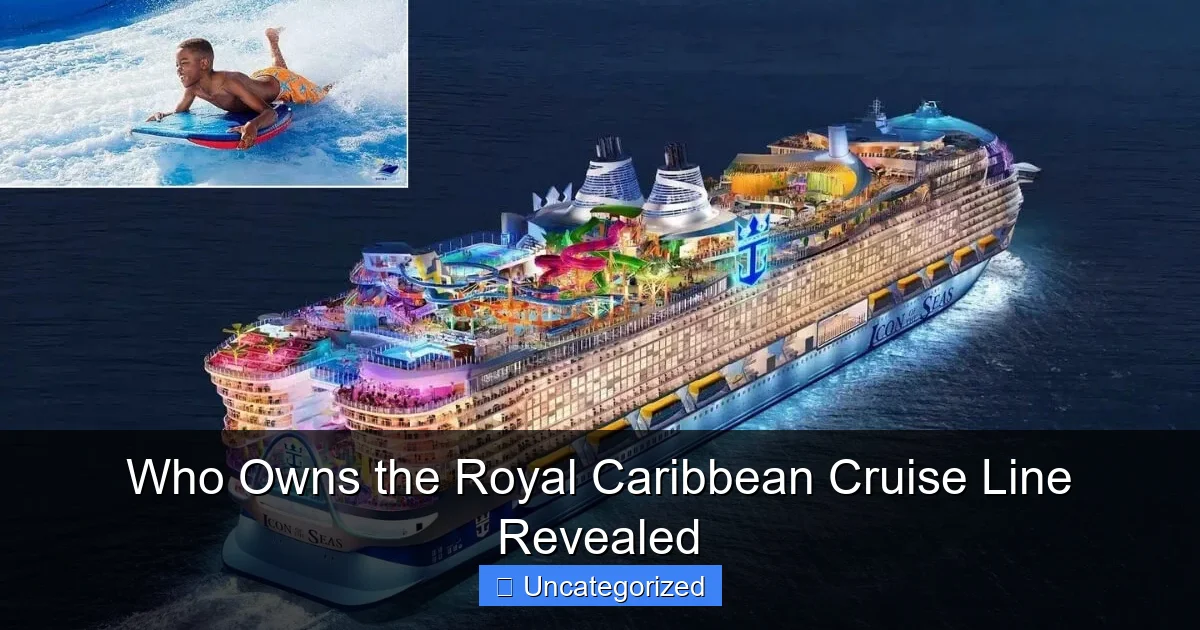
Visual guide about who owns the royal caribbean cruise line
Image source: shinecruise.com
The Original Trio: The Founding Companies
The three original owners were:
- Anders Wilhelmsen & Co. (AWC) – A family-owned shipping enterprise with deep roots in Norwegian maritime history. The Wilhelmsen family remains one of the most influential stakeholders in the company to this day.
- Johan Wilhelmsen – A related entity, also part of the Wilhelmsen dynasty, which contributed both capital and industry expertise.
- I.M. Skaugen & Co. – A third Norwegian shipping firm that brought additional resources and operational know-how to the table.
This triumvirate pooled $10 million to launch Royal Caribbean Cruise Line, with their first ship, Song of Norway, setting sail in 1969 from Miami to the Caribbean. The goal was clear: to offer a more modern, American-style cruise experience compared to the traditional, formal European cruises of the time. The ships were designed with open decks, casual dining, and onboard entertainment—elements that would later become industry standards.
From Consortium to Corporate Identity
While the three companies initially shared ownership equally, the structure evolved rapidly. By the 1970s, the need for a unified corporate identity and centralized management led to the creation of Royal Caribbean Cruises Ltd. (RCL) in 1970, incorporated in Liberia for tax and regulatory advantages—a common practice among international shipping firms. This new entity became the parent company, managing the brand, operations, and fleet expansion.
Tip: When researching cruise line ownership, always look for the parent company. In Royal Caribbean’s case, it’s Royal Caribbean Group (formerly Royal Caribbean Cruises Ltd.), which now oversees multiple brands, including Celebrity Cruises and Silversea Cruises. The original founding trio still holds significant influence, especially through the Wilhelmsen family, who maintain a long-term strategic partnership.
Public Ownership and the Stock Market: RCL Goes Global
In 1993, Royal Caribbean took a pivotal step: it went public. Shares of Royal Caribbean Cruises Ltd. (ticker: RCL) were listed on the New York Stock Exchange, marking a transformation from a privately held, family-influenced enterprise to a publicly traded multinational corporation. This move was not just about raising capital—it was about scaling globally, modernizing operations, and attracting institutional investors.
Key Milestones in Public Trading
- 1993: Initial Public Offering (IPO) on the NYSE. Raised capital for fleet expansion and new technology investments.
- 1997: Acquisition of Celebrity Cruises, diversifying the portfolio into premium cruising.
- 2000: Launch of the Voyager-class ships, introducing the concept of “mega-ships” with onboard ice rinks, rock climbing walls, and Broadway-style shows.
- 2018: Rebranded from “Royal Caribbean Cruises Ltd.” to Royal Caribbean Group to reflect its broader brand portfolio.
Going public allowed Royal Caribbean to access global capital markets, enabling massive investments in shipbuilding, port infrastructure, and digital innovation. For example, the construction of the Symphony of the Seas—the world’s largest cruise ship at launch—cost over $1.35 billion, a feat only possible through diversified funding sources including equity, debt, and operating cash flow.
Who Are the Major Shareholders?
Today, Royal Caribbean Group is owned by a mix of institutional investors, mutual funds, and long-term family interests. According to the latest SEC filings (as of 2023), the top shareholders include:
| Shareholder | Type | Ownership Percentage | Notes |
|---|---|---|---|
| The Vanguard Group | Institutional Investor | 7.8% | One of the largest asset managers globally; holds shares via index and active funds. |
| BlackRock, Inc. | Institutional Investor | 6.5% | Major shareholder in many Fortune 500 companies; includes ETFs like iShares. |
| Anders Wilhelmsen & Co. | Founding Family | 5.1% | Remains the largest individual shareholder; family retains board influence. |
| FMR LLC (Fidelity) | Mutual Fund | 4.9% | Holds shares through Fidelity’s growth and sector-specific funds. |
| State Street Corporation | Institutional Investor | 3.7% | Primarily through index funds and pension fund management. |
While no single entity owns a majority, the Wilhelmsen family remains the most influential private stakeholder. Their long-term vision and board representation ensure continuity in strategic direction, especially in sustainability and fleet innovation.
Tip: For investors, monitoring RCL’s institutional ownership can signal confidence. A rising percentage of institutional holdings often correlates with stable management and growth potential. However, high volatility in the travel sector (e.g., pandemic impacts) can affect short-term performance.
Corporate Restructuring and Brand Portfolio Expansion
Royal Caribbean Group is no longer just about the “Royal Caribbean” brand. Over the decades, it has strategically acquired and developed a portfolio of cruise lines to capture different market segments, from budget-conscious travelers to ultra-luxury seekers. This diversification is a key part of its ownership and operational strategy.
Acquisition of Celebrity Cruises (1997)
In 1997, Royal Caribbean Cruises Ltd. acquired Celebrity Cruises for approximately $1.2 billion. At the time, Celebrity was a rising star in the premium cruise market, known for elegant ships, refined dining, and destination-focused itineraries. The acquisition allowed Royal Caribbean to:
- Compete directly with Carnival’s Holland America Line.
- Access a more affluent customer base.
- Leverage shared technology and operational platforms.
Today, Celebrity Cruises operates 16 ships, including the innovative Edge-class vessels with outward-facing cabins and the Magic Carpet moving platform. The brand contributes approximately 20% of Royal Caribbean Group’s annual revenue.
Partnership with Silversea Cruises (2018) and Full Acquisition (2020)
In 2018, Royal Caribbean Group acquired a 66.7% stake in Silversea Cruises, a luxury all-inclusive line with small, intimate ships. By 2020, it purchased the remaining shares, fully integrating Silversea into its portfolio. This move was a strategic play to dominate the ultra-luxury and expedition cruising markets.
Silversea’s ownership history was complex prior to the acquisition—founded by the Lefebvre family of France and later owned by the Aponte family (also behind MSC Cruises)—but Royal Caribbean’s acquisition brought financial stability and access to its global distribution network. The result? Silversea now offers itineraries to remote destinations like Antarctica and the Galápagos, appealing to high-net-worth travelers.
Minority Stake in TUI Cruises (Germany)
Royal Caribbean also holds a 50% stake in TUI Cruises, a German cruise line targeting the European market. The other 50% is owned by TUI Group, Europe’s largest travel company. This joint venture allows Royal Caribbean to:
- Penetrate the German-speaking market without building a standalone brand.
- Share shipbuilding costs (e.g., Mein Schiff series).
- Test new concepts tailored to European preferences (e.g., more cultural excursions, less formal dining).
This partnership exemplifies how modern cruise ownership often involves strategic alliances rather than outright acquisitions. It’s not just about who owns the company, but who controls the market access, brand positioning, and operational synergy.
Leadership and Governance: Who Calls the Shots?
Ownership isn’t just about shareholders—it’s also about leadership, governance, and decision-making. At Royal Caribbean Group, the board of directors and executive team play a crucial role in shaping the company’s direction, balancing shareholder interests with long-term sustainability and innovation.
The Board of Directors: A Blend of Expertise and Legacy
The board includes:
- Jason T. Liberty – President and CEO (since 2022), former CFO. A key architect of post-pandemic recovery and digital transformation.
- Richard D. Fain – Former long-time CEO (1988–2022), now Chairman Emeritus. Credited with modernizing the fleet and expanding global reach.
- Anders Wilhelmsen – Director representing the founding family. Ensures continuity of the original vision.
- Independent directors with backgrounds in finance, hospitality, technology, and sustainability.
The board meets quarterly and oversees major decisions, including:
- Fleet expansion and ship design.
- Environmental, Social, and Governance (ESG) initiatives.
- Capital allocation (dividends, buybacks, reinvestment).
- Crisis management (e.g., pandemic response, geopolitical disruptions).
Executive Leadership and Strategic Vision
Under Jason Liberty, Royal Caribbean has focused on:
- Digital Innovation: Launching the Royal Caribbean App for contactless check-in, dining reservations, and real-time navigation.
- Sustainability: Committing to net-zero emissions by 2050, with investments in LNG-powered ships and waste-to-energy systems.
- Experiential Cruising: Expanding private destinations like Perfect Day at CocoCay and Royal Beach Club at Paradise Island.
Tip: When evaluating a cruise line’s leadership, look at the CEO’s background. Liberty’s finance and operations experience has helped RCL maintain strong balance sheets, even during downturns. This financial discipline is a hallmark of effective ownership management.
Global Operations and Economic Impact: Beyond Ownership
Ownership of Royal Caribbean extends beyond corporate structure—it has real-world implications for economies, employment, and environmental stewardship. As one of the largest employers in the maritime industry, the company’s decisions ripple across continents.
Economic Footprint and Job Creation
Royal Caribbean Group employs over 77,000 people worldwide, including:
- 14,000+ crew members across its fleet.
- 63,000+ land-based employees in offices (Miami, London, Berlin, Shanghai).
It contributes billions annually to local economies through:
- Port fees and tourism spending.
- Supplier contracts (food, fuel, entertainment).
- Tax revenues (in jurisdictions like the U.S., Bahamas, and Norway).
Environmental Ownership and Responsibility
As a major polluter of the oceans (by industry standards), Royal Caribbean has faced criticism for its environmental impact. However, recent years have seen a shift toward responsible ownership:
- LNG-Powered Ships: The Icon-class (launching 2024) will be the first LNG-powered cruise ships in North America, reducing sulfur and nitrogen emissions by 95% and 85%, respectively.
- Waste Reduction: Zero landfill goals for private destinations; onboard recycling programs.
- Carbon Neutrality Goals: Net-zero emissions by 2050, with interim targets for 2030.
The company also partners with organizations like the World Wildlife Fund (WWF) to protect marine ecosystems and support sustainable tourism.
Tip: For eco-conscious travelers, check Royal Caribbean’s Environmental, Social, and Governance (ESG) Report annually. It details progress on emissions, water usage, and community engagement—key indicators of responsible ownership.
Conclusion: The Many Faces of Ownership
So, who owns the Royal Caribbean Cruise Line? The answer is multifaceted: it’s the Wilhelmsen family, whose legacy continues to shape the company’s culture and values. It’s institutional investors like Vanguard and BlackRock, who provide the capital for innovation and growth. It’s the board of directors and executive team, who steer strategy through economic cycles and global challenges. And it’s the millions of shareholders—from retirees with a few shares to pension funds managing billions—who collectively own a piece of this maritime empire.
But ownership also extends to responsibility. Royal Caribbean Group doesn’t just own ships—it owns a legacy of adventure, a commitment to sustainability, and a promise to deliver unforgettable experiences. From its humble beginnings in Norway to its status as a global leader, the company’s ownership structure reflects its evolution: a blend of tradition and innovation, family stewardship and public accountability.
Whether you’re booking your next cruise, analyzing stock performance, or studying corporate governance, understanding who owns Royal Caribbean offers valuable insights into one of the most dynamic industries on Earth. As the company sails into the future with LNG-powered icons and AI-driven guest experiences, one thing remains clear: the owners—both visible and behind the scenes—are steering a course toward a more connected, responsible, and thrilling world of travel.
Frequently Asked Questions
Who owns the Royal Caribbean Cruise Line?
Royal Caribbean Cruise Line is owned by Royal Caribbean Group, a global cruise company headquartered in Miami, Florida. The group operates multiple brands, including Royal Caribbean International, Celebrity Cruises, and Silversea Cruises.
Is Royal Caribbean Cruise Line publicly traded?
Yes, Royal Caribbean Group (the parent company of Royal Caribbean Cruise Line) is publicly traded on the New York Stock Exchange under the ticker symbol RCL. This means ownership is distributed among shareholders and institutional investors.
Who founded the Royal Caribbean Cruise Line?
Royal Caribbean Cruise Line was founded in 1968 by three Norwegian shipping companies: Anders Wilhelmsen & Co., I.M. Skaugen & Co., and Gotaas-Larsen. The brand launched its first ship, Song of Norway, in 1970.
Does Royal Caribbean Group own other cruise lines?
Yes, Royal Caribbean Group owns several cruise brands beyond its flagship line, including Celebrity Cruises, Silversea Cruises, and a 50% stake in TUI Cruises. This diversified portfolio strengthens their global market presence.
Who is the largest shareholder of Royal Caribbean Group?
The largest shareholders of Royal Caribbean Group include institutional investors like Vanguard Group, BlackRock, and State Street Corporation. The founding Wilhelmsen family also retains a significant ownership stake.
How does the ownership structure impact Royal Caribbean Cruise Line operations?
As part of Royal Caribbean Group, the cruise line benefits from shared resources, economies of scale, and strategic oversight. This ownership model supports innovation, sustainability efforts, and expansion of its fleet and destinations.