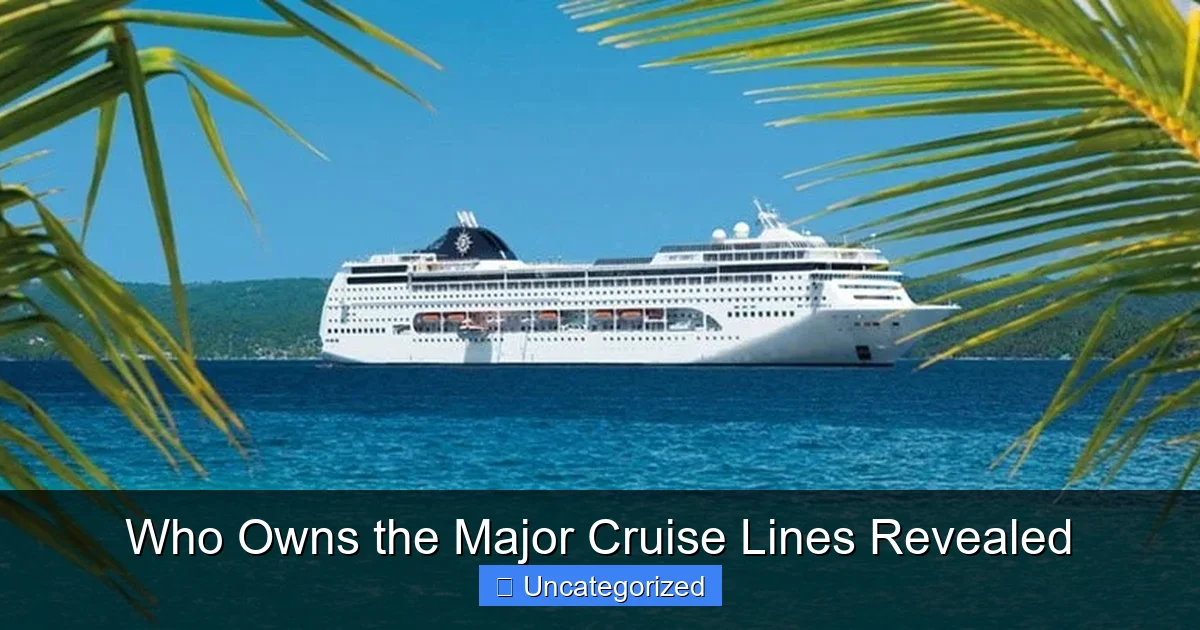
Featured image for who owns the major cruise lines
Image source: carpolaw.com
Carnival Corporation & plc and Royal Caribbean Group dominate the cruise industry, collectively owning over 70% of the world’s major cruise lines, including household names like Carnival, Princess, Royal Caribbean International, and Norwegian Cruise Line Holdings. This oligopoly controls global itineraries, pricing, and innovation, shaping the future of ocean travel through massive fleets, sustainability investments, and post-pandemic expansion strategies.
Key Takeaways
- Carnival Corporation dominates with 9 major cruise brands under its umbrella.
- Royal Caribbean Group owns 5 key lines, including Celebrity and Silversea.
- Norwegian Cruise Line Holdings operates 3 distinct brands across market segments.
- MSC Cruises remains family-owned, rapidly expanding its global fleet presence.
- Lindblad Expeditions partners with National Geographic for unique adventure cruises.
- Private equity firms increasingly invest in niche and luxury cruise operators.
📑 Table of Contents
- The Hidden Powers Behind the Decks: Who Really Owns the Major Cruise Lines?
- The Cruise Industry’s Corporate Landscape: A Global Powerhouse
- Carnival Corporation & plc: The World’s Largest Cruise Operator
- Royal Caribbean Group: Innovation and Luxury at Sea
- Norwegian Cruise Line Holdings: The Challenger Brand
- Other Notable Players and Niche Owners
- Data Table: Major Cruise Line Ownership (2024)
- Conclusion: The Power Behind the Propellers
The Hidden Powers Behind the Decks: Who Really Owns the Major Cruise Lines?
When you picture a luxury cruise vacation, you likely imagine shimmering ocean vistas, gourmet dining, Broadway-style shows, and endless onboard entertainment. But behind these glamorous facades lies a complex web of corporate ownership, global investments, and strategic branding that shapes your entire cruise experience. While cruise lines like Carnival Cruise Line, Royal Caribbean, and Norwegian Cruise Line are household names, few travelers realize that these brands are often subsidiaries of even larger parent companies—some with roots stretching back over a century, while others are modern financial conglomerates with diversified portfolios.
Understanding who owns the major cruise lines isn’t just a matter of corporate trivia—it’s essential for travelers who want to make informed decisions. The ownership structure influences everything from pricing strategies and onboard amenities to environmental policies and customer service standards. Whether you’re a first-time cruiser, a loyalty program member, or an investor eyeing the travel sector, knowing the corporate hierarchy can help you anticipate changes, evaluate brand consistency, and even predict future innovations. In this deep dive, we’ll pull back the curtain on the major players, reveal the parent companies steering the industry, and explore how ownership impacts your next vacation at sea.
The Cruise Industry’s Corporate Landscape: A Global Powerhouse
The modern cruise industry is a $150+ billion global enterprise, with over 30 million passengers annually before the pandemic and a steady recovery post-2022. But unlike airlines or hotel chains, cruise lines are often part of larger, diversified corporations that span multiple sectors—from real estate and entertainment to transportation and hospitality. This structure allows parent companies to leverage synergies, share resources, and weather economic downturns more effectively.
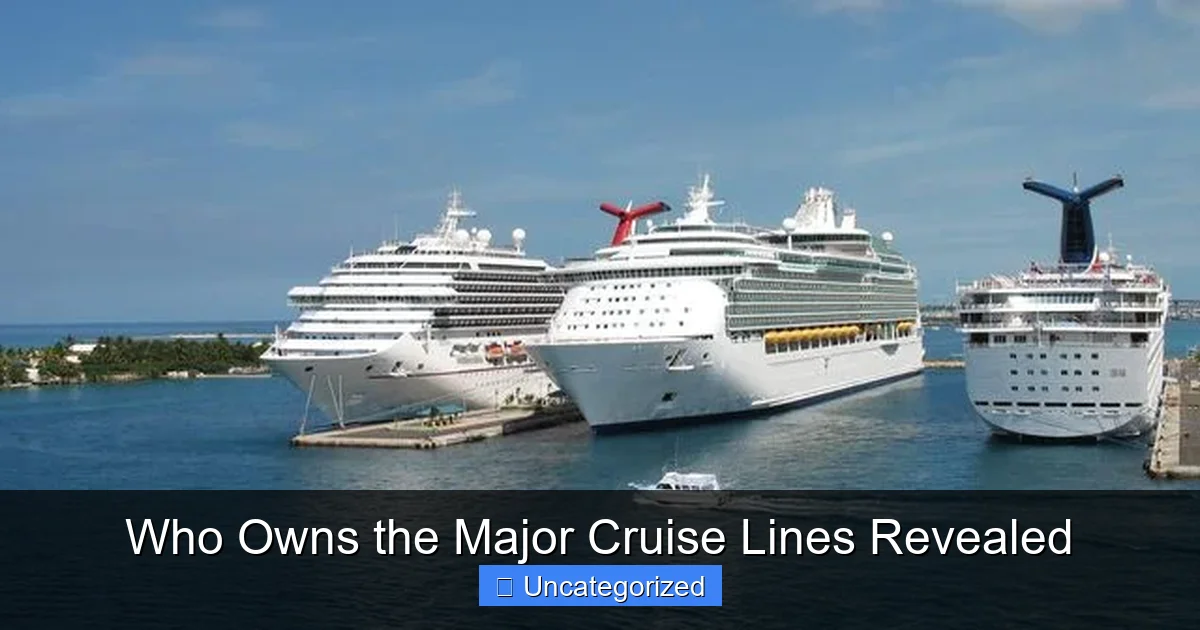
Visual guide about who owns the major cruise lines
Image source: cruise-panorama.com
The Rise of the Cruise Conglomerates
The consolidation of the cruise industry began in earnest in the 1990s, when rising capital costs and increasing competition pushed smaller brands into mergers and acquisitions. The most pivotal moment came in 1999, when Carnival Corporation & plc merged with P&O Princess Cruises to form the world’s largest cruise company. This set the stage for a wave of consolidation that continues today. Now, just a few parent companies control the majority of global cruise capacity, creating what industry analysts call an “oligopoly” of maritime hospitality.
Today, the industry is dominated by three main corporate groups:
- Carnival Corporation & plc – The world’s largest cruise operator by fleet size and revenue
- Royal Caribbean Group – A close second, known for innovation and luxury offerings
- Norwegian Cruise Line Holdings Ltd. – A publicly traded company with a growing luxury and expedition segment
These three parent companies collectively operate over 150 ships and serve more than 60% of the world’s cruise passengers. Their ownership models vary—Carnival is a dual-listed company (U.S. and UK), Royal Caribbean is publicly traded on the NYSE, and Norwegian is also NYSE-listed—but all are driven by shareholder value, global expansion, and brand differentiation.
Why Ownership Matters to Travelers
You might wonder: does it really matter who owns my cruise line? The answer is a resounding yes. Here’s why:
- Brand Consistency: Parent companies set overarching standards for service, safety, and guest experience. For example, Carnival’s “Fun Ships” philosophy applies across all its brands, from Carnival Cruise Line to Princess Cruises.
- Innovation and Technology: Parent companies invest heavily in R&D. Royal Caribbean Group’s development of Quantum-class ships with robotic bartenders and skydiving simulators was funded at the corporate level.
- Environmental and Sustainability Policies: Major parent companies are under increasing pressure to reduce emissions. Carnival Corporation’s $1 billion LNG (liquefied natural gas) initiative is a top-down strategy.
- Port Infrastructure and Real Estate: Many parent companies own private islands and port terminals, giving them control over the entire guest journey. Royal Caribbean Group owns CocoCay in the Bahamas, a key revenue driver.
Carnival Corporation & plc: The World’s Largest Cruise Operator
With a fleet of 90+ ships and 10 major brands, Carnival Corporation & plc is the undisputed leader in the cruise industry. Based in Miami, Florida, and Southampton, England, the company operates under a dual-listed structure, meaning it’s registered in both the U.S. and the UK, allowing it to access capital markets in both regions. In 2023, it reported annual revenue of $21.6 billion, making it the largest cruise operator by both fleet size and passenger volume.
Brands Under the Carnival Umbrella
Carnival’s brand portfolio is designed to serve every market segment, from budget-friendly to ultra-luxury:
- Carnival Cruise Line – The “Fun Ships” brand, targeting families and first-time cruisers
- Princess Cruises – Premium mid-tier brand with a strong presence in Alaska and Europe
- Holland America Line – Classic, elegant cruises with a focus on enrichment and cultural experiences
- Seabourn Cruise Line – Ultra-luxury, all-inclusive, small-ship experiences
- Cunard Line – Iconic transatlantic voyages and British heritage (think Queen Mary 2)
- Costa Cruises – Europe-focused, with a strong presence in Italy and the Mediterranean
- AIDA Cruises – Germany’s largest cruise line, with a vibrant, youth-oriented style
- P&O Cruises – UK-based, with two brands: P&O Cruises (for adults) and P&O Cruises Australia
- Carnival UK – Operates Cunard and P&O Cruises in the UK market
- Fathom – A now-defunct social impact brand (launched in 2016, discontinued in 2017)
This multi-brand strategy allows Carnival to capture diverse demographics and geographies. For example, AIDA Cruises appeals to German millennials with themed parties and casual dining, while Seabourn targets affluent retirees with butler service and fine dining.
Ownership and Financial Structure
Carnival Corporation & plc is publicly traded on both the New York Stock Exchange (ticker: CCL) and the London Stock Exchange (ticker: CCL). It’s a component of the S&P 500 and FTSE 100 indices. The company is led by CEO Josh Weinstein, who took over in 2022 after the retirement of long-time leader Arnold Donald.
Key Fact: Despite its size, Carnival faced unprecedented challenges during the pandemic. In 2020, it reported a $10.2 billion net loss—the largest in its history. However, it rebounded with a $1.2 billion profit in 2023, thanks to strong demand and cost-cutting measures.
Traveler Tip: If you’re loyal to a specific brand (e.g., Princess Cruises), check if it’s part of Carnival’s fleet. This can help you understand potential changes in service quality, pricing, or loyalty program integration.
Royal Caribbean Group: Innovation and Luxury at Sea
Headquartered in Miami, Royal Caribbean Group (NYSE: RCL) is the second-largest cruise company in the world, with 60+ ships across four major brands. Known for pushing the boundaries of ship design and onboard entertainment, Royal Caribbean has pioneered concepts like flowrider surfing simulators, robotics bars, and central park atriums—all funded and developed at the corporate level.
Brand Portfolio: From Family Fun to Ultra-Luxury
Royal Caribbean Group’s brands are strategically segmented to serve different traveler profiles:
- Royal Caribbean International – The flagship brand, known for massive ships (e.g., Symphony of the Seas, the world’s largest cruise ship) and family-friendly amenities
- Royal Caribbean UK – Operates in the UK market with tailored itineraries
- Silversea Cruises – Acquired in 2018, this ultra-luxury, all-inclusive brand features small ships (100–200 passengers) and high staff-to-guest ratios
- TUI Cruises – A 50/50 joint venture with German tourism giant TUI AG, targeting German-speaking markets with premium, European-style cruises
- Hapag-Lloyd Cruises – Acquired in 2019, this German luxury and expedition brand includes the Europa 2 and Hanseatic ships, focusing on cultural and polar voyages
- Pullmantur Cruises – A Spanish-based brand (now restructured) that previously focused on the Latin American market
One of Royal Caribbean’s most significant moves was the acquisition of Silversea, which gave it immediate access to the ultra-luxury market. In 2023, Silversea reported record bookings, with average prices exceeding $1,500 per passenger per day.
Corporate Strategy and Sustainability
Royal Caribbean Group is heavily invested in innovation and sustainability. Its Destination Net Zero initiative aims to achieve net-zero emissions by 2050. The company has already launched the first LNG-powered cruise ship, Icon of the Seas (2024), which reduces sulfur emissions by 99% and particulate matter by 85%.
The group also owns Perfect Day at CocoCay in the Bahamas, a private island with water parks, beaches, and zip lines. This destination alone generated over $200 million in revenue in 2023, highlighting the importance of owned real estate in the cruise business model.
Traveler Tip: If you’re considering a luxury or expedition cruise, Silversea and Hapag-Lloyd are excellent choices—but remember they’re backed by Royal Caribbean’s financial and technological resources, which can mean better itinerary planning and emergency response capabilities.
Norwegian Cruise Line Holdings: The Challenger Brand
Norwegian Cruise Line Holdings Ltd. (NYSE: NCLH) is the third major player in the industry, with 32 ships across three distinct brands. Founded in 1966 as Norwegian Caribbean Line, the company rebranded in 2010 to reflect its global ambitions. Today, it’s known for its “Freestyle Cruising” concept—no formal dress codes, flexible dining times, and a la carte pricing.
Three Brands, One Vision
NCLH’s brand structure is designed to offer a spectrum of experiences:
- Norwegian Cruise Line – The core brand, emphasizing freedom, variety, and value. Ships like Norwegian Encore feature go-kart tracks and Broadway shows
- Oceania Cruises – A premium brand focused on culinary excellence, enrichment, and destination immersion. Ships are smaller (600–1,200 passengers) and visit off-the-beaten-path ports
- Regent Seven Seas Cruises – All-inclusive luxury with butler service, free shore excursions, and spacious suites. Known as the “most inclusive luxury cruise line”
Oceania and Regent were acquired in 2014 and 2015, respectively, as part of NCLH’s strategy to move upmarket. These brands now contribute over 40% of the company’s revenue, despite having fewer ships.
Financial Health and Market Position
NCLH is publicly traded on the NYSE (ticker: NCLH) and is led by CEO Harry Sommer. The company faced significant financial strain during the pandemic but raised over $3 billion in equity and debt to survive. In 2023, it reported $8.5 billion in revenue and a net income of $1.1 billion.
One of NCLH’s strengths is its destination-focused marketing. Unlike Carnival and Royal Caribbean, which emphasize onboard entertainment, NCLH promotes “immersive travel” and authentic cultural experiences. This appeals to travelers seeking more than just a floating resort.
Traveler Tip: If you value flexibility and all-inclusive luxury, consider Regent Seven Seas. But remember, NCLH’s smaller fleet means fewer departure options and less bargaining power with ports—so book early for peak seasons.
Other Notable Players and Niche Owners
While the “Big Three” dominate, several other owners and niche players are worth noting:
MSC Cruises: The Fastest-Growing Brand
Owned by the Mediterranean Shipping Company (MSC)—a global shipping giant—MSC Cruises is the fastest-growing cruise line, with a fleet of 22 ships and plans to launch 10 more by 2027. Based in Geneva, MSC Cruises is known for European-style service, Italian cuisine, and aggressive expansion into the U.S. market. It’s not part of a traditional cruise conglomerate but benefits from MSC’s massive cargo shipping network, which provides logistical advantages.
Viking Cruises: Independent and Focused
Founded by Norwegian billionaire Torstein Hagen, Viking Cruises is privately owned and operates river, ocean, and expedition voyages. With 90+ river ships and 9 ocean ships (as of 2024), Viking targets affluent, older travelers with cultural, destination-focused itineraries. Its independence allows it to maintain consistent branding and avoid corporate restructuring.
Disney Cruise Line: The Entertainment Giant
Owned by The Walt Disney Company (NYSE: DIS), Disney Cruise Line is a niche brand that leverages Disney’s intellectual property. With 5 ships and 2 under construction, it focuses on families and character experiences. Unlike other cruise lines, Disney doesn’t rely on onboard gambling or alcohol sales—instead, it monetizes through premium pricing and exclusive merchandise.
Smaller and Expedition Operators
Brands like Lindblad Expeditions (owned by National Geographic), Quark Expeditions, and Hurtigruten (majority-owned by private equity firm TDR Capital) serve the adventure and polar cruise market. These are often owned by media companies, private equity, or sovereign wealth funds, reflecting the diversity of cruise line ownership beyond the Big Three.
Data Table: Major Cruise Line Ownership (2024)
| Parent Company | Brands Owned | Fleet Size (2024) | HQ Location | Public/Private | Key Differentiator |
|---|---|---|---|---|---|
| Carnival Corporation & plc | Carnival, Princess, Holland America, Seabourn, Cunard, Costa, AIDA, P&O, Fathom | 92 | Miami, FL / Southampton, UK | Public (NYSE: CCL, LSE: CCL) | Largest fleet, global reach |
| Royal Caribbean Group | Royal Caribbean, Silversea, TUI Cruises, Hapag-Lloyd, Pullmantur | 63 | Miami, FL | Public (NYSE: RCL) | Innovation, private destinations |
| Norwegian Cruise Line Holdings | Norwegian, Oceania, Regent Seven Seas | 32 | Miami, FL | Public (NYSE: NCLH) | Freestyle cruising, luxury focus |
| MSC Group | MSC Cruises | 22 | Geneva, Switzerland | Private | Fastest-growing, cargo synergy |
| The Walt Disney Company | Disney Cruise Line | 5 | Orlando, FL | Public (NYSE: DIS) | Family entertainment, IP-driven |
| Torstein Hagen (Private) | Viking Cruises | 99 (river + ocean) | Basel, Switzerland | Private | Cultural immersion, no casinos |
Conclusion: The Power Behind the Propellers
The cruise industry may sell dreams of freedom and adventure, but its ownership structure is anything but simple. From Carnival’s global empire to Royal Caribbean’s innovation labs and Norwegian’s luxury acquisitions, the parent companies behind the major cruise lines are the true architects of your vacation. Their decisions on branding, technology, sustainability, and real estate directly shape your onboard experience—whether you’re sipping a cocktail on a private island or attending a Broadway show at sea.
As a traveler, understanding this hierarchy empowers you to make smarter choices. Are you drawn to the consistency of a large conglomerate? Or do you prefer the independence and focus of a niche operator like Viking or Silversea? Do you value innovation (Royal Caribbean), value (Carnival), or all-inclusive luxury (Regent Seven Seas)? Knowing who owns your cruise line helps you align your expectations with reality.
Looking ahead, the industry is poised for transformation. Climate regulations, AI-driven personalization, and rising competition from private equity and media giants will test the resilience of these corporate structures. But one thing is certain: the owners of the major cruise lines will continue to steer the course—ensuring that, no matter who you sail with, there’s always a captain at the helm.
Frequently Asked Questions
Who owns the major cruise lines in the industry?
The major cruise lines are primarily owned by two large corporations: Carnival Corporation & plc and Royal Caribbean Group. These two companies operate well-known brands like Carnival Cruise Line, Princess Cruises, Royal Caribbean International, and Celebrity Cruises.
Is Norwegian Cruise Line owned by Carnival or Royal Caribbean?
No, Norwegian Cruise Line (NCL) is not owned by Carnival or Royal Caribbean. It is operated by Norwegian Cruise Line Holdings Ltd., an independent company that also owns Oceania Cruises and Regent Seven Seas Cruises.
What company owns the most cruise lines?
Carnival Corporation & plc owns the most cruise lines, with nine major brands under its umbrella, including Holland America Line, Costa Cruises, and P&O Cruises. This makes it the largest cruise company by fleet size and market share.
Are Disney Cruise Line and Royal Caribbean owned by the same parent company?
No, Disney Cruise Line is owned by The Walt Disney Company, while Royal Caribbean International is part of the Royal Caribbean Group. They operate independently, with distinct branding, themes, and target audiences.
Does the same company own Carnival Cruise Line and Princess Cruises?
Yes, both Carnival Cruise Line and Princess Cruises are owned by Carnival Corporation & plc. Despite shared ownership, each brand maintains its own unique onboard experience, itineraries, and customer base.
Who owns the major cruise lines besides the big three operators?
Beyond Carnival, Royal Caribbean, and Norwegian, other key players include MSC Cruises (privately owned by the Aponte family) and Viking Cruises (privately held). These companies have grown rapidly, offering luxury and niche-focused cruising options.