Featured image for who owns the carnival cruise line
Image source: oceanblissjourneys.com
Carnival Cruise Line is owned by Carnival Corporation & plc, the world’s largest cruise company. This global giant operates multiple brands across 100+ countries, with Carnival Cruise Line as its flagship, known for fun-focused, affordable voyages. The parent company’s dual UK-US structure (Carnival plc and Carnival Corp) ensures dominance in the cruise industry.
Key Takeaways
- Carnival Corporation owns Carnival Cruise Line, a publicly traded global leader in cruising.
- Founded in 1972, it operates 9 cruise brands across major markets worldwide.
- Shares trade on NYSE under ticker CCL, offering investor transparency.
- Headquartered in Miami, it controls 45% of the global cruise market share.
- Diverse fleet of 27 ships serves budget to premium travelers under Carnival brand.
📑 Table of Contents
- Introduction: The Vibrant Legacy of Carnival Cruise Line
- The Parent Company: Carnival Corporation & plc
- The Founders and Early Visionaries
- Current Leadership and Executive Team
- Global Portfolio: Carnival’s 11 Cruise Brands
- Ownership and Financial Performance: A Data-Driven Look
- Conclusion: The Power Behind the Fun
Introduction: The Vibrant Legacy of Carnival Cruise Line
Few names in the cruise industry evoke as much excitement, color, and celebration as Carnival Cruise Line. Known as the “Fun Ships” for decades, Carnival has become synonymous with affordable, high-energy vacations at sea—offering everything from Broadway-style shows to water parks, gourmet dining, and tropical destinations. Whether you’re a first-time cruiser or a seasoned traveler, the Carnival brand is hard to miss. But behind the dazzling deck parties, themed nights, and endless buffets lies a fascinating corporate story: Who actually owns Carnival Cruise Line?
While Carnival is a household name, its ownership structure is less widely understood. The company is not an independent entity but part of a much larger, globally diversified corporation with roots stretching back to the 1970s. Understanding who owns Carnival Cruise Line isn’t just a matter of corporate curiosity—it reveals the strategic decisions, financial resilience, and global reach that have allowed the brand to dominate the mid-tier cruise market. From its early days as a bold startup to its current status as the largest cruise operator in the world by passenger volume, Carnival’s ownership story is one of vision, adaptation, and long-term planning. This article dives deep into the ownership structure of Carnival Cruise Line, uncovering the parent company, key stakeholders, leadership, and the global ecosystem that keeps the fun afloat.
The Parent Company: Carnival Corporation & plc
The Dual-Listed Structure: A Unique Corporate Model
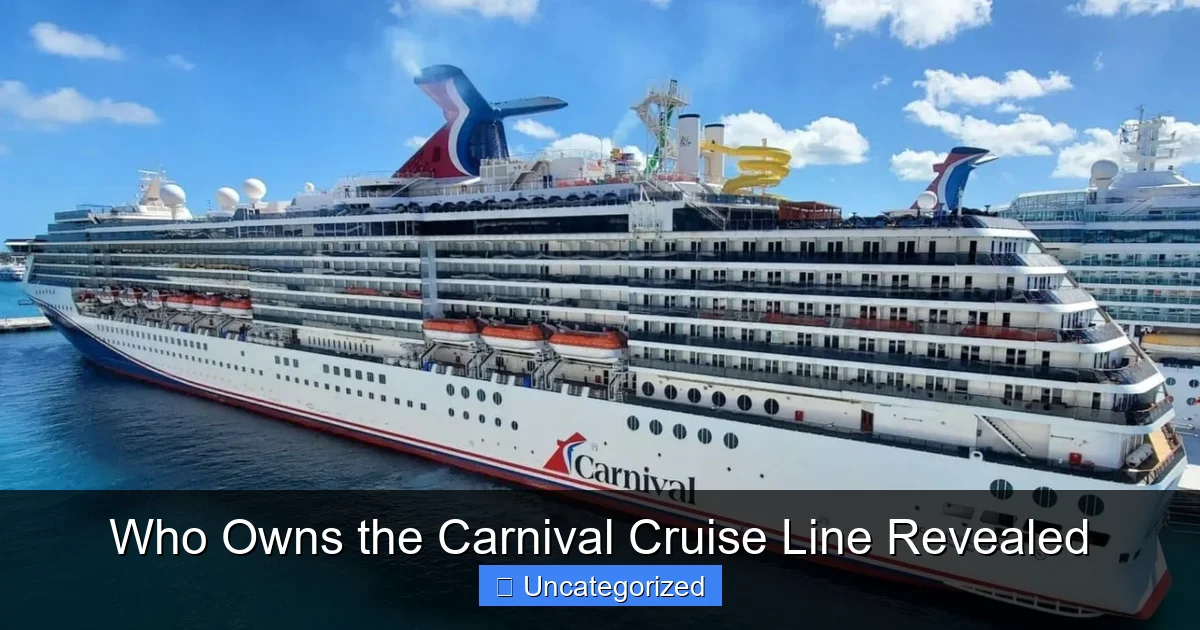
To answer the question “Who owns Carnival Cruise Line?”, we must first look at Carnival Corporation & plc. This is the ultimate parent company that owns and operates Carnival Cruise Line, along with ten other cruise brands across the globe. What makes Carnival Corporation & plc unique is its dual-listed company (DLC) structure—a rare arrangement that combines two legally separate entities operating as one economic unit.
Visual guide about who owns the carnival cruise line
Image source: cruisefever.net
- Carnival Corporation is incorporated in Panama and listed on the New York Stock Exchange (NYSE) under the ticker CCL.
- Carnival plc is incorporated in England and Wales and listed on the London Stock Exchange (LSE) under the ticker CCL (same symbol) and LSE: CCL.
This dual structure was established in 2003 through the merger of Carnival Corporation (founded in 1972) and P&O Princess Cruises (a British cruise giant). The goal was to create a unified global cruise company while maintaining separate legal entities to comply with international regulations and tax considerations. Despite the dual listing, shareholders of both companies vote as a single group on major decisions, and profits are shared equally. This model allows Carnival to access capital markets in both the U.S. and Europe while maintaining operational cohesion.
Why the DLC Structure Matters for Investors and Consumers
The dual-listed structure isn’t just a legal formality—it has real-world implications. For investors, it means dual exposure to two major financial markets, offering flexibility in trading and access to a broader investor base. For consumers, it ensures that Carnival Cruise Line operates under a stable, well-capitalized parent company with global reach. The DLC structure has helped Carnival navigate economic downturns, pandemics, and fuel price volatility more effectively than smaller, independent cruise lines.
For example, during the COVID-19 pandemic, Carnival Corporation & plc leveraged its dual-market access to raise over $12 billion in capital through stock offerings, debt issuance, and asset sales—critical funding that kept the entire group afloat. Smaller competitors without such diversified access to capital struggled or went bankrupt. This financial resilience is a direct result of the ownership structure and the deep pockets of the parent company.
The Founders and Early Visionaries
Ted Arison: The “Father of Modern Cruising”
No discussion of Carnival’s ownership is complete without acknowledging Ted Arison, the visionary founder who launched Carnival Cruise Line in 1972. Born in Tel Aviv, Arison moved to the U.S. in the 1960s and began his career in the shipping industry. His big break came when he acquired the aging cruise ship Mardi Gras for $6.5 million and transformed it into the first “Fun Ship”—a revolutionary concept at the time.
Arison’s idea was simple but powerful: Make cruising fun, affordable, and accessible to the average American family. He introduced casual dress codes, lively entertainment, and a party atmosphere that contrasted sharply with the formal, elitist image of traditional cruise lines. This strategy paid off. Within a decade, Carnival became the fastest-growing cruise company in the world, and by the 1990s, it was the largest.
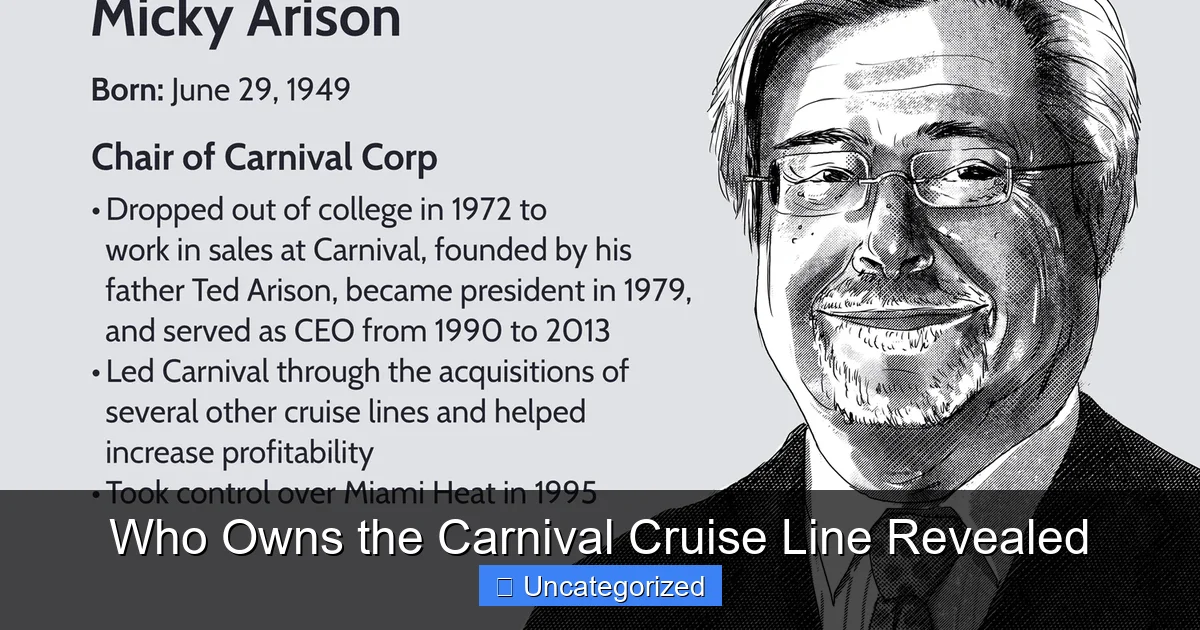
Arison’s legacy lives on not just in Carnival’s brand identity but in its ownership structure. He held a controlling stake in the company until his death in 1999. His son, Micky Arison, succeeded him as CEO and later as Chairman of the Board, a role he held until 2013. Micky Arison remains a significant shareholder and influential figure in the company’s strategic direction.
The Arison Family’s Ongoing Influence
While Carnival Corporation & plc is a publicly traded company, the Arison family still holds substantial influence. Through the Arison Group, a private holding company, the family owns a large block of Class B shares, which carry 10 votes per share compared to one vote for regular Class A shares. This dual-class structure gives the Arisons voting control over major corporate decisions, even though their economic ownership is around 20%.
This arrangement ensures that the company’s long-term vision—rooted in Ted Arison’s original philosophy—remains intact. For example, despite pressure to cut costs during the pandemic, the Arisons supported investments in new ships, sustainability initiatives, and guest experience upgrades, believing that long-term brand value outweighs short-term profits.
Current Leadership and Executive Team
Josh Weinstein: The New CEO Steering the Ship
In 2023, Josh Weinstein took the helm as President and CEO of Carnival Corporation & plc, succeeding Arnold W. Donald, who led the company for over a decade. Weinstein, a 20-year veteran of the company, previously served as Chief Operations Officer and was instrumental in navigating Carnival through the pandemic recovery.
Weinstein’s leadership marks a shift toward operational excellence, sustainability, and digital innovation. Under his direction, Carnival has:
- Accelerated the retirement of older, less efficient ships to reduce emissions.
- Launched new LNG-powered vessels like the Carnival Celebration and Mardi Gras.
- Expanded digital guest services, including AI-powered concierge and mobile check-in.
Weinstein’s background in finance and operations—not just cruising—reflects the parent company’s strategy to professionalize management while preserving the fun, customer-centric culture that defines Carnival Cruise Line.
The Board of Directors: A Global Governance Team
Carnival Corporation & plc’s Board of Directors includes 14 members, representing a mix of industry veterans, financial experts, and independent directors. Key figures include:
- Arnold W. Donald – Former CEO, now Chairman of the Board.
- Micky Arison – Former CEO, current Board member and major shareholder.
- Katie Lahey – Independent director with expertise in sustainability and corporate governance.
- John Parker – Former airline executive, bringing cross-industry logistics insight.
The board oversees strategic direction, risk management, and executive compensation. Their decisions directly impact Carnival Cruise Line’s operations, from fleet expansion to pricing strategies. For example, the board’s approval of a $2.5 billion investment in LNG-powered ships in 2021 signaled a long-term commitment to environmental responsibility—a move that has enhanced Carnival’s reputation with eco-conscious travelers.
Global Portfolio: Carnival’s 11 Cruise Brands
Beyond Carnival Cruise Line: A Diversified Fleet
One of the most compelling aspects of Carnival’s ownership structure is its multi-brand strategy. Carnival Corporation & plc owns 11 distinct cruise brands, each targeting different market segments and geographic regions. This diversification reduces risk and maximizes market coverage. Carnival Cruise Line is the flagship brand, but it operates alongside:
| Brand | Primary Market | Key Features | Notable Ships |
|---|---|---|---|
| Carnival Cruise Line | North America | Affordable, family-friendly, high-energy | Carnival Horizon, Mardi Gras |
| Princess Cruises | Global (Premium) | Scenic itineraries, Discovery at Sea programming | Regal Princess, Discovery Princess |
| Holland America Line | Global (Luxury) | Classic elegance, culinary excellence | Koningsdam, Nieuw Statendam |
| Seabourn | Ultra-Luxury | All-suite, all-inclusive, expedition cruises | Seabourn Ovation, Seabourn Venture |
| Costa Cruises | Europe (Italian style) | Lively, European flair, themed cruises | Costa Smeralda, Costa Toscana |
| AIDA Cruises | Germany | German-speaking, vibrant, casual | AIDAcosma, AIDAnova |
| Cunard | UK/Global | Transatlantic, formal, heritage-rich | Queen Mary 2, Queen Elizabeth |
| P&O Cruises (UK) | UK | British tradition, family-oriented | Arvia, Iona |
| P&O Cruises Australia | Australia/NZ | Local focus, relaxed vibe | Pacific Encounter, Pacific Adventure |
| Fathom (defunct) | Social impact | Voluntourism, cultural immersion | Adonia (reassigned) |
| Oceania Cruises | Premium | Gourmet, small-ship luxury | Insignia, Vista |
How Brand Diversification Supports Carnival Cruise Line
This diversified portfolio allows Carnival Cruise Line to thrive even when other markets face challenges. For example:
- When European demand dipped post-pandemic, Carnival Cruise Line absorbed some of the slack by offering transatlantic repositioning cruises at competitive prices.
- When luxury travelers returned faster, Seabourn and Oceania Cruises helped offset slower recovery in the mid-tier market.
- The shared infrastructure (ports, logistics, procurement) reduces costs across all brands, enabling Carnival Cruise Line to keep prices low while maintaining quality.
Moreover, the parent company’s global scale allows for cross-promotion. A passenger on a Cunard transatlantic crossing might be enticed to try a Carnival cruise for a Caribbean getaway—and vice versa. This ecosystem strengthens customer loyalty and lifetime value.
Ownership and Financial Performance: A Data-Driven Look
Public Shareholders and Institutional Investors
Carnival Corporation & plc is a publicly traded company, meaning ownership is distributed among millions of shareholders worldwide. As of 2023, the top institutional investors include:
- BlackRock – ~8.2% ownership
- The Vanguard Group – ~7.1% ownership
- State Street Corporation – ~4.3% ownership
- Capital Research & Management – ~3.9% ownership
These large asset managers hold significant sway over corporate governance. Their investment decisions are based on financial performance, sustainability metrics, and long-term growth potential. For Carnival Cruise Line, this means the parent company must maintain strong revenue, profitability, and brand reputation to attract and retain investors.
Financial Performance: Revenue, Profitability, and Growth
Carnival Corporation & plc’s financial health directly impacts Carnival Cruise Line. Here’s a snapshot of key metrics (2023 fiscal year):
| Metric | Value | Insight |
|---|---|---|
| Total Revenue | $21.6 billion | Up 70% from 2022, nearing pre-pandemic levels |
| Net Income (Loss) | ($74) million | Near breakeven; strong recovery in bookings |
| Carnival Cruise Line Revenue Share | ~32% of total | Largest single contributor to group revenue |
| Fleet Size | 90+ ships (across all brands) | Includes 27 Carnival Cruise Line vessels |
| Passenger Capacity | Over 500,000 berths | World’s largest cruise operator by volume |
| Debt Level | $30.1 billion | High but manageable; refinancing ongoing |
Despite the pandemic-induced losses, Carnival Cruise Line has seen a strong rebound in bookings, with 2024 and 2025 sailings selling out faster than expected. The parent company’s ability to raise capital and manage debt has been crucial. For example, Carnival issued new shares and convertible notes to reduce leverage, while also selling older ships to generate cash flow.
Tips for Consumers: What Ownership Means for Your Cruise
Understanding Carnival’s ownership can help you make smarter travel decisions:
- Stability: As part of a global giant, Carnival Cruise Line is less likely to face sudden closures or service cuts.
- Innovation: The parent company invests in new ships, technology, and sustainability—benefits you’ll see on board.
- Value: Shared resources across brands help keep prices competitive without sacrificing quality.
- Flexibility: If a Carnival cruise is canceled, you may be offered alternatives on sister brands like Princess or Holland America.
Conclusion: The Power Behind the Fun
So, who owns the Carnival Cruise Line? The answer is both simple and complex: Carnival Cruise Line is owned by Carnival Corporation & plc, a dual-listed global cruise giant with roots in the vision of founder Ted Arison, stewardship by the Arison family, and leadership by a professional executive team. This ownership structure—spanning public shareholders, institutional investors, and a diversified portfolio of brands—provides the financial strength, operational scale, and long-term vision that keep the “Fun Ships” sailing.
From its innovative dual-listed model to its multi-brand strategy, Carnival’s ownership is a masterclass in corporate resilience and adaptability. Whether you’re enjoying a poolside cocktail on the Carnival Breeze or booking a themed cruise for your family, you’re experiencing the result of decades of strategic planning, risk management, and customer-centric innovation—all made possible by the robust ownership framework behind the scenes.
As Carnival continues to invest in LNG-powered ships, digital guest experiences, and sustainable tourism, its ownership structure will remain a key driver of success. The next time you step aboard a Carnival Cruise Line ship, remember: the fun isn’t just in the shows, the food, or the destinations—it’s also in the powerful, well-oiled machine that makes it all possible.
Frequently Asked Questions
Who owns the Carnival Cruise Line?
Carnival Cruise Line is owned by Carnival Corporation & plc, the world’s largest cruise company. The brand operates as a subsidiary under this parent company, which trades on both the NYSE and London Stock Exchange.
Is Carnival Cruise Line part of a larger corporation?
Yes, Carnival Cruise Line is one of 10 global cruise brands owned by Carnival Corporation, including Princess Cruises, Holland America Line, and Costa Cruises. This structure allows shared resources while maintaining distinct brand identities.
Who founded Carnival Cruise Line and who runs it now?
Founded in 1972 by Ted Arison, the line is now led by CEO Josh Weinstein under Carnival Corporation. The Arison family remains a major shareholder, maintaining legacy influence over the brand’s operations.
Does Carnival Corporation own the Carnival Cruise Line exclusively?
Yes, the parent company Carnival Corporation fully owns the Carnival Cruise Line brand. However, it licenses the name to other operators in rare cases, like Costa Cruises’ “Carnival by Costa” in China.
Are Carnival Cruise Line and Carnival Corporation the same?
No, Carnival Cruise Line is the consumer-facing brand, while Carnival Corporation is the corporate entity that owns it. The corporation oversees strategy, while the line handles ship operations and guest experiences.
What countries is Carnival Cruise Line owned by?
Carnival Cruise Line’s parent company, Carnival Corporation, is dual-headquartered in the U.S. (Miami) and the UK (Southampton). The company operates globally but is incorporated as a British-American entity.