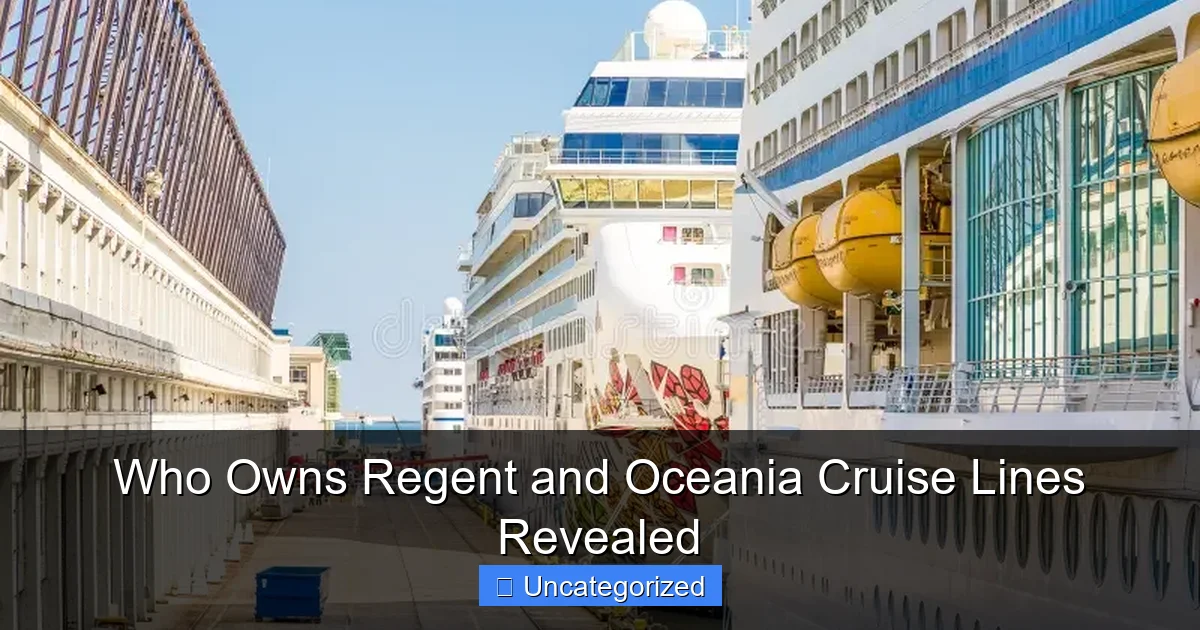
Featured image for who owns regent and oceania cruise lines
Image source: thumbs.dreamstime.com
Regent Seven Seas Cruises and Oceania Cruises are both owned by Norwegian Cruise Line Holdings (NCLH), a global leader in the cruise industry. This powerhouse parent company operates the trio of Regent, Oceania, and Norwegian Cruise Line, leveraging their luxury and premium niches to dominate high-end travel markets. The acquisition solidifies NCLH’s strategy of catering to discerning travelers with all-inclusive, destination-focused voyages.
Key Takeaways
- Regent and Oceania are owned by: Norwegian Cruise Line Holdings, a global cruise operator.
- Luxury focus: Both brands deliver premium experiences under NCLH’s upscale portfolio.
- Shared leadership: Same parent ensures aligned strategies and operational synergies.
- Diverse offerings: Oceania caters to mid-luxury; Regent targets ultra-luxury travelers.
- Financial stability: Backed by NCLH’s resources for consistent service and innovation.
📑 Table of Contents
- Who Owns Regent and Oceania Cruise Lines Revealed
- The Parent Company: Norwegian Cruise Line Holdings Ltd.
- The History and Evolution of Oceania Cruises
- The Story of Regent Seven Seas Cruises: From Niche to All-Inclusive Leader
- How Shared Ownership Shapes the Cruise Experience
- Key Data: Fleet, Market Share, and Ownership Structure
- Conclusion: The Future of Regent and Oceania Under NCLH
Who Owns Regent and Oceania Cruise Lines Revealed
When it comes to luxury cruising, few names stand out as prominently as Regent Seven Seas Cruises and Oceania Cruises. These two brands have built reputations for offering all-inclusive, high-end experiences with a focus on fine dining, spacious accommodations, and immersive destinations. But behind the polished veneer of these cruise lines lies a complex corporate structure that often leaves travelers wondering: Who really owns Regent and Oceania Cruise Lines? The answer isn’t as straightforward as it might seem, especially given their shared ownership and intertwined history.
Understanding the ownership of these luxury cruise brands isn’t just a matter of trivia—it has real implications for travelers. From the quality of onboard experiences to the consistency of service, the parent company plays a pivotal role in shaping the brand’s identity, investment in new ships, and long-term strategy. Whether you’re a seasoned cruiser planning your next voyage or a first-time luxury traveler comparing options, knowing who owns these lines can help you make informed decisions. In this comprehensive guide, we’ll peel back the layers of corporate ownership, explore the history of both brands, and examine how their shared parent company influences everything from itineraries to sustainability initiatives.
The Parent Company: Norwegian Cruise Line Holdings Ltd.
The Power Behind the Luxury Brands
At the top of the ownership hierarchy for both Regent Seven Seas Cruises and Oceania Cruises is Norwegian Cruise Line Holdings Ltd. (NCLH), one of the world’s leading global cruise operators. Headquartered in Miami, Florida, NCLH trades on the New York Stock Exchange under the ticker symbol NCLH and is a publicly traded company. It operates a diversified portfolio of three distinct cruise brands: Norwegian Cruise Line (the mass-market, freestyle cruising brand), Oceania Cruises, and Regent Seven Seas Cruises. While each brand serves a different market segment, they are all under the same corporate umbrella, allowing for shared resources, centralized management, and strategic synergies.

Visual guide about who owns regent and oceania cruise lines
Image source: thumbs.dreamstime.com
NCLH was formed in 2013 through the merger of Norwegian Cruise Line and Apollo Global Management’s cruise investments, which included Oceania and Regent at the time. This consolidation created a powerhouse in the cruise industry, giving the company the ability to leverage economies of scale while maintaining brand differentiation. For example, while Norwegian Cruise Line targets a younger, more casual demographic with its “freestyle” dining and entertainment, Oceania and Regent cater to affluent travelers seeking refined, destination-focused voyages with all-inclusive pricing.
Strategic Advantages of Shared Ownership
Being part of NCLH provides both Regent and Oceania with significant strategic advantages:
- Financial Stability: As a publicly traded company, NCLH has access to capital markets, enabling it to fund new ship builds, refurbishments, and marketing campaigns. For instance, the construction of Regent Seven Seas Grandeur (launched in 2023) and Oceania Vista (launched in 2023) was backed by NCLH’s balance sheet and investor confidence.
- Shared Infrastructure: NCLH manages centralized functions such as procurement, IT systems, human resources, and environmental compliance, reducing operational costs and ensuring consistency across brands.
- Cross-Brand Innovation: Best practices in sustainability, guest experience, and digital engagement can be shared. For example, the implementation of NCLH’s “Sail Safe” health protocols during the pandemic was rolled out across all three brands.
- Global Distribution Network: NCLH’s extensive sales and marketing reach—especially in North America and Europe—helps Regent and Oceania attract international clientele.
Despite these shared benefits, each brand maintains its own leadership team, brand identity, and customer experience. This balance between corporate synergy and brand autonomy is key to NCLH’s success in the luxury cruise market.
The History and Evolution of Oceania Cruises
Founding and Early Growth
Oceania Cruises was founded in 2002 by cruise industry veterans Frank Del Rio, Joe Watters, and Bruce Nierenberg. The brand was launched with a clear vision: to create a luxury cruise experience that emphasized destination immersion and culinary excellence, without the formality and high price tags of traditional luxury lines like Silversea or Crystal. The first ship, Insignia, was acquired from Renaissance Cruises and underwent a $50 million refurbishment to meet Oceania’s new standards.
From the start, Oceania positioned itself as a “premium” luxury brand—offering a more accessible entry point into luxury cruising compared to Regent. Its ships, while smaller than mass-market vessels, carried around 684 to 1,250 passengers, striking a balance between intimacy and comfort. The brand quickly gained a following among travelers who wanted gourmet dining (featuring partnerships with celebrity chefs like Jacques Pépin), longer port stays, and curated shore excursions.
Acquisition by Apollo Global Management and Transition to NCLH
In 2007, Oceania Cruises was acquired by Apollo Global Management, a private equity firm known for its investments in the travel and hospitality sectors. Apollo also owned Prestige Cruise Holdings, which included Regent Seven Seas Cruises at the time. This dual ownership allowed Apollo to consolidate its luxury cruise assets and streamline operations.
Under Apollo’s ownership, Oceania expanded its fleet with the acquisition and renovation of Regatta (2008) and Nautica (2009). The brand also introduced the Marina class of ships, with Marina (2011) and Riviera (2012), which featured modern design, expanded dining options (including the signature Jacques and Red Ginger restaurants), and larger staterooms. These ships were among the first in the industry to offer all-suite accommodations with private balconies—a feature that later became standard across the brand.
When Apollo merged its cruise holdings with Norwegian Cruise Line in 2013 to form Norwegian Cruise Line Holdings Ltd., Oceania Cruises officially became part of the NCLH family. This transition marked a new era of growth and investment, with NCLH committing to further fleet expansion and sustainability initiatives.
Recent Developments and the Launch of Vista
In 2023, Oceania Cruises launched its first newbuild in over a decade: the Oceania Vista, a 1,200-passenger ship designed to redefine the brand’s luxury standards. The Vista features:
- A new “OceaniaNEXT” design concept with modern interiors and expanded public spaces
- Eight specialty dining venues, including the debut of Crudo, a raw bar and seafood restaurant
- Enhanced wellness offerings, including a larger spa and fitness center
- Advanced sustainability features, such as shore power connectivity and waste heat recovery systems
The launch of Vista was funded and managed under NCLH’s corporate strategy, highlighting how parent company ownership enables large-scale investments while preserving brand identity. A second ship, Oceania Allura, is scheduled for delivery in 2025, further expanding the fleet and reinforcing Oceania’s position in the premium luxury market.
The Story of Regent Seven Seas Cruises: From Niche to All-Inclusive Leader
Origins and Early Challenges
Regent Seven Seas Cruises traces its roots back to 1990 with the founding of Radisson Seven Seas Cruises, a joint venture between Radisson Hotels and Seven Seas Cruises. The brand initially operated smaller ships like the Radisson Diamond and Seven Seas Navigator, targeting affluent travelers with a boutique, all-inclusive approach. However, the brand struggled with consistency and brand recognition in its early years.
In 2001, Radisson Seven Seas Cruises was acquired by Prestige Cruise Holdings, a company backed by Apollo Global Management. This acquisition marked a turning point. Prestige rebranded the company as Regent Seven Seas Cruises in 2003, aiming to position it as the most luxurious all-inclusive cruise line in the world. The new name paid homage to the historic Regent ships of the 1970s, evoking a sense of timeless elegance.
The All-Inclusive Revolution
Under Prestige and later Apollo, Regent pioneered a true all-inclusive model that set it apart from competitors. Unlike other luxury lines that charge extra for excursions, premium beverages, and gratuities, Regent includes:
- All meals and dining (including specialty restaurants)
- Unlimited premium wine, beer, and spirits
- Pre-paid gratuities
- Round-trip airfare (from select gateways in North America and Europe)
- Shore excursions (one per port, with options to purchase additional tours)
- Business-class airfare on select sailings
This model resonated with luxury travelers who valued convenience and transparency. The brand’s slogan, “The Most All-Inclusive Luxury Vacation Experience”, became a cornerstone of its marketing strategy. Regent also invested heavily in ship refurbishments, transforming the Seven Seas Mariner (2001) and Seven Seas Voyager (2003) into floating luxury resorts.
Acquisition by NCLH and Fleet Modernization
When Apollo merged Prestige Cruise Holdings with Norwegian Cruise Line in 2013, Regent Seven Seas Cruises became part of NCLH. The transition brought new resources and a renewed focus on innovation. In 2016, Regent launched the Seven Seas Explorer, a 750-passenger ship billed as “the most luxurious ship ever built.” The Explorer featured:
- Spacious suites (average 400+ square feet)
- All-suite, all-balcony accommodations
- The Constellation Theater, with Broadway-style productions
- The Regent Spa, a two-story wellness retreat
Following the success of the Explorer, NCLH commissioned two new ships: the Seven Seas Splendor (2020) and Seven Seas Grandeur (2023). These vessels feature even more refined interiors, expanded dining options, and advanced environmental technologies, such as hybrid scrubbers and LED lighting. The construction of these ships—each costing over $500 million—was made possible by NCLH’s financial backing and long-term strategic planning.
How Shared Ownership Shapes the Cruise Experience
Brand Differentiation Within a Unified Structure
One of the most impressive aspects of NCLH’s ownership model is its ability to maintain brand differentiation while leveraging shared resources. While Regent and Oceania are both luxury brands under the same parent, they target slightly different audiences:
- Regent Seven Seas Cruises appeals to travelers seeking the ultimate all-inclusive experience, with a focus on spacious suites, personalized service, and comprehensive inclusions (including airfare).
- Oceania Cruises targets culinary and destination-focused travelers, offering more intimate ships, gourmet dining, and longer port stays (often overnight or multi-day).
For example, a Regent cruise might include a complimentary business-class flight from New York to Rome, while an Oceania voyage might feature a private dinner at a Michelin-starred restaurant in Santorini as part of a curated shore excursion. These distinctions are carefully maintained by each brand’s management team, ensuring that the guest experience remains unique.
Shared Innovation and Sustainability Initiatives
Despite their differences, Regent and Oceania benefit from NCLH’s centralized innovation and sustainability programs. Key initiatives include:
- Environmental Stewardship: NCLH has committed to reducing greenhouse gas emissions by 35% by 2030 (compared to 2019). Both Regent and Oceania ships are equipped with advanced wastewater treatment systems, LNG-ready engines, and shore power connectivity.
- Digital Transformation: NCLH’s “Sail & Sustain” app allows guests to track their carbon footprint, access digital boarding passes, and receive personalized excursion recommendations. This tech is used across all three brands.
- Health and Safety: During the pandemic, NCLH implemented unified health protocols, including mandatory vaccination, enhanced cleaning, and contactless check-in—measures that were rolled out consistently across Regent, Oceania, and Norwegian.
These shared initiatives not only improve operational efficiency but also enhance the guest experience by ensuring consistency in service quality and safety standards.
Marketing and Customer Loyalty Programs
NCLH operates a unified loyalty program called Latitudes Rewards, which allows guests to earn and redeem points across all three brands. However, each brand maintains its own loyalty tier structure and perks. For example:
- Regent’s Seven Seas Society offers benefits like priority boarding, complimentary upgrades, and exclusive events.
- Oceania’s Oceania Club provides early access to new itineraries, onboard credits, and invitations to culinary experiences.
This dual approach allows NCLH to foster cross-brand loyalty while preserving brand-specific rewards that resonate with each audience.
Key Data: Fleet, Market Share, and Ownership Structure
Fleet Overview and Market Position
Below is a data table summarizing the current fleets, passenger capacities, and key features of Regent and Oceania Cruises under NCLH ownership:
| Brand | Ship Name | Passenger Capacity | Year Built/Refurbished | Key Features | Ownership |
|---|---|---|---|---|---|
| Regent Seven Seas Cruises | Seven Seas Grandeur | 750 | 2023 | All-suite, all-balcony, Constellation Theater, Regent Spa | NCLH |
| Seven Seas Splendor | 750 | 2020 | All-inclusive, business-class air, gourmet dining | NCLH | |
| Seven Seas Explorer | 750 | 2016 | “Most luxurious ship ever built,” all-suite | NCLH | |
| Seven Seas Voyager | 700 | 2003 (refurbished 2016) | All-inclusive, spacious suites | NCLH | |
| Seven Seas Mariner | 700 | 2001 (refurbished 2018) | First all-suite, all-balcony ship | NCLH | |
| Oceania Cruises | Oceania Vista | 1,200 | 2023 | OceaniaNEXT design, 8 dining venues, wellness focus | NCLH |
| Oceania Allura | 1,200 | 2025 (planned) | Second newbuild, expanded public spaces | NCLH | |
| Oceania Marina | 1,250 | 2011 | Jacques, Red Ginger, all-suite with balconies | NCLH | |
| Oceania Riviera | 1,250 | 2012 | Similar to Marina, enhanced spa | NCLH | |
| Oceania Insignia | 684 | 1998 (refurbished 2014, 2022) | Intimate, destination-focused | NCLH |
Source: Norwegian Cruise Line Holdings Ltd. Annual Reports (2022–2023)
Market Share and Financial Performance
As of 2023, NCLH holds approximately 12% of the global cruise market, with Regent and Oceania contributing around 20% of the company’s total capacity. In 2022, NCLH reported revenue of $4.8 billion, with luxury brands (Oceania and Regent) accounting for 35% of that figure. This highlights the growing importance of the luxury segment within the company’s portfolio.
Key financial metrics for NCLH (2022):
- Total Revenue: $4.8 billion
- Net Income: $1.1 billion (post-pandemic recovery)
- Luxury Segment Revenue: $1.68 billion
- Passenger Yield (luxury): $380 per passenger per day
These figures demonstrate the profitability and strategic value of Regent and Oceania within NCLH’s business model.
Conclusion: The Future of Regent and Oceania Under NCLH
The ownership of Regent Seven Seas Cruises and Oceania Cruises by Norwegian Cruise Line Holdings Ltd. is a masterclass in strategic brand management. By combining the financial strength and operational efficiency of a global cruise giant with the autonomy and brand integrity of two distinct luxury lines, NCLH has created a winning formula. Travelers benefit from consistent quality, innovative ships, and a growing commitment to sustainability—all while enjoying the unique personalities of each brand.
Looking ahead, NCLH’s investment in new ships like Oceania Allura and Regent Seven Seas Grandeur signals a continued focus on the luxury market. The company is also exploring new itineraries, enhanced digital experiences, and partnerships with local communities to deepen destination immersion. For cruisers, this means even more choices, better value, and unforgettable journeys.
Whether you’re drawn to Regent’s all-inclusive elegance or Oceania’s culinary and cultural adventures, knowing that both are backed by a financially stable, forward-thinking parent company should give you confidence in your next cruise booking. The future of luxury cruising is bright—and it’s owned by NCLH.
Frequently Asked Questions
Who owns Regent and Oceania Cruise Lines?
Regent Seven Seas Cruises and Oceania Cruises are both owned by Norwegian Cruise Line Holdings Ltd. (NCLH), a leading global cruise company. The parent company acquired both luxury brands to expand its premium and upper-premium market offerings.
Are Regent and Oceania Cruise Lines part of the same parent company?
Yes, both Regent Seven Seas Cruises and Oceania Cruises operate under Norwegian Cruise Line Holdings, alongside Norwegian Cruise Line. This structure allows NCLH to serve distinct luxury and upscale travel segments while maintaining separate brand identities.
What company owns Oceania Cruises?
Oceania Cruises is owned by Norwegian Cruise Line Holdings Ltd., which purchased the brand in 2007. The company focuses on mid-sized, upper-premium ships with destination-rich itineraries.
Is Regent Seven Seas Cruises owned by Royal Caribbean?
No, Regent Seven Seas Cruises is not owned by Royal Caribbean. It is part of Norwegian Cruise Line Holdings, which also owns Oceania Cruises and Norwegian Cruise Line. Royal Caribbean owns its own portfolio of brands, including Celebrity Cruises.
Who is the CEO of Regent and Oceania Cruise Lines?
Both Regent and Oceania Cruises are led by CEO Frank Del Rio, who also heads Norwegian Cruise Line Holdings. He has played a key role in growing the company’s luxury cruise division.
How does Norwegian Cruise Line Holdings operate Regent and Oceania differently?
While both brands fall under Norwegian Cruise Line Holdings, they maintain separate operations to preserve their unique identities. Regent focuses on all-inclusive luxury, while Oceania emphasizes destination immersion and culinary excellence in the upper-premium segment.