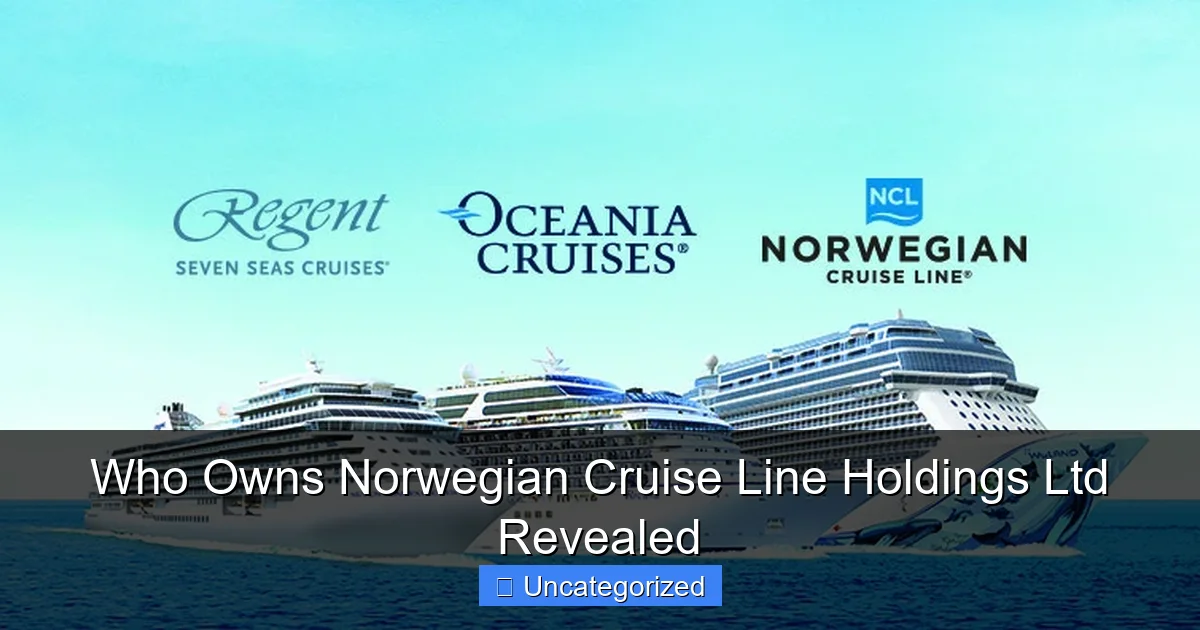
Featured image for who owns norwegian cruise line holdings ltd
Image source: annualreports.com
Norwegian Cruise Line Holdings Ltd (NCLH) is majority-owned by institutional investors and public shareholders, with top stakeholders including The Vanguard Group, BlackRock, and Capital International Investors. This publicly traded company (NYSE: NCLH) has no single individual owner, reflecting a diversified ownership structure driven by large financial firms and thousands of retail investors worldwide.
Key Takeaways
- Majority ownership: Public shareholders hold most of Norwegian Cruise Line Holdings Ltd.
- Institutional investors: Top firms like Vanguard and BlackRock own significant stakes.
- Insider ownership: Executives and directors hold a small but strategic portion.
- Private equity: Apollo Global Management was a major past stakeholder.
- Global reach: Ownership spans U.S., Europe, and Asia, reflecting international interest.
📑 Table of Contents
- Who Owns Norwegian Cruise Line Holdings Ltd Revealed
- The Public Ownership Structure of NCLH
- Institutional Investors: The Power Behind the Helm
- Insider Ownership: Executives and Board Members
- Private Equity and Founders: The Legacy Stakeholders
- International and Strategic Ownership Interests
- Ownership Trends and Future Outlook
- Conclusion
Who Owns Norwegian Cruise Line Holdings Ltd Revealed
The cruise industry is a fascinating world where luxury, adventure, and business intersect. Among the major players in this global industry, Norwegian Cruise Line Holdings Ltd (NCLH) stands out for its innovative approach, diverse fleet, and commitment to delivering exceptional guest experiences. From its humble beginnings as a single-ship operator in the 1960s to becoming a publicly traded global powerhouse, NCLH has grown into one of the top cruise companies in the world. But behind the scenes of its dazzling ocean liners and exotic destinations lies a complex web of ownership, corporate governance, and strategic partnerships. Who truly owns Norwegian Cruise Line Holdings Ltd? This question isn’t just about shareholders—it’s about the visionaries, institutional investors, and financial structures that shape the company’s future.
Understanding ownership of NCLH isn’t merely a matter of checking a stock ticker. It involves unraveling layers of institutional investment, insider holdings, private equity influences, and even international stakeholders. As the cruise industry rebounds post-pandemic and faces new challenges like sustainability regulations and shifting consumer preferences, knowing who owns NCLH provides insight into its strategic direction. Whether you’re an investor, a travel enthusiast, or someone curious about how major corporations are structured, this deep dive into the ownership of Norwegian Cruise Line Holdings Ltd will reveal the key individuals, firms, and forces steering the company through the tides of global commerce.
The Public Ownership Structure of NCLH
Shares and Stock Exchange Listing
Norwegian Cruise Line Holdings Ltd is a publicly traded company listed on the New York Stock Exchange (NYSE) under the ticker symbol NCLH. This means that ownership is distributed among millions of shareholders worldwide who purchase and trade shares through brokerage platforms. The company went public in 2013 with an Initial Public Offering (IPO), marking a pivotal moment in its corporate evolution. Prior to the IPO, NCLH was primarily owned by private equity firms and founders. The transition to public ownership opened the door for retail investors, mutual funds, pension plans, and institutional investors to become stakeholders.
Visual guide about who owns norwegian cruise line holdings ltd
Image source: d2q79iu7y748jz.cloudfront.net
As of 2023, NCLH has approximately 420 million outstanding shares, with daily trading volume averaging between 10 to 15 million shares. This liquidity reflects strong market interest and confidence in the company’s recovery and growth prospects. Public ownership allows NCLH to raise capital for new ship builds, debt refinancing, and expansion into new markets—critical elements in an industry requiring massive upfront investment.
Shareholder Categories and Their Influence
Ownership of NCLH can be broken down into three main categories:
- Retail Investors: Individual investors who buy shares through platforms like Robinhood, Fidelity, or E*TRADE. While they collectively hold a significant portion, their influence is typically limited due to fragmented holdings.
- Institutional Investors: These include mutual funds, hedge funds, pension funds, and asset management firms. They often hold large blocks of shares and wield considerable voting power in corporate decisions.
- Insiders: Company executives, board members, and early investors who hold shares directly tied to the company’s performance. Their stakes align their interests with long-term success.
For example, if a major institutional investor like Vanguard or BlackRock increases its stake in NCLH, it signals confidence in the company’s management and future profitability. Conversely, large-scale selling by insiders may raise red flags for analysts and other shareholders.
How to Track Ownership Changes
Investors and analysts monitor ownership changes through regulatory filings, particularly SEC Form 13F (filed quarterly by institutional investors managing over $100 million in assets) and Form 4 (filed by insiders when they buy or sell shares). These documents provide real-time insight into shifts in ownership and sentiment.
Tip: To stay updated on NCLH ownership, regularly check the company’s investor relations website and use financial data platforms like Bloomberg, Yahoo Finance, or Morningstar. Look for trends—such as consistent buying by a top fund—which may indicate bullish expectations.
Institutional Investors: The Power Behind the Helm
Top Institutional Shareholders
Institutional investors are the backbone of NCLH’s ownership structure. As of the latest SEC filings (Q2 2023), the top five institutional holders include:
- The Vanguard Group: Holds over 45 million shares (~10.7% of total shares), making it the largest single shareholder.
- BlackRock, Inc.: Owns approximately 38 million shares (~9.1%), leveraging its vast network of index funds and ETFs.
- Capital Research Global Investors: Controls around 25 million shares (~6.0%), primarily through its American Funds family.
- State Street Corporation: Holds 18 million shares (~4.3%), often representing holdings in S&P 500 index funds.
- Fidelity Management & Research: Maintains a position of 15 million shares (~3.6%), actively managing both growth and income strategies.
These firms don’t just passively hold shares—they actively engage with management. For instance, Vanguard has historically advocated for environmental, social, and governance (ESG) improvements, pushing cruise lines to reduce emissions and improve labor practices.
Why Institutional Investors Matter
Institutional investors play a crucial role beyond capital provision. They influence:
- Board Composition: By voting on board nominees during annual meetings, institutions help shape leadership.
- Strategic Direction: Through shareholder proposals, they can advocate for fleet modernization, digital transformation, or sustainability initiatives.
- Market Perception: A strong institutional presence often boosts investor confidence, reducing volatility and lowering borrowing costs.
Consider the example of NCLH’s decision to order new LNG-powered ships. Institutional investors, particularly those with ESG mandates, likely supported this move not only for its environmental benefits but also because it positions the company competitively in a carbon-conscious future.
Activist Investors and Their Role
While most institutional investors take a passive approach, some adopt activist stances. In 2020, during the pandemic downturn, hedge fund Pershing Square Capital Management (led by Bill Ackman) briefly became a major NCLH shareholder, acquiring a 10% stake. Ackman pushed for aggressive cost-cutting and liquidity measures, which contributed to NCLH’s survival during the industry’s darkest days.
Tip: When a well-known activist investor enters the picture, it often signals either undervaluation or a need for strategic overhaul. Watch for press releases and SEC filings to anticipate potential shifts in corporate strategy.
Insider Ownership: Executives and Board Members
Executive Shareholdings
Insider ownership is a key indicator of alignment between leadership and shareholders. When executives own significant shares, they have a vested interest in the company’s long-term performance. At NCLH, several top executives hold substantial equity stakes:
- Frank J. Del Rio (President & CEO): Holds over 1.2 million shares, valued at approximately $25 million as of mid-2023. He also receives performance-based stock awards.
- Mark A. Kempa (CFO): Owns around 300,000 shares, with additional options tied to profitability metrics.
- Harry J. Sommer (President of Norwegian Cruise Line): Holds 180,000 shares, reflecting his leadership in day-to-day operations.
These holdings are not static—they grow through stock grants, performance bonuses, and direct purchases. For example, Del Rio’s compensation package includes long-term incentive plans (LTIPs) that vest over five years, ensuring he remains focused on sustained growth.
Board of Directors and Governance
The NCLH Board of Directors consists of 12 members, including independent directors and representatives from major shareholders. Notable members include:
- David M. Abrams: Former CEO of Apollo Global Management; brings private equity expertise.
- Wendy A. Beck: Independent director with extensive experience in consumer brands and digital strategy.
- Robert J. Binder: Former CEO of NCLH’s European division; provides operational insight.
Board members typically own smaller but meaningful stakes—ranging from 50,000 to 200,000 shares—ensuring their decisions benefit shareholders. They also serve on key committees: Audit, Compensation, and Nominating & Governance, overseeing financial integrity, executive pay, and board diversity.
Insider Trading Patterns and Red Flags
Monitoring insider trades can provide valuable clues. For instance:
- Consistent Buying: If multiple executives increase their holdings during a downturn, it may signal confidence in a turnaround.
- Large Sales: While executives often sell shares to diversify wealth, sudden mass selling—especially before negative news—can be a red flag.
Tip: Use tools like OpenInsider.com to track real-time insider transactions. Look for clusters of buys or sells, and cross-reference them with earnings reports and analyst ratings.
Private Equity and Founders: The Legacy Stakeholders
Apollo Global Management and the Pre-IPO Era
Before NCLH’s IPO, the company was controlled by private equity giant Apollo Global Management. Founded in 1990, Norwegian Cruise Line was acquired by Apollo in 2007 for $1 billion. Over the next six years, Apollo restructured operations, expanded the fleet, and rebranded the company under the Norwegian Cruise Line Holdings umbrella.
Apollo’s involvement was instrumental in modernizing NCLH. They introduced new ships like the Norwegian Breakaway and Getaway, implemented dynamic pricing models, and expanded into international markets. By the time of the 2013 IPO, Apollo retained a 25% stake, but gradually reduced its position through secondary offerings.
As of 2023, Apollo no longer holds a controlling interest, but its legacy remains embedded in NCLH’s operational DNA. Former Apollo executives still serve on advisory boards and maintain informal influence through industry networks.
Founder Influence and Family Legacy
The original founder of Norwegian Cruise Line was Knud E. Hansen, a Danish naval architect who designed the company’s first ship, the Sunward, in 1966. However, the modern era of NCLH is more closely associated with the Del Rio family. Frank J. Del Rio, current CEO, acquired Oceania Cruises and Regent Seven Seas Cruises in 2007, merging them with Norwegian to form NCLH.
While Del Rio doesn’t hold a majority stake, his influence is profound. He owns multiple brands within the portfolio and has final say over major strategic decisions. His leadership style—focused on premium experiences, innovation, and brand differentiation—has defined NCLH’s identity.
Other Private Equity Involvement
Beyond Apollo, other private equity firms have played supporting roles:
- TPG Capital: Held a minority stake in the early 2010s before exiting post-IPO.
- Oaktree Capital Management: Provided debt financing during the pandemic, effectively becoming a temporary equity holder through debt-for-equity swaps.
These firms often act as catalysts during financial distress, injecting capital in exchange for future upside. Their involvement underscores the cyclical nature of the cruise industry and the importance of flexible financing.
International and Strategic Ownership Interests
Global Shareholder Base
NCLH’s ownership extends far beyond U.S. borders. International investors account for nearly 30% of total shares, with significant holdings from:
- European Funds: Especially in the UK, Germany, and Switzerland, where cruise tourism is popular.
- Asian Investors: Including sovereign wealth funds in Singapore and Japan, drawn to the company’s Asia-Pacific expansion.
- Middle Eastern Entities: Such as Qatar Investment Authority, which has shown interest in leisure and tourism assets.
For example, the Government of Singapore Investment Corporation (GIC) holds a 2.5% stake in NCLH, reflecting confidence in its long-term growth in Asian markets. This geographic diversification reduces reliance on any single economy and spreads risk.
Strategic Partnerships and Joint Ventures
While not direct ownership, strategic alliances can influence control. NCLH has several notable partnerships:
- Meyer Werft Shipyard (Germany): Builder of many NCLH ships, including the Norwegian Encore. Their close relationship gives them indirect influence over fleet development.
- Royal Caribbean Group: Collaborates on port infrastructure and environmental initiatives, despite being competitors.
- Disney Cruise Line: Shares port facilities in the Caribbean, optimizing logistics and reducing costs.
These partnerships often involve co-investment, joint marketing, and technology sharing—blurring the lines between ownership and collaboration.
Government and Regulatory Influence
Though not shareholders, governments play an indirect ownership role through:
- Maritime Regulations: The U.S. Coast Guard and International Maritime Organization (IMO) set safety and environmental standards.
- Tax Policies: Cruise lines often register ships in countries like the Bahamas or Bermuda for favorable tax treatment.
- Port Agreements: Local governments may require equity-like contributions in exchange for docking rights or infrastructure upgrades.
For instance, NCLH’s investment in a new terminal in Miami involved a long-term lease agreement with the city, effectively creating a quasi-ownership stake in port operations.
Ownership Trends and Future Outlook
Consolidation and Industry Shifts
The cruise industry is undergoing consolidation. Competitors like Carnival Corporation and Royal Caribbean have acquired smaller lines, and there’s speculation about potential mergers. If NCLH were to merge with another operator, ownership would shift dramatically—possibly leading to dual listings or cross-holdings.
Additionally, ESG-focused funds are increasing their stakes. As of 2023, over 40% of NCLH shares are held by ESG-compliant funds, up from 25% in 2020. This trend will likely accelerate, influencing everything from ship design to crew welfare policies.
Digital Transformation and Shareholder Engagement
NCLH is investing heavily in digital tools, including AI-driven pricing, mobile check-in, and virtual concierge services. These innovations are partly driven by institutional shareholders who demand operational efficiency and customer satisfaction metrics.
Tip: Watch for shareholder proposals related to technology and sustainability. They often precede major strategic shifts.
Data Table: Key Ownership Metrics (2023)
| Owner Type | Percentage of Shares | Examples | Key Influence |
|---|---|---|---|
| Institutional Investors | 68% | Vanguard, BlackRock | Board votes, ESG advocacy |
| Retail Investors | 22% | Individual traders | Liquidity, sentiment |
| Insiders | 5% | Frank Del Rio, CFO | Strategic alignment |
| International Investors | 30% (subset of institutional/retail) | GIC, European funds | Global market access |
| Former Private Equity (Apollo) | <1% | Apollo Global Management | Historical influence |
Predictions for the Next Decade
Looking ahead, ownership of NCLH will likely become more diversified and ESG-driven. Expect:
- Increased involvement from sovereign wealth funds in Asia and the Middle East.
- Greater transparency in executive compensation and environmental impact.
- Potential spin-offs of non-core assets (e.g., luxury brands) to unlock shareholder value.
Ultimately, while no single entity “owns” NCLH, the collective power of its shareholders—both large and small—will continue to steer its course across the world’s oceans.
Conclusion
The question of who owns Norwegian Cruise Line Holdings Ltd reveals a dynamic and multifaceted ownership landscape. From the towering influence of institutional investors like Vanguard and BlackRock to the enduring legacy of private equity and visionary leaders like Frank Del Rio, NCLH’s ownership is a tapestry woven from global capital, strategic foresight, and operational excellence. Retail investors, international funds, and insiders all play distinct yet interconnected roles in shaping the company’s trajectory.
As the cruise industry evolves—driven by climate concerns, technological innovation, and changing traveler behaviors—the ownership structure of NCLH will remain a critical barometer of its adaptability and resilience. Whether you’re analyzing the company for investment purposes or simply fascinated by how global businesses are governed, understanding who holds the reins offers invaluable insight. One thing is clear: Norwegian Cruise Line Holdings Ltd is not owned by a single entity, but by a diverse coalition of stakeholders united by a shared belief in the enduring allure of the sea. And as long as people dream of exploring the world by ship, that ownership will continue to sail forward—together.
Frequently Asked Questions
Who owns Norwegian Cruise Line Holdings Ltd?
Norwegian Cruise Line Holdings Ltd (NCLH) is a publicly traded company listed on the New York Stock Exchange (NCLH), meaning it is collectively owned by institutional investors, mutual funds, and individual shareholders. Its largest shareholders include Vanguard Group and BlackRock, alongside management and board members who hold significant stakes.
Is Norwegian Cruise Line Holdings Ltd privately owned?
No, Norwegian Cruise Line Holdings Ltd is not privately owned. It is a publicly traded company (NYSE: NCLH) with ownership distributed among retail investors, institutional investors, and corporate insiders. Major institutional shareholders include investment firms like FMR LLC and State Street Corporation.
Who are the top shareholders of Norwegian Cruise Line Holdings Ltd?
The largest shareholders of Norwegian Cruise Line Holdings Ltd include Vanguard Group, BlackRock, and FMR LLC, alongside company executives like CEO Harry Sommer. These institutional investors and insiders collectively control a significant portion of the company’s outstanding shares.
Does Norwegian Cruise Line Holdings Ltd have a parent company?
No, Norwegian Cruise Line Holdings Ltd operates as an independent parent company overseeing three cruise brands: Norwegian Cruise Line, Oceania Cruises, and Regent Seven Seas Cruises. It is not a subsidiary of any other corporation.
How can I find the latest ownership details for Norwegian Cruise Line Holdings Ltd?
Ownership details for Norwegian Cruise Line Holdings Ltd are updated quarterly in SEC filings (e.g., 10-K, 13F). You can review these reports or check financial platforms like Yahoo Finance, Bloomberg, or NCLH’s investor relations website for real-time shareholder data.
What role does management play in owning Norwegian Cruise Line Holdings Ltd?
Management, including CEO Harry Sommer and other executives, holds a meaningful ownership stake in Norwegian Cruise Line Holdings Ltd through stock grants and personal investments. This aligns their interests with those of public shareholders and ensures long-term accountability.