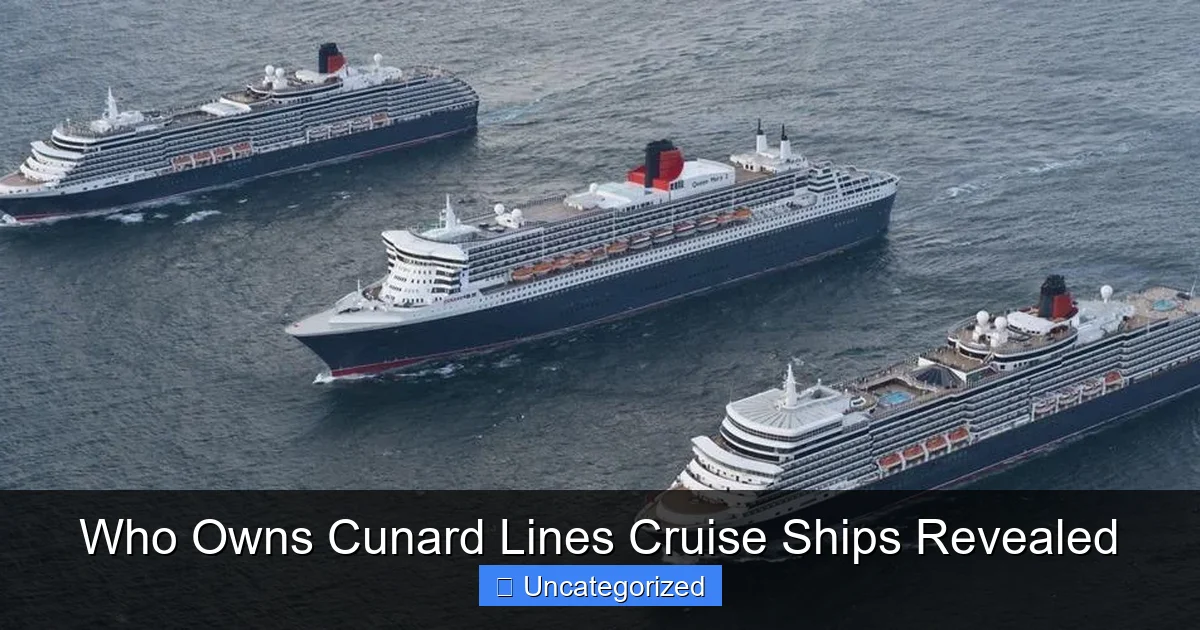
Featured image for who owns cunard lines cruise ships
Image source: cruisemapper.com
Cunard Line is owned by Carnival Corporation & plc, the world’s largest cruise company, which operates the iconic fleet including the Queen Mary 2 and Queen Elizabeth. This British-American giant ensures Cunard maintains its luxury legacy while benefiting from global scale and innovation.
Key Takeaways
- Cunard Line is owned by: Carnival Corporation, a global cruise giant.
- Operates independently: Maintains unique branding despite parent company ownership.
- Fleet includes: Queen Mary 2, Queen Elizabeth, and Queen Victoria.
- Heritage focus: Prioritizes luxury and tradition in its cruise experiences.
- Global reach: Sails worldwide, targeting upscale travelers.
- Parent company advantage: Benefits from Carnival’s resources and operational scale.
📑 Table of Contents
- The Majesty of the Seas: Unveiling the Ownership Behind Cunard Lines
- The Corporate Hierarchy: Who Really Owns Cunard Lines?
- Historical Ownership: From Samuel Cunard to Modern Conglomerates
- Fleet Ownership and Management: Who Owns the Ships?
- The Business Strategy: Why Carnival Keeps Cunard Independent
- Future Outlook: Ownership, Sustainability, and Innovation
- Data Table: Cunard Fleet Ownership and Key Details (2024)
- Conclusion: The Legacy Lives On Under Global Ownership
The Majesty of the Seas: Unveiling the Ownership Behind Cunard Lines
Few names in maritime history evoke the same sense of elegance, tradition, and grandeur as Cunard Line. From the legendary Queen Mary 2 to the timeless voyages across the North Atlantic, Cunard has long been synonymous with luxury ocean travel. But behind the polished brass, the white-gloved stewards, and the transatlantic crossings lies a complex corporate story—one of mergers, acquisitions, and global branding that has shaped one of the world’s most iconic cruise lines. So, who owns Cunard Lines cruise ships today? The answer isn’t as simple as it might seem at first glance.
While Cunard’s roots stretch back to 1840, when Samuel Cunard launched the first scheduled transatlantic steamship service, the modern ownership structure is a product of 21st-century consolidation in the cruise industry. Today, Cunard is not an independent company but a premium brand within a much larger global corporation. This blog post dives deep into the corporate hierarchy, the strategic decisions behind Cunard’s ownership, and what it means for travelers, employees, and the future of luxury cruising. Whether you’re a seasoned cruiser curious about the brand’s lineage or a first-time traveler booking a transatlantic crossing, understanding who owns Cunard Lines cruise ships reveals the forces shaping the future of one of the sea’s most storied names.
The Corporate Hierarchy: Who Really Owns Cunard Lines?
Carnival Corporation & Plc: The Parent Company
At the top of Cunard’s ownership chain sits Carnival Corporation & Plc, one of the world’s largest leisure travel companies. Formed in 2003 through the dual-listed company (DLC) structure that combines Carnival Corporation (based in the U.S.) and Carnival plc (based in the UK), this entity owns and operates 10 cruise line brands across the globe, including Carnival Cruise Line, Princess Cruises, Holland America Line, and, of course, Cunard Line.
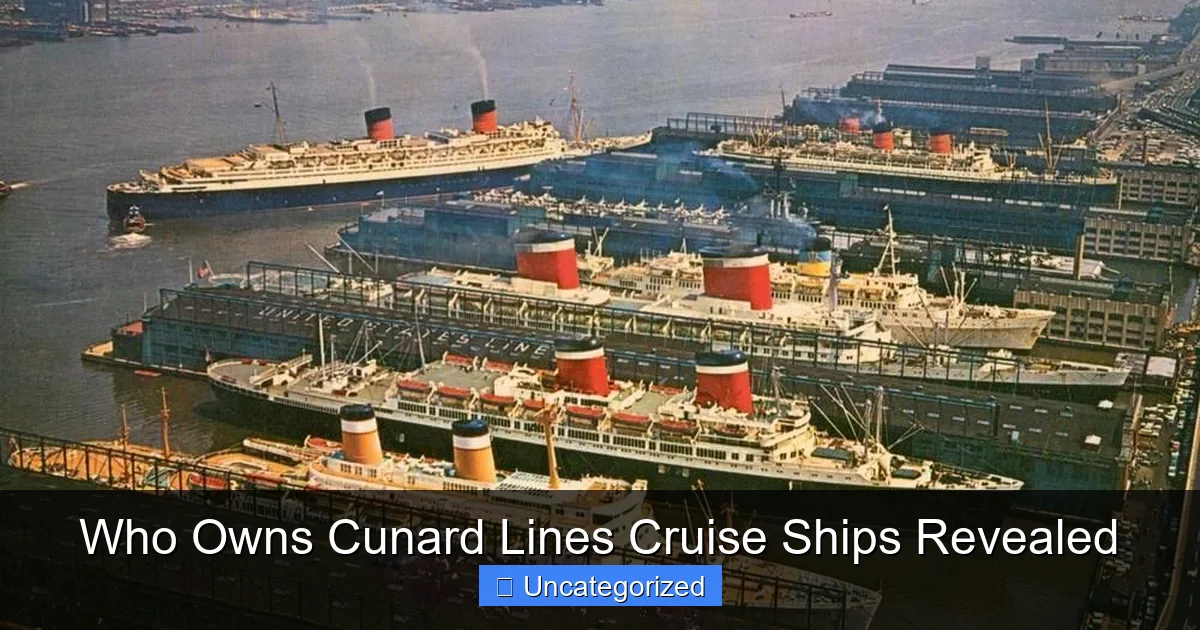
Visual guide about who owns cunard lines cruise ships
Image source: cruisemapper.com
Carnival Corporation & Plc acquired Cunard in 1998 when it purchased the British conglomerate P&O Princess Cruises, which had owned Cunard since 1971. The acquisition was part of a broader strategy to consolidate premium and luxury cruise brands under one corporate umbrella. Unlike its more casual sister brands, Cunard occupies a unique niche within the Carnival portfolio: it is the only brand that focuses on traditional ocean liner voyages, with a strong emphasis on transatlantic crossings, white-glove service, and heritage-inspired experiences.
As of 2024, Carnival Corporation & Plc is publicly traded on the New York Stock Exchange (NYSE: CCL) and the London Stock Exchange (LSE: CCL), with a market capitalization exceeding $20 billion. The company’s dual structure allows it to benefit from both U.S. and UK regulatory frameworks, tax efficiencies, and investor bases. Cunard, though a small portion of the overall fleet (just three ships as of 2024), is strategically positioned as a high-margin, luxury brand that enhances the group’s prestige and attracts affluent travelers.
Cunard as a Brand, Not an Independent Operator
It’s important to emphasize that Cunard is not an independent cruise operator today. It functions as a brand under the Carnival umbrella, with its own marketing, design, service standards, and customer experience. However, key corporate functions—such as finance, legal, human resources, and fleet management—are centralized within Carnival’s global operations. This means that while Cunard maintains its distinct identity, its strategic direction is guided by the broader goals of its parent company.
For example, when the Queen Mary 2 underwent a $132 million refit in 2016, the funding, project management, and oversight came from Carnival’s global capital expenditure budget, not from Cunard’s own balance sheet. Similarly, decisions about new ship construction, itinerary planning, and sustainability initiatives are made in coordination with Carnival’s executive leadership in Miami and Southampton.
This structure allows Cunard to benefit from economies of scale—such as bulk purchasing of fuel, food, and supplies—while maintaining the exclusivity and heritage that define its brand. It’s a delicate balance, but one that has allowed Cunard to thrive as a premium offering within a mass-market cruise conglomerate.
Historical Ownership: From Samuel Cunard to Modern Conglomerates
The Founding and Early Years (1840–1934)
Cunard Line was founded in 1840 by Samuel Cunard, a Canadian-born shipping magnate who won a British government contract to deliver mail and passengers across the Atlantic. The first ship, the Britannia, departed Liverpool for Boston in July 1840, marking the beginning of scheduled transatlantic service. For nearly a century, Cunard operated as an independent British company, building a reputation for reliability, safety, and innovation.
During the golden age of ocean liners (1890–1950s), Cunard launched iconic vessels like the Mauretania, the Queen Mary (1936), and the Queen Elizabeth (1940). These ships weren’t just transportation—they were floating palaces, hosting royalty, celebrities, and immigrants alike. The Queen Mary, for instance, held the Blue Riband (fastest transatlantic crossing) for 14 years and later served as a troopship during WWII, carrying over 16,000 soldiers in a single voyage.
Throughout this era, Cunard was owned by the Cunard family and later by British investors, with the British government providing subsidies to maintain national prestige and strategic shipping capabilities. The company was publicly traded on the London Stock Exchange, reflecting its status as a national icon.
The Decline and Nationalization (1934–1971)
The post-WWII era brought dramatic changes. The rise of commercial aviation made transatlantic ocean travel less essential, and passenger numbers began to decline. In 1934, Cunard merged with its rival, the White Star Line (famous for the Titanic), to form the Cunard-White Star Line, a move designed to reduce competition and share costs. However, by 1949, the White Star name was phased out, and Cunard returned to its original branding.
By the 1960s, Cunard was struggling financially. The British government, recognizing the strategic and symbolic value of the company, stepped in. In 1967, the British Government took a majority stake in Cunard through the British National Export Corporation, effectively nationalizing the company. This move ensured that the Queen Elizabeth 2 (QE2), launched in 1969, would be built and operated under British ownership, preserving the nation’s maritime heritage.
The QE2 became Cunard’s flagship for 39 years, symbolizing the company’s resilience during a period of rapid technological and social change. It wasn’t until 1971 that the government sold Cunard to a private entity: P&O (Peninsular and Oriental Steam Navigation Company), a British shipping conglomerate with interests in ports, logistics, and cruise operations.
The P&O Era and Carnival Takeover (1971–2003)
Under P&O’s ownership, Cunard underwent a transformation. The company shifted from being a nationalized ocean liner operator to a luxury cruise brand. The QE2 was refitted for leisure cruising, and new destinations were added. P&O also launched the Queen Elizabeth 2’s successor, the Queen Mary 2, in 2004—though construction began before the Carnival acquisition.
In 1998, P&O merged with Princess Cruises to form P&O Princess Cruises, a move that created the world’s second-largest cruise operator. Two years later, Carnival Corporation made a hostile bid to acquire P&O Princess. After a high-profile battle with rival bidder Royal Caribbean, Carnival won the acquisition in 2003, bringing Cunard into its fold. This marked the end of British ownership and the beginning of a new chapter under American corporate leadership.
Fleet Ownership and Management: Who Owns the Ships?
Legal Ownership: Ship-owning Subsidiaries
While Carnival Corporation & Plc is the ultimate parent, the individual Cunard ships are legally owned by specialized ship-owning subsidiaries. These are often based in tax-efficient jurisdictions such as the Bahamas, Panama, or Bermuda. For example:
- Queen Mary 2 is owned by Cunard Line Limited, a UK-based subsidiary of Carnival UK.
- Queen Elizabeth and Queen Victoria are owned by Cunard Shipping Limited, registered in the Isle of Man.
This structure is common in the cruise industry. It allows the parent company to manage tax liabilities, insurance, and regulatory compliance more efficiently. The subsidiaries lease the ships back to the operating brand (Cunard) under long-term charters, with Carnival providing management, crew, and operational support.
These subsidiaries are not independent—they exist solely to hold the ships and comply with maritime regulations. All major decisions (refits, dry docks, itinerary changes) are made by Carnival’s fleet operations team, with input from Cunard’s brand managers.
Operational Management: Crew and Logistics
While the ships are owned by subsidiaries, day-to-day operations are managed by Carnival UK, a division of Carnival Corporation & Plc based in Southampton, England. Carnival UK handles:
- Hiring and training of crew (over 1,000 per ship)
- Food and beverage procurement
- Maintenance and technical services
- Itinerary planning and port negotiations
- Marketing and guest services under the Cunard brand
The crew on Cunard ships is international, with officers primarily from the UK, India, and Eastern Europe, and service staff from the Philippines, Indonesia, and the Caribbean. Despite the American ownership, Cunard maintains a distinctly British flair—crew uniforms, afternoon tea service, and onboard entertainment reflect the brand’s heritage.
New Ship Construction: The Role of Carnival’s Capital Planning
When it comes to building new ships, Carnival Corporation & Plc plays a central role. The decision to order a new Cunard vessel (like the upcoming Queen Anne, launched in 2024) is made by Carnival’s executive committee, which evaluates:
- Market demand for luxury ocean voyages
- Return on investment (ROI) projections
- Shipyard capacity and costs (Cunard ships are typically built by Chantiers de l’Atlantique in France)
- Environmental regulations and fuel efficiency
The capital for new builds comes from Carnival’s global funding pool, not from Cunard’s individual profits. This means that Cunard benefits from the financial strength of the entire corporation, even though its three-ship fleet is small compared to Carnival’s 90+ vessels.
The Business Strategy: Why Carnival Keeps Cunard Independent
Brand Segmentation and Market Positioning
One of the key reasons Carnival retains Cunard as a distinct brand is market segmentation. Carnival operates cruise lines across multiple price points:
- Budget: Carnival Cruise Line, Costa Cruises
- Mid-range: Princess, Holland America, P&O Cruises
- Luxury: Seabourn (owned by Carnival), Regent Seven Seas (independent)
- Ultra-luxury/Heritage: Cunard
Cunard occupies a unique space: it’s not just a luxury brand, but a heritage brand with a legacy dating back to 1840. This allows Carnival to target affluent travelers (typically 50+ years old, with high disposable income) who value tradition, formality, and long-duration voyages. In contrast, brands like Carnival Cruise Line focus on short, fun-filled Caribbean cruises for families and younger travelers.
By keeping Cunard independent, Carnival avoids brand dilution. If Cunard were merged into another brand (say, Holland America), it would lose its distinct identity and appeal. Instead, it functions as a “crown jewel” brand that enhances the prestige of the entire portfolio.
Revenue and Profitability: The Premium Pricing Model
Cunard’s business model relies on premium pricing. A transatlantic crossing on the Queen Mary 2 can cost $5,000–$15,000 per person for a standard stateroom, compared to $1,000–$2,000 for a similar-duration cruise on a mid-range line. This pricing reflects:
- Higher crew-to-guest ratio (1:2.5 vs. 1:3 or lower on other lines)
- White-glove service and formal dining
- Longer itineraries (7–14 days minimum)
- Unique experiences (afternoon tea, ballroom dancing, enrichment lectures)
While Cunard’s revenue is a small fraction of Carnival’s $22 billion annual turnover (estimated at 5–7%), its profit margins are significantly higher. Luxury brands typically have lower operating costs per passenger (due to fewer guests) and higher onboard spending on premium dining, spa, and excursions.
Marketing and Brand Loyalty
Cunard’s marketing strategy focuses on emotional storytelling and heritage appeal. Campaigns often feature:
- Vintage photographs of the Queen Mary and QE2
- Testimonials from repeat guests (some with 50+ Cunard voyages)
- Partnerships with British institutions (Royal Academy of Arts, Glyndebourne Opera)
This contrasts with the more casual, fun-focused marketing of Carnival’s other brands. Cunard’s loyalty program, The Cunard World Club, rewards repeat travelers with perks like priority boarding, complimentary drinks, and exclusive events. This fosters a strong sense of community and brand loyalty, which translates into high retention rates.
Future Outlook: Ownership, Sustainability, and Innovation
The Launch of Queen Anne (2024) and Fleet Modernization
In 2024, Cunard welcomed Queen Anne, its first new ship in 14 years. At 113,000 gross tons and carrying 2,996 guests, Queen Anne is the largest Cunard ship ever built. Owned by Cunard Shipping Limited (Isle of Man), the vessel was constructed at Chantiers de l’Atlantique in Saint-Nazaire, France, at a cost of approximately $750 million—funded entirely by Carnival Corporation.
Queen Anne represents a blend of tradition and innovation:
- Heritage design elements: Red funnel, black hull, grand lobby
- Modern amenities: Expanded wellness areas, new dining venues, enhanced entertainment
- Sustainability: LNG-ready engines, advanced wastewater treatment
The ship is a strategic investment by Carnival to modernize the Cunard fleet and attract younger luxury travelers. It also signals Carnival’s long-term commitment to the Cunard brand, despite its small size within the portfolio.
Sustainability and Environmental Responsibility
As environmental regulations tighten, Carnival is investing in sustainable technologies across its fleet, including Cunard. Key initiatives include:
- LNG (Liquefied Natural Gas) readiness: Future Cunard ships will be able to switch to LNG, reducing sulfur and CO2 emissions
- Advanced exhaust scrubbers: Installed on Queen Mary 2 to reduce sulfur emissions
- Waste-to-energy systems: Being tested on newer vessels
- Plastic reduction: Single-use plastics banned across the fleet
These investments are funded by Carnival’s global sustainability budget, not by Cunard alone. This underscores the importance of centralized ownership in enabling large-scale environmental initiatives.
Challenges and Opportunities Ahead
Looking ahead, Cunard faces both challenges and opportunities:
- Challenge: Declining interest in long-duration voyages among younger travelers
- Opportunity: Growing demand for experiential and cultural travel
- Challenge: High operating costs of traditional ocean liner service
- Opportunity: Partnerships with luxury brands (e.g., Harrods, Fortnum & Mason) to enhance onboard experiences
Carnival’s ownership provides the financial and operational support needed to navigate these trends. By leveraging its global scale, Carnival can ensure that Cunard remains viable—and even expands—while staying true to its heritage.
Data Table: Cunard Fleet Ownership and Key Details (2024)
| Ship Name | Year Built | Length (m) | Passenger Capacity | Legal Owner | Parent Company | Flag State |
|---|---|---|---|---|---|---|
| Queen Mary 2 | 2004 | 345 | 2,691 | Cunard Line Limited (UK) | Carnival Corporation & Plc | Bermuda |
| Queen Victoria | 2007 | 294 | 2,081 | Cunard Shipping Limited (Isle of Man) | Carnival Corporation & Plc | UK |
| Queen Elizabeth | 2010 | 294 | 2,081 | Cunard Shipping Limited (Isle of Man) | Carnival Corporation & Plc | UK |
| Queen Anne | 2024 | 323 | 2,996 | Cunard Shipping Limited (Isle of Man) | Carnival Corporation & Plc | UK |
Conclusion: The Legacy Lives On Under Global Ownership
The story of who owns Cunard Lines cruise ships is one of evolution, resilience, and strategic branding. From its founding by Samuel Cunard in 1840 to its current status as a premium brand under Carnival Corporation & Plc, Cunard has navigated waves of change—technological, economic, and corporate. While it is no longer an independent British company, its identity remains fiercely protected, thanks to Carnival’s commitment to brand segmentation and heritage preservation.
Today, Cunard’s ships are legally owned by specialized subsidiaries, operated by Carnival UK, and strategically guided by a global cruise giant. Yet, the spirit of Cunard—the white-gloved service, the transatlantic crossings, the timeless elegance—endures. For travelers, this means access to a unique blend of history and modern luxury, backed by the financial strength and innovation of a world-leading cruise corporation.
As Cunard sails into the future with the launch of Queen Anne and a renewed focus on sustainability and cultural enrichment, one thing is clear: the legacy of Cunard is not just preserved—it’s being reinvented. And with Carnival’s ownership providing the resources and strategic vision, the red funnel will continue to grace the world’s oceans for generations to come. Whether you’re booking a transatlantic crossing or simply dreaming of a bygone era of ocean travel, Cunard remains a testament to the enduring power of maritime tradition in a modern world.
Frequently Asked Questions
Who owns Cunard Lines cruise ships?
Cunard Line is owned by Carnival Corporation & plc, the world’s largest cruise company. The brand operates as a subsidiary under Carnival’s portfolio of premium cruise lines.
Is Cunard Line still owned by the original Cunard family?
No, the Cunard Line is no longer owned by the Cunard family. It was acquired by Carnival Corporation in 1998 and has since operated as part of its global cruise brand family.
Which parent company owns Cunard Lines cruise ships?
Cunard Lines cruise ships are owned by Carnival Corporation & plc, a dual-listed company formed by the merger of Carnival Corporation and Carnival plc in 2003. The group manages multiple cruise brands worldwide.
How does Carnival Corporation manage Cunard Lines?
Carnival Corporation oversees Cunard Lines as a standalone luxury brand while providing financial and operational support. Cunard retains its unique heritage, service standards, and fleet operations.
Are Cunard ships owned individually or by the company?
Cunard ships are owned by Cunard Line Limited, a subsidiary of Carnival Corporation. The company manages the vessels collectively as part of its fleet strategy and global operations.
What other cruise lines does the owner of Cunard Lines operate?
The owner of Cunard Lines, Carnival Corporation, also operates brands like Princess Cruises, Holland America Line, and Costa Cruises. It is a leader in the global cruise industry with 90+ ships across 10 brands.