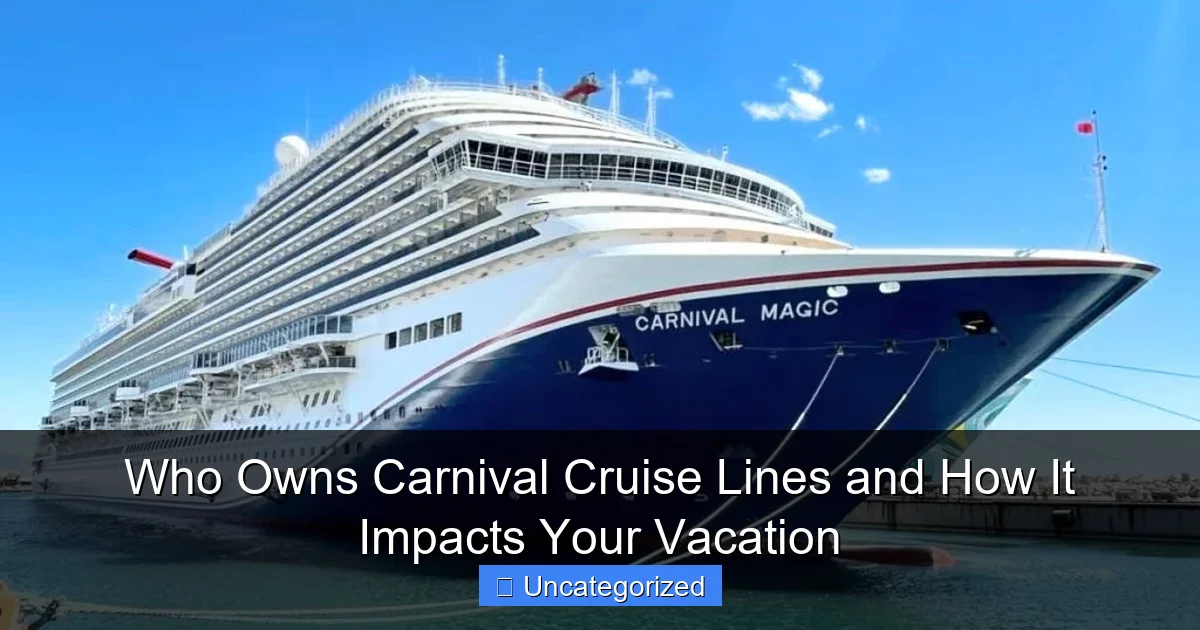
Featured image for how owns carnival cruise lines
Image source: highseascruising.com
Carnival Cruise Lines is owned by Carnival Corporation & plc, the world’s largest cruise company, operating multiple brands under one global umbrella. This corporate structure means your Carnival vacation benefits from shared resources, standardized safety protocols, and expansive itineraries, while still enjoying the line’s signature fun-focused experience. The ownership also ensures consistent service and loyalty program integration across its fleet.
Key Takeaways
- Carnival Corporation owns Carnival Cruise Lines, ensuring brand consistency and global operations.
- Publicly traded stock means financial transparency and investor influence on cruise offerings.
- Parent company’s scale drives cost savings, reflected in competitive pricing for travelers.
- Shared resources with sister brands enhance onboard experiences and port destinations.
- Corporate sustainability initiatives impact eco-friendly policies and itinerary planning.
- Ownership structure affects loyalty perks across Carnival’s portfolio of cruise lines.
📑 Table of Contents
- Who Owns Carnival Cruise Lines and How It Impacts Your Vacation
- The Corporate Structure: Carnival Corporation & plc
- The Carnival Cruise Line Brand: A Subsidiary of the Larger Empire
- Operational Synergies and Cost Efficiency
- Financial Health and Its Impact on Your Cruise
- How Ownership Shapes Your Vacation Experience
- Conclusion: Why Ownership Matters for Your Next Cruise
Who Owns Carnival Cruise Lines and How It Impacts Your Vacation
When you picture a Carnival cruise, what comes to mind? Perhaps it’s the vibrant deck parties, the endless buffet lines, or the thrill of exploring exotic ports with a cocktail in hand. Carnival Cruise Line has long been synonymous with fun, affordability, and family-friendly vacations. But behind the colorful branding and lively entertainment lies a complex corporate structure that shapes every aspect of your vacation experience. Who owns Carnival Cruise Lines? The answer isn’t as straightforward as you might think, and understanding the ownership structure reveals how decisions are made, how resources are allocated, and how your cruise experience is crafted from the moment you book to the day you disembark.
The cruise industry is a global juggernaut, and Carnival Corporation & plc sits at the helm of one of its most influential empires. As the world’s largest cruise company, Carnival doesn’t just own the Carnival Cruise Line brand—it operates a portfolio of 10 distinct cruise lines, each targeting different market segments. From luxury ocean liners to budget-friendly Caribbean getaways, the ownership model impacts everything from onboard amenities to environmental policies, safety protocols, and even the destinations you can visit. In this deep dive, we’ll explore the corporate hierarchy, the key players, and how this ownership structure directly influences the quality, cost, and overall experience of your Carnival cruise. Whether you’re a first-time cruiser or a seasoned sea traveler, knowing who’s behind the scenes can help you make smarter, more informed vacation choices.
The Corporate Structure: Carnival Corporation & plc
At the heart of the Carnival empire is Carnival Corporation & plc, a dual-listed company that operates as a single economic entity despite its dual legal structure. This unique setup, established in 2003, combines Carnival Corporation (a Panama-based company) with Carnival plc (a British company listed on the London Stock Exchange). Together, they form one of the most powerful players in the global travel and hospitality industry, with a market capitalization exceeding $30 billion and operations spanning over 700 ships across 10 cruise brands.
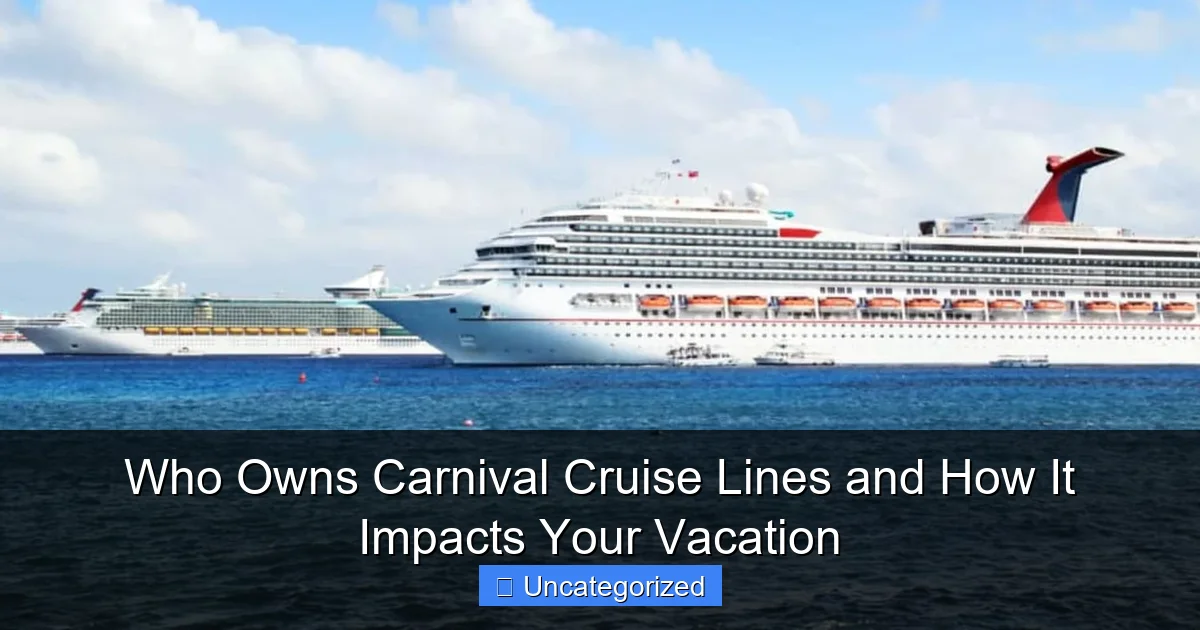
Visual guide about how owns carnival cruise lines
Image source: scottsdaleluxurycruises.com
Dual-Listed Company: A Strategic Business Model
The dual-listing structure allows Carnival to access capital from both U.S. and European markets, diversify its investor base, and maintain regulatory advantages in multiple jurisdictions. Carnival Corporation is headquartered in Doral, Florida, and trades on the New York Stock Exchange (NYSE) under the ticker CCL. Carnival plc, on the other hand, is based in London and trades on the London Stock Exchange under the same ticker. Despite being legally separate, they operate as a single entity with a unified board of directors, executive leadership, and corporate strategy. This model enables the company to optimize tax efficiencies, manage currency risks, and respond quickly to global economic shifts—all of which indirectly affect cruise pricing, itineraries, and investment in new ships.
Ownership Breakdown: Public, Institutional, and Family Stakes
Carnival is a publicly traded company, meaning its shares are owned by a mix of institutional investors, retail shareholders, and insiders. According to recent SEC filings, the largest institutional shareholders include BlackRock (approximately 8.5% stake), The Vanguard Group (7.2%), and State Street Corporation (4.1%). These institutional investors wield significant influence through shareholder meetings and voting rights, particularly on matters like executive compensation, environmental policies, and fleet expansion.
However, one of the most fascinating aspects of Carnival’s ownership is the Arison family’s enduring influence. Micky Arison, the long-time CEO (1979–2013) and current Chairman of the Board, is the son of Ted Arison, Carnival’s founder. The Arison family, primarily through the Arison Foundation and various trusts, holds a substantial voting stake—estimated at over 20%—giving them disproportionate control over strategic decisions. For example, Micky Arison was instrumental in guiding Carnival through the 2020 pandemic, when the company secured $6 billion in emergency financing to avoid bankruptcy. His leadership and family legacy remain deeply embedded in the company’s culture and long-term vision.
Board of Directors and Executive Leadership
The Board of Directors includes seasoned executives from diverse industries, including finance, technology, and sustainability. Notable members include Arnold W. Donald, former President and CEO of Carnival Corporation & plc (2013–2023), who led the company’s post-pandemic recovery and digital transformation. The current CEO, Josh Weinstein, appointed in 2023, brings a fresh focus on operational efficiency and brand differentiation. This leadership team makes high-level decisions that trickle down to every aspect of your cruise—from crew training and safety protocols to the rollout of new onboard tech like facial recognition and AI-driven guest services.
The Carnival Cruise Line Brand: A Subsidiary of the Larger Empire
While Carnival Corporation & plc is the parent company, Carnival Cruise Line is one of its 10 subsidiary brands, each with its own identity, target audience, and operational strategy. Carnival Cruise Line is the company’s flagship brand, often referred to as the “fun ship” line due to its emphasis on entertainment, affordability, and family-friendly experiences. But it’s just one piece of a much larger puzzle.
Portfolio of Cruise Brands Under Carnival Corporation
Here’s a breakdown of the 10 cruise lines owned by Carnival Corporation & plc:
- Carnival Cruise Line – Fun, affordable, mass-market vacations (e.g., Carnival Horizon, Carnival Breeze)
- Princess Cruises – Mid-tier luxury, popular with couples and retirees (e.g., Regal Princess)
- Holland America Line – Classic cruising, cultural enrichment, longer itineraries (e.g., Nieuw Statendam)
- Seabourn – Ultra-luxury, all-suite, all-inclusive experiences
- Costa Cruises – European-focused, Italian flair, popular in Italy and Germany
- AIDA Cruises – German market, vibrant, music-themed ships
- P&O Cruises (UK) – British tradition, family-friendly, UK departures
- P&O Cruises (Australia) – Pacific region, tailored to Australian and New Zealand tastes
- Cunard Line – Iconic transatlantic voyages, luxury heritage (e.g., Queen Mary 2)
- Fathom – (Now defunct) Social impact travel, focused on voluntourism
This diversified portfolio allows Carnival to capture multiple market segments. For instance, if you’re a budget-conscious family, Carnival Cruise Line offers value-packed deals. If you’re seeking a more refined experience, Cunard or Seabourn might be a better fit. The ownership structure enables cross-brand synergies—shared procurement, centralized IT systems, and joint marketing campaigns—that reduce costs and improve efficiency.
How Brand Positioning Affects Your Cruise Experience
Because each brand has a distinct identity, the ownership model ensures that Carnival Cruise Line doesn’t compete directly with, say, Seabourn’s five-star service or Cunard’s black-tie elegance. Instead, Carnival focuses on volume and value. This means:
- More ships in the fleet (24+ vessels) → more departure ports and flexible itineraries
- Lower per-cruise operating costs due to economies of scale
- Standardized amenities (e.g., Carnival WaterWorks, Seuss at Sea) across ships
- Targeted marketing to families, millennials, and first-time cruisers
For example, Carnival’s “Fun Ship 2.0” initiative, launched in 2013, invested $500 million to upgrade onboard entertainment, dining, and tech across the fleet. This decision was made at the corporate level but implemented specifically for the Carnival Cruise Line brand, showing how ownership enables targeted investment in brand-specific upgrades.
Operational Synergies and Cost Efficiency
One of the most significant impacts of Carnival’s ownership structure is operational synergy—the ability to share resources, technology, and expertise across its brands. This isn’t just about cutting costs; it’s about creating a seamless, high-quality experience for guests across all lines.
Shared Procurement and Supply Chain Management
Carnival Corporation negotiates bulk purchasing agreements for everything from fuel and food to linens and cleaning supplies. For example, the company sources over 100 million eggs annually for its fleet. By pooling demand across all 10 brands, Carnival secures lower prices, which translates into more competitive cruise fares. This centralized procurement also ensures consistency—whether you’re on a Carnival Horizon or a Princess Regal, the quality of the coffee, the brand of shampoo, or the type of deck chairs remains standardized.
Centralized IT and Digital Innovation
All Carnival brands use a unified digital platform for booking, check-in, and onboard services. The “Carnival Hub” app, for instance, is used across multiple brands (with slight customization). This app allows guests to book excursions, order room service, and access daily schedules. Because IT development is funded at the corporate level, Carnival can roll out new features—like contactless check-in or AI-powered recommendations—faster and more efficiently than smaller, independent cruise lines.
During the pandemic, this centralized tech infrastructure proved crucial. Carnival rapidly implemented digital health verification systems, contactless dining, and enhanced sanitation protocols across its entire fleet. A guest on a Carnival cruise in Miami and a Cunard voyage in Southampton experienced the same safety standards because of corporate-level coordination.
Environmental and Sustainability Initiatives
Environmental policies are also managed at the corporate level. Carnival Corporation has committed to reducing its carbon emissions by 40% by 2030 and achieving net-zero emissions by 2050. Initiatives like Liquefied Natural Gas (LNG)-powered ships (e.g., Carnival Mardi Gras, Carnival Celebration) and advanced wastewater treatment systems are rolled out fleet-wide. While Carnival Cruise Line may not be the most eco-friendly brand in the portfolio, it benefits from the corporation’s investment in green technology. For instance, the new “Excel-class” ships use LNG fuel, reducing sulfur and particulate emissions by 95% compared to traditional marine diesel.
As a guest, this means cleaner air, quieter engines, and a reduced environmental footprint—factors that increasingly influence consumer choice. If you’re environmentally conscious, knowing that Carnival Cruise Line is part of a larger sustainability strategy can reassure you that your vacation isn’t just fun, but also more responsible.
Financial Health and Its Impact on Your Cruise
The financial stability of Carnival Corporation & plc directly affects the quality, pricing, and reliability of your Carnival cruise. After the 2020 pandemic, when global travel halted, Carnival’s stock plummeted, and the company faced unprecedented losses—over $10 billion in 2020 alone. The ownership structure, however, played a key role in its recovery.
Capital Raising and Debt Management
As a publicly traded company with dual listings, Carnival was able to raise emergency capital through bond offerings, stock issuance, and government-backed loans. The Arison family’s influence also helped stabilize investor confidence. In 2021, Carnival raised $6 billion in high-yield bonds, using its vast asset base (ships, ports, intellectual property) as collateral. This financial flexibility allowed Carnival Cruise Line to resume operations faster than many competitors, with phased reactivations of ships starting in mid-2021.
For you, the cruiser, this means:
- More ships returning to service → more itinerary options
- Stabilized pricing (avoiding sudden price hikes due to financial distress)
- Continued investment in new ships (e.g., Carnival Jubilee, launching 2023)
Profit Margins and Pricing Strategy
Carnival Corporation operates on a high-volume, low-margin model. Carnival Cruise Line, in particular, focuses on filling ships to capacity (typically 3,000–6,500 passengers) rather than charging premium prices. This strategy relies on economies of scale—more passengers mean lower per-person costs for food, fuel, and crew salaries. As a result, Carnival can offer 7-day Caribbean cruises for as low as $500 per person, including meals and entertainment.
However, this model also means that Carnival must carefully manage ancillary revenue—onboard spending on drinks, excursions, spas, and retail. The ownership structure enables sophisticated data analytics to predict guest spending habits and personalize offers. For example, if you’ve booked a Carnival cruise, you might receive targeted emails offering discounted drink packages or spa credits, increasing the likelihood of onboard spending.
Data Table: Carnival Cruise Line Financial Snapshot (2022–2023)
| Metric | 2022 | 2023 (Projected) |
|---|---|---|
| Passenger Capacity (Carnival Cruise Line) | 1.2 million | 1.4 million |
| Average Daily Cruise Cost (per person) | $120 | $135 |
| Onboard Revenue per Passenger (per day) | $45 | $52 |
| Number of Ships in Fleet | 23 | 25 |
| New Ship Deliveries (2022–2023) | 2 (Carnival Celebration, Carnival Jubilee) | 1 (Carnival Firenze) |
| Corporate Net Income (Carnival Corporation) | $1.2 billion | $1.8 billion (est.) |
Source: Carnival Corporation Annual Reports (2022, 2023)
How Ownership Shapes Your Vacation Experience
So, how does all this corporate structure translate into your actual cruise vacation? The answer lies in the end-to-end guest experience, from booking to disembarkation. Every decision—from the design of the ship to the menu at the Lido buffet—is influenced by Carnival’s ownership model.
Ship Design and Amenities
Carnival Cruise Line ships are designed with mass-market appeal in mind. The ownership structure enables access to corporate R&D teams, naval architects, and interior designers who specialize in high-capacity, high-engagement environments. For example, the “Serenity” adult-only retreat or the “RedFrog Pub” are standardized across the fleet, ensuring a consistent experience whether you’re in Miami or Galveston. These amenities are tested and refined across all Carnival brands, with successful concepts adopted fleet-wide.
Crew Training and Safety Protocols
Carnival Corporation operates centralized training academies, such as the Carnival Cruise Line Academy in Florida. Crew members from all brands receive standardized training in safety, hospitality, and emergency procedures. This ensures that a waiter on a Carnival ship in the Caribbean and a bartender on a Princess cruise in Alaska follow the same protocols. During the pandemic, this centralized training allowed Carnival to implement new health guidelines (e.g., mask policies, sanitization routines) uniformly across its fleet within weeks.
Itinerary Planning and Port Partnerships
Because Carnival Corporation has massive buying power, it negotiates exclusive partnerships with ports and destinations. For example, Carnival owns Half Moon Cay (Bahamas) and CocoCay (Royal Caribbean’s private island, but Carnival has docking rights). These private destinations are used by multiple Carnival brands, reducing port fees and offering guests unique, controlled experiences. As a Carnival guest, you benefit from these partnerships through lower excursion prices and exclusive access to private beaches and attractions.
Additionally, the corporation’s size allows it to secure priority docking rights at major ports like Miami, Barcelona, and Sydney—reducing wait times and improving on-time departures.
Conclusion: Why Ownership Matters for Your Next Cruise
Understanding who owns Carnival Cruise Lines isn’t just a matter of corporate trivia—it’s a key to unlocking a smarter, more satisfying vacation. The ownership structure of Carnival Corporation & plc shapes every aspect of your cruise, from the affordability of your fare to the safety of your journey, the quality of your meals, and the uniqueness of your excursions. The dual-listed model provides financial resilience, the diversified brand portfolio ensures tailored experiences, and the centralized operations drive innovation and efficiency.
As a traveler, this means you’re not just booking a cruise—you’re participating in a global, interconnected ecosystem of hospitality, technology, and sustainability. When you choose Carnival Cruise Line, you’re benefiting from the resources of the world’s largest cruise company, including:
- Lower prices due to economies of scale
- Consistent quality across ships and itineraries
- Cutting-edge technology like the Carnival Hub app
- Environmental responsibility through fleet-wide green initiatives
- Financial stability ensuring reliable service and future upgrades
So, the next time you’re browsing Carnival’s website, remember: behind the “fun ship” logo is a sophisticated, globally managed corporation with decades of experience and billions in investment. Whether you’re sailing for the first time or the fiftieth, knowing who’s behind the scenes empowers you to make informed choices, maximize value, and create unforgettable memories. In the world of cruising, ownership isn’t just about control—it’s about creating the best possible experience for you.
Frequently Asked Questions
Who owns Carnival Cruise Lines?
Carnival Cruise Lines is owned by Carnival Corporation & plc, the world’s largest cruise company. The corporation operates multiple brands, including Princess Cruises, Holland America Line, and Costa Cruises, under its portfolio.
How does Carnival Corporation’s ownership impact cruise prices?
As the parent company of Carnival Cruise Lines, Carnival Corporation leverages economies of scale to offer competitive pricing and bundled vacation packages. This ownership structure often results in cost savings passed on to passengers through promotions and loyalty rewards.
Is Carnival Cruise Lines a publicly traded company?
Yes, Carnival Corporation & plc—the parent company of Carnival Cruise Lines—is publicly traded on the New York Stock Exchange (NYSE: CCL) and London Stock Exchange (LSE: CCL). This transparency means financial performance and business strategies are publicly accessible.
Does Carnival Corporation own other cruise lines besides Carnival Cruise Lines?
Absolutely. The corporation owns 10+ cruise brands worldwide, including P&O Cruises, AIDA Cruises, and Seabourn. This diverse portfolio allows Carnival to cater to different traveler demographics while sharing resources and operational expertise.
How does Carnival Cruise Lines’ ownership affect onboard experiences?
Under Carnival Corporation, the cruise line benefits from shared technology, safety protocols, and entertainment partnerships. This unified ownership ensures consistent quality across ships while enabling unique innovations like BOLT roller coasters and eco-friendly LNG-powered vessels.
Who are the major shareholders of Carnival Corporation?
The largest shareholders include institutional investors like Vanguard Group and BlackRock, along with descendants of Carnival’s founder, Ted Arison. This mix of private and public ownership ensures long-term stability and strategic growth for Carnival Cruise Lines.