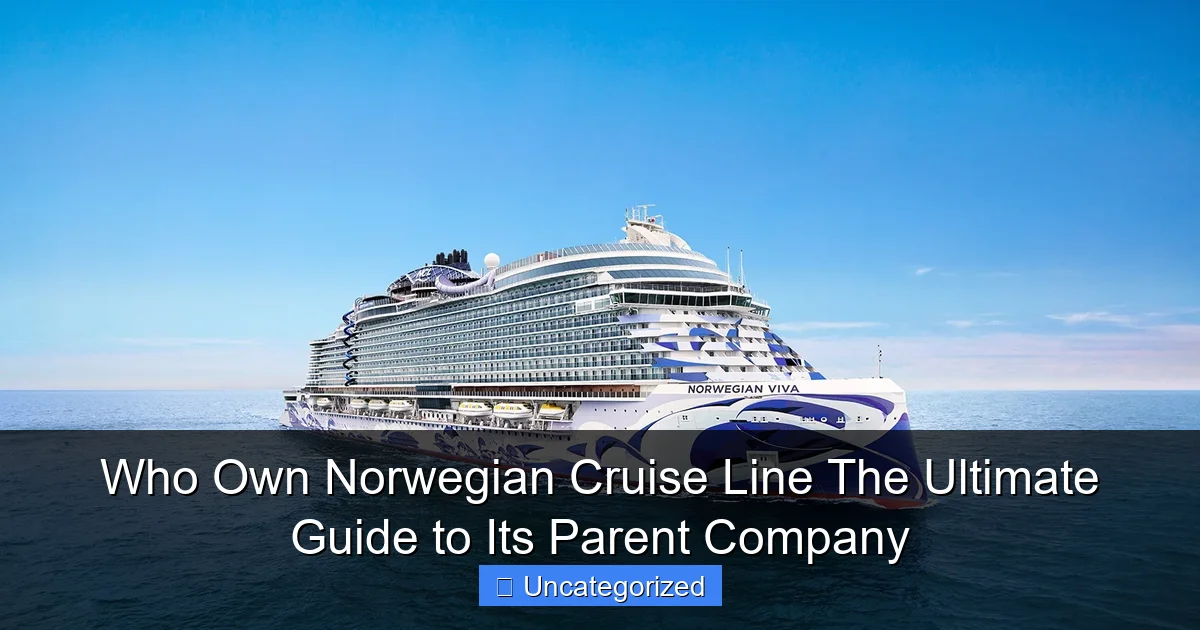
Featured image for who own norwegian cruise line
Image source: thepointsguy.global.ssl.fastly.net
Norwegian Cruise Line (NCL) is owned by Norwegian Cruise Line Holdings Ltd. (NCLH), a global cruise company that also operates Oceania Cruises and Regent Seven Seas Cruises. Headquartered in Miami, Florida, NCLH trades on the NYSE under the ticker “NCLH” and maintains a diverse ownership structure, with major stakes held by institutional investors and private equity firms, including Apollo Global Management and TPG Capital.
Key Takeaways
- NCL is owned by: Norwegian Cruise Line Holdings Ltd., a publicly traded company.
- Major shareholders: Institutional investors like Vanguard and BlackRock hold significant stakes.
- Leadership matters: CEO Harry Sommer drives strategic direction and growth initiatives.
- Global operations: Parent company manages NCL, Oceania, and Regent Seven Seas Cruises.
- Stock ticker: NCLH trades on NYSE—monitor for financial and ownership updates.
📑 Table of Contents
- Who Owns Norwegian Cruise Line: The Ultimate Guide to Its Parent Company
- The Parent Company: Norwegian Cruise Line Holdings Ltd.
- Key Shareholders and Institutional Investors
- Historical Timeline: From Founding to Global Expansion
- Ownership Impact on Operations and Guest Experience
- Global Reach and Future Outlook
- Data Table: Norwegian Cruise Line Holdings Ltd. (2023 Snapshot)
- Conclusion: The Future of Norwegian Cruise Line
Who Owns Norwegian Cruise Line: The Ultimate Guide to Its Parent Company
When you set sail on a Norwegian Cruise Line (NCL) ship, you’re not just booking a vacation—you’re stepping into a global hospitality empire with a complex corporate structure. Norwegian Cruise Line, known for its innovative Freestyle Cruising concept, has grown from a regional player to one of the world’s leading cruise brands. But behind the glittering decks and all-inclusive packages lies a corporate story shaped by mergers, acquisitions, and strategic partnerships. If you’ve ever wondered, “Who owns Norwegian Cruise Line?”, you’re not alone. The answer involves a mix of publicly traded companies, private equity giants, and a parent corporation with a global footprint.
Understanding the ownership of Norwegian Cruise Line isn’t just about corporate trivia—it’s key to grasping the brand’s direction, financial health, and future ambitions. From its early days as a niche player to its current status as a publicly traded company under a larger umbrella, NCL’s journey reflects the broader trends in the cruise industry: consolidation, innovation, and resilience in the face of global challenges. This guide dives deep into the parent company, its shareholders, historical milestones, and what ownership means for travelers, investors, and employees alike. Whether you’re a cruise enthusiast, a potential investor, or simply curious, this is your ultimate resource.
The Parent Company: Norwegian Cruise Line Holdings Ltd.
Corporate Structure and Stock Exchange
Norwegian Cruise Line is owned and operated by Norwegian Cruise Line Holdings Ltd. (NCLH), a publicly traded company listed on the New York Stock Exchange (NYSE) under the ticker symbol “NCLH”. Incorporated in Bermuda and headquartered in Miami, Florida, NCLH functions as the parent holding company for three major cruise brands: Norwegian Cruise Line, Oceania Cruises, and Regent Seven Seas Cruises. This multi-brand strategy allows the company to cater to diverse market segments—from mid-tier to ultra-luxury—while maintaining operational synergies.

Visual guide about who own norwegian cruise line
Image source: travelprofessionalnews.com
As of 2023, NCLH has a market capitalization of approximately $7.5 billion, with shares widely held by institutional investors, mutual funds, and individual shareholders. The company reports its financials quarterly, providing transparency into revenue, net income, and debt levels. For example, in Q2 2023, NCLH reported $1.6 billion in revenue, a 70% year-over-year increase, signaling strong post-pandemic recovery.
Three Core Brands Under One Umbrella
- Norwegian Cruise Line (NCL): The flagship brand, offering 19 ships with a focus on casual, flexible cruising. Known for amenities like The Waterfront, Broadway shows, and diverse dining options.
- Oceania Cruises: A premium brand with 8 mid-sized ships targeting affluent travelers. Offers gourmet dining, destination-intensive itineraries, and a refined onboard experience.
- Regent Seven Seas Cruises: An ultra-luxury brand with 6 all-suite ships. All-inclusive pricing covers airfare, shore excursions, and premium beverages.
This portfolio diversification allows NCLH to capture a wide range of consumer spending. For instance, a family of four might choose NCL’s Norwegian Encore for its affordability and kids’ programs, while a retiree might opt for Regent’s Seven Seas Splendor for its all-inclusive luxury.
Why a Holding Company Structure?
Using a holding company structure offers several strategic advantages:
- Brand Autonomy: Each brand retains its unique identity, marketing, and guest experience.
- Operational Efficiency: Shared departments (e.g., finance, IT, procurement) reduce costs.
- Risk Management: Economic downturns or regional disruptions affect brands differently, providing a buffer.
Tip for Investors: When evaluating NCLH, analyze the performance of each brand separately. For example, Regent’s higher margins (25–30%) may offset slower growth compared to NCL’s volume-driven model.
Key Shareholders and Institutional Investors
Top Institutional Investors
While NCLH is publicly traded, a significant portion of its shares are held by large institutional investors. As of the latest SEC filings (Q3 2023), the top shareholders include:
- The Vanguard Group: 11.2% ownership (largest shareholder)
- BlackRock Inc.: 9.8% ownership
- Fidelity Management & Research: 6.5% ownership
- Capital World Investors: 5.1% ownership
These institutions often hold long-term stakes, providing stability. For example, Vanguard has consistently increased its NCLH holdings since 2020, reflecting confidence in the cruise industry’s rebound.
Insider Ownership and Executive Influence
Insiders—executives and board members—own approximately 1.3% of NCLH shares. Notable figures include:
- Harry Sommer: President & CEO (joined 2015), owns 0.4% of shares. His compensation includes stock options tied to performance metrics like EBITDA growth.
- Frank J. Del Rio: Former CEO (2015–2022), retains a 0.2% stake. His tenure saw the launch of the Norwegian Prima class and the acquisition of Regent.
Practical Example: In 2022, when Del Rio stepped down, his stock-based compensation package (worth ~$18 million) was contingent on NCLH achieving 2023 revenue targets—a sign of performance-driven leadership.
Retail Investors and Market Sentiment
Retail investors (individuals) hold about 15% of NCLH shares, with platforms like Robinhood and Fidelity enabling easy access. This group is highly active on forums like Reddit’s r/Cruise and r/stocks, where discussions about NCLH often center on:
- Post-pandemic recovery
- Debt refinancing efforts
- New ship launches (e.g., Norwegian Viva)
Tip for Travelers: Monitor investor sentiment. If retail investors are bullish, it may signal upcoming promotions or fleet expansions—great for booking discounts!
Historical Timeline: From Founding to Global Expansion
1966–1987: The Early Years
Norwegian Cruise Line was founded in 1966 as Norwegian Caribbean Lines by Knut Kloster and Ted Arison (who later founded Carnival Cruise Line). The company’s first ship, Sunward, sailed from Miami to the Bahamas, pioneering the modern cruise vacation. Key milestones:
- 1970: First cruise to the Caribbean with a full onboard casino.
- 1980: Launched Norwegian Star, introducing the concept of open-deck dining.
The brand’s early success was rooted in Freestyle Cruising, which eliminated formal dining times and dress codes—a radical idea at the time.
1987–2007: Mergers and Private Equity
In 1987, NCL was acquired by Star Cruises (a Hong Kong-based company), marking its entry into the Asian market. This era saw:
- 1998: Launch of Norwegian Sky, the first cruise ship with a full-service spa.
- 2000: Rebranding to Norwegian Cruise Line to emphasize global appeal.
- 2003: Acquired by Apollo Management (a private equity firm) in a $1.3 billion deal. Apollo invested heavily in fleet modernization, adding ships like Norwegian Jewel.
2007–2013: Public Listing and Growth
In 2007, Apollo took NCL public via an IPO on the Oslo Stock Exchange. By 2011, NCLH was formed to consolidate NCL, Oceania, and Regent under one entity. The 2013 NYSE listing raised $420 million, funding:
- The Breakaway class (e.g., Norwegian Breakaway, 2013).
- Acquisition of Prestige Cruise Holdings (parent of Oceania and Regent) for $3 billion.
2014–Present: Pandemic and Recovery
The 2020–2021 pandemic halted global cruising, but NCLH’s diversified portfolio and $4 billion in emergency financing (via bonds and equity) ensured survival. Post-recovery highlights:
- 2022: Launch of Norwegian Prima, the first of six new ships in the “Prima” class.
- 2023: Debt reduced by $1.2 billion through refinancing.
Ownership Impact on Operations and Guest Experience
Fleet Modernization and Sustainability
Under NCLH, Norwegian Cruise Line has invested over $5 billion in fleet upgrades since 2015. Key initiatives:
- New Ship Classes: The Prima class (2022–2027) features LNG-ready engines, reducing carbon emissions by 20%.
- Retrofits: Older ships like Norwegian Epic received $200 million in upgrades, adding water slides and specialty dining.
Example: The Norwegian Viva (2023) has 17 dining venues and a three-deck go-kart track—amenities made possible by NCLH’s capital allocation.
Guest Experience and Brand Differentiation
Ownership enables NCL to maintain its Freestyle Cruising model while innovating:
- Dining: 20+ restaurants per ship, including partnerships with celebrity chefs (e.g., Iron Chef Masaharu Morimoto).
- Entertainment: Broadway shows like Jersey Boys and Footloose.
- Technology: The NCL Mobile App allows real-time booking, keyless stateroom entry, and AI-powered recommendations.
Tip for Travelers: Use the app to book “Free at Sea” packages early—they sell out fast!
Financial Health and Pricing Strategy
NCLH’s ownership structure allows dynamic pricing:
- Base Fares: Competitive with Carnival and Royal Caribbean.
- Add-ons: “Free at Sea” packages (e.g., open bar, specialty dining) increase onboard revenue.
- Loyalty Program: Latitudes Rewards offers perks like priority boarding and free cruises for repeat guests.
In 2022, NCLH reported $1.8 billion in onboard spending—a 30% increase from 2019.
Global Reach and Future Outlook
Market Expansion and Itineraries
NCLH operates in over 50 countries, with ships sailing to:
- Caribbean (35% of itineraries)
- Mediterranean (25%)
- Asia-Pacific (15%)
- Alaska (10%)
- New markets: Africa (2024 launch), Antarctica (2025 pilot)
The 2023 acquisition of a 10% stake in Hapag-Lloyd Cruises (Germany) signals expansion into the European luxury market.
Innovation and Technology Investments
NCLH is testing AI and automation:
- AI Chatbots: Handle 30% of customer inquiries via the NCL app.
- Autonomous Shuttles: In ports like Barcelona, self-driving vehicles transport guests.
- Sustainability Tech: Advanced wastewater treatment systems reduce ocean pollution by 90%.
Challenges and Opportunities
Key challenges include:
- Debt: $10.5 billion in long-term debt (as of Q3 2023).
- Competition: Rivals like Royal Caribbean and MSC Cruises are also expanding.
- Regulation: Stricter emissions laws (e.g., EU’s “Fit for 55” plan).
Opportunities:
- Ultra-Luxury Growth: Regent’s 2024 ship, Seven Seas Grandeur, targets the $200 billion luxury travel market.
- Sustainable Cruising: NCLH aims for net-zero emissions by 2050.
Data Table: Norwegian Cruise Line Holdings Ltd. (2023 Snapshot)
| Metric | Value | Source |
|---|---|---|
| Total Fleet (Ships) | 33 | NCLH Annual Report 2023 |
| Annual Passengers | 2.5 million | Statista |
| Revenue (2022) | $6.8 billion | SEC Filings |
| Net Income (2022) | $1.2 billion | SEC Filings |
| Market Cap (2023) | $7.5 billion | Yahoo Finance |
| Top Shareholder (Vanguard) | 11.2% | SEC Form 13F |
| Debt (2023) | $10.5 billion | NCLH Q3 Earnings |
Conclusion: The Future of Norwegian Cruise Line
Norwegian Cruise Line’s ownership story is one of resilience, innovation, and strategic vision. Under the stewardship of Norwegian Cruise Line Holdings Ltd., the brand has evolved from a Caribbean pioneer to a global leader with a diversified portfolio. The parent company’s ability to balance public market demands with long-term investments—in fleet modernization, sustainability, and guest experience—positions NCL for sustained growth. Whether you’re a traveler booking a dream vacation, an investor analyzing financials, or an employee in the hospitality sector, understanding NCLH’s structure is key to grasping the brand’s trajectory.
Looking ahead, NCLH faces challenges—debt, competition, and regulatory pressures—but its multi-brand strategy, technological edge, and commitment to sustainability offer a roadmap to success. As the cruise industry rebounds and evolves, one thing is clear: Norwegian Cruise Line, backed by its powerful parent company, will continue to redefine what it means to set sail in the 21st century. So the next time you step onto a Norwegian ship, remember: you’re not just a passenger. You’re part of a global story written by shareholders, executives, and innovators who believe in the magic of the open sea.
Frequently Asked Questions
Who owns Norwegian Cruise Line?
Norwegian Cruise Line (NCL) is owned by Norwegian Cruise Line Holdings Ltd., a global cruise company headquartered in Miami, Florida. The parent company operates three brands: Norwegian Cruise Line, Oceania Cruises, and Regent Seven Seas Cruises.
Is Norwegian Cruise Line a publicly traded company?
Yes, Norwegian Cruise Line Holdings Ltd. trades on the New York Stock Exchange under the ticker symbol NCLH. This means the company is owned by shareholders, including institutional investors and individual stockholders.
Who are the major shareholders of Norwegian Cruise Line?
The largest shareholders of Norwegian Cruise Line Holdings include institutional investors like The Vanguard Group and BlackRock. These firms hold significant stakes in the company, reflecting investor confidence in the cruise industry’s recovery and growth.
Does Norwegian Cruise Line belong to a larger cruise corporation?
Norwegian Cruise Line is part of Norwegian Cruise Line Holdings Ltd., an independent parent company that also owns premium brands Oceania and Regent Seven Seas. Unlike Carnival or Royal Caribbean, NCLH operates as a standalone entity focused on mid-to-luxury cruising.
Who owns Norwegian Cruise Line Holdings Ltd.?
Norwegian Cruise Line Holdings Ltd. is publicly owned by its shareholders, with no single majority owner. However, its board of directors and leadership team, including CEO Harry Sommer, oversee daily operations and strategic decisions.
How did Norwegian Cruise Line become part of its current parent company?
Norwegian Cruise Line merged with Prestige Cruises International (parent of Oceania and Regent) in 2014 to form Norwegian Cruise Line Holdings Ltd. This acquisition expanded the company’s portfolio into the luxury cruise market while retaining NCL’s signature “Freestyle Cruising” model.