Featured image for who is the biggest cruise line company
Image source: i.pinimg.com
Carnival Corporation & plc is the world’s largest cruise line company, operating over 90 ships across 10 global brands including Carnival Cruise Line, Princess Cruises, and Holland America. With unmatched fleet size, market share, and annual passenger capacity, it dominates the industry far ahead of competitors like Royal Caribbean Group and Norwegian Cruise Line Holdings.
Key Takeaways
- Carnival Corporation leads as the world’s largest cruise line by fleet size and revenue.
- Royal Caribbean ranks second with innovative ships and global itineraries.
- Norwegian Cruise Line excels in passenger capacity and onboard experiences.
- Market share matters—Carnival holds nearly 50% of the global cruise market.
- Choose based on value: Carnival for affordability, Royal Caribbean for luxury.
- Track industry trends as mergers and expansions reshape rankings yearly.
📑 Table of Contents
- Introduction: The Titans of the High Seas
- Defining “Biggest”: What Metrics Matter?
- The Reigning Champion: Carnival Corporation & plc
- Royal Caribbean Group: The Innovation Powerhouse
- Norwegian Cruise Line Holdings: The Agile Challenger
- Other Major Players and Regional Leaders
- Data Table: Comparing the Top Cruise Companies (2024)
- Conclusion: The Verdict on the Biggest Cruise Line
Introduction: The Titans of the High Seas
When you think of a dream vacation, a luxury cruise might come to mind—floating cities with endless buffets, Broadway-style shows, and stops at exotic destinations. But behind these floating paradises are massive corporations that dominate the global cruise industry. The question of who is the biggest cruise line company isn’t just about size; it’s about market share, fleet capacity, brand diversity, and global reach. With over 30 million passengers cruising annually and the industry projected to exceed $27 billion by 2027, the competition among cruise giants is fierce, and the stakes are high.
From the Caribbean to the Mediterranean, Alaska to Southeast Asia, cruise lines are a major force in tourism. But not all cruise companies are created equal. Some own multiple brands, operate hundreds of ships, and serve tens of millions of guests each year. In this deep dive, we’ll explore the largest cruise line company by multiple metrics: fleet size, passenger capacity, revenue, brand portfolio, and global presence. Whether you’re a cruise enthusiast, a travel blogger, or just planning your next vacation, understanding who leads the pack can help you make informed choices and appreciate the scale of this maritime empire. So, who is the biggest cruise line company? Let’s set sail and find out.
Defining “Biggest”: What Metrics Matter?
To determine the biggest cruise line company, we can’t rely on a single number. The term “biggest” can mean different things depending on the metric used. Is it the number of ships? Total passenger capacity? Annual revenue? Or perhaps the number of brands under one corporate umbrella? Each of these factors plays a crucial role in evaluating the true scale of a cruise company. Let’s break down the key metrics used in the industry to assess dominance.

Visual guide about who is the biggest cruise line company
Image source: logowik.com
Fleet Size and Number of Vessels
The most visible indicator of a company’s size is its fleet. A larger number of ships means more routes, more destinations, and greater operational flexibility. For example, a company with 100 ships can offer more itineraries than one with 30. However, fleet size alone doesn’t tell the whole story—some ships are massive (like Royal Caribbean’s Symphony of the Seas, carrying over 6,600 guests), while others are smaller expedition vessels. Still, the total number of vessels is a strong starting point.
Passenger Capacity and Berths
More important than the number of ships is the total passenger capacity—how many people the company can accommodate across its fleet. This metric, often measured in “berths” (available beds), reflects the company’s ability to generate revenue through bookings. For instance, a company with 100,000 berths can serve far more guests annually than one with 50,000, even if both have similar fleet sizes. This is a critical factor in revenue generation and market reach.
Annual Revenue and Financial Performance
Money talks. The company with the highest annual revenue is often considered the most powerful in terms of economic influence. Revenue comes from ticket sales, onboard spending (drinks, spa, excursions), and add-on services. Publicly traded companies like Carnival Corporation and Royal Caribbean Group regularly report earnings, allowing for direct comparison. In 2023, for example, Carnival reported over $21 billion in revenue, making it a financial titan in the travel sector.
Brand Portfolio and Market Segmentation
Another way to measure size is by the diversity of brands a company owns. A single corporation may operate luxury, premium, contemporary, and budget brands, allowing it to capture multiple market segments. For example, one company might own a high-end line like Seabourn, a mid-tier line like Princess Cruises, and a budget-friendly option like Carnival Cruise Line. This multi-brand strategy increases market penetration and brand loyalty across demographics.
Global Reach and Itinerary Coverage
The biggest cruise companies don’t just dominate one region—they have a global footprint. They operate in North America, Europe, Asia, Australia, and even expedition destinations like Antarctica. The ability to offer year-round itineraries across multiple continents is a sign of operational scale and logistical mastery. A company with ships in the Caribbean, the Baltic, and Southeast Asia simultaneously is truly a global player.
Tip: When comparing cruise companies, look at a combination of these metrics. A company with a smaller fleet but higher revenue and global reach might be “bigger” in influence than one with more ships but limited destinations.
The Reigning Champion: Carnival Corporation & plc
When it comes to answering the question, who is the biggest cruise line company, the crown goes to Carnival Corporation & plc. This American-British multinational corporation is the undisputed leader in the global cruise industry, outpacing competitors in nearly every measurable category. Founded in 1972 and headquartered in Miami, Florida, with a dual listing on the New York and London stock exchanges, Carnival Corporation operates under a unique dual structure that gives it both financial and strategic advantages.
Fleet Size and Passenger Capacity
Carnival Corporation boasts the largest cruise fleet in the world, with 92 ships across its 10 global brands as of 2024. These ships collectively offer over 270,000 berths, making it the company with the highest passenger capacity globally. To put this in perspective, that’s enough to carry more people than the entire population of a medium-sized city. The fleet includes megaships like the Carnival Celebration (5,374 guests) and AIDAluna (2,100 guests), as well as smaller vessels tailored for niche markets.
Brand Portfolio: A House of Brands
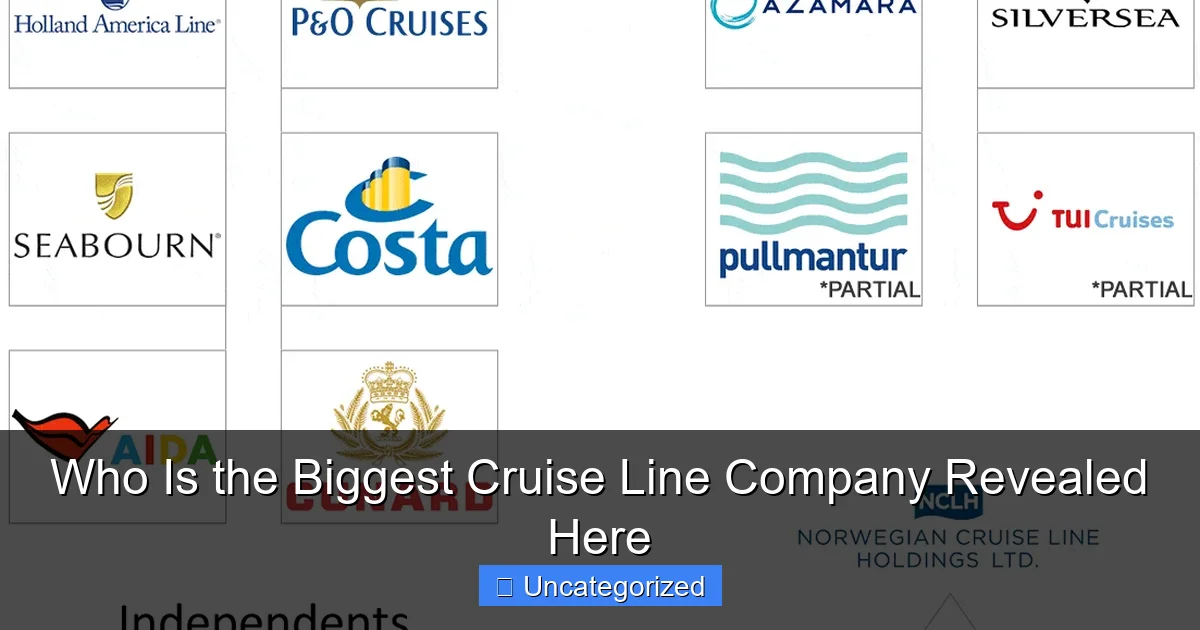
One of Carnival’s greatest strengths is its diverse brand portfolio, allowing it to target every segment of the market. The company owns and operates the following major brands:
- Carnival Cruise Line – Fun, family-friendly, and value-oriented
- Princess Cruises – Premium, with a strong presence in Alaska and the Caribbean
- Holland America Line – Mid-tier, known for longer voyages and cultural experiences
- Costa Cruises – Europe-focused, popular in Italy and the Mediterranean
- AIDA Cruises – German market leader with vibrant, casual onboard atmosphere
- P&O Cruises – British-focused, with a heritage dating back to 1837
- Seabourn – Ultra-luxury, all-suite ships with personalized service
- Cunard Line – Iconic transatlantic crossings and formal elegance
- Oceania Cruises – Premium small-ship luxury with culinary focus
- Windstar Cruises – Boutique, sailing yachts and small motor yachts
This portfolio allows Carnival to compete across price points, cultures, and travel preferences, from budget-conscious families to luxury travelers seeking bespoke experiences.
Revenue and Market Share
In fiscal year 2023, Carnival Corporation reported $21.6 billion in revenue, a significant rebound from pandemic lows. This represents approximately 40% of the global cruise market share by revenue, far ahead of its closest competitor. The company serves over 13 million guests annually, with operations in more than 70 countries. Its financial scale enables massive investments in new ships, technology, and sustainability initiatives.
Global Operations and Itineraries
Carnival’s ships sail to over 700 ports worldwide, including major destinations like the Caribbean, Alaska, Europe, Australia, and Asia. The company also operates private islands in the Bahamas (Half Moon Cay, Princess Cays) to enhance guest experiences and control costs. Its global reach is supported by regional headquarters in the U.S., U.K., Germany, and Australia, ensuring localized marketing and customer service.
Tip: If you’re looking for variety and value, booking through a Carnival-owned brand gives you access to a vast network of ships, destinations, and loyalty programs (like Carnival’s VIFP Club).
Royal Caribbean Group: The Innovation Powerhouse
While Carnival leads in fleet size and revenue, Royal Caribbean Group is a close second and arguably the most innovative player in the industry. Based in Miami, Royal Caribbean operates under a different philosophy: build bigger, bolder, and more technologically advanced ships. The company is known for pushing the boundaries of what’s possible at sea, making it a favorite among thrill-seekers and families.
Fleet and Capacity
Royal Caribbean Group operates 65 ships across three major brands: Royal Caribbean International, Silversea Cruises, and TUI Cruises (a joint venture with TUI Group). The fleet has a total capacity of over 180,000 berths, placing it second in the industry. However, its ships are often larger and more technologically advanced than Carnival’s, with an emphasis on onboard attractions.
Record-Breaking Ships and Onboard Experiences
Royal Caribbean is famous for its Oasis-class and Icon-class ships, which are the largest passenger vessels ever built. The Symphony of the Seas and Wonder of the Seas each carry over 6,600 guests and feature innovations like:
- Central Park (an open-air park with real trees and plants)
- FlowRider surf simulators
- North Star observation capsule (300 feet above sea level)
- Robotic bartenders and high-tech entertainment venues
The upcoming Icon of the Seas, launching in 2024, will be the first LNG-powered cruise ship and feature a six-slide water park, a suspended infinity pool, and a 1,200-seat theater—further cementing Royal Caribbean’s reputation for innovation.
Revenue and Brand Strategy
Royal Caribbean Group reported $13.9 billion in revenue in 2023, with strong growth in North American and European markets. While smaller than Carnival, its focus on premium experiences and high-margin add-ons (like specialty dining and excursions) boosts profitability. The acquisition of Silversea Cruises in 2018 expanded its luxury footprint, appealing to high-net-worth travelers.
Global Reach and Sustainability
Royal Caribbean sails to over 600 ports, with a strong presence in the Caribbean, Europe, and Alaska. The company is also investing heavily in sustainability, with plans to achieve net-zero emissions by 2050. Initiatives include LNG-powered ships, waste-to-energy systems, and partnerships with environmental organizations.
Tip: If you love cutting-edge technology and adrenaline-pumping activities, Royal Caribbean is the best choice. Their ships are essentially floating theme parks with a side of relaxation.
Norwegian Cruise Line Holdings: The Agile Challenger
While Carnival and Royal Caribbean dominate the top two spots, Norwegian Cruise Line Holdings (NCLH) is a formidable third-place player with a reputation for flexibility and guest freedom. Founded in 1966, NCLH operates three brands: Norwegian Cruise Line, Oceania Cruises, and Regent Seven Seas Cruises. The company is known for its “Freestyle Cruising” concept, which eliminates rigid dining times and dress codes, offering a more relaxed vacation experience.
Fleet and Capacity
NCLH operates 29 ships with a total capacity of around 85,000 berths. While smaller in fleet size, the company focuses on premium and luxury segments through Oceania and Regent, which command higher ticket prices and onboard spending. Norwegian Cruise Line itself is a major player in the contemporary market, especially in the Caribbean and Alaska.
Brand Differentiation
- Norwegian Cruise Line – “Freestyle Cruising,” no formal nights, open dining, and a wide range of entertainment.
- Oceania Cruises – Gourmet cuisine, destination-focused itineraries, and small-ship luxury.
- Regent Seven Seas Cruises – All-inclusive luxury, with fares covering airfare, shore excursions, and fine dining.
This tiered approach allows NCLH to compete in multiple markets without diluting brand identity.
Revenue and Innovation
In 2023, NCLH reported $8.5 billion in revenue, with strong performance in the luxury segment. The company is investing in new ships like the Norwegian Prima class, which feature modern design, enhanced outdoor spaces, and improved energy efficiency. NCLH also emphasizes sustainability, with plans to reduce carbon emissions by 25% by 2025.
Unique Selling Points
NCLH stands out for its no-tipping policy (on Norwegian ships) and all-inclusive luxury (on Regent). It also offers unique itineraries, such as 14-day voyages to the South Pacific and transatlantic crossings. The company’s “Go Big, Go Better, Go Best” pricing model allows guests to customize their experience and budget.
Other Major Players and Regional Leaders
While the “Big Three” (Carnival, Royal Caribbean, NCLH) dominate the global market, several other companies play significant roles, especially in regional or niche markets.
MSC Cruises
Based in Geneva, Switzerland, MSC Cruises is the fastest-growing cruise line, with a fleet of 22 ships and plans to expand to 30 by 2027. Owned by the MSC Group (a shipping giant), it focuses on the European market but has expanded aggressively into North America and Asia. MSC is investing in LNG-powered ships and has a strong presence in the Mediterranean and Caribbean.
Disney Cruise Line
Though smaller (4 ships, ~12,000 berths), Disney Cruise Line is a powerhouse in the family and premium market. With immersive Disney-themed experiences, character meet-and-greets, and Broadway-style shows, it commands high prices and strong brand loyalty. It’s a subsidiary of The Walt Disney Company and sails primarily in the Caribbean and Alaska.
Hurtigruten & Expedition Cruise Lines
For adventure travelers, Hurtigruten (Norway) and Lindblad Expeditions (in partnership with National Geographic) dominate the expedition cruise market. These companies operate smaller, ice-class ships to destinations like Antarctica, the Arctic, and the Galápagos. While not “big” in fleet size, they are leaders in sustainable and educational travel.
Data Table: Comparing the Top Cruise Companies (2024)
| Company | Fleet Size | Total Berths | 2023 Revenue (USD) | Key Brands | Global Ports |
|---|---|---|---|---|---|
| Carnival Corporation | 92 | 270,000+ | $21.6 billion | Carnival, Princess, Holland America, Seabourn, etc. | 700+ |
| Royal Caribbean Group | 65 | 180,000+ | $13.9 billion | Royal Caribbean, Silversea, TUI Cruises | 600+ |
| Norwegian Cruise Line Holdings | 29 | 85,000 | $8.5 billion | Norwegian, Oceania, Regent | 500+ |
| MSC Cruises | 22 | 65,000 | $4.3 billion | MSC | 300+ |
| Disney Cruise Line | 4 | 12,000 | $1.2 billion | Disney | 50+ |
Conclusion: The Verdict on the Biggest Cruise Line
So, who is the biggest cruise line company? The answer is clear: Carnival Corporation & plc reigns supreme by nearly every major metric—fleet size, passenger capacity, revenue, brand diversity, and global reach. With over 90 ships, 270,000 berths, and a portfolio of 10 world-renowned brands, Carnival is the undisputed king of the seas. Its ability to serve every type of traveler—from budget-conscious families to luxury seekers—gives it unmatched market penetration.
However, size isn’t everything. Royal Caribbean Group leads in innovation and onboard experiences, while Norwegian Cruise Line Holdings excels in flexibility and luxury. Smaller players like MSC and Disney may not match the giants in scale, but they dominate in niche markets and customer satisfaction. Ultimately, the “best” cruise line depends on your preferences: if you want variety and value, Carnival is the answer. If you crave adventure and technology, Royal Caribbean wins. And if you seek all-inclusive luxury or family magic, look to Regent or Disney.
As the cruise industry continues to grow—with new ships, sustainable technologies, and expanded destinations—the competition will only intensify. But one thing is certain: the biggest cruise line company isn’t just a title; it’s a symbol of scale, strategy, and the power to turn dreams of the open sea into reality for millions. Whether you’re booking your first cruise or your fiftieth, knowing who leads the pack helps you sail smarter, spend wiser, and enjoy more. Bon voyage!
Frequently Asked Questions
Who is the biggest cruise line company in the world?
Carnival Corporation & PLC holds the title of the biggest cruise line company, operating nine global brands including Carnival Cruise Line, Princess Cruises, and Holland America. With over 90 ships and a 45% market share, it leads in fleet size, revenue, and passenger volume.
Which cruise line has the largest fleet?
Carnival Corporation & PLC again takes the crown, with a combined fleet of more than 90 vessels across its subsidiaries. Royal Caribbean Group follows closely with around 60 ships, including its namesake brand and Celebrity Cruises.
How does Royal Caribbean compare to the biggest cruise line company?
While Royal Caribbean Group is the second-largest cruise operator, Carnival Corporation & PLC still outpaces it in total fleet size and annual passenger capacity. However, Royal Caribbean leads in ship size, with record-breaking mega-ships like *Icon of the Seas*.
What makes Carnival the biggest cruise line company?
Carnival’s dominance comes from its diversified portfolio of brands, global routes, and high passenger volume (over 13 million annually pre-pandemic). Its focus on value-driven experiences and economies of scale solidify its top position in the industry.
Are there other major competitors to the biggest cruise line company?
Yes, Royal Caribbean Group and Norwegian Cruise Line Holdings are the next-largest players, with strong brand recognition and innovative ships. However, Carnival remains the leader in market share and fleet size.
Does the biggest cruise line company operate the most luxurious ships?
Not necessarily—while Carnival Corporation & PLC has premium brands like Holland America and Seabourn, luxury-focused lines like Regent Seven Seas (under Norwegian) or Silversea (Royal Caribbean) often lead in high-end amenities. Carnival’s strength lies in volume, not luxury specialization.