Featured image for who is princess cruise line owned by
Image source: 4.bp.blogspot.com
Princess Cruise Line is owned by Carnival Corporation & plc, the world’s largest cruise company, operating globally under multiple brands. This powerhouse parent company ensures Princess maintains premium service and innovation, backed by decades of maritime expertise and a vast fleet.
Key Takeaways
- Princess Cruises is owned by: Carnival Corporation, a global cruise leader.
- Part of Carnival’s portfolio: One of 9 major cruise brands under its umbrella.
- Founded in 1965: Now a top choice for premium cruise vacations worldwide.
- Shares Carnival’s resources: Access to cutting-edge ships and global itineraries.
- Strong financial backing: Ensures consistent service and innovation in cruising.
📑 Table of Contents
- Who Is Princess Cruise Line Owned By? The Corporate Story Behind the Iconic Brand
- The Current Ownership: Carnival Corporation & PLC
- Historical Evolution: From Alaskan Tours to Global Brand
- Corporate Structure: How Carnival Manages Its Brands
- Financial Performance and Market Position
- The Future: What’s Next for Princess Cruises?
- Conclusion: The Ownership Story Matters
Who Is Princess Cruise Line Owned By? The Corporate Story Behind the Iconic Brand
For decades, Princess Cruises has been a household name in the world of ocean travel, known for its elegant ships, immersive destination experiences, and the unforgettable tagline: “Come back new.” From the majestic Sky Princess sailing the Mediterranean to the Discovery Princess exploring Alaska’s icy fjords, the brand has carved out a loyal following among cruise enthusiasts. But behind the polished decks, gourmet dining, and Broadway-style entertainment lies a complex corporate structure that shapes everything from fleet expansion to global marketing strategies. The question on many travelers’ minds—who is Princess Cruise Line owned by?—reveals a story far beyond a single company name. It’s a tale of global consolidation, strategic branding, and the evolving landscape of the cruise industry.
Understanding the ownership of Princess Cruises isn’t just about naming a parent company—it’s about grasping the broader ecosystem of hospitality, logistics, and investment that powers one of the world’s most recognizable cruise lines. Whether you’re a frequent cruiser curious about where your vacation dollars go, an investor analyzing cruise sector trends, or a travel blogger seeking authoritative insights, this deep dive will uncover the layers of ownership, corporate strategy, and brand evolution that define Princess Cruises today. From its early days as a modest Alaskan tour operator to its current status as a global powerhouse, the journey of Princess Cruises is as fascinating as the destinations it serves.
The Current Ownership: Carnival Corporation & PLC
The Parent Company: Carnival Corporation & PLC
As of 2024, Princess Cruise Line is owned by Carnival Corporation & PLC, the world’s largest cruise operator by market share, fleet size, and revenue. Carnival is a dual-listed company, meaning it operates as two legal entities—Carnival Corporation (incorporated in Panama) and Carnival PLC (registered in the UK)—that function as a single economic unit. This structure, established in 2003, allows Carnival to optimize tax, regulatory, and operational efficiency across international markets. Princess Cruises is one of 10 distinct cruise brands under the Carnival umbrella, alongside names like Carnival Cruise Line, Holland America Line, Seabourn, and Costa Cruises.
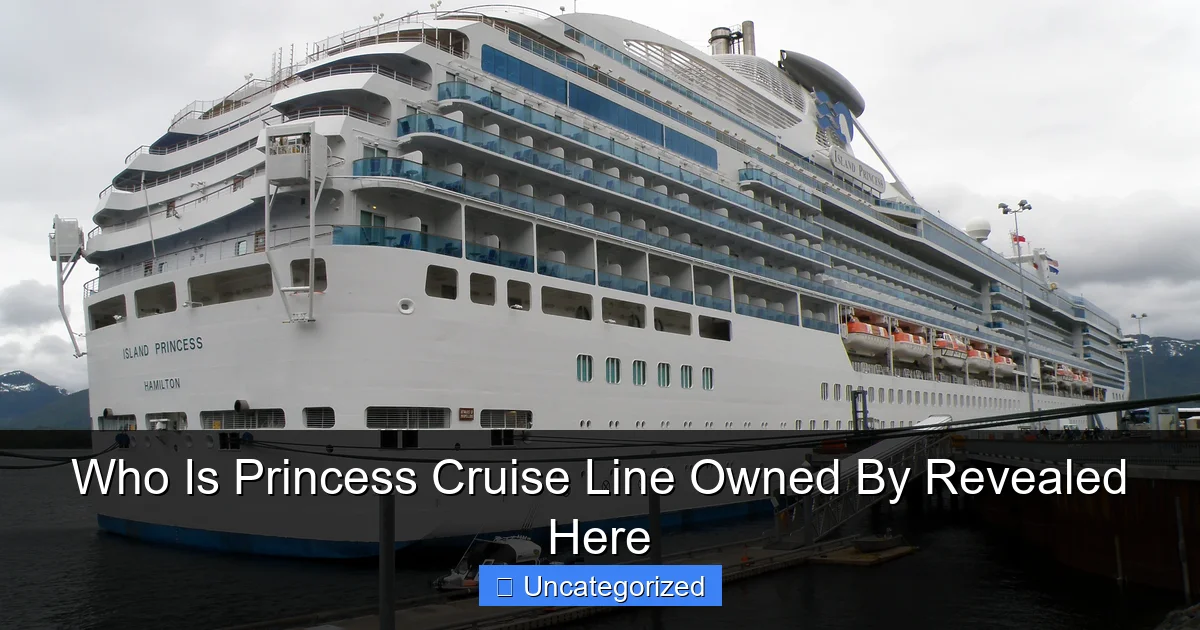
Visual guide about who is princess cruise line owned by
Image source: pictures.mastermarf.com
Carnival Corporation & PLC reported $21.6 billion in revenue for 2023, with Princess Cruises contributing significantly through its fleet of 15 active ships and a global itinerary spanning over 380 destinations. The company’s ownership model is publicly traded, with shares listed on both the New York Stock Exchange (CCL) and the London Stock Exchange (CCL/LSE). This means that anyone can technically “own” a piece of Princess Cruises by purchasing Carnival stock—though the strategic direction remains firmly in the hands of Carnival’s executive leadership and board of directors.
How Ownership Works: Brand Autonomy vs. Centralized Control
One of the most misunderstood aspects of Carnival’s ownership structure is how much autonomy each brand retains. While Carnival provides central support in areas like procurement, IT, finance, and legal compliance, each cruise line—including Princess—operates with a high degree of independence in brand identity, marketing, guest experience, and itinerary planning. For example:
- Marketing Strategy: Princess Cruises runs its own advertising campaigns, social media, and loyalty programs (e.g., the Captain’s Circle), distinct from Carnival’s “Fun Ships” branding.
- Onboard Experience: Princess emphasizes enrichment, wellness, and destination immersion (e.g., the Discovery at SEA program with Discovery Channel), while Carnival focuses on family-friendly, high-energy entertainment.
- Fleet Design: New ships like the Discovery Princess feature Princess-specific innovations such as the Sky Suites and MedallionClass technology, developed independently but supported by Carnival’s R&D budget.
Tip for Travelers: When booking a Princess cruise, remember that while the ship is operated under Carnival’s safety and logistics framework, your onboard experience is curated by Princess’s own teams. This hybrid model allows for both cost efficiency and brand uniqueness.
Historical Evolution: From Alaskan Tours to Global Brand
Founding and Early Years (1965–1974)
Princess Cruises began not as a cruise line, but as a land-based tour operator. In 1965, Stanley B. McDonald, a Canadian entrepreneur, founded Princess Tours to shuttle tourists between Alaska and the Canadian Rockies. The company quickly expanded into river cruises on the Yukon and, by 1969, launched its first ocean cruise using a chartered ship, the Princess Italia, in the Mediterranean. This marked the birth of Princess Cruises as a maritime brand.
The turning point came in 1974, when Princess acquired its first dedicated cruise ship, the Island Princess, and began offering full-length itineraries in Alaska. The brand’s early success was built on destination-focused cruising—a novel concept at the time, where the journey and ports of call were as important as onboard amenities. This ethos remains central to Princess today, especially in Alaska, where the line is the largest cruise operator.
Acquisition by P&O and the Road to Carnival (1974–2003)
In 1974, British shipping giant P&O (Peninsular and Oriental Steam Navigation Company) acquired Princess Tours and its fledgling cruise division. P&O saw potential in the cruise market and invested heavily in fleet expansion, launching iconic ships like the Royal Princess in 1984—the first cruise ship to have a full wrap-around promenade deck. Under P&O, Princess Cruises expanded into Europe, the Caribbean, and Asia, becoming a premium brand with a reputation for sophistication.
The real transformation began in 1988 when P&O merged its cruise operations with Princess Cruises, forming P&O Princess Cruises. This new entity operated both the P&O and Princess brands, but Princess quickly emerged as the star, thanks to its strong brand identity and marketing (notably the Love Boat TV series, which aired from 1977 to 1986 and featured Princess ships).
In 2003, Carnival Corporation made a landmark $5.4 billion acquisition of P&O Princess Cruises, creating the dual-listed Carnival Corporation & PLC. This merger was controversial, facing antitrust scrutiny from the U.S. Federal Trade Commission and the European Commission. Ultimately, Carnival was allowed to proceed after agreeing to divest certain assets (e.g., the Windstar Cruises brand), ensuring competition in key markets.
Post-Acquisition Growth (2003–Present)
Since joining Carnival, Princess Cruises has undergone massive growth. The fleet has expanded from 12 to 15 ships, with three newbuilds delivered between 2017 and 2022. Carnival’s capital investments have enabled Princess to adopt cutting-edge technologies like the OceanMedallion, a wearable device that personalizes the guest experience (e.g., keyless stateroom entry, drink delivery, itinerary recommendations). The brand has also embraced sustainability, with Carnival funding LNG-powered ships and carbon offset programs across its portfolio.
Corporate Structure: How Carnival Manages Its Brands
The Carnival Portfolio: A Multi-Brand Strategy
Carnival Corporation & PLC operates a multi-brand strategy, where each cruise line targets a distinct market segment. This approach allows Carnival to capture diverse demographics without cannibalizing its own brands. Here’s how Princess fits into the ecosystem:
| Brand | Target Audience | Key Differentiators | Fleet Size (2024) |
|---|---|---|---|
| Princess Cruises | Mid-to-upscale travelers, couples, solo cruisers | Destination immersion, enrichment programs, MedallionClass tech | 15 ships |
| Carnival Cruise Line | Families, budget-conscious travelers | Fun, casual, high-energy entertainment | 27 ships |
| Holland America Line | Older, luxury-oriented cruisers | Traditional service, culinary excellence | 11 ships |
| Seabourn | Ultra-luxury, all-inclusive | Intimate ships, personalized service | 6 ships |
| Costa Cruises | European travelers, multigenerational families | Italian flair, vibrant onboard culture | 11 ships |
Princess Cruises occupies the “premium” segment—above Carnival’s mainstream offerings but below Seabourn’s ultra-luxury tier. This positioning allows it to attract travelers seeking a balance of comfort, innovation, and destination authenticity. Carnival’s centralized support systems (e.g., shared dry-dock facilities, global marketing teams) reduce operational costs, while brand-specific teams handle guest experience, allowing Princess to maintain its unique voice.
Leadership and Decision-Making
The day-to-day operations of Princess Cruises are led by a dedicated executive team, including:
- John Padgett, President of Princess Cruises (since 2022)
- Jan Swartz, Group President of Princess Cruises (reports to Carnival CEO)
- Brand-specific VPs for marketing, operations, and guest experience
However, major decisions—such as new ship orders, fleet redeployment, and global marketing budgets—are made at the Carnival corporate level. For example, the decision to build the Discovery Princess (delivered in 2022) was approved by Carnival’s board, which evaluates ROI across all brands. This top-down control ensures financial discipline but can lead to tensions, as seen when Princess sought to expand its Alaska fleet while Carnival prioritized Caribbean growth.
Tip for Industry Observers: Watch Carnival’s quarterly earnings calls (available on their investor website) to see how Princess performs relative to other brands. Metrics like revenue per passenger cruise day (RPC) and onboard spending reveal the brand’s health within the portfolio.
Financial Performance and Market Position
Revenue and Profitability
Princess Cruises contributes approximately 20% of Carnival Corporation’s total revenue, making it the second-largest brand after Carnival Cruise Line. In 2023, Princess generated an estimated $4.3 billion in revenue, with an operating margin of 18%—higher than the company average (15%). Key drivers include:
- Premium pricing: Princess’s average ticket price is 15–20% higher than Carnival’s.
- Onboard spending: Guests spend more on spa treatments, specialty dining, and excursions.
- Alaska dominance: Princess controls 35% of the Alaska cruise market, with high occupancy rates (95% in 2023).
The brand’s profitability has rebounded post-pandemic, with 2023 passenger numbers surpassing 2019 levels by 12%. Carnival’s aggressive debt management (reducing net debt by $3 billion since 2022) has also stabilized Princess’s financial outlook.
Market Share and Competitive Landscape
Princess Cruises holds a 12% share of the global cruise market, placing it third behind Royal Caribbean (18%) and Carnival Cruise Line (15%). Its competitive advantages include:
- Brand recognition: 85% aided awareness in the U.S. market (2023 survey).
- Technology: The OceanMedallion is used by 90% of guests, driving satisfaction and repeat bookings.
- Sustainability: LNG-powered ships (e.g., Enchanted Princess) attract eco-conscious travelers.
However, challenges remain. Rising fuel costs, geopolitical risks (e.g., Red Sea disruptions), and competition from Norwegian Cruise Line’s premium brand Oceania Cruises require constant innovation. Carnival’s investment in AI-driven dynamic pricing and port partnerships (e.g., exclusive access to Juneau’s new cruise terminal) aims to maintain Princess’s edge.
The Future: What’s Next for Princess Cruises?
Fleet Expansion and Innovation
Princess Cruises is set to welcome two new ships by 2027, both LNG-powered and designed for the premium market. The first, Star Princess, will debut in 2025 as the largest ship in the fleet (175,000 GT), featuring:
- Expanded Sky Suites with 270-degree views
- Next-gen OceanMedallion with AI-powered recommendations
- Zero-emission docking in select ports
Carnival’s commitment to net-zero emissions by 2050 will shape Princess’s future, with investments in hydrogen fuel cells and carbon capture technologies. The brand is also exploring expedition cruising in Antarctica and the Arctic, competing with Hurtigruten and Lindblad Expeditions.
Strategic Priorities Under Carnival
Looking ahead, Princess Cruises will focus on three key areas:
- Destination immersion: Expanding partnerships with local tour operators and cultural institutions (e.g., the Princess Cruises Culinary Ambassador program with renowned chefs).
- Personalization: Leveraging data from the OceanMedallion to offer hyper-customized experiences (e.g., curated shore excursions based on guest preferences).
- Global growth: Increasing presence in emerging markets like China, where Carnival has a joint venture with China State Shipbuilding Corporation.
As part of Carnival’s broader vision, Princess will continue to balance brand uniqueness with corporate synergy, ensuring it remains a leader in the premium cruise segment.
Conclusion: The Ownership Story Matters
So, who is Princess Cruise Line owned by? The answer is clear: Carnival Corporation & PLC, a global cruise giant that provides the financial muscle, operational infrastructure, and strategic vision to keep Princess Cruises sailing into the future. But ownership goes beyond a parent company—it’s about a carefully managed ecosystem where brand identity, guest experience, and corporate efficiency coexist. From its Alaskan roots to its current status as a technology-driven premium brand, Princess Cruises thrives because Carnival invests in its autonomy while leveraging shared resources.
For travelers, this means more than just a vacation—it’s access to a network of innovation, sustainability, and global reach. Whether you’re booking a 7-day Caribbean getaway or a 14-day transatlantic crossing, understanding the ownership behind Princess Cruises adds depth to your journey. It’s a reminder that behind every sunset cruise and gourmet meal is a corporate story of ambition, adaptation, and the enduring allure of the sea. As Princess continues to evolve under Carnival’s stewardship, one thing remains certain: the brand will keep inviting guests to “come back new”—not just from their travels, but from the evolving world of cruising itself.
Frequently Asked Questions
Who owns Princess Cruise Line?
Princess Cruise Line is owned by Carnival Corporation & plc, the world’s largest cruise company. It operates as one of the 10 core brands under Carnival’s portfolio.
Is Princess Cruise Line part of Carnival?
Yes, Princess Cruise Line is a wholly owned subsidiary of Carnival Corporation, which acquired the brand in 2003. The parent company manages operations while Princess retains its distinct identity.
Who is Princess Cruise Line owned by in terms of parent brands?
Princess Cruise Line is owned by Carnival Corporation & plc, a dual-listed company traded on both the NYSE and LSE. Carnival also owns other major lines like Holland America and Costa Cruises.
Does Royal Caribbean own Princess Cruise Line?
No, Princess Cruise Line is not owned by Royal Caribbean. It is operated by Carnival Corporation, a separate entity and key competitor in the cruise industry.
What company operates Princess Cruise Line?
Princess Cruise Line is operated by Carnival Corporation, which provides strategic direction, logistics, and shared services across its brand network. Daily operations remain under Princess’s management.
Who is the parent company behind Princess Cruise Line?
The parent company of Princess Cruise Line is Carnival Corporation & plc, a global leader in leisure travel. Carnival acquired Princess to expand its market share in premium cruising.