Featured image for who is msc cruise line owned by
Image source: cruisewithleo.com
MSC Cruises is owned by the MSC Group, a global leader in maritime and logistics services. The cruise line operates as a subsidiary under this Swiss-based conglomerate, leveraging its parent company’s decades of shipping expertise. Founded in 1970, MSC Group expanded into cruising in 1995, making MSC Cruises one of the fastest-growing cruise brands worldwide.
Key Takeaways
- MSC is family-owned: Controlled by the Aponte family, ensuring private, long-term vision.
- Part of MSC Group: A global logistics and shipping giant beyond just cruises.
- No public stock: Privately held, avoiding shareholder pressure for unique strategic moves.
- European roots, global reach: Swiss-based but operates worldwide with Italian flair.
- Rapid expansion: Aggressive fleet growth and new builds signal strong ownership commitment.
- Diverse business: Owns port operations, cargo, and travel, reducing cruise-only risks.
📑 Table of Contents
- The Enigma of Ownership: Unraveling MSC Cruise Line’s Corporate Structure
- The Aponte Family: The Heart of MSC’s Legacy
- MSC Group: The Parent Company and Its Global Footprint
- Ownership Structure: A Closer Look at the Legal and Financial Framework
- Global Expansion and Strategic Partnerships: How Ownership Fuels Growth
- Ownership Impact: Sustainability, Innovation, and Customer Experience
- Conclusion: The Power of Family Ownership in a Global Industry
The Enigma of Ownership: Unraveling MSC Cruise Line’s Corporate Structure
The world of cruising is filled with glamorous ships, exotic destinations, and unforgettable experiences. But behind the glittering facade of luxury liners and all-inclusive packages lies a complex web of corporate ownership and strategic business decisions. Among the most prominent players in the cruise industry is MSC Cruises, a name that has become synonymous with Mediterranean charm, family-friendly amenities, and rapid global expansion. With its iconic white and blue ships dotting the oceans and its aggressive fleet growth, many travelers and industry insiders alike find themselves asking: Who is MSC Cruise Line owned by?
Unlike publicly traded cruise giants such as Carnival Corporation or Royal Caribbean Group, MSC Cruises operates under a different corporate model — one deeply rooted in family heritage, private ownership, and global diversification. The answer to the ownership question isn’t as simple as checking a stock ticker. Instead, it leads us into the story of a shipping dynasty, a strategic shift from cargo to cruise, and a vision that has reshaped the modern cruise landscape. In this comprehensive guide, we’ll peel back the layers of MSC Cruises’ ownership structure, explore the family behind the brand, examine its financial ecosystem, and reveal how its unique ownership model impacts everything from shipbuilding to sustainability initiatives. Whether you’re a curious cruiser, a maritime business analyst, or a travel blogger looking to add depth to your content, this is the definitive breakdown of who is MSC Cruise Line owned by.
The Aponte Family: The Heart of MSC’s Legacy
From Humble Beginnings to Maritime Empire
The story of MSC Cruises begins not with a cruise ship, but with a single cargo vessel and an ambitious Italian entrepreneur. Captain Gianluigi Aponte, a former sea captain born in Sorrento, Italy, founded Mediterranean Shipping Company (MSC) in 1970 with just one ship — the Patricia — purchased for $1.8 million. His vision was clear: to build a global shipping company that could compete with the world’s largest carriers. Over the next three decades, MSC grew into one of the world’s largest container shipping companies, handling a significant portion of global trade through its vast fleet and logistics network.
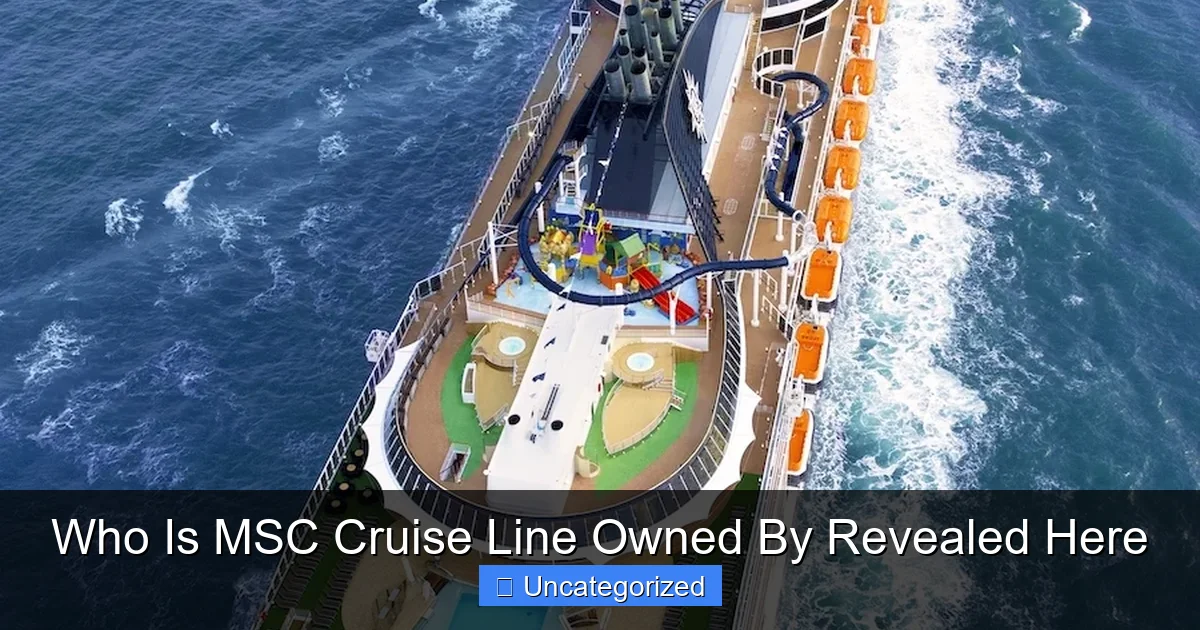
Visual guide about who is msc cruise line owned by
Image source: backroadplanet.com
But the Aponte family didn’t stop at cargo. In the early 2000s, as global tourism surged and cruise vacations became a mainstream travel choice, the family recognized a unique opportunity. They leveraged their maritime expertise, financial capital, and operational infrastructure to launch MSC Cruises in 1989 (officially rebranded in 2003). This strategic pivot from freight to leisure wasn’t just a diversification play — it was a calculated expansion of a family-owned empire. Today, MSC Cruises remains 100% privately owned by the Aponte family, making it one of the few major cruise lines not publicly traded or backed by institutional shareholders.
The Next Generation: Leadership Transition and Family Governance
While Captain Aponte remains the symbolic figurehead and Chairman of the MSC Group, day-to-day operations are now led by his son, Pierfrancesco Vago, who serves as Executive Chairman of MSC Cruises. Vago, who joined the company in the early 2000s, has been instrumental in transforming MSC Cruises from a regional player into a global brand. Under his leadership, the company has launched new ship classes, expanded into new markets (including North America and China), and invested heavily in sustainability and digital innovation.
Family governance is central to MSC’s ethos. Unlike publicly traded companies that must answer to quarterly earnings reports and shareholder demands, MSC Cruises can make long-term decisions without the pressure of short-term profits. This autonomy has allowed the company to:
- Invest in newbuilds with a 10–15 year horizon
- Focus on environmental initiatives without immediate ROI expectations
- Maintain consistent branding and service standards across regions
This family-first approach is rare in the cruise industry and gives MSC a unique competitive advantage — one rooted in legacy, trust, and long-term vision.
MSC Group: The Parent Company and Its Global Footprint
Beyond Cruises: A Diversified Maritime Conglomerate
To truly understand who owns MSC Cruises, we must look beyond the cruise line itself to the broader MSC Group, the umbrella organization that encompasses multiple maritime and logistics businesses. Founded by Captain Aponte, the MSC Group is a privately held conglomerate with operations spanning four core sectors:
- MSC Mediterranean Shipping Company – One of the world’s largest container shipping lines (ranked #2 globally by fleet capacity)
- MSC Cruises – The luxury and premium cruise division
- MSC Air Cargo – A growing air freight business launched in 2022
- MSC Terminal & Logistics – Port operations and supply chain management
This vertical integration is a key differentiator. While most cruise lines rely on third-party logistics for provisioning, fuel, and supply chain management, MSC Cruises benefits from direct access to its parent company’s global network. For example, when an MSC cruise ship docks in a port in Brazil, it can leverage MSC’s container terminals and distribution hubs to streamline operations — reducing costs and increasing efficiency.
Financial Synergy and Cross-Subsidization
One of the most intriguing aspects of MSC Cruises’ ownership is the financial synergy between its cruise and shipping divisions. The container shipping business generates massive revenue — in 2022, MSC’s shipping division reported over $60 billion in revenue — which provides a stable financial foundation for the cruise arm. This allows MSC Cruises to:
- Fund new ship construction without external debt
- Weather economic downturns (e.g., during the pandemic, when the cruise industry was devastated)
- Offer competitive pricing while maintaining high service standards
This model is often referred to as cross-subsidization: profits from the shipping business are reinvested into the cruise division. For instance, the construction of MSC World Europa — a $1.1 billion LNG-powered ship — was financed entirely through internal capital, not external loans. This financial independence gives MSC Cruises unparalleled flexibility in fleet expansion and innovation.
Ownership Structure: A Closer Look at the Legal and Financial Framework
Private Ownership vs. Publicly Traded Models
Unlike Carnival Corporation (NYSE: CCL) or Royal Caribbean Group (NYSE: RCL), which are publicly traded and subject to shareholder scrutiny, MSC Cruises is structured as a private, family-owned enterprise. The exact legal structure is complex and spans multiple jurisdictions, but the core ownership remains with the Aponte family through a series of holding companies registered in Switzerland, Italy, and the Netherlands.
Key entities include:
- MSC Holding AG (Switzerland) – The primary holding company, controlled by the Aponte family
- MSC Cruises S.A. (Luxembourg) – The operating entity for the cruise business
- MSC Mediterranean Shipping Company S.A. (Switzerland) – The parent shipping company
This structure allows the family to maintain full control while optimizing tax efficiency and legal compliance across international markets. It also means that financial disclosures are limited — MSC Cruises does not publish annual reports like its public competitors. Instead, the company releases select data through press statements, sustainability reports, and industry disclosures.
Why Private Ownership Matters for Cruisers
You might wonder: why does ownership structure matter to the average cruiser? The answer lies in decision-making speed, brand consistency, and innovation. Because the Aponte family holds full ownership, they can:
- Approve new ship designs in weeks, not months
- Launch new itineraries based on long-term trends, not short-term profits
- Invest in niche markets (e.g., luxury yachting via MSC Yacht Club) without board approval
For example, when MSC Cruises launched its World Class ships — including MSC World Europa — the company committed to LNG (liquefied natural gas) propulsion years before most competitors. This decision, driven by environmental goals rather than immediate cost savings, was possible because the family could prioritize sustainability over quarterly earnings. Publicly traded companies, by contrast, often face investor pressure to cut costs, which can delay green initiatives.
Global Expansion and Strategic Partnerships: How Ownership Fuels Growth
Fleet Expansion and Shipbuilding Power
One of the most visible signs of MSC Cruises’ success is its aggressive fleet expansion. As of 2024, the company operates 22 ships, with another 10 on order — the largest newbuild pipeline in the industry. These ships, built primarily at Fincantieri (Italy) and Chantiers de l’Atlantique (France), represent a total investment of over $15 billion. How is this possible without stock offerings or massive debt?
The answer: ownership-driven capital allocation. The Aponte family uses profits from the shipping business to fund cruise ship construction. This model has allowed MSC Cruises to:
- Order larger, more innovative ships (e.g., the 205,700 GT MSC World Europa)
- Maintain a young fleet average age (under 10 years)
- Introduce cutting-edge features like AI-powered navigation and hybrid propulsion
For instance, the MSC Seashore, delivered in 2021, was the first cruise ship to feature a “smart city” onboard — with digital concierge services, app-based room controls, and real-time energy monitoring. These innovations were funded internally, without relying on external investors.
Strategic Alliances and Market Penetration
While MSC Cruises is privately owned, it has formed key partnerships to accelerate global growth:
- MSC Cruises USA – A joint venture with MSC’s North American logistics arm to target the U.S. market
- MSC Grandiosa in China – A collaboration with local tour operators to customize itineraries for Asian travelers
- MSC Foundation – A nonprofit arm focused on ocean conservation, funded by cruise profits
These partnerships are not about diluting ownership — they’re about leveraging MSC Group’s global reach. For example, when MSC Cruises launched its first U.S.-based ship (MSC Meraviglia) in 2019, it used MSC’s existing cargo terminals in Miami to streamline provisioning and crew logistics. This integration is only possible because of the unified ownership structure.
Ownership Impact: Sustainability, Innovation, and Customer Experience
Environmental Leadership Without Shareholder Pressure
MSC Cruises has made sustainability a cornerstone of its brand — a move made possible by its private ownership. While public cruise lines often face criticism for greenwashing, MSC has committed to:
- LNG-powered ships (reducing CO2 emissions by up to 25%)
- Advanced wastewater treatment systems
- Plastic-free initiatives (eliminated single-use plastics fleet-wide)
These initiatives are costly — LNG engines cost 20–30% more than traditional ones — but the Aponte family views them as long-term investments. In 2023, MSC Cruises announced plans to achieve net-zero emissions by 2050, backed by a $1 billion green technology fund. This kind of commitment is rare in an industry where short-term profits often trump environmental goals.
Customer-Centric Innovation: The Family Touch
The family-owned model also influences the onboard experience. Unlike publicly traded companies that standardize services to cut costs, MSC Cruises tailors its offerings to regional markets:
- In Europe: Emphasis on Mediterranean cuisine, multilingual staff, and cultural excursions
- In North America: Family-friendly amenities, Broadway-style shows, and flexible dining
- In Asia: Dedicated Mandarin-speaking hosts, tea ceremonies, and local cuisine
This localization is possible because the company isn’t bound by rigid corporate templates. As Pierfrancesco Vago stated in a 2022 interview: “We’re not building ships for shareholders — we’re building them for families.”
Data Snapshot: MSC Cruises vs. Public Competitors
| Metric | MSC Cruises | Carnival Corporation | Royal Caribbean Group |
|---|---|---|---|
| Ownership | 100% Private (Aponte Family) | Public (NYSE: CCL) | Public (NYSE: RCL) |
| Fleet Size (2024) | 22 ships | 87 ships | 65 ships |
| Newbuilds on Order | 10 ships ($15B+) | 18 ships | 12 ships |
| Parent Company Revenue (2022) | $60B+ (MSC Group) | $12.5B | $8.8B |
| LNG-Powered Ships | 5 (with more planned) | 2 | 3 |
| Net-Zero Target | 2050 (with $1B fund) | 2050 | 2050 |
Conclusion: The Power of Family Ownership in a Global Industry
So, who is MSC Cruise Line owned by? The answer is both simple and profound: it’s owned by the Aponte family — a legacy of maritime expertise, visionary leadership, and unwavering commitment to long-term growth. Unlike its publicly traded competitors, MSC Cruises operates without the constraints of shareholder demands, quarterly earnings pressure, or external debt. This private ownership model has enabled the company to invest boldly in fleet expansion, sustainability, and customer experience — all while maintaining the agility of a family business.
For travelers, this means cruises that feel more personalized, ships that are technologically advanced, and itineraries that reflect genuine cultural immersion. For the industry, MSC serves as a powerful example of how private ownership can drive innovation in a capital-intensive sector. As the cruise market continues to evolve — with new technologies, changing consumer preferences, and climate challenges — MSC Cruises’ family-owned structure may prove to be its greatest competitive advantage.
In a world where corporate transparency is increasingly demanded, the Aponte family has chosen a different path: one of quiet control, strategic patience, and maritime excellence. The next time you board an MSC cruise ship, remember — you’re not just sailing with a company. You’re sailing with a family’s legacy, built on the waves of history and the winds of innovation.
Frequently Asked Questions
Who owns MSC Cruise Line?
MSC Cruise Line is owned by the Mediterranean Shipping Company (MSC), a global leader in container shipping and logistics. The cruise division operates as a separate entity under the MSC Group, founded by the Aponte family in 1970.
Is MSC Cruise Line part of a larger corporation?
Yes, MSC Cruise Line is part of the MSC Group, a privately held conglomerate that includes cargo shipping, logistics, and port operations. The cruise line is one of the fastest-growing divisions within the organization.
Who is the parent company of MSC Cruise Line?
The parent company of MSC Cruise Line is Mediterranean Shipping Company (MSC), a Swiss-based multinational founded by Gianluigi Aponte. The cruise line was launched in 2003 as a subsidiary to diversify the group’s maritime portfolio.
Is MSC Cruise Line owned by a government or private entity?
MSC Cruise Line is owned by a private entity—the Aponte family—through their holding company, MSC Group. Unlike some cruise lines, it remains fully independent and not government-owned.
How does MSC Cruise Line’s ownership affect its operations?
Being privately owned by MSC Group allows the cruise line to invest heavily in fleet expansion and sustainability initiatives without shareholder pressure. This ownership structure supports long-term growth, including newbuilds like the LNG-powered World Class ships.
Who is the CEO of MSC Cruise Line?
The CEO of MSC Cruise Line is Pierfrancesco Vago, who also serves as Executive Chairman of MSC Group’s cruise division. Under his leadership, the brand has expanded globally while maintaining its family-owned ethos.