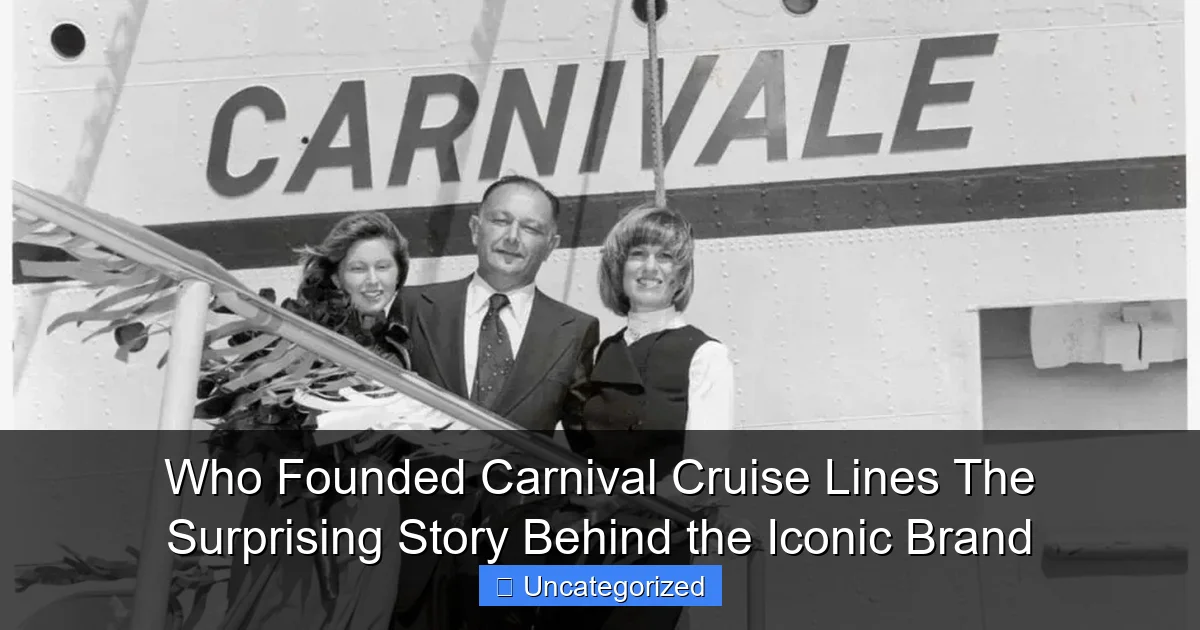
Featured image for who founded carnival cruise lines
Image source: cruiseradio.net
Carnival Cruise Lines was founded by Ted Arison in 1972, a visionary entrepreneur who transformed the cruise industry with affordable, fun-focused vacations. Starting with a single refurbished ocean liner, Arison built the “Fun Ships” brand into a global powerhouse, revolutionizing leisure travel with a bold, customer-first approach. His legacy remains the foundation of Carnival’s iconic, high-energy cruising experience.
Key Takeaways
- Carnival was founded in 1972 by Ted Arison, an Israeli-American entrepreneur with a bold vision.
- Started with one ship, the TSS Mardi Gras, transforming it into a floating resort.
- Revolutionized cruising by making vacations affordable and fun for the average traveler.
- First to market “fun” cruises, shifting industry focus from luxury to entertainment.
- Expanded rapidly through smart acquisitions and innovative ship designs.
- Survived early financial struggles to become the world’s largest cruise line.
- Legacy continues today under Carnival Corporation, led by Arison’s pioneering spirit.
📑 Table of Contents
- Who Founded Carnival Cruise Lines? The Surprising Story Behind the Iconic Brand
- The Man Behind the Vision: Ted Arison
- Meshulam Riklis: The Financial Backbone
- The Role of Innovation and Branding in Carnival’s Rise
- Expansion and Global Dominance: The Arison Family Legacy
- Lessons from Carnival’s Founding: What Entrepreneurs Can Learn
- Conclusion: The Enduring Legacy of Carnival’s Founders
Who Founded Carnival Cruise Lines? The Surprising Story Behind the Iconic Brand
Few names in the travel industry evoke the same sense of fun, freedom, and tropical adventure as Carnival Cruise Lines. From its humble beginnings to becoming the world’s most popular cruise line, Carnival has redefined how millions of people vacation at sea. But behind the dazzling lights of its “Fun Ships” and the infectious slogan “Fun for All, All for Fun,” lies a surprising story of entrepreneurship, risk-taking, and vision. Who founded Carnival Cruise Lines? The answer isn’t just one name—it’s a tale of ambition, cultural insight, and the power of a single idea to transform an entire industry.
Founded in the early 1970s, Carnival Cruise Lines emerged during a time when cruising was seen as an exclusive, luxury experience reserved for the wealthy. The founders challenged that notion by introducing a new concept: affordable, accessible, and entertaining vacations on the water. What started as a single second-hand vessel has grown into a global fleet of over 20 ships, carrying more than 5 million passengers annually. The journey from obscurity to global dominance is not just a business success story—it’s a lesson in innovation, branding, and understanding the pulse of the modern traveler. In this in-depth exploration, we uncover the real story behind the founding of Carnival Cruise Lines, the visionaries who made it happen, and how their legacy continues to shape the cruise industry today.
The Man Behind the Vision: Ted Arison
From Immigrant to Cruise Mogul
The story of Carnival Cruise Lines begins with Ted Arison, an Israeli-American entrepreneur whose life was shaped by displacement, resilience, and an uncanny ability to spot opportunity. Born in 1924 in Tel Aviv, then part of British Mandatory Palestine, Arison was raised in a family of modest means but strong ambition. His father, an accountant, instilled in him a keen sense of financial discipline and strategic thinking. After serving in the British Army during World War II, Arison moved to the United States in the 1950s, seeking new horizons.
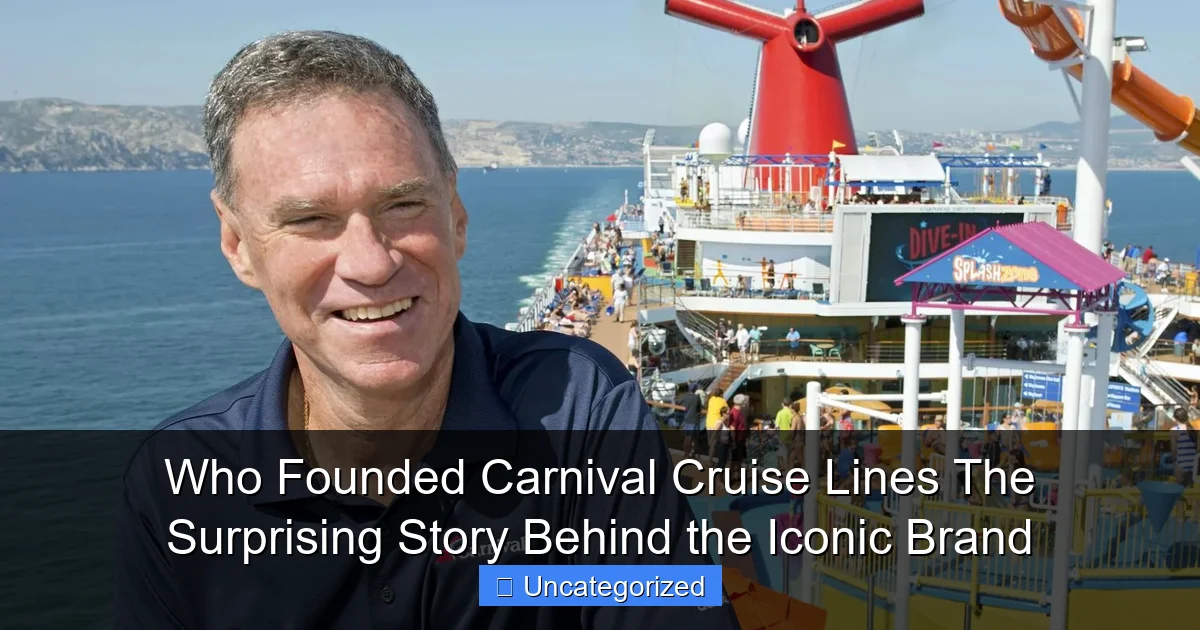
Visual guide about who founded carnival cruise lines
Image source: touristsecrets.com
Arison’s early career was not in travel. He worked in construction and real estate, but his passion for the sea and ships remained strong. In 1966, he co-founded Norwegian Cruise Line (NCL) with a group of investors. However, after disagreements over the company’s direction—particularly Arison’s vision for a more affordable, mass-market cruise experience—he was ousted in 1972. This setback, rather than ending his career, became the catalyst for something even bigger: the founding of Carnival Cruise Lines.
The Birth of a New Cruise Concept
Arison’s vision was simple but revolutionary: make cruising fun, affordable, and accessible to the average American family. At the time, cruises were marketed as elegant, formal affairs with high prices and rigid schedules. Arison believed that people wanted to relax, have fun, and enjoy themselves without breaking the bank. He coined the term “Fun Ships” to describe his new cruise line, emphasizing entertainment, casual dining, and non-stop activities.
To bring this vision to life, Arison needed capital. He approached Meshulam Riklis, a wealthy American businessman and owner of the American Export Lines, a shipping company with a struggling cruise division. Riklis agreed to finance the new venture, and in 1972, Carnival Cruise Lines was officially founded. Arison secured a $10 million loan from the Export-Import Bank of the United States, backed by the U.S. government, to purchase a 14-year-old ocean liner: the Mardi Gras.
Overcoming Early Struggles
The Mardi Gras, a former transatlantic liner built in 1955, was far from glamorous. It was outdated, inefficient, and had a reputation for mechanical failures. In its first year, the ship experienced multiple breakdowns, including a notorious incident where it ran aground off the coast of Miami, leading to headlines like “The Ship That Couldn’t Sail.” Despite these early setbacks, Arison remained committed to his vision.
He focused on improving the guest experience: hiring energetic staff, introducing themed parties, and offering all-inclusive packages that included meals, entertainment, and even drinks. Arison also invested heavily in marketing, using bold advertising campaigns with slogans like “Carnival: The Fun Ship” to attract families, couples, and young travelers. His strategy paid off. By 1975, Carnival was turning a profit and expanding its fleet with the addition of the Carnival Celebration and Carnival Holiday.
Meshulam Riklis: The Financial Backbone
The Businessman Who Bet on Fun
While Ted Arison was the face and driving force behind Carnival, Meshulam Riklis played a crucial role as the financial architect. A self-made millionaire known for his aggressive business tactics and flamboyant lifestyle, Riklis was the chairman of Rapid-American Corporation, a conglomerate that owned American Export Lines. When Arison approached him with the idea of a “fun cruise” line, Riklis saw potential in the untapped market of middle-class vacationers.
Riklis didn’t just provide funding—he provided credibility. His reputation in the shipping and finance worlds helped secure the government-backed loan that purchased the Mardi Gras. He also allowed Arison to operate Carnival as a semi-autonomous division of American Export Lines, giving the founder the creative freedom he needed to innovate. This partnership was essential in the early years, allowing Carnival to focus on branding and customer experience without being bogged down by corporate bureaucracy.
A Clash of Visions and a Strategic Exit
Despite their initial success, tensions arose between Arison and Riklis over the long-term direction of Carnival. Riklis favored a more conservative, financially driven approach, while Arison wanted to expand aggressively and invest in new ships and marketing. The turning point came in 1978 when Carnival launched the Carnival Fantasy, its first newbuild ship designed from the ground up for the “Fun Ship” concept. Riklis was hesitant, fearing the financial risk.
Arison, determined to grow the brand, negotiated a buyout. In 1979, he purchased Carnival from American Export Lines for $135 million, effectively ending Riklis’s involvement. This move allowed Arison to fully control Carnival’s destiny and accelerate its expansion. It also marked the beginning of Carnival’s transformation into an independent, publicly traded company.
Legacy of a Strategic Partnership
Though their partnership was short-lived, Riklis’s role cannot be overstated. Without his initial investment and willingness to take a chance on a risky concept, Carnival might never have launched. His decision to back Arison—despite industry skepticism—was a gamble that paid off. Today, Carnival Corporation & plc, the parent company, is a $10+ billion enterprise with a portfolio of 10 cruise brands, including Princess, Holland America, and Costa Cruises. The foundation Riklis helped lay was instrumental in that success.
The Role of Innovation and Branding in Carnival’s Rise
“Fun Ships”: A New Cruise Identity
One of Carnival’s most significant contributions to the cruise industry was its rebranding of the cruise experience. Arison didn’t just sell vacations—he sold a lifestyle. The “Fun Ships” concept emphasized entertainment, relaxation, and affordability. Unlike traditional cruise lines that required formal attire and strict schedules, Carnival encouraged guests to “let loose” with poolside parties, themed nights (like “80s Night” or “Carnival Legends”), and all-day dining options.
Arison hired Michael Thorne, a marketing expert, to develop Carnival’s iconic branding. Thorne introduced bright colors, playful logos, and a cheerful tone in all communications. He also pioneered the use of influencer marketing before it was a term, partnering with travel writers, TV hosts, and even celebrities to promote Carnival. The result was a brand that felt approachable, energetic, and inclusive—perfect for families and first-time cruisers.
First-Mover Innovations
Carnival wasn’t just a marketing success—it was a technological and operational pioneer. Some of its groundbreaking innovations include:
- All-inclusive packages: Carnival was among the first to offer packages that included meals, entertainment, and even gratuities, simplifying the vacation experience.
- Casual dining: While other lines enforced strict dining times and dress codes, Carnival introduced “open dining,” allowing guests to eat when and where they wanted.
- Onboard entertainment: Carnival invested in Broadway-style shows, comedy clubs, and live music, making its ships destinations in themselves.
- Targeted marketing: Arison focused on middle-income families, using radio ads, TV commercials, and direct mail to reach them directly.
These innovations weren’t just about comfort—they were about democratizing luxury. Carnival proved that you didn’t need to be rich to enjoy a cruise vacation.
The Power of Slogans and Sloganeering
Few slogans are as memorable as “Fun for All, All for Fun.” Created in the 1980s, it captured the essence of the Carnival experience: inclusive, joyful, and unpretentious. But Carnival’s marketing went beyond slogans. The company used:
- Emotional storytelling: Ads focused on family bonding, romantic getaways, and personal transformation.
- User-generated content: Carnival encouraged guests to share photos and stories, creating a sense of community.
- Digital innovation: In the 2000s, Carnival was an early adopter of social media, launching Facebook pages, Twitter feeds, and mobile apps to engage customers.
These strategies helped Carnival build a loyal customer base and maintain its position as the most popular cruise line in the world.
Expansion and Global Dominance: The Arison Family Legacy
From One Ship to a Fleet
By the 1980s, Carnival was no longer a startup—it was a powerhouse. The company went public in 1987, raising capital to fund rapid expansion. Over the next two decades, Carnival added new ships like the Carnival Destiny (1996), the first cruise ship to exceed 100,000 tons, and the Carnival Breeze (2012), featuring water parks, sky rides, and outdoor dining venues.
Arison also diversified the brand by launching new cruise lines under the Carnival Corporation umbrella, including:
- Holland America Line: Acquired in 1989, offering a more traditional, luxury cruise experience.
- Princess Cruises: Purchased in 1999, known for its scenic Alaska and European itineraries.
- Costa Cruises: Acquired in 2000, catering to European travelers.
This “portfolio strategy” allowed Carnival to capture multiple market segments while leveraging shared resources, marketing, and operations.
The Leadership Transition: Micky Arison Takes the Helm
In 1992, Micky Arison, Ted’s son, became CEO of Carnival Cruise Lines. A graduate of the University of Miami, Micky had worked his way up through the company, starting in the mailroom and later managing ship operations and marketing. Under his leadership, Carnival expanded aggressively into new markets, including Asia and the Middle East.
Micky also navigated the company through challenges like the 2008 financial crisis and the 2013 Carnival Triumph “poop cruise” incident, where a fire left a ship adrift for days. He responded with transparency, compensation for affected passengers, and a $300 million fleet-wide safety upgrade, restoring customer trust.
Public Company, Global Reach
Today, Carnival Corporation & plc is listed on both the New York Stock Exchange (CCL) and the London Stock Exchange (CUK). It operates 87 ships across 10 brands, serving over 13 million guests annually. The company’s revenue exceeded $15 billion in 2023, making it the largest cruise operator in the world.
Lessons from Carnival’s Founding: What Entrepreneurs Can Learn
Identify Unmet Needs
Arison’s success began with recognizing a gap in the market: affordable, fun vacations for the middle class. Many entrepreneurs focus on high-end products, but the biggest opportunities often lie in making luxury accessible. Tip: Conduct market research to identify pain points in your industry. Ask: “What are people paying for that could be simpler, cheaper, or more enjoyable?”
Embrace Branding as a Core Strategy
Carnival didn’t just sell cruises—it sold an experience. Its branding made it stand out in a crowded market. Tip: Develop a clear brand identity that resonates emotionally with your target audience. Use consistent visuals, messaging, and tone across all platforms.
Take Calculated Risks
Buying the Mardi Gras was a huge risk. So was launching newbuild ships during economic downturns. But Arison calculated the risks carefully, using data and intuition. Tip: Before making big decisions, assess potential downsides and have contingency plans. Don’t avoid risk—manage it.
Invest in Customer Experience
Carnival’s focus on fun, comfort, and convenience created loyal customers. Tip: Map the entire customer journey—from booking to disembarkation—and identify ways to enhance each touchpoint. Small improvements (like free Wi-Fi or faster check-in) can have big impacts.
Build a Legacy, Not Just a Business
Arison didn’t just build a company—he built a culture. His values of fun, inclusivity, and innovation live on in Carnival’s operations. Tip: Define your company’s core values early and ensure they guide hiring, decision-making, and branding.
Data Table: Key Milestones in Carnival’s History
| Year | Event | Significance |
|---|---|---|
| 1972 | Carnival Cruise Lines founded by Ted Arison | Launch of the Mardi Gras, first “Fun Ship” |
| 1979 | Arison buys Carnival from American Export Lines | Full independence and control over brand |
| 1987 | Carnival goes public on NYSE | Access to capital for expansion |
| 1992 | Micky Arison becomes CEO | Leadership transition and global growth |
| 1999 | Acquisition of Princess Cruises | Entry into premium and luxury segments |
| 2003 | Merger with P&O Princess Cruises | Creation of Carnival Corporation & plc |
| 2020 | Pandemic-related global pause in operations | Industry-wide challenge; Carnival led recovery efforts |
| 2023 | Launch of Carnival Jubilee | Newest LNG-powered ship, symbolizing innovation |
Conclusion: The Enduring Legacy of Carnival’s Founders
The story of who founded Carnival Cruise Lines is not just about Ted Arison or Meshulam Riklis—it’s about a vision for a more joyful, accessible world of travel. Arison’s ability to see potential in a broken-down ship, his relentless focus on fun and affordability, and his willingness to take risks transformed an entire industry. Riklis’s financial backing provided the foundation, while Micky Arison’s leadership ensured the brand’s longevity.
Today, Carnival remains the world’s most popular cruise line, a testament to the power of innovation, branding, and customer-centric thinking. Its “Fun Ships” continue to sail the seven seas, offering unforgettable experiences to millions. But beyond the numbers and the headlines, Carnival’s true legacy lies in its ability to make people feel—to laugh, to relax, to connect.
For entrepreneurs, travelers, and dreamers alike, the story of Carnival is a reminder that the best ideas often come from challenging the status quo. Whether you’re building a business or planning your next vacation, remember the words that launched a revolution: “Fun for All, All for Fun.” That’s not just a slogan—it’s a philosophy that changed the world.
Frequently Asked Questions
Who founded Carnival Cruise Lines?
Carnival Cruise Lines was founded by Ted Arison, an Israeli-American entrepreneur, in 1972. Arison pioneered the concept of “fun ships,” transforming the cruise industry with affordable, entertaining voyages.
What inspired Ted Arison to create Carnival Cruise Lines?
Ted Arison was inspired by his experience in the shipping and travel industry, recognizing a gap for leisure-focused cruises. His vision was to make cruising accessible to everyday travelers, not just the wealthy.
How did Carnival Cruise Lines get its start?
The company launched its first ship, the Mardi Gras, in 1972, purchased from another line and rebranded. Despite early financial struggles, Arison’s innovative marketing and focus on fun turned it into a success.
Was Carnival Cruise Lines the first cruise line Ted Arison founded?
No, Arison previously co-founded Norwegian Cruise Line (NCL) in 1966 but left due to creative differences. He then applied his expertise to launch Carnival, which became his legacy.
What role did the “Fun Ship” concept play in Carnival’s success?
The “Fun Ship” idea, emphasizing entertainment, casual dining, and onboard activities, set Carnival apart. This approach, tied to its founding, helped it dominate the mass-market cruise industry.
Who owns Carnival Cruise Lines today?
After Ted Arison’s death in 1999, his son Micky Arison took over as CEO. Today, Carnival Corporation & plc, the parent company, is publicly traded but still influenced by the Arison family.