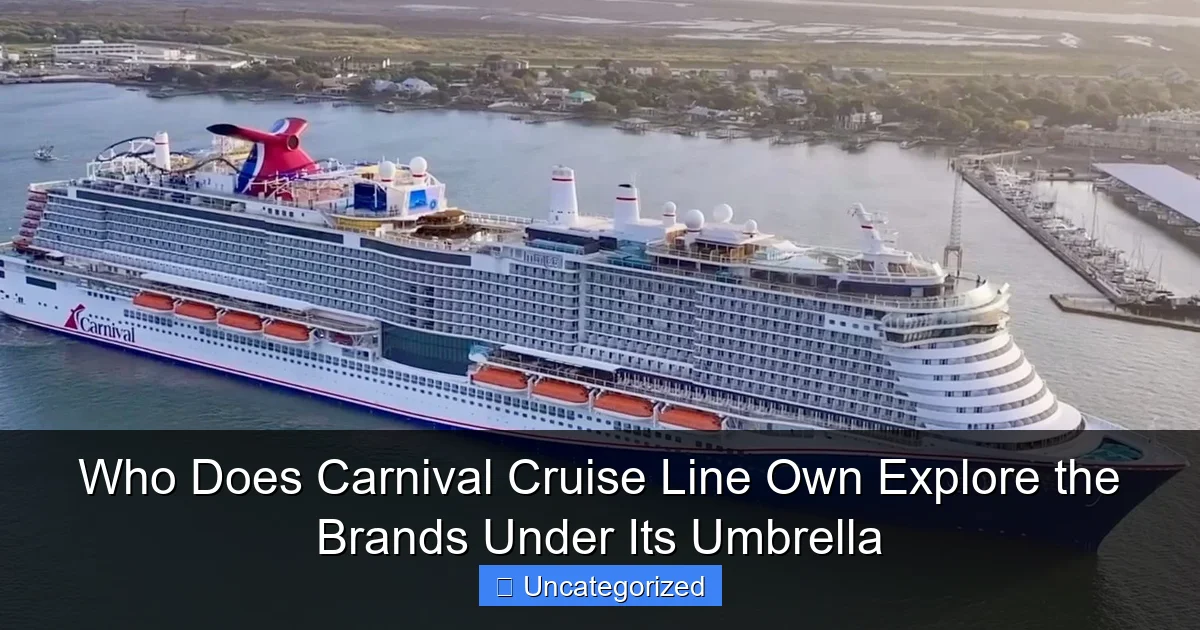
Featured image for who does carnival cruise line own
Image source: cruisefever.net
Carnival Cruise Line owns a diverse portfolio of nine global cruise brands, including Princess Cruises, Holland America Line, and Seabourn, making it the world’s largest cruise company. These brands cater to every traveler, from budget-friendly Carnival Cruise Line to ultra-luxury Seabourn, offering unique experiences across Alaska, the Caribbean, and beyond.
Key Takeaways
- Carnival owns 9 global brands including Princess, Holland America, and Costa Cruises.
- Each brand targets unique markets from luxury to family-friendly experiences.
- Costa Cruises expands Carnival’s European presence with culturally immersive itineraries.
- Princess Cruises offers premium cruising with innovative onboard amenities and technology.
- Holland America appeals to mature travelers with refined dining and enrichment programs.
- Carnival’s fleet spans 100+ ships across diverse destinations and price points.
📑 Table of Contents
- Who Does Carnival Cruise Line Own? Explore the Brands Under Its Umbrella
- The Evolution of Carnival Corporation: From One Ship to a Global Empire
- Core Brands: The Flagships of Carnival’s Fleet
- European & UK-Focused Brands: Serving the British Market
- Specialty and Expedition Brands: Niche Markets, Unique Experiences
- Data Snapshot: Carnival Corporation’s Brand Portfolio at a Glance
- Conclusion: A Diversified Empire Built for Every Traveler
Who Does Carnival Cruise Line Own? Explore the Brands Under Its Umbrella
When you think of Carnival Cruise Line, vibrant parades, lively decks, and the iconic “Fun Ship” experience likely come to mind. But behind this household name lies a vast, globally diversified cruise empire that extends far beyond the familiar red-and-blue funnel. Carnival Corporation & plc, the parent company of Carnival Cruise Line, is not just one brand—it’s a multinational conglomerate that owns and operates multiple cruise lines across the world. With a fleet that sails to over 700 ports and serves more than 13 million guests annually, Carnival Corporation is the largest cruise company on the planet.
Understanding who Carnival Cruise Line owns—or more accurately, who falls under the broader Carnival Corporation umbrella—offers a fascinating glimpse into how a single company can cater to diverse markets, demographics, and travel preferences. From budget-friendly Caribbean getaways to ultra-luxury Mediterranean voyages, Carnival Corporation’s portfolio includes brands that target every segment of the cruise industry. Whether you’re a first-time cruiser or a seasoned traveler seeking exclusivity, there’s likely a brand under Carnival’s ownership that aligns with your vacation dreams. In this comprehensive guide, we’ll explore the full spectrum of cruise lines owned by Carnival Corporation, their unique identities, and how each contributes to the company’s global dominance.
The Evolution of Carnival Corporation: From One Ship to a Global Empire
The Humble Beginnings in 1972
Founded by Ted Arison in 1972, Carnival Cruise Line began with a single secondhand vessel, the Mardi Gras, purchased for $13 million. The goal was simple: to make cruising fun, accessible, and affordable for the average American family. By the late 1970s, Carnival had established itself as the “Fun Ship” brand, known for its lively entertainment, casual atmosphere, and value-driven pricing. But Arison’s vision didn’t stop there. Recognizing the potential for expansion, he began acquiring or launching new brands to capture different market segments.
Visual guide about who does carnival cruise line own
Image source: cruisesolutioner.com
Strategic Acquisitions and Global Expansion
The 1990s and 2000s marked a transformative era for Carnival Corporation. Instead of relying solely on organic growth, the company pursued a strategy of strategic acquisitions to rapidly expand its global footprint. In 1993, Carnival acquired Holland America Line, a premium cruise brand with a rich 150-year history. This was followed by the purchase of Cunard Line in 1998, home of the legendary Queen Mary 2, and Princess Cruises in 2003—one of the most recognizable names in cruising thanks to its TV fame on The Love Boat.
By the early 2000s, Carnival had also established a presence in Europe and Asia through joint ventures and new brands. The formation of Carnival UK in 1996 (later rebranded as P&O Cruises and Princess Cruises for the UK market) allowed the company to tap into the British market. In 2007, Carnival completed a landmark merger with P&O Princess Cruises, creating a dual-listed company (Carnival Corporation & plc) that operates under both U.S. and UK governance. This merger added several key brands to the portfolio and solidified Carnival’s status as the world’s largest cruise operator.
Modern-Day Structure and Market Position
Today, Carnival Corporation operates nine distinct cruise brands, each with its own fleet, target audience, and operational region. The company’s business model emphasizes brand segmentation, allowing it to avoid internal competition and maximize market share. While Carnival Cruise Line remains the largest brand by fleet size and passenger volume, the other brands serve niche markets—from luxury to expedition cruising—ensuring that no segment is left unaddressed.
According to the company’s 2023 annual report, Carnival Corporation owns and operates over 90 ships across its brands, with a combined capacity of more than 230,000 lower berths. The company’s global reach includes operations in North America, Europe, the UK, Australia, and parts of Asia, with plans to expand further in emerging markets like India and Southeast Asia.
Core Brands: The Flagships of Carnival’s Fleet
Carnival Cruise Line – The “Fun Ship” Pioneer
As the original brand and the most recognizable under the Carnival umbrella, Carnival Cruise Line remains the company’s volume leader. With 25 ships (as of 2024), including the massive Carnival Celebration and Mardi Gras—both powered by LNG (liquefied natural gas)—this brand focuses on affordable, family-friendly cruising. Destinations include the Caribbean, Bahamas, Mexico, and Alaska, with itineraries ranging from 3 to 14 days.
Key features:
- Entertainment: Live music, comedy clubs, Broadway-style shows, and water parks.
- Value: All-inclusive packages with dining, basic drinks, and kids’ clubs included in the base fare.
- Target audience: Families, first-time cruisers, and budget-conscious travelers.
Fun fact: Carnival’s “Fun Ship” branding includes a signature red-and-blue funnel, which is now a globally recognized symbol of fun and relaxation. The brand is also known for its SeaDay programming—a full day of activities, games, and events when the ship is at sea.
Princess Cruises – The “Love Boat” Legacy
Acquired in 2003, Princess Cruises is one of Carnival’s most successful premium brands. With 15 ships, including the Discovery Princess and Enchanted Princess, this line is known for its elegant ambiance, destination-focused itineraries, and innovative technology like the MedallionClass experience—a wearable device that enables contactless boarding, personalized service, and keyless cabin entry.
What sets Princess apart:
- Destinations: Alaska, Europe, the South Pacific, and world cruises (up to 111 days).
- Onboard experience: Enrichment programs, guest lecturers, and themed cruises (e.g., culinary, music).
- Technology: The OceanMedallion system has been praised for enhancing guest convenience and safety.
Tip: If you’re interested in a longer, more immersive cruise with a focus on destinations, Princess Cruises is an excellent choice. Their “Cruise with Purpose” program also supports sustainability and community engagement in port cities.
Holland America Line – Premium Cruising with a Dutch Heritage
Founded in 1873, Holland America Line is one of the oldest cruise lines in the world and a proud part of Carnival’s premium tier. With 11 ships, including the Rotterdam and Nieuw Statendam, this brand emphasizes refined dining, cultural enrichment, and longer itineraries. It’s particularly popular among mature travelers and those seeking a more relaxed, traditional cruise experience.
Highlights:
- Food: Partnerships with celebrity chefs like Curtis Stone and a focus on regional cuisine.
- Entertainment: Lincoln Center Stage (classical music), Billboard Onboard (pop hits), and B.B. King’s Blues Club.
- Destinations: Alaska (with exclusive access to Glacier Bay), Northern Europe, and the Mediterranean.
Did you know? Holland America operates its own fleet of 150-year-old Koningsdam-class ships, each named after a Dutch city. The line also offers expedition-style voyages to Antarctica and the Northwest Passage through its World Cruises.
European & UK-Focused Brands: Serving the British Market
P&O Cruises – The British Institution
Established in 1837, P&O Cruises is the UK’s oldest cruise line and a cornerstone of Carnival’s European operations. With seven ships, including the Arvia and Iona (both LNG-powered), P&O caters specifically to British travelers with a focus on British cuisine, entertainment, and cultural programming.
Unique aspects:
- British identity: Afternoon tea, pub quizzes, and West End-style shows.
- Itineraries: Mediterranean, Canary Islands, and British Isles (including round-Britain cruises).
- Family-friendly: Dedicated kids’ clubs and teen zones, with family staterooms available.
Tip: P&O Cruises often offers “no-fly” cruises, meaning you can board the ship in Southampton without needing a flight. This is ideal for families or travelers who prefer to avoid air travel.
Cunard Line – The Epitome of Ocean Liner Luxury
Perhaps the most prestigious brand in Carnival’s portfolio, Cunard Line is synonymous with transatlantic crossings, formal nights, and timeless elegance. With three ships—Queen Mary 2, Queen Victoria, and Queen Elizabeth—Cunard maintains a classic, refined atmosphere that appeals to travelers seeking a traditional cruise experience.
Signature experiences:
- Transatlantic crossings: The Queen Mary 2 operates the only scheduled transatlantic service, a 7-day journey between New York and Southampton.
- Formal nights: Black-tie events, gala dinners, and ballroom dancing.
- Enrichment: Guest speakers, lectures, and partnerships with institutions like the Royal Academy of Dramatic Art (RADA).
Fun fact: Cunard’s Queen Mary 2 is the only ocean liner still in service for regular crossings. It’s also one of the few ships equipped to handle the rough North Atlantic weather, thanks to its powerful engines and advanced stabilizers.
AIDA Cruises – Germany’s Party Ship
While not UK-focused, AIDA Cruises deserves mention as Carnival’s German brand. With 13 ships, including the AIDAnova (the world’s first LNG-powered cruise ship), AIDA is known for its lively, youthful atmosphere, German-speaking crew, and innovative design. The brand targets younger travelers and families in German-speaking countries (Germany, Austria, Switzerland).
Key features:
- Onboard vibe: Themed decks, outdoor movie screens, and a “Beach Club” with a retractable roof.
- Destinations: Mediterranean, Caribbean, and Northern Europe.
- Sustainability: AIDA was the first cruise line to introduce LNG-powered ships, reducing emissions by up to 25%.
Tip: If you’re a German speaker or enjoy a more energetic, party-like cruise, AIDA is a great option. Their “AIDAperla” and “AIDAluna” ships are especially popular for summer Mediterranean voyages.
Specialty and Expedition Brands: Niche Markets, Unique Experiences
Seabourn – Ultra-Luxury, All-Inclusive Cruising
Acquired in 2009, Seabourn is Carnival’s entry into the ultra-luxury segment. With five intimate ships (carrying 458–600 guests), Seabourn offers all-inclusive experiences with personalized service, fine dining, and exclusive destinations. The brand is known for its resort-at-sea ambiance, with features like private verandas, open bars, and complimentary excursions.
What makes Seabourn special:
- All-inclusive: Gratuities, premium beverages, Wi-Fi, and select excursions are included.
- Destinations: Antarctica, the Amazon, and remote Pacific islands.
- Expedition voyages: Seabourn’s “Ventures by Seabourn” program uses kayaks, Zodiacs, and expert naturalists for up-close exploration.
Example: On a Seabourn Antarctic cruise, guests can kayak alongside icebergs, visit penguin colonies, and attend lectures by polar scientists—all while enjoying caviar and champagne in a heated lounge.
Costa Cruises – Italian Flair and European Focus
Founded in 1854, Costa Cruises is Carnival’s Italian brand, with 11 ships serving the European market. Known for its Italian cuisine, vibrant atmosphere, and Mediterranean focus, Costa appeals to travelers who want a mix of culture, relaxation, and entertainment.
Highlights:
- Cuisine: Authentic Italian dishes, pizza bars, and wine tastings.
- Entertainment: Italian opera, dance shows, and themed parties.
- Destinations: Western Mediterranean, Canary Islands, and Middle East.
Note: Costa Cruises is currently undergoing a rebranding to “Costa by Carnival,” with a focus on sustainability and modernization. The new Costa Toscana and Costa Smeralda are LNG-powered and feature eco-friendly design elements.
Fathom – The Social Impact Cruise (Now Discontinued)
While no longer active, Fathom is worth mentioning as Carnival’s innovative attempt at social impact cruising. Launched in 2016, Fathom offered week-long trips to the Dominican Republic and Cuba with a focus on volunteer work, community engagement, and cultural exchange. Passengers participated in reforestation, education programs, and artisan workshops.
Though Fathom was discontinued in 2017 due to low demand, it demonstrated Carnival’s willingness to experiment with new business models and sustainability initiatives. The lessons learned from Fathom have influenced other brands’ enrichment and community programs.
Data Snapshot: Carnival Corporation’s Brand Portfolio at a Glance
Below is a summary of the nine brands owned by Carnival Corporation, including fleet size, target audience, and key features:
| Brand | Fleet Size (2024) | Target Audience | Key Features |
|---|---|---|---|
| Carnival Cruise Line | 25 | Families, budget travelers | Fun Ship, water parks, all-inclusive basics |
| Princess Cruises | 15 | Premium travelers, destination lovers | MedallionClass, world cruises, enrichment |
| Holland America Line | 11 | Mature travelers, foodies | Refined dining, cultural programs, Alaska |
| P&O Cruises | 7 | British travelers, families | British cuisine, no-fly cruises, pub culture |
| Cunard Line | 3 | Luxury seekers, traditionalists | Transatlantic crossings, formal nights, RADA |
| AIDA Cruises | 13 | German-speaking youth, families | Party atmosphere, LNG ships, themed decks |
| Seabourn | 5 | Ultra-luxury travelers | All-inclusive, expedition voyages, private verandas |
| Costa Cruises | 11 | European travelers, culture lovers | Italian cuisine, Mediterranean focus, eco-design |
| Carnival Corporation (Corporate) | — | — | Parent company, dual-listed (US/UK) |
Source: Carnival Corporation Annual Report 2023, brand websites (2024)
Conclusion: A Diversified Empire Built for Every Traveler
From the budget-friendly decks of Carnival Cruise Line to the opulent ballrooms of Cunard, the cruise empire owned by Carnival Corporation is a masterclass in brand segmentation and global market reach. With nine distinct brands, each tailored to a specific audience, Carnival has created a portfolio that caters to every type of traveler—whether you’re a first-time cruiser looking for fun, a luxury seeker craving exclusivity, or an adventurer wanting to explore remote corners of the globe.
What makes this empire truly remarkable is its ability to maintain brand identity while sharing resources. While each line has its own fleet, culture, and marketing, they benefit from Carnival Corporation’s centralized operations, purchasing power, and technological innovations. This synergy allows the company to deliver consistent quality, safety, and sustainability across all brands—even as they evolve to meet changing consumer preferences.
As the cruise industry continues to grow—especially in emerging markets and with a rising demand for sustainable travel—Carnival Corporation is well-positioned to lead the way. With LNG-powered ships, carbon-reduction initiatives, and a commitment to diversity and inclusion, the company is not just expanding its fleet but also its vision for the future of cruising.
So, the next time you book a cruise, take a moment to consider the brand behind the funnel. Whether you’re sailing with Carnival, Seabourn, or AIDA, you’re experiencing a piece of a global travel empire built on innovation, inclusivity, and—above all—fun. The question isn’t just “Who does Carnival Cruise Line own?” It’s “Where can Carnival take you?” The answer, as this guide shows, is almost anywhere in the world.
Frequently Asked Questions
Which cruise brands does Carnival Cruise Line own?
Carnival Cruise Line is part of Carnival Corporation & plc, the world’s largest cruise company, and owns several well-known brands, including Princess Cruises, Holland America Line, Seabourn, Costa Cruises, AIDA Cruises, P&O Cruises (UK and Australia), and Cunard. These brands cater to diverse markets, from luxury to family-friendly experiences.
Who does Carnival Cruise Line own under its parent company?
Under Carnival Corporation & plc, Carnival Cruise Line owns nine global brands, such as Carnival Cruise Line, Princess Cruises, and Holland America Line. Each brand operates independently but benefits from shared resources and expertise within the corporation.
Does Carnival Cruise Line own luxury cruise brands?
Yes, Carnival Cruise Line’s parent company owns Seabourn and Cunard, two luxury-focused cruise lines. Seabourn offers ultra-luxury small-ship cruising, while Cunard is known for its iconic transatlantic voyages and premium onboard experiences.
What European cruise brands does Carnival own?
Carnival Corporation owns two major European brands: Costa Cruises (Italy) and AIDA Cruises (Germany). Costa appeals to Mediterranean travelers, while AIDA dominates the German-speaking market with vibrant, activity-packed ships.
Is Princess Cruises owned by Carnival Cruise Line?
Yes, Princess Cruises is one of the key brands owned by Carnival Corporation & plc, alongside Carnival Cruise Line. Princess is renowned for its “Love Boat” legacy and innovative features like the MedallionClass technology.
Does Carnival own any Australian or UK-based cruise lines?
Yes, Carnival owns P&O Cruises, which operates separate UK and Australia fleets. The UK brand focuses on British travelers, while P&O Cruises Australia offers regional itineraries tailored to Australian and New Zealand guests.