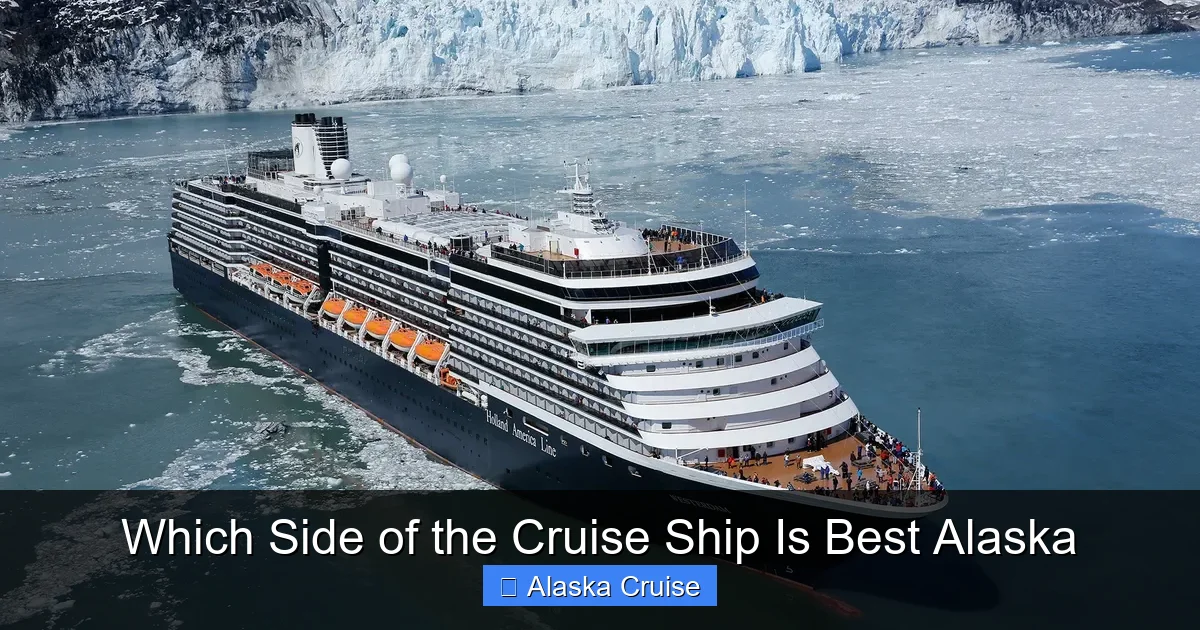
Choosing the best side of the cruise ship in Alaska depends on your itinerary, ports of call, and what you want to see. While there’s no one-size-fits-all answer, understanding wind patterns, sun exposure, and scenic highlights can help you pick the ideal side for wildlife, glaciers, and breathtaking views.
Key Takeaways
- Port vs. Starboard Matters: The left (port) and right (starboard) sides offer different views based on the ship’s direction and itinerary.
- Glacier Viewing Tips: For glaciers like Hubbard or Tracy Arm, the starboard side often provides better views on northbound routes.
- Wildlife Spotting: Sea lions, whales, and bears are often spotted on the port side near certain fjords and bays.
- Sun and Shade Considerations: Morning sun hits the starboard side; afternoon sun favors port—choose based on your preference for warmth or shade.
- Wind and Weather Impact: The windward side (usually starboard in Alaska) can be rougher but offers clearer views without glare.
- Cabin Location Tips: Midship cabins reduce motion sickness, but forward or aft cabins may offer unique panoramic views.
- Itinerary Dictates Everything: Your cruise route—whether round-trip from Seattle or one-way between Vancouver and Seward—determines which side is best.
📑 Table of Contents
- Which Side of the Cruise Ship Is Best Alaska? A Complete Guide
- Understanding Port vs. Starboard: The Basics
- Glacier Viewing: Which Side Gets the Best Views?
- Wildlife Spotting: Where to Be for Whales, Bears, and More
- Sun, Wind, and Comfort: Practical Considerations
- Itinerary-Specific Tips: Matching Your Route to the Best Side
- Pro Tips for Maximizing Your View
- Final Thoughts: There’s No Wrong Side—Just the Right Strategy
Which Side of the Cruise Ship Is Best Alaska? A Complete Guide
So you’ve booked your Alaska cruise—congratulations! You’re in for towering glaciers, breaching whales, and landscapes so stunning they’ll make your camera roll weep. But now comes a question that puzzles even seasoned cruisers: *Which side of the cruise ship is best in Alaska?*
It’s not just about picking a cabin or a deck chair. It’s about maximizing your experience in one of the most visually spectacular cruise destinations on Earth. Alaska’s coastline is a masterpiece of fjords, icefields, and wildlife, and your view can make or break a moment—like watching a glacier calve or spotting a humpback whale breach.
The truth? There’s no universal “best” side. But with a little planning and insight, you can dramatically increase your chances of being on the right side at the right time. Whether you’re sailing from Seattle, Vancouver, or Anchorage, understanding the nuances of port vs. starboard, wind direction, and scenic routes will help you make the most of your Alaskan adventure.
In this guide, we’ll break down everything you need to know—from glacier viewing strategies to wildlife hotspots, sun angles, and cabin selection tips—so you can confidently choose the best side of the ship for your Alaska cruise.
Understanding Port vs. Starboard: The Basics

Visual guide about Which Side of the Cruise Ship Is Best Alaska
Image source: thumbs.dreamstime.com
Before we dive into Alaska-specific advice, let’s clarify the basics. On any ship, the **port side** is the left side when facing the front (bow) of the ship, and the **starboard side** is the right. These terms are standard in maritime language and won’t change, no matter which direction your ship is sailing.
Now, here’s the key: the side that offers the best view depends entirely on your cruise’s **direction of travel** and **itinerary**. For example, if your ship is sailing north from Vancouver to Seward, the starboard side will face the open ocean and coastline, while the port side looks inward toward the mainland. But if you’re returning southbound, those roles reverse.
This means that a cabin on the starboard side might be ideal on the way up, but less scenic on the way back. That’s why round-trip cruises (like those departing and returning to Seattle or Vancouver) require extra consideration—you’ll experience both sides during your voyage.
Why Direction of Travel Matters
Alaska cruises typically follow one of two main routes:
– **Northbound:** Starting in cities like Vancouver or Seattle and ending in Seward or Whittier (near Anchorage).
– **Southbound:** The reverse—starting in Alaska and ending in the Pacific Northwest.
– **Round-Trip:** Departing and returning to the same port, often circling the Inside Passage.
On a northbound journey, the starboard side usually offers views of the Pacific Ocean, coastal mountains, and open water—ideal for whale watching and sunset views. The port side, meanwhile, looks toward the mainland, offering glimpses of forests, small towns, and sometimes even bears along the shore.
On a southbound cruise, it’s the opposite. The port side becomes the ocean-facing side, while starboard looks inland.
For round-trip cruises, you’ll get a taste of both—but you’ll only have one cabin. So if you’re choosing a stateroom, consider which leg of the journey has the most scenic highlights. For most travelers, the northbound leg (with glacier stops) is the most dramatic, so prioritizing starboard for that segment makes sense.
Glacier Viewing: Which Side Gets the Best Views?
If there’s one thing Alaska is famous for, it’s glaciers. And when it comes to glacier viewing, **timing and positioning are everything**.
Most Alaska cruises include at least one major glacier stop—Hubbard Glacier, Tracy Arm Fjord (with Sawyer Glaciers), or Glacier Bay National Park. These are the moments you’ve been waiting for: towering walls of blue ice, thunderous calving events, and the crisp, clean air of the Arctic.
But here’s the catch: ships often approach glaciers from a specific direction, and the best views are usually on one side.
Hubbard Glacier: Starboard Side Wins
Hubbard Glacier, one of the largest tidewater glaciers in North America, is typically approached from the south. On northbound cruises, this means the **starboard side** offers the most unobstructed views. You’ll see the full face of the glacier, including its massive ice cliffs and the surrounding snow-capped peaks.
Many cruisers report that the starboard side is where the action happens—especially during calving events, when chunks of ice break off and crash into the water. If you’re on the port side, you might only see the back or side of the glacier, which is far less dramatic.
Tracy Arm Fjord: Port Side for Wildlife, Starboard for Glaciers
Tracy Arm is a narrow, winding fjord that leads to the twin Sawyer Glaciers. Because the fjord is so tight, the ship often turns multiple times, giving both sides a chance to see the glaciers. However, the **starboard side** usually gets the first and best view of the glaciers as the ship enters the fjord.
That said, the **port side** often offers better wildlife spotting opportunities. Sea lions, harbor seals, and even black bears have been spotted along the rocky shores on the port side. So if you’re more interested in animals than ice, port might be your pick.
Glacier Bay National Park: A Balanced Experience
Glacier Bay is a UNESCO World Heritage Site and a highlight for many Alaska cruisers. Here, the ship typically sails westward through the bay, with glaciers on both sides. This means **both port and starboard offer incredible views**, though the timing of your visit matters.
The park rangers often position the ship for optimal viewing, rotating it slowly so passengers on both sides can see the glaciers. However, the most famous glaciers—like Margerie and Johns Hopkins—are often best viewed from the **starboard side** during the morning hours.
Pro tip: Bring binoculars and dress warmly. Even in summer, glacier viewing can be chilly, and the wind off the ice is no joke.
Wildlife Spotting: Where to Be for Whales, Bears, and More
Alaska isn’t just about ice—it’s a wildlife paradise. From humpback whales and orcas to brown bears and bald eagles, the chances of spotting incredible animals are high. But again, **location matters**.
Whale Watching: Starboard for Open Water
Humpback whales, orcas, and minke whales are often seen in the open waters of the Pacific or near the mouth of fjords. On northbound cruises, the **starboard side** faces the ocean, making it the prime spot for whale sightings.
Whales tend to travel along the continental shelf, which runs parallel to the coast on the starboard side during northbound journeys. Many cruisers report seeing breaching whales, tail slaps, and even bubble-net feeding on this side.
That said, whales can appear anywhere—so keep your eyes peeled on both sides. But if you had to pick one, starboard is statistically better for marine mammals.
Bears and Coastal Wildlife: Port Side for Shoreline Views
While whales dominate the open water, bears and other coastal wildlife are more likely to be spotted near the shoreline. On northbound cruises, the **port side** looks toward the mainland, where bears often forage along river mouths or salmon streams.
Places like Icy Strait Point, Ketchikan, and the Tongass National Forest are prime bear-watching areas. If your ship slows down or stops near these regions, the port side offers the best chance to spot a bear ambling along the beach or fishing in a creek.
Sea lions and seals are also commonly seen on rocky outcrops and buoys—again, often on the port side during northbound travel.
Birds and Eagles: Both Sides, But Timing Helps
Bald eagles are everywhere in Alaska—perched on treetops, soaring over fjords, and nesting along the coast. You’ll likely see them from both sides, but early morning and late afternoon are the best times for bird activity.
If you’re a birdwatcher, consider positioning yourself on the side that faces the sun during these golden hours. For example, if the sun is rising over the starboard side, that’s where you’ll get the best lighting for photos.
Sun, Wind, and Comfort: Practical Considerations
Beyond scenery, the side of the ship you choose can affect your comfort—especially when it comes to sun, wind, and motion.
Sun Exposure: Morning vs. Afternoon Light
In Alaska, the sun rises in the east and sets in the west, just like anywhere else. But because most cruises travel north or south along the coast, the angle of the sun changes throughout the day.
– **Morning:** The sun rises over the starboard side on northbound cruises. If you love waking up with golden light streaming into your cabin, starboard is the way to go.
– **Afternoon:** The sun moves to the port side by late afternoon. If you prefer afternoon sun for warmth or photography, port might be better.
Keep in mind that Alaska’s high latitude means long summer days—up to 18 hours of daylight in June. So even if you’re on the “shady” side, you’ll still get plenty of light.
Wind and Weather: The Windward Side
Alaska’s weather can be unpredictable, with sudden winds and rain. The **windward side** of the ship (the side facing the wind) will be colder and wetter, while the leeward side (sheltered from the wind) is calmer and drier.
In most Alaska cruises, the **starboard side** is windward during northbound travel, especially in open water. This means it can be windier and chillier—but also clearer, with less glare on the windows.
If you’re prone to motion sickness, the windward side may feel rougher. But if you want unobstructed views and don’t mind a brisk breeze, it’s worth it.
Cabin Location: Forward, Aft, or Midship?
While side matters, so does your cabin’s position on the ship.
– **Midship cabins** are the most stable, with less sway—ideal if you’re sensitive to motion.
– **Forward cabins** offer panoramic views, especially on the bow, but can be noisier and feel more movement.
– **Aft cabins** (at the back) often have private balconies with sweeping views of the wake and coastline—great for photography.
If you’re choosing between a forward starboard cabin and a midship port cabin, consider your priorities: views vs. comfort.
Itinerary-Specific Tips: Matching Your Route to the Best Side
Not all Alaska cruises are the same. Your itinerary—whether it’s a 7-day round-trip from Seattle or a 10-day one-way voyage from Vancouver to Seward—will determine which side is best.
Round-Trip Cruises (Seattle, Vancouver, San Francisco)
These cruises are popular because they don’t require flying into Alaska. You sail up the Inside Passage, visit ports like Juneau, Skagway, and Ketchikan, then return the same way.
On these trips, you’ll experience both port and starboard views. But since the northbound leg (with glaciers) is usually the most scenic, **prioritize starboard for glacier and whale viewing**.
If you’re booking a cabin, consider a starboard-side stateroom on decks 6–10—high enough for views, but not so high that wind becomes an issue.
One-Way Cruises (Vancouver to Seward or Vice Versa)
These cruises offer a more immersive experience, often including more time in Glacier Bay or longer stops in port cities.
On a **Vancouver to Seward** (northbound) cruise, the **starboard side** is generally best for ocean views, whales, and glaciers.
On a **Seward to Vancouver** (southbound) cruise, the **port side** becomes the ocean-facing side, making it ideal for wildlife and sunset views.
If you’re doing a one-way cruise, you can choose your cabin side based on the direction of travel—no need to compromise.
Small Ship vs. Large Ship Considerations
Smaller ships (like those from UnCruise or Lindblad Expeditions) can navigate narrower fjords and get closer to glaciers and wildlife. On these ships, **both sides often get great views**, and the crew may rotate the ship for optimal sightings.
Larger ships (like those from Carnival or Royal Caribbean) follow more fixed routes and may not turn as frequently. On these, choosing the right side is even more important.
Pro Tips for Maximizing Your View
No matter which side you choose, here are some insider tips to make the most of your Alaska cruise views:
– **Arrive Early:** Popular spots on the deck fill up fast during glacier viewing. Get there 30–60 minutes early to secure a good spot.
– **Bring Layers:** Even in summer, it can be cold near glaciers. A windbreaker, hat, and gloves are essential.
– **Use Binoculars:** Wildlife and distant glaciers look incredible up close. A good pair of binoculars is a must.
– **Check the Daily Schedule:** Cruise directors often announce which side will have the best views for upcoming stops.
– **Talk to the Crew:** Officers and naturalists know the ship’s route and can give real-time advice on where to be.
Final Thoughts: There’s No Wrong Side—Just the Right Strategy
So, which side of the cruise ship is best in Alaska? The honest answer is: it depends.
If you’re on a northbound cruise and want to see glaciers and whales, **starboard** is usually your best bet. If you’re more interested in bears, coastal scenery, and afternoon sun, **port** might be better. And if you’re on a round-trip cruise, you’ll get a taste of both—so focus on the leg with the most highlights.
Ultimately, Alaska’s beauty is so vast and varied that you’re going to see something incredible no matter where you stand. But with a little planning, you can ensure you’re on the right side at the right time—whether that’s watching a glacier calve, spotting a whale breach, or simply soaking in the golden light of an Alaskan sunset.
So pack your camera, bring your sense of wonder, and get ready for the cruise of a lifetime. Just remember: the best side of the ship isn’t just about location—it’s about being present, prepared, and open to the magic of the Last Frontier.
Frequently Asked Questions
Which side of the cruise ship is best for glacier viewing in Alaska?
The starboard side is generally best for glacier viewing, especially on northbound cruises. Glaciers like Hubbard and those in Glacier Bay are often approached from the south, giving starboard passengers the most direct and dramatic views.
Is the port or starboard side better for whale watching?
The starboard side is typically better for whale watching on northbound Alaska cruises, as it faces the open ocean where whales are commonly spotted. However, whales can appear anywhere, so keep an eye on both sides.
Does the side of the ship matter on a round-trip Alaska cruise?
Yes, because you’ll experience both port and starboard views. Since the northbound leg often includes the most scenic glacier stops, many travelers prefer a starboard-side cabin for that segment.
Which side gets more sun in the morning on an Alaska cruise?
On northbound cruises, the starboard side receives morning sun, making it ideal if you like waking up with natural light. The port side gets afternoon sun.
Can I see bears from the cruise ship?
Yes, especially on the port side during northbound travel, where the ship passes close to the mainland. Bears are often spotted near river mouths and salmon streams in areas like Icy Strait Point.
Should I choose a forward or aft cabin for better views?
Forward cabins offer panoramic views, especially on the bow, while aft cabins often have private balconies with sweeping views of the coastline. Midship cabins are best for stability and reduced motion.