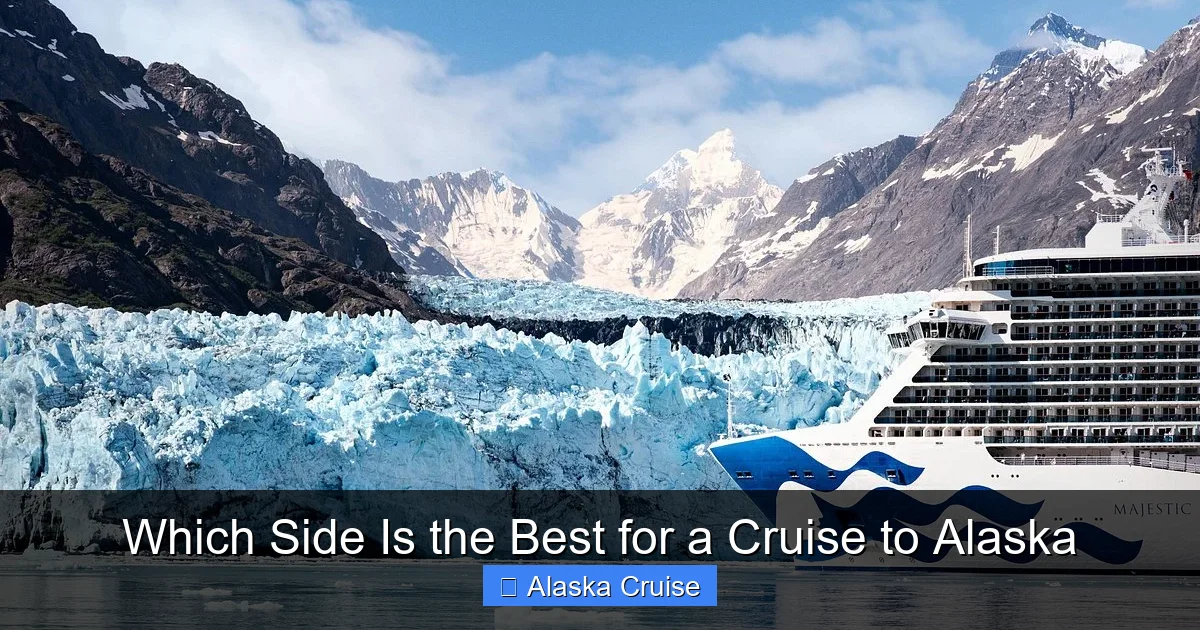
Choosing the best side for a cruise to Alaska depends on your itinerary, ship direction, and what you want to see. Whether you’re on the port or starboard side, each offers unique views of glaciers, wildlife, and coastal scenery—planning ahead ensures you don’t miss the magic.
This is a comprehensive guide about which side is the best for a cruise to alaska.
Key Takeaways
- Port vs. Starboard Matters: The side of the ship you’re on can determine what scenic views you see, especially in narrow fjords and during glacier approaches.
- Itinerary Direction Is Key: Northbound and southbound cruises follow opposite routes, flipping which side offers the best views at different ports.
- Glacier Viewing Tips: For iconic stops like Glacier Bay or Hubbard Glacier, one side typically provides unobstructed views—knowing which helps you plan.
- Wildlife Spotting Opportunities: Certain sides offer better angles for spotting whales, sea lions, and birds, especially near popular wildlife zones.
- Sunrise and Sunset Views: Depending on your cabin side, you may enjoy stunning sunrises over the water or golden sunsets behind mountain peaks.
- Balcony vs. Interior Cabins: While balcony cabins offer flexibility, even interior cabins can be great if you spend time on public decks.
- Ask the Crew: Ship staff often know the best viewing spots and can guide you to prime locations based on daily routes.
[FEATURED_IMAGE_PLACEHOLDER]
Which Side Is the Best for a Cruise to Alaska?
So, you’ve booked your dream cruise to Alaska—congratulations! You’re probably already imagining towering glaciers, breaching whales, and misty fjords wrapped in pine-covered mountains. But now comes a surprisingly important question: which side of the ship should you be on?
It might seem like a small detail, but choosing the right side—port (left) or starboard (right)—can make a big difference in your Alaska cruise experience. Unlike cruising in the Caribbean or Mediterranean, where the ocean is wide and views are symmetrical, Alaska’s coastline is rugged, narrow, and full of dramatic turns. Ships often hug the shore, and certain scenic highlights are only visible from one side. Whether you’re marveling at a calving glacier in Glacier Bay or spotting a pod of orcas near Juneau, being on the right side can mean the difference between a front-row seat and a blocked view.
But don’t stress—this isn’t about picking a “winner.” Instead, it’s about understanding how the ship moves, where the sights are, and how to maximize your chances of seeing Alaska’s wonders. In this guide, we’ll break down everything you need to know about choosing the best side for your Alaska cruise, from itinerary direction to wildlife hotspots and even cabin selection tips. By the end, you’ll feel confident and ready to enjoy every breathtaking moment.
Understanding Port vs. Starboard: The Basics
Before we dive into the specifics of Alaska cruising, let’s clarify a few nautical terms. If you’re new to cruising, “port” and “starboard” might sound like something from a pirate movie—but they’re essential for understanding ship orientation.
Port refers to the left side of the ship when you’re facing the front (the bow). Starboard is the right side. These terms are used universally in maritime settings because they’re fixed—unlike “left” and “right,” which can change depending on which way you’re facing. So no matter where you are on the ship, port is always port, and starboard is always starboard.
Now, why does this matter for an Alaska cruise? Because the direction your ship travels—northbound or southbound—determines which side faces the shore and which faces the open water. For example, on a northbound cruise from Seattle to Whittier, the ship typically hugs the coastline with land on the starboard side. That means starboard cabins and decks offer views of the mountains, forests, and wildlife. On a southbound return, the ship reverses course, and now the port side faces the shore.
This flip-flop effect means that the “best” side changes depending on your itinerary. A cabin that offers stunning glacier views on the way north might face the open ocean on the way back. So instead of asking, “Which side is best?” the smarter question is: “Which side is best for my specific cruise direction and ports?”
Northbound vs. Southbound: How Direction Affects Your Views
One of the most important factors in determining the best side for your Alaska cruise is whether your trip is northbound or southbound. Most Alaska cruises depart from either Seattle or Vancouver and end in Whittier or Seward (near Anchorage), or vice versa. This directionality directly impacts which side of the ship offers the best views.
Northbound Cruises: Seattle/Vancouver to Whittier/Seward
If you’re cruising northbound—starting in the Pacific Northwest and heading toward Alaska—your ship will generally travel along the inside passage with the coastline on the starboard (right) side. This means that starboard cabins, balconies, and public decks will have prime views of the shore, including:
– The lush forests of British Columbia
– The bustling ports of Ketchikan and Juneau
– The dramatic fjords of Tracy Arm and Endicott Arm
– The approach to Glacier Bay National Park
For example, when your ship enters Glacier Bay, the glaciers like Margerie and Lamplugh are often visible from the starboard side. If you’re in a starboard cabin with a balcony, you’ll have an unobstructed view as the ship slowly navigates the bay. Meanwhile, port-side passengers might see more open water or the opposite shoreline.
Southbound Cruises: Whittier/Seward to Seattle/Vancouver
On a southbound cruise, the ship reverses direction. Now, the coastline is on the port (left) side, making port-side cabins and decks the better choice for scenic views. As you leave Glacier Bay and head back down the inside passage, the port side will offer:
– Views of the Alaskan coastline as you depart
– Better angles for spotting wildlife near shore
– Access to sunrise views over the water (more on that later)
This means that if you’re on a round-trip cruise that starts and ends in the same city (like Seattle), your outbound and return journeys will offer different views depending on your cabin side. A starboard cabin might be perfect on the way north but less ideal on the way back.
Practical Example: A Typical 7-Day Itinerary
Let’s say you’re on a 7-day cruise from Seattle to Ketchikan, Juneau, Skagway, and Glacier Bay, ending in Whittier. Here’s how the views break down:
– Day 1–2 (Seattle to Ketchikan): Starboard side faces the coast of British Columbia and southern Alaska. Great for spotting islands and early wildlife.
– Day 3 (Ketchikan): Docked on the starboard side, so starboard passengers have easier access to tenders (small boats) if needed.
– Day 4 (Juneau): Often docked on the starboard side. Starboard cabins get views of the city and surrounding mountains.
– Day 5 (Skagway): Docked on the port side. Port cabins have better views of the town and the White Pass.
– Day 6 (Glacier Bay): The ship navigates slowly, and glaciers are typically on the starboard side. Starboard is the prime viewing spot.
– Day 7 (Whittier): Arrival in the morning. Starboard side faces the town and the entrance to the fjord.
In this case, a starboard cabin offers the best overall experience. But if you were on the return trip (southbound), the port side would be better.
Glacier Viewing: Where to Be for the Best Ice Views
Glaciers are one of the main reasons people cruise to Alaska. The sight of a massive wall of ice calving into the sea is unforgettable. But to see it properly, you need to be on the right side of the ship.
Glacier Bay National Park
Glacier Bay is a highlight of most Alaska itineraries. The park is home to over a dozen active glaciers, and ships spend several hours navigating the bay. The most famous glaciers—Margerie, Lamplugh, and Johns Hopkins—are typically visible from the starboard side on northbound cruises.
Why? Because the ship enters the bay from the south and travels northward, with the glaciers lining the western (starboard) shore. As the ship slows to a crawl, passengers on the starboard side get front-row seats to the action. You’ll see blue ice cliffs, hear the thunderous crack of calving, and maybe even spot seals lounging on ice floes.
Port-side passengers aren’t left out entirely—they’ll see the opposite shoreline, which is also beautiful—but they’ll miss the close-up glacier views. If you’re serious about glacier watching, a starboard cabin on a northbound cruise is your best bet.
Tracy Arm and Endicott Arm
These narrow fjords near Juneau are famous for their towering cliffs and the Sawyer Glaciers. Ships often enter Tracy Arm from the south, with the glaciers on the starboard side. Again, starboard passengers get the best views.
However, some ships may turn around in the fjord, which can shift the best viewing side. But in general, if you’re heading into Tracy Arm on a northbound cruise, starboard is the way to go.
Hubbard Glacier
Hubbard Glacier, near the end of many itineraries, is one of the largest tidewater glaciers in North America. Ships approach it from the south, and the glacier itself is on the port side as you arrive. That means port-side cabins offer the best views during this stop.
This is a great example of why itinerary direction matters. On a northbound cruise, Hubbard Glacier is often one of the last stops, and the ship may approach it from a different angle than Glacier Bay. Always check your cruise line’s route map to see which side will face the glacier.
Tips for Glacier Viewing
– Book a balcony cabin: Even if it’s on the “wrong” side, a balcony lets you move around and find the best angle.
– Use public decks: The bow (front) and stern (back) often offer 360-degree views, so you’re not limited to your cabin side.
– Bring binoculars: Glaciers can be far away, and binoculars help you see details like crevasses and wildlife.
– Layer up: It’s colder near glaciers, even in summer. Bring a jacket, hat, and gloves.
Wildlife Spotting: Which Side Offers the Best Chances?
Alaska is a wildlife paradise. From humpback whales to sea otters, bald eagles to brown bears, the coast is teeming with life. But where you are on the ship can affect your chances of spotting these creatures.
Whale Watching
Whales are often seen near the shore, especially in areas like Icy Strait Point near Hoonah and around Juneau. On a northbound cruise, the starboard side faces the coast, making it the prime spot for whale sightings. Humpbacks, orcas, and minke whales frequently feed in these waters, and being on the right side increases your odds.
That said, whales can appear anywhere, and ships often slow down or change course when sightings are reported. Still, if you’re in a starboard cabin, you’re more likely to see them first.
Sea Lions and Seals
Steller sea lions and harbor seals are commonly seen on rocky outcrops and ice floes. These animals tend to stay close to shore, so again, the side facing the coastline offers better views. In Glacier Bay, seals are often spotted on icebergs near the glaciers—another reason to be on the starboard side during that stop.
Birds and Coastal Wildlife
Bald eagles nest in tall trees along the shore, and puffins can be seen on rocky islands. Seabirds like gulls and cormorants are everywhere. The side facing the coast will give you the best views of these birds in their natural habitat.
Bear Viewing (From a Distance)
While you won’t see bears from the ship itself, some excursions—like bear-watching tours in places like Pack Creek on Admiralty Island—are accessed from ports. If your ship docks on the starboard side in Juneau, for example, starboard passengers may have easier access to tenders heading to bear-viewing sites.
Pro Tip: Use the Ship’s Naturalists
Most Alaska cruises have onboard naturalists who give lectures and point out wildlife. They often station themselves on the best viewing decks and can help you spot animals you might otherwise miss. Ask them where to go based on the day’s route.
Cabin Selection: Balcony, Oceanview, or Interior?
Now that you know which side might offer the best views, let’s talk about cabin types. Your choice here can enhance—or limit—your Alaska experience.
Balcony Cabins: The Gold Standard
A balcony cabin is ideal for Alaska. It gives you a private space to enjoy the scenery, breathe the fresh air, and take photos without fighting for space on crowded decks. Even if your balcony is on the “less scenic” side, you can still step out to public areas when the ship reaches highlights.
Balcony cabins are especially valuable during glacier viewing, when you’ll want to stay outside for hours. You can sip coffee, wrap up in a blanket, and watch the ice calve—all from the comfort of your room.
Oceanview Cabins: A Solid Middle Ground
If a balcony is out of budget, an oceanview cabin with a large window is a great alternative. You won’t have outdoor access, but you’ll still get natural light and views. Just make sure the window opens—some don’t, which can be frustrating on a crisp Alaskan morning.
Interior Cabins: Budget-Friendly but Limited
Interior cabins have no windows, so you’ll miss the views entirely unless you’re on deck. However, many cruisers find they spend most of their time outside anyway, exploring ports or relaxing on public decks. If you’re on a tight budget, an interior cabin can still work—just plan to be mobile and take advantage of the ship’s observation areas.
Choosing the Right Side for Your Cabin
If you’re booking a balcony or oceanview cabin, consider the itinerary direction:
– Northbound cruise: Choose a starboard cabin for better coastal and glacier views.
– Southbound cruise: Choose a port cabin.
– Round-trip cruise: You might want to book different sides for each leg, but that’s not always possible. In that case, pick the side that aligns with the most scenic parts of your trip (usually Glacier Bay).
Sunrise, Sunset, and the Alaskan Light
One often-overlooked benefit of choosing a specific side is the quality of light—especially during sunrise and sunset. Alaska’s long summer days mean you’ll have plenty of daylight, but the angle of the sun can create stunning photo opportunities.
Sunrise Views
On a northbound cruise, the sun rises in the east. If your cabin is on the starboard side, you may catch beautiful sunrise views over the water as the ship heads north. This is especially true in the early morning hours when the light is soft and golden.
Sunset Views
Sunsets are best seen from the side facing west. On a northbound cruise, that’s often the port side—especially as you leave ports like Skagway or Juneau in the evening. If you’re on the port side, you might enjoy a spectacular sunset behind the mountains as the ship sails into the night.
Photography Tips
– Golden hour: The hour after sunrise and before sunset offers the best light for photos.
– Use a tripod: For long exposures of glaciers or water, a small tripod can help.
– Shoot in RAW: This gives you more flexibility when editing photos later.
Final Tips for Maximizing Your Alaska Cruise Experience
Choosing the best side is just one part of planning your Alaska cruise. Here are a few final tips to help you make the most of your trip:
- Check your itinerary: Review the route map provided by your cruise line. Note which ports are on which side and when glaciers are approached.
- Talk to the crew: Staff members often know the best viewing spots and can give you real-time updates on wildlife sightings.
- Be flexible: Weather and sea conditions can change plans. Sometimes the ship may alter its route, which can shift the best viewing side.
- Pack wisely: Bring layers, waterproof gear, and a good camera. Alaska’s weather can be unpredictable.
- Book excursions early: Popular tours like whale watching or glacier hikes fill up fast. Reserve them as soon as possible.
Conclusion
So, which side is the best for a cruise to Alaska? The answer isn’t one-size-fits-all. It depends on your cruise direction, itinerary, and what you most want to see. For northbound cruises, the starboard side often offers the best views of glaciers, wildlife, and coastal scenery. For southbound trips, the port side takes the lead. And if you’re on a round-trip cruise, you might enjoy different views on each leg.
But here’s the good news: no matter which side you’re on, Alaska is breathtaking from every angle. The key is to be informed, flexible, and ready to embrace the adventure. Whether you’re sipping coffee on your balcony as a glacier calves or spotting a whale breach from the bow, you’re in for an unforgettable journey.
So go ahead—book that cabin, pack your bags, and get ready to experience the wild beauty of Alaska. Just remember: the best side is the one that lets you say, “Wow,” over and over again.
Frequently Asked Questions
Is it better to be on the port or starboard side for an Alaska cruise?
It depends on your cruise direction. On northbound cruises, the starboard side usually faces the coast and offers better views of glaciers and wildlife. On southbound cruises, the port side is better. Check your itinerary to decide.
Can I change sides during the cruise?
Generally, no. Cabin assignments are fixed, but you can move to public decks like the bow or stern for 360-degree views, especially during scenic stops.
Do I need a balcony cabin to see the best views?
Not necessarily. While a balcony is ideal, public observation decks offer excellent views too. Many cruisers spend most of their time outside anyway.
What if my cabin is on the wrong side for glacier viewing?
Don’t worry—ships often slow down or turn during glacier approaches, giving everyone a chance to see. Plus, naturalists will guide you to the best spots.
Are wildlife sightings guaranteed on one side?
No, wildlife can appear anywhere. However, the side facing the shore increases your chances, especially for whales and seals near the coast.
Should I book different sides for a round-trip cruise?
Ideally, yes—but it’s not always possible. If you can’t, choose the side that aligns with the most scenic parts of your trip, like Glacier Bay.