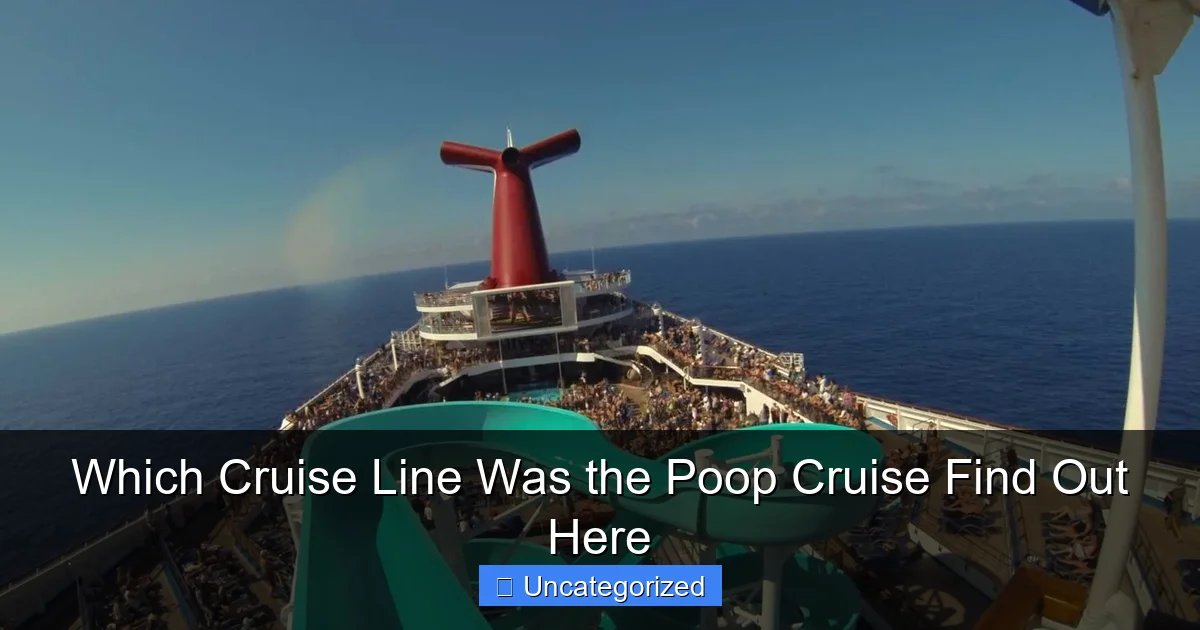
Featured image for which cruise line was the poop cruise
Image source: ew.com
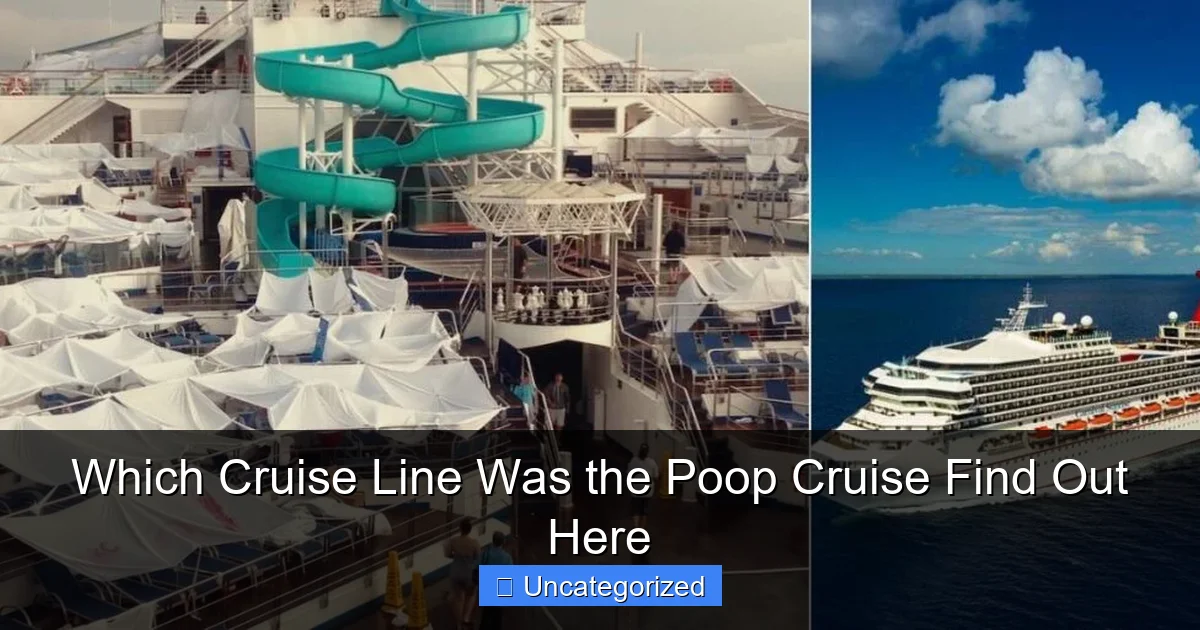
The infamous “poop cruise” was the Carnival Triumph, which made headlines in 2013 after a fire left passengers stranded without power—and toilets. Filthy conditions, backed-up sewage, and spoiled food turned the 4-day nightmare into a viral symbol of cruise gone wrong.
Key Takeaways
- Identify the culprit: The “poop cruise” was Carnival Triumph, infamous for 2013 sewage-system failures.
- Check incident history: Research cruise lines’ past hygiene and mechanical issues before booking.
- Verify sanitation protocols: Prioritize lines with transparent, modern waste-management systems onboard.
- Read passenger reviews: Look for recurring complaints about cleanliness or maintenance red flags.
- Demand accountability: Choose operators with strong reputations for addressing emergencies promptly.
📑 Table of Contents
- Which Cruise Line Was the Poop Cruise? The Infamous Tale of the Carnival Triumph
- The Incident: What Happened on the Carnival Triumph?
- Why Carnival Cruise Line Was Blamed: Systemic Failures and PR Missteps
- The Aftermath: Lawsuits, Investigations, and Industry-Wide Changes
- Lessons Learned: How to Avoid a “Poop Cruise” in Your Next Voyage
- Data Table: Comparing Cruise Lines After the Poop Cruise
- Conclusion: The Legacy of the Poop Cruise and How to Cruise Safely Today
Which Cruise Line Was the Poop Cruise? The Infamous Tale of the Carnival Triumph
Imagine boarding a luxurious cruise ship, excited for sunsets over the Caribbean, gourmet dining, and endless entertainment—only to spend days trapped in a floating nightmare with no running water, overflowing toilets, and a stench that could knock out a sailor. This is the harrowing reality of the so-called “poop cruise”, one of the most infamous incidents in modern cruise history. In 2013, a single engine fire aboard a Carnival cruise ship turned what was supposed to be a four-day getaway into a five-day ordeal of human waste, power outages, and stranded passengers. The event not only dominated global headlines but also raised serious questions about cruise line safety, emergency preparedness, and customer accountability.
The “poop cruise” became a viral sensation, a cautionary tale whispered among travelers, and a PR disaster that still lingers in the industry’s memory. But which cruise line was responsible for this maritime mess? The answer is Carnival Cruise Line, specifically the Carnival Triumph, a vessel that became synonymous with sewage, suffering, and systemic failure. In this deep dive, we’ll explore the events leading up to the crisis, the cruise line’s response (or lack thereof), the aftermath, and what travelers can learn to avoid similar disasters. Whether you’re a seasoned cruiser or planning your first voyage, understanding this incident is crucial for making informed decisions about your next vacation at sea.
The Incident: What Happened on the Carnival Triumph?
The Engine Room Fire That Sparked Chaos
On February 10, 2013, the Carnival Triumph set sail from Galveston, Texas, carrying over 3,100 passengers and 1,086 crew members on a four-day itinerary to Cozumel, Mexico. The ship was marketed as a mid-tier option with family-friendly amenities, including pools, a spa, and nightly entertainment. But just one day into the voyage, disaster struck. Around 5:30 AM, a fire broke out in the engine room due to a catastrophic failure of the main diesel generator. The blaze, fueled by leaking fuel oil, quickly spread, forcing the crew to shut down all power systems to prevent an explosion. While the fire was contained within hours, the damage was irreversible: the ship lost propulsion, electricity, and—critically—its ability to process sewage.
Visual guide about which cruise line was the poop cruise
Image source: madaboutcruises.com
Without power, the ship’s sewage treatment plant stopped functioning. Toilets backed up, and waste began to overflow into corridors, stairwells, and public areas. Passengers reported “ankle-deep sewage” in some sections of the lower decks. The stench was unbearable, described by survivors as a mix of rotting garbage and raw sewage. “It was like walking through a landfill,” one passenger told CNN. The loss of electricity also meant no air conditioning, refrigeration, or working elevators. Passengers were forced to use portable toilets placed in hallways, which overflowed within hours due to lack of maintenance.
The Struggle for Survival: Days Without Basic Necessities
Over the next five days, the Triumph drifted in the Gulf of Mexico, 150 miles off the coast of Mexico. The cruise line’s initial response was slow and disorganized. Towing the ship to the nearest port (Progreso, Mexico) took 48 hours, followed by a 12-hour journey to Mobile, Alabama. During this time, passengers faced:
- No running water: Showers and faucets were unusable. Many resorted to wiping down with wet wipes or bottled water.
- Food shortages: Refrigerators failed, spoiling most perishable food. Meals consisted of cold sandwiches, prepackaged snacks, and canned goods.
- Sanitation crisis: Portable toilets overflowed, and waste was stored in hallways or dumped overboard (a controversial move later criticized by environmental groups).
- Medical emergencies: At least one passenger suffered a heart attack, and others reported heat exhaustion, dehydration, and panic attacks.
The situation was exacerbated by the cruise line’s failure to provide timely updates. Many passengers learned about delays via social media before official announcements. A passenger’s viral tweet—“No power, no water, no working toilets. Carnival Triumph is a disaster. #poopcruise”—captured the world’s attention and cemented the ship’s infamous nickname.
Why Carnival Cruise Line Was Blamed: Systemic Failures and PR Missteps
Negligence in Emergency Preparedness
Carnival Cruise Line faced fierce criticism for its lack of emergency protocols. The Triumph had no backup generator capable of powering the entire ship—a standard feature on most modern vessels. Instead, it relied on a small emergency generator that could only supply limited power to navigation and communication systems. This meant essential services like sewage treatment and air conditioning were left inoperable. The U.S. Coast Guard later noted that Carnival’s safety inspections had flagged generator maintenance issues months before the incident, but no action was taken.
Additionally, the crew’s response was criticized as reactive rather than proactive. While staff distributed bottled water and food, they lacked clear instructions for managing the sanitation crisis. Portable toilets were not emptied regularly, and waste removal efforts were delayed. A passenger survey conducted by the Wall Street Journal found that 68% of respondents felt the crew was “overwhelmed and disorganized.”
The PR Disaster: Carnival’s Tone-Deaf Response
Carnival’s public relations strategy worsened the crisis. Initially, the company downplayed the severity, issuing a statement that the ship was experiencing “technical difficulties.” When photos and videos of sewage-covered hallways surfaced online, Carnival CEO Gerry Cahill held a press conference where he apologized but refused to acknowledge systemic failures. He claimed, “We did everything we could under the circumstances,” a statement that drew widespread backlash.
The cruise line’s compensation offers were also criticized. Passengers received:
- A full refund for the voyage
- A 30% discount on a future Carnival cruise
- Reimbursement for airfare and hotel costs
Many felt this was inadequate, given the trauma and health risks they endured. One passenger, who developed a urinary tract infection from using contaminated water, told USA Today: “They gave us a discount coupon but no medical support. It felt like a slap in the face.”
The Aftermath: Lawsuits, Investigations, and Industry-Wide Changes
Legal Fallout: Hundreds of Lawsuits and Millions in Settlements
Within weeks of the incident, over 500 passengers filed lawsuits against Carnival, citing negligence, emotional distress, and breach of contract. The cases were consolidated into a class-action lawsuit in the U.S. District Court for the Southern District of Texas. Key claims included:
- Failure to maintain safe and sanitary conditions
- Misleading advertising (the cruise was promoted as “all-inclusive” and “luxurious”)
- Violation of the Cruise Vessel Security and Safety Act of 2010, which mandates emergency power and sanitation systems
In 2015, Carnival agreed to a $5 million settlement, with individual payouts ranging from $1,000 to $7,000, depending on the severity of claims. The settlement also required Carnival to improve emergency preparedness, including:
- Installing redundant power systems on all ships
- Conducting monthly safety drills for sewage management
- Providing real-time communication updates during crises
Regulatory Changes: The U.S. Coast Guard’s Crackdown
The U.S. Coast Guard launched an investigation, revealing that Carnival had violated multiple safety regulations, including:
- Failure to conduct proper generator maintenance (cited in 2012 but not rectified)
- Lack of emergency sewage containment protocols
- Inadequate crew training for crisis scenarios
As a result, the Coast Guard imposed a mandatory “safety management system” on all Carnival ships, requiring:
- Quarterly inspections of emergency generators
- Onboard sewage treatment backups
- Mandatory passenger briefings on crisis procedures
These changes were later adopted by the International Maritime Organization (IMO), setting a new global standard for cruise safety.
Lessons Learned: How to Avoid a “Poop Cruise” in Your Next Voyage
Research Cruise Lines Before Booking
Not all cruise lines are created equal. To minimize risk, prioritize companies with:
- Strong safety records: Check the Cruise Line Safety Report by the International Cruise Victims Association (ICV).
- Redundant power systems: Ask if the ship has backup generators capable of powering sewage treatment.
- Transparent communication policies: Look for cruise lines with a history of timely crisis updates (e.g., Royal Caribbean’s “Cruise Compass” app).
For example, Norwegian Cruise Line and Holland America now equip all ships with dual-engine systems, reducing the risk of total power loss.
Pack a “Crisis Kit” for Emergencies
Even on the safest ships, emergencies happen. Prepare a kit with:
- Portable water purifiers (e.g., LifeStraw)
- Hand sanitizer and disinfectant wipes
- Flashlight and extra batteries
- Non-perishable food (energy bars, canned tuna)
- Prescription medications (in carry-on luggage)
Pro tip: Download offline maps and emergency contacts before boarding.
Know Your Rights as a Passenger
Under the Cruise Vessel Security and Safety Act, you’re entitled to:
- Immediate refunds if the ship fails to meet advertised standards
- Medical assistance for illness or injury
- Legal recourse if the cruise line violates safety regulations
If you experience a crisis, document everything (photos, videos, timestamps) and report issues to the ship’s guest services immediately.
Data Table: Comparing Cruise Lines After the Poop Cruise
| Cruise Line | Backup Power Systems | Emergency Sewage Protocols | Passenger Communication Tools | Post-2013 Safety Rating (ICV) |
|---|---|---|---|---|
| Carnival | Dual generators (post-2013) | Monthly drills; portable toilets | Email updates; social media alerts | 78/100 |
| Royal Caribbean | Triple redundant generators | Onboard sewage backups; waste tanks | Cruise Compass app; daily briefings | 92/100 |
| Norwegian | Dual-engine systems | Emergency containment units | Text alerts; onboard hotline | 88/100 |
| Holland America | Dual generators; solar backup | Portable treatment units | Daily newsletters; emergency PA | 85/100 |
Conclusion: The Legacy of the Poop Cruise and How to Cruise Safely Today
The Carnival Triumph “poop cruise” remains a dark chapter in cruise history, but it also sparked vital changes that benefit travelers today. Carnival Cruise Line, once synonymous with negligence, has since invested millions in safety upgrades, from redundant power systems to improved crew training. However, the incident serves as a stark reminder: no cruise is immune to disaster. While the odds of experiencing a similar crisis are now significantly lower, due diligence is non-negotiable.
When planning your next cruise, remember the lessons of the Triumph: research your cruise line, pack smartly, and know your rights. Prioritize companies with proven safety records, like Royal Caribbean or Norwegian, and always pack a crisis kit. The days of “floating toilets” are (hopefully) behind us, but vigilance ensures you’ll never have to live the nightmare of a poop cruise—no matter which cruise line you choose.
As the cruise industry continues to evolve, one truth endures: safety and transparency are the cornerstones of a memorable voyage. Whether you’re chasing tropical sunsets or exploring icy fjords, let the Carnival Triumph saga be your guide to smarter, safer, and more enjoyable cruising. Bon voyage—and may your toilets always flush!
Frequently Asked Questions
Which cruise line was the poop cruise?
The infamous “poop cruise” refers to the 2013 incident involving Carnival Cruise Line, specifically the Carnival Triumph. A fire in the engine room left the ship adrift for days, causing unsanitary conditions due to overflowing toilets and limited power.
What caused the Carnival poop cruise disaster?
The Carnival Triumph’s engine room fire disabled the ship’s power and plumbing systems, leading to sewage backup and deplorable living conditions. Passengers reported feces on floors, spoiled food, and sweltering heat during the four-day ordeal before tugboats arrived.
Did the poop cruise happen on other cruise lines?
While other ships (like Royal Caribbean’s Explorer of the Seas in 2014) have faced norovirus outbreaks, the “poop cruise” nickname specifically targets Carnival’s 2013 incident. The scale of sewage and media coverage made it a viral scandal.
How did Carnival respond to the poop cruise incident?
Carnival offered refunds, future cruise credits, and $500 compensation to affected passengers. They also implemented new safety protocols, including backup generators and improved sanitation systems, to prevent repeat disasters.
Which cruise line was the poop cruise, and did it affect their reputation?
Yes, Carnival’s reputation took a hit, but they recovered by addressing safety concerns and investing in fleet upgrades. The incident remains a cautionary tale for the industry about emergency preparedness.
Are there lessons from the poop cruise for modern cruise lines?
Absolutely. The Carnival Triumph disaster pushed the entire industry to prioritize backup systems, waste management, and crisis communication. Today, most major cruise lines have stricter protocols to avoid similar PR nightmares.