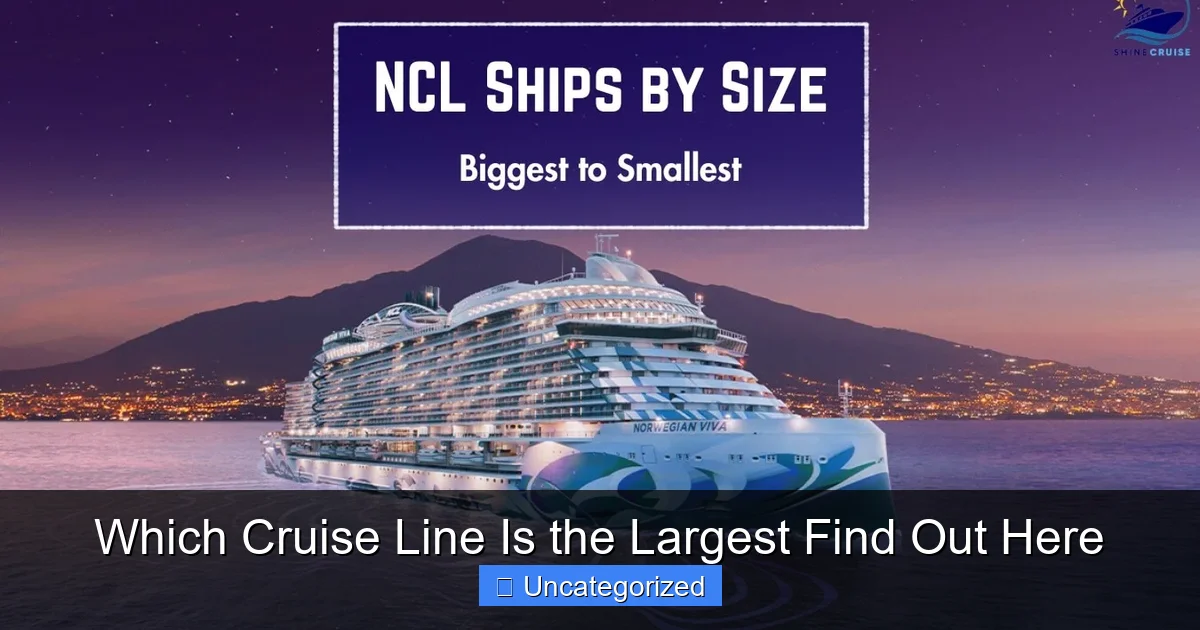
Featured image for which cruise line is the largest
Image source: shinecruise.com
Carnival Corporation & plc is the largest cruise line in the world, operating over 90 ships across 10 brands, including Carnival, Princess, and Holland America. With a fleet capacity surpassing 220,000 berths, it dominates the global market, offering more voyages and destinations than any competitor.
Key Takeaways
- Carnival Corporation leads: Largest cruise company by fleet size and passengers.
- Royal Caribbean ranks second: Known for innovative ships and global routes.
- Norwegian Cruise Line expands: Fast-growing with flexible dining and freestyle cruising.
- Market share matters: Size impacts onboard experience and destination access.
- Fleet diversity wins: Larger lines offer varied ships for all budgets.
- Choose by preference: Size isn’t everything—match line to travel style.
📑 Table of Contents
- Introduction: The Titans of the High Seas
- Understanding What “Largest” Really Means in the Cruise Industry
- The Top Contenders: Who Leads in Size and Scale?
- Data Table: Comparing the Largest Cruise Lines by Key Metrics (2024)
- Why Size Matters: Benefits and Considerations for Travelers
- The Future of the Largest Cruise Lines: Trends and Predictions
- Conclusion: Who Is the Largest? The Answer Depends on Your Definition
Introduction: The Titans of the High Seas
Imagine standing on the deck of a floating city, where luxury meets adventure and every horizon holds a new destination. Cruise vacations have evolved from simple ocean voyages to immersive experiences that rival the world’s most prestigious resorts. But have you ever wondered which cruise line reigns supreme in size and scale? With fleets that span the globe, record-breaking ships, and itineraries that cover every corner of the planet, the competition for the title of “largest cruise line” is fierce. Whether you’re a seasoned cruiser or planning your first voyage, understanding the giants of the industry can help you choose the perfect cruise for your next getaway.
The term “largest” isn’t just about the number of ships in a fleet—it encompasses a complex mix of factors including total passenger capacity, gross tonnage (GT), fleet size, and even annual revenue. Some cruise lines boast the biggest ships in the world, while others dominate through sheer volume of vessels or global reach. In this comprehensive guide, we’ll dive deep into the metrics that define “largest,” compare the top contenders, and reveal which cruise line truly stands at the top of the industry. From the engineering marvels of Royal Caribbean to the expansive networks of Carnival Corporation, this is your definitive answer to which cruise line is the largest.
Understanding What “Largest” Really Means in the Cruise Industry
Before we crown a champion, it’s essential to clarify what “largest” actually signifies in the cruise world. Unlike industries where size is measured by revenue or market share alone, the cruise industry uses multiple overlapping metrics. Each offers a different perspective on a cruise line’s scale and influence.
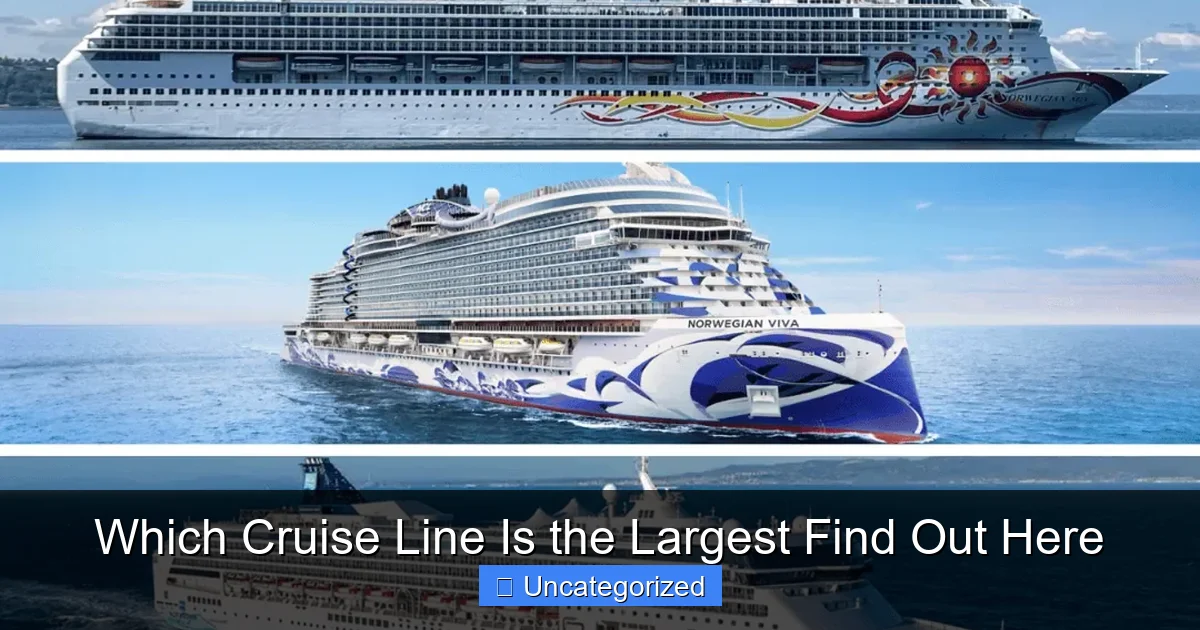
Visual guide about which cruise line is the largest
Image source: cruiseradio.net
1. Fleet Size: Number of Ships in Operation
One of the most straightforward ways to measure size is by counting how many ships a cruise line operates. A larger fleet often means more destinations, more departure ports, and greater flexibility for travelers. For example, Carnival Cruise Line operates over 25 ships, while Royal Caribbean International has around 27. However, fleet size alone doesn’t tell the whole story—some lines have fewer ships but much larger vessels.
2. Gross Tonnage (GT): The Industry Standard for Ship Size
Gross tonnage is a critical metric that measures the total internal volume of a ship, not its weight. It’s expressed in thousands of tons and is used globally to compare ship sizes. A higher GT means more space for amenities, cabins, dining venues, and entertainment. For instance, Royal Caribbean’s Icon of the Seas has a GT of 250,800—making it the largest cruise ship in the world. This metric is crucial because it reflects the physical footprint of a cruise line’s fleet.
3. Passenger Capacity: How Many Guests Can Be Accommodated
Another key factor is maximum passenger capacity, often cited as “double occupancy” (two guests per cabin) plus “maximum occupancy” (with third/fourth berths). The largest ships can carry over 7,000 passengers at full capacity. This number is vital for understanding how many people a cruise line can serve simultaneously and is a strong indicator of operational scale.
4. Annual Revenue and Market Share
Financial metrics like annual revenue and market share also contribute to a cruise line’s overall size and influence. Carnival Corporation & plc, for example, generates over $20 billion in annual revenue and controls nearly half of the global cruise market. Even if individual brands under its umbrella aren’t the largest in GT, the collective power of the corporation is unmatched.
5. Geographic Reach and Itinerary Coverage
Size can also be measured by geographic footprint—how many countries, regions, and ports a cruise line serves. Some lines, like Norwegian Cruise Line, offer sailings in over 300 ports across six continents. A broad itinerary network enhances a cruise line’s global presence and accessibility, making it a major player even without the world’s biggest ship.
Tip: When comparing cruise lines, don’t rely on just one metric. Consider a combination of fleet size, GT, passenger capacity, and market presence to get a full picture of which cruise line is truly the largest in its own right.
The Top Contenders: Who Leads in Size and Scale?
Now that we understand the metrics, let’s examine the cruise lines that consistently top the charts in various categories. These are the industry giants, each excelling in different aspects of “largest.”
Royal Caribbean International: The King of Ship Size
Royal Caribbean is widely recognized as the cruise line with the largest individual ships. Their Oasis-class and Icon-class vessels are engineering marvels. The Icon of the Seas, launched in 2024, is the world’s largest cruise ship with a GT of 250,800 and a maximum capacity of 7,600 guests. It features a 17-deck-high central park, eight distinct neighborhoods, and the first-ever suspended infinity pool at sea.
- Flagship: Icon of the Seas (250,800 GT, 7,600 passengers)
- Fleet Size: 27 ships (as of 2024)
- Key Innovation: Neighborhood concept, Central Park, AquaTheater
Royal Caribbean’s focus on size, innovation, and guest experience makes it the undisputed leader in ship volume and onboard amenities.
Carnival Cruise Line: The Fleet Giant
While Royal Caribbean leads in individual ship size, Carnival Cruise Line dominates in fleet size and accessibility. With over 25 ships, Carnival is the largest single brand by number of vessels. Their ships are designed for fun, family-friendly vacations, with a focus on entertainment, dining, and value.
- Flagship: Carnival Celebration (183,200 GT, 6,631 passengers)
- Fleet Size: 27 ships (including Mardi Gras and Celebration classes)
- Key Feature: BOLT roller coaster, family suites, extensive kids’ programs
Carnival’s strength lies in its mass-market appeal and ability to operate large numbers of mid-sized ships across North America, the Caribbean, and Europe.
Carnival Corporation & plc: The Ultimate Holding Company
Here’s where things get interesting. While Carnival Cruise Line is a major brand, it’s just one of 10+ brands under Carnival Corporation & plc, including Princess, Holland America, Seabourn, Costa, and P&O Cruises. This conglomerate is the largest cruise company in the world by total fleet size, revenue, and market share.
- Total Fleet: Over 90 ships across 10 brands
- Annual Revenue: $20+ billion (2023)
- Market Share: ~45% of the global cruise industry
By this measure, Carnival Corporation is the largest cruise entity on the planet—even if no single ship under its umbrella is the largest in GT.
Norwegian Cruise Line (NCL): The Freestyle Pioneer with Global Reach
Norwegian Cruise Line stands out for its freestyle cruising model—no set dining times, relaxed dress codes, and flexible itineraries. With over 20 ships, including the massive Norwegian Encore (169,116 GT, 4,004 double occupancy), NCL offers a blend of size and innovation.
- Flagship: Norwegian Encore (169,116 GT)
- Fleet Size: 20+ ships
- Key Feature: Go Freestyle, Broadway shows, extensive specialty dining
NCL’s global itineraries—from Alaska to Asia, Europe to South America—make it a strong contender for geographic reach and passenger diversity.
Mediterranean Shipping Company (MSC Cruises): The Fastest-Growing Giant
MSC Cruises, part of the Swiss-Italian MSC Group, is the fastest-growing cruise line in the world. With aggressive expansion plans and a focus on European markets, MSC now operates over 20 ships, including the MSC World Europa (215,863 GT, 6,762 passengers).
- Flagship: MSC World Europa (215,863 GT)
- Fleet Size: 22 ships (expanding rapidly)
- Key Feature: LNG-powered ships, family-friendly zones, global itineraries
MSC’s investment in sustainability and LNG-powered vessels positions it as a future leader in both size and innovation.
Data Table: Comparing the Largest Cruise Lines by Key Metrics (2024)
| Cruise Line | Fleet Size | Largest Ship (Name) | Gross Tonnage (GT) | Max Passenger Capacity | Annual Revenue (Est.) | Market Share |
|---|---|---|---|---|---|---|
| Royal Caribbean International | 27 | Icon of the Seas | 250,800 | 7,600 | $10.2 billion | ~20% |
| Carnival Cruise Line | 27 | Carnival Celebration | 183,200 | 6,631 | $8.5 billion | ~15% |
| Carnival Corporation & plc | 90+ (all brands) | Various | N/A (aggregate) | ~30,000+ (combined) | $21.5 billion | ~45% |
| Norwegian Cruise Line | 20 | Norwegian Encore | 169,116 | 4,004 (double), 6,000+ (max) | $5.8 billion | ~10% |
| MSC Cruises | 22 | MSC World Europa | 215,863 | 6,762 | $4.3 billion | ~8% |
Note: Data is based on 2024 industry reports from CLIA, Cruise Market Watch, and company disclosures. Revenue estimates include all brands under Carnival Corporation.
This table illustrates the multi-faceted nature of “largest.” While Royal Caribbean leads in individual ship size, Carnival Corporation is the clear winner in total fleet, revenue, and market dominance. MSC and NCL show strong growth, while Carnival Cruise Line remains a top choice for budget-conscious travelers.
Why Size Matters: Benefits and Considerations for Travelers
Understanding which cruise line is the largest isn’t just trivia—it directly impacts your vacation experience. Larger cruise lines and ships offer unique advantages, but they also come with trade-offs. Here’s what size means for you as a traveler.
Advantages of Larger Cruise Lines and Ships
- More Amenities and Entertainment: Bigger ships mean more dining options, Broadway-style shows, water parks, ice rinks, and even indoor skydiving. Royal Caribbean’s Icon of the Seas has over 40 restaurants and bars.
- Greater Itinerary Flexibility: Large fleets allow cruise lines to offer more departure ports, shorter cruises, and diverse destinations. Carnival, for example, sails from over 15 U.S. cities.
- Economies of Scale: Larger operations can reduce per-passenger costs, often leading to competitive pricing and inclusive packages.
- Innovation and Firsts: Big cruise lines invest in cutting-edge technology and sustainability. MSC’s LNG-powered ships and Royal Caribbean’s AI concierge are examples.
- Global Support Network: With large corporations like Carnival Corporation, you’re more likely to find support services, loyalty programs, and multilingual staff.
Potential Drawbacks of Large Ships and Brands
- Overcrowding: Ships with 7,000+ guests can feel crowded, especially in popular areas like pools, dining rooms, and embarkation ports.
- Less Personalized Service: With thousands of guests, it’s harder to receive one-on-one attention from crew members.
- Longer Embarkation/Disembarkation: Larger ships take more time to load and unload, which can delay your vacation start.
- Less Intimacy: If you prefer a boutique or romantic experience, large ships may feel too commercialized.
- Environmental Impact: While many large lines are improving, bigger ships still consume more fuel and produce more emissions (though LNG and hybrid tech are helping).
Tips for Choosing Based on Size
Here’s how to use size to your advantage when booking:
- For first-time cruisers: Consider Carnival or Royal Caribbean for their extensive onboard activities and family-friendly environments.
- For luxury and exclusivity: Look at smaller brands under Carnival Corporation, like Seabourn or Regent Seven Seas, which offer all-inclusive, high-end experiences.
- For eco-conscious travelers: MSC and Royal Caribbean are leading in sustainable ship design—opt for newer, LNG-powered vessels.
- For itinerary flexibility: Choose lines with large fleets (Carnival, NCL) to access more departure ports and last-minute deals.
- For avoiding crowds: Book off-peak seasons or choose ships with lower passenger-to-space ratios (e.g., NCL’s Breakaway Plus class).
The Future of the Largest Cruise Lines: Trends and Predictions
The cruise industry is evolving rapidly, and the definition of “largest” is changing with it. Here’s what to expect in the coming years.
1. Bigger Ships, Smarter Technology
Royal Caribbean’s Icon of the Seas is just the beginning. The next generation of ships will feature AI-powered guest services, virtual reality entertainment, and even robotic bartenders. Size will continue to grow, with GTs potentially exceeding 300,000 in the 2030s.
2. Sustainability as a Competitive Advantage
With increasing environmental regulations, the largest cruise lines are investing in LNG, hydrogen fuel cells, and shore power. MSC and Royal Caribbean are already leading this shift. In the future, “largest” may also mean “greenest.”
3. Expansion into New Markets
As Asia, the Middle East, and South America grow in popularity, cruise lines are building region-specific ships. Carnival and MSC are launching vessels designed for Asian tastes, with karaoke lounges, tea rooms, and regional cuisine.
4. Consolidation and Mergers
Smaller cruise lines may merge or be acquired by larger corporations. Carnival Corporation and Royal Caribbean Group (owner of Royal Caribbean, Celebrity, and Silversea) are likely to remain the dominant forces, but niche players like Viking and Virgin Voyages could carve out significant shares.
5. The Rise of “Experience Over Size”
While size will always matter, travelers are increasingly valuing unique experiences over sheer scale. Expect more themed cruises (e.g., wellness, music, culinary), longer itineraries, and immersive shore excursions—even on large ships.
Conclusion: Who Is the Largest? The Answer Depends on Your Definition
So, which cruise line is the largest? The answer isn’t a simple name—it’s a nuanced picture based on what “largest” means to you.
- If you’re measuring by individual ship size, Royal Caribbean International wins with the Icon of the Seas—the world’s largest cruise ship.
- If you’re looking at fleet size and total market dominance, Carnival Corporation & plc is the undisputed champion, with over 90 ships and nearly half the global market.
- If you prioritize geographic reach and itinerary diversity, Norwegian Cruise Line and MSC Cruises are strong contenders.
- If you value growth and innovation, MSC Cruises is rapidly expanding and investing in sustainable technology.
Ultimately, the “largest” cruise line is the one that best fits your travel style, budget, and destination preferences. Whether you crave the thrill of a 7,000-passenger megaship or the intimacy of a smaller vessel under a global brand, the world of cruising offers something for everyone.
As the industry grows, so do the opportunities. With larger ships, smarter technology, and greener practices, the future of cruising is not just about size—it’s about experience, innovation, and sustainability. So set sail, explore the seas, and find the cruise line that’s largest in your heart.
Frequently Asked Questions
Which cruise line is the largest in terms of fleet size?
Carnival Corporation & plc is the largest cruise line by fleet size, operating over 90 ships across 10 global brands, including Carnival Cruise Line, Princess Cruises, and Holland America. Its diverse portfolio makes it the clear leader in the industry.
What is the largest cruise line by passenger capacity?
Royal Caribbean International holds the title for the largest cruise line by passenger capacity, thanks to its massive Oasis-class ships like *Wonder of the Seas*, which can carry over 7,000 guests. These vessels dominate the market with record-breaking onboard amenities.
Which cruise line is the largest in revenue and market share?
Carnival Corporation & plc also leads in revenue and market share, generating over $20 billion annually and controlling nearly 50% of the global cruise market. Its widespread brand presence ensures dominance in the industry.
Which cruise line has the largest single ship in the world?
Royal Caribbean’s *Icon of the Seas* is currently the largest single cruise ship, measuring 1,198 feet long and accommodating over 7,600 passengers. It surpasses all competitors in size and luxury offerings.
Is the largest cruise line the best choice for my vacation?
The “largest” doesn’t always mean “best”—it depends on your preferences. While big lines like Carnival or Royal Caribbean offer extensive amenities, smaller lines may provide more personalized experiences. Consider your travel style before deciding.
Which cruise line is the largest in terms of global destinations?
Princess Cruises, a subsidiary of Carnival Corporation, offers the most extensive global itineraries, visiting over 380 destinations across all seven continents. Its partnerships with local experts ensure unique port experiences.