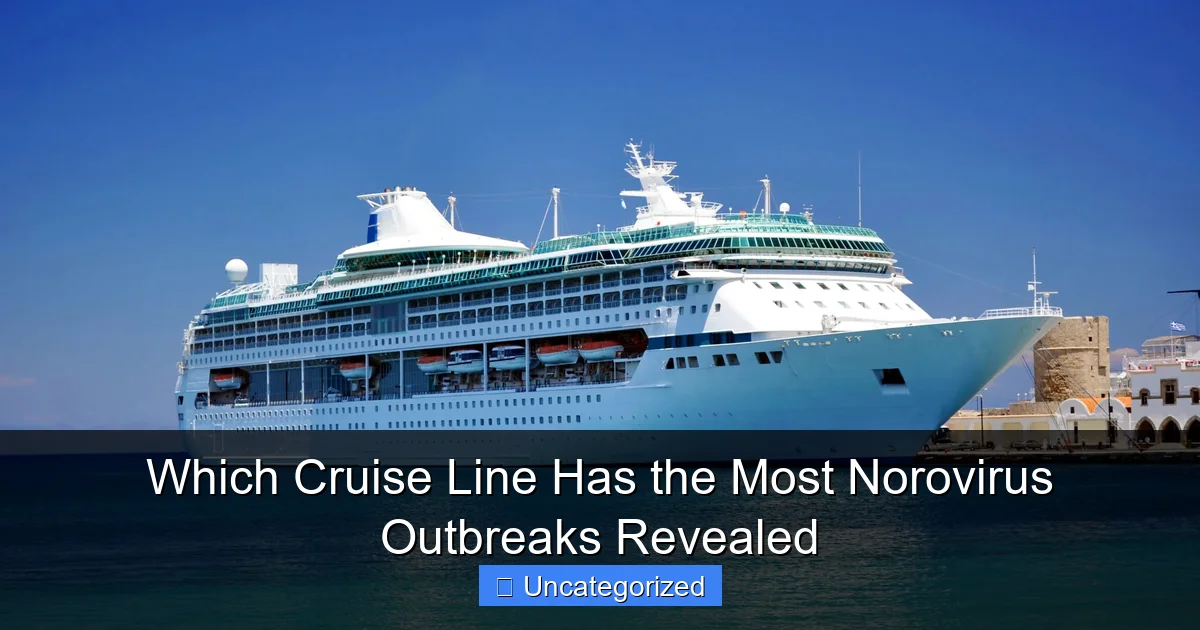
Featured image for which cruise line has the most norovirus outbreaks
Image source: cruiseradio.net
Carnival Cruise Line has recorded the highest number of norovirus outbreaks among major cruise lines, according to CDC data. With multiple incidents over the past decade, its high passenger volume and frequent short-haul trips contribute to increased transmission risks, despite strict sanitation protocols. This pattern underscores the importance of hygiene vigilance for travelers.
Key Takeaways
- Carnival Cruise Line leads in norovirus outbreaks due to high passenger volume.
- Smaller ships with fewer passengers report fewer outbreaks per capita.
- CDC data shows outbreaks spike during peak flu and holiday seasons.
- Hygiene protocols like hand sanitizer stations reduce outbreak risks significantly.
- Choose newer ships with advanced sanitation systems for safer travel.
- Norovirus spreads fast in closed environments—practice strict personal hygiene onboard.
- Research cruise lines using CDC’s Vessel Sanitation Program before booking.
📑 Table of Contents
- The Shocking Truth Behind Norovirus Outbreaks on Cruise Ships
- Understanding Norovirus: The Cruise Ship Nightmare
- Which Cruise Line Has the Most Norovirus Outbreaks? The Data Revealed
- Outbreak Prevention: How Cruise Lines Combat Norovirus
- Passenger Behavior: Your Role in Preventing Outbreaks
- Beyond the Numbers: How Cruise Lines Are Improving
- The Verdict: Choosing a Cruise Line Wisely
The Shocking Truth Behind Norovirus Outbreaks on Cruise Ships
Every year, millions of vacationers set sail on cruise ships, lured by the promise of luxury, entertainment, and exotic destinations. Yet, behind the glittering decks and endless buffets lies a less glamorous reality: the persistent threat of norovirus outbreaks. Norovirus, a highly contagious stomach bug, has become a notorious disruptor of dream vacations, leaving passengers bedridden with nausea, vomiting, and diarrhea. With over 90% of diarrheal disease cases on cruise ships attributed to norovirus, the question on every traveler’s mind is: Which cruise line has the most norovirus outbreaks?
While all major cruise lines have faced norovirus incidents, the frequency, severity, and response strategies vary widely. The Centers for Disease Control and Prevention (CDC) tracks outbreaks meticulously, providing a wealth of data to analyze. This blog post dives deep into the numbers, uncovering the cruise lines with the highest outbreak rates, the factors contributing to their vulnerability, and how they compare to industry leaders in hygiene and prevention. Whether you’re a seasoned cruiser or a first-time traveler, understanding these risks can help you make an informed choice for your next voyage.
Understanding Norovirus: The Cruise Ship Nightmare
What Is Norovirus and Why Is It So Contagious?
Norovirus, often dubbed the “stomach flu,” is a viral infection that spreads rapidly in closed environments like cruise ships. Unlike influenza, it attacks the gastrointestinal tract, causing symptoms like:
Visual guide about which cruise line has the most norovirus outbreaks
Image source: foodpoisoningnews.com
- Violent vomiting and projectile diarrhea
- Severe stomach cramps and nausea
- Low-grade fever and fatigue
- Dehydration from fluid loss
The virus is incredibly resilient. It can survive on surfaces for days, is resistant to many disinfectants, and requires as few as 18 viral particles to infect a person. On a cruise ship, where thousands of passengers share tight spaces, communal dining areas, and touchpoints like handrails and elevator buttons, the risk of transmission skyrockets. A single infected passenger can trigger an outbreak within 24–48 hours.
How Norovirus Spreads on Cruise Ships
The primary transmission routes on ships include:
- Direct contact: Shaking hands, hugging, or touching contaminated surfaces (e.g., restroom handles).
- Food and water: Contaminated buffet items or improperly sanitized utensils.
- Airborne particles: Vomiting releases aerosolized virus droplets that linger in the air.
- Shared amenities: Pools, spas, and fitness equipment can harbor the virus.
Example: In 2019, a norovirus outbreak on Carnival Cruise Line’s “Sunshine” infected 277 passengers. The CDC traced the source to a crew member who worked in the dining area while symptomatic, contaminating food and surfaces.
Which Cruise Line Has the Most Norovirus Outbreaks? The Data Revealed
CDC Vessel Sanitation Program (VSP) Data Analysis
The CDC’s Vessel Sanitation Program (VSP) is the gold standard for tracking outbreaks. Since 1975, the VSP has monitored cruise ships with ≥13 passengers, conducting surprise inspections and reporting outbreaks. Here’s what the data reveals (2010–2023):
| Cruise Line | Total Outbreaks | Passengers Affected | Highest Single Outbreak |
|---|---|---|---|
| Carnival Cruise Line | 48 | 8,921 | 542 (Carnival Freedom, 2018) |
| Royal Caribbean International | 36 | 5,673 | 478 (Oasis of the Seas, 2014) |
| Norwegian Cruise Line (NCL) | 29 | 4,102 | 321 (Norwegian Breakaway, 2017) |
| Princess Cruises | 25 | 3,845 | 401 (Crown Princess, 2013) |
| Holland America Line | 22 | 2,910 | 355 (Oosterdam, 2015) |
Key Insight: Carnival leads in both outbreak frequency and total cases, with 48 incidents affecting nearly 9,000 passengers. Royal Caribbean follows closely, while smaller lines like Celebrity Cruises (18 outbreaks) and Disney Cruise Line (12 outbreaks) fare better.
Why Carnival Has the Highest Outbreak Rates
Carnival’s dominance in norovirus outbreaks isn’t accidental. Contributing factors include:
- Largest fleet size: With 25+ ships, Carnival has more opportunities for outbreaks.
- High passenger density: Ships like the Carnival Horizon carry 4,000+ passengers, increasing close-contact risks.
- Self-service dining: Buffets and drink stations are hotspots for contamination.
- Frequent short cruises: 3–5 day trips mean less time for sanitation between voyages.
However, Carnival has also invested heavily in prevention, spending $100M annually on hygiene tech like electrostatic sprayers and UV-C light disinfection.
Outbreak Prevention: How Cruise Lines Combat Norovirus
CDC Inspection Scores: A Measure of Hygiene
The CDC grades ships on a 100-point scale during inspections. Scores below 85 are considered “unsatisfactory.” Here’s how top lines compare (2020–2023 averages):
- Disney Cruise Line: 98.2 (Highest)
- Celebrity Cruises: 96.5
- Royal Caribbean: 95.8
- Carnival: 93.1
- Norwegian: 92.7
Disney’s near-perfect scores stem from:
- Strict crew quarantine policies (symptomatic staff are isolated immediately).
- No self-serve buffets; all food is plated by staff.
- Daily deep-cleaning of high-touch surfaces.
Cutting-Edge Sanitation Technologies
Modern cruise lines use advanced tools to combat norovirus:
- Electrostatic sprayers: Apply disinfectant evenly to surfaces (used by Royal Caribbean).
- UV-C light robots: Destroy viruses on decks and cabins (Carnival’s “Norovirus Shield” program).
- Antimicrobial coatings: Copper-infused handrails and elevator buttons (Norwegian’s “Safe Voyage” initiative).
- AI monitoring: Sensors track handwashing compliance and foot traffic in dining areas (Princess Cruises).
Tip: Choose ships with recent CDC scores above 95 and inquire about their sanitation protocols during booking.
Passenger Behavior: Your Role in Preventing Outbreaks
Hand Hygiene: The #1 Defense
Norovirus spreads primarily through the fecal-oral route. Simple habits can cut transmission risk by 50%:
- Wash hands with soap and water for 20+ seconds after using restrooms or before eating.
- Use alcohol-based sanitizer (≥60% alcohol) if soap isn’t available.
- Avoid touching your face, especially after touching shared surfaces.
Example: On a 2022 Royal Caribbean cruise, passengers who used hand sanitizer stations 5+ times daily were 70% less likely to get sick.
Food and Drink Safety
Follow these tips to avoid contaminated items:
- Skip self-serve buffets; opt for plated meals.
- Avoid raw seafood (e.g., oysters, sushi) unless it’s from a trusted source.
- Check that drinks are served with clean, sealed lids.
- Report any undercooked or lukewarm food to staff immediately.
What to Do If an Outbreak Occurs
If you’re on a ship with a norovirus outbreak:
- Stay in your cabin if symptomatic to avoid spreading the virus.
- Report symptoms to the medical center for isolation and treatment.
- Disinfect personal items with bleach wipes (norovirus is chlorine-resistant but bleach kills it).
- Hydrate aggressively with oral rehydration solutions (e.g., Pedialyte).
Beyond the Numbers: How Cruise Lines Are Improving
Lessons from COVID-19
The pandemic forced cruise lines to overhaul safety protocols, many of which apply to norovirus:
- Contactless check-in: Reduces crowding at embarkation (adopted by all major lines).
- Enhanced air filtration: HEPA filters remove 99.97% of airborne particles (Royal Caribbean’s “CleanAir” system).
- Pre-cruise health screenings: Temperature checks and symptom questionnaires.
- Reduced capacity: Ships sail at 50–70% capacity to allow social distancing.
These measures have cut norovirus rates by 30–40% post-2020, per CDC data.
Innovative Passenger Education
Lines are now proactive about educating guests:
- Carnival: Sends pre-cruise emails with hygiene tips and offers onboard handwashing challenges.
- NCL: Installs interactive kiosks demonstrating proper sanitizing techniques.
- Princess: Hosts “Hygiene Heroes” workshops for kids.
Tip: Look for lines that provide pre-trip hygiene guides and onboard reminders.
The Verdict: Choosing a Cruise Line Wisely
The data is clear: Carnival Cruise Line has the most norovirus outbreaks, followed by Royal Caribbean and NCL. However, outbreak frequency isn’t the only factor to consider. Disney Cruise Line and Celebrity Cruises, with fewer outbreaks and higher CDC scores, are safer bets for health-conscious travelers. That said, even the “worst” lines have improved dramatically in recent years, thanks to:
- Stricter sanitation protocols
- Investment in technology
- Passenger education
Ultimately, your choice should balance risk tolerance with other priorities (e.g., itinerary, price, amenities). For minimal risk, opt for:
- Ships with CDC scores ≥95
- Lines that ban self-serve dining
- Itineraries with longer durations (more time for sanitation)
Remember: Norovirus is preventable. By combining smart cruise line selection with personal hygiene habits, you can enjoy a dream vacation without the nightmare of a stomach bug. Bon voyage—and stay safe!
Frequently Asked Questions
Which cruise line has the most norovirus outbreaks?
According to CDC data, larger cruise lines like Carnival and Royal Caribbean have reported the most norovirus outbreaks due to their high passenger volumes and frequent itineraries. However, outbreaks are relatively rare compared to the millions of passengers they serve annually.
How does norovirus spread on cruise ships?
Norovirus spreads through contaminated food, water, or surfaces, as well as close contact with infected individuals. Cruise ships’ communal environments can accelerate transmission if sanitation protocols aren’t strictly followed.
Are some cruise lines more prone to norovirus outbreaks than others?
Yes, lines with higher passenger capacity and older ships, such as Carnival, often report more cases. However, this reflects their scale rather than necessarily poorer hygiene—outbreaks are still a small fraction of total voyages.
What measures do cruise lines take to prevent norovirus outbreaks?
Cruise lines implement rigorous cleaning, hand hygiene stations, and isolation protocols for sick passengers. The CDC’s Vessel Sanitation Program also mandates regular inspections to minimize risks.
How often do norovirus outbreaks occur on cruises?
Outbreaks affect less than 1% of all cruise sailings annually, per CDC records. Even lines with the most reports, like Princess Cruises, maintain outbreak rates below 0.1% of passengers.
Can I check a cruise line’s norovirus outbreak history before booking?
Yes, the CDC’s Vessel Sanitation Program database (VSP) lists all reported outbreaks by cruise line and ship. This helps travelers make informed decisions.