Featured image for where is msc cruise line from
Image source: cruise.blog
MSC Cruise Line originates from Italy, founded in 1987 by the Aponte family as part of the Mediterranean Shipping Company, a global shipping giant. Headquartered in Geneva, Switzerland, today it operates one of the world’s largest cruise fleets with a rapidly expanding global presence, serving over 300 destinations across seven continents.
Key Takeaways
- MSC Cruises is headquartered in Geneva, Switzerland — a global hub for its operations and strategy.
- Founded in 1987 by the Aponte family — rooted in a legacy of Italian shipping expertise.
- Originally an Italian brand — evolved into a global player with European heritage.
- Fleet registered in multiple countries — uses flags of convenience like Panama and Malta.
- Strong presence in Mediterranean markets — home region remains central to its identity.
- Global reach spans 100+ countries — expanding rapidly in Asia, North America, and beyond.
📑 Table of Contents
- The Fascinating Story of MSC Cruise Line: Where It All Began
- 1. The Birthplace of MSC: Italian Roots and a Shipping Dynasty
- 2. Corporate Structure and Global Headquarters
- 3. Fleet Development: From One Ship to a Global Armada
- 4. Global Reach: Itineraries and Market Expansion
- 5. Sustainability and Innovation: A Forward-Thinking Approach
- 6. The Future of MSC: Where Is It Headed?
- Data Table: MSC Cruise Line Fleet Overview (2024)
- Conclusion: A Global Brand with Italian Soul
The Fascinating Story of MSC Cruise Line: Where It All Began
When you step aboard an MSC Cruise Line ship, you’re not just embarking on a vacation—you’re joining a journey that spans continents, cultures, and over 80 years of maritime history. With its dazzling fleet of modern megaships, family-friendly amenities, and a growing global footprint, MSC Cruises has become one of the most recognized names in the cruise industry. But have you ever wondered: where is MSC Cruise Line from?
The answer isn’t as simple as pointing to a single port. MSC Cruises, officially known as MSC Cruises S.A., is a multinational cruise line with deep roots in Europe, particularly Italy, but operates with a truly global vision. From its humble beginnings in the Mediterranean to its current status as the world’s third-largest cruise brand, MSC’s story is one of ambition, innovation, and strategic expansion. Whether you’re a first-time cruiser curious about the brand’s heritage or a seasoned traveler comparing cruise lines, understanding MSC’s origins and global reach offers valuable insight into why it stands out in a crowded market. In this comprehensive guide, we’ll explore the history, corporate structure, fleet development, and international presence of MSC Cruises—answering the question of where it’s from and where it’s headed.
1. The Birthplace of MSC: Italian Roots and a Shipping Dynasty
From Cargo to Cruises: The Mediterranean Shipping Company Legacy
The story of MSC Cruise Line begins not on the waves of the Caribbean, but in the bustling port city of Naples, Italy. In 1970, Italian entrepreneur Gianluigi Aponte founded the Mediterranean Shipping Company (MSC) as a cargo shipping line. Starting with just one vessel, Aponte built a logistics empire that would eventually dominate global container shipping. By the 1980s, MSC had become one of the world’s largest shipping companies, operating a fleet of over 500 vessels and managing logistics across 150+ countries.
Visual guide about where is msc cruise line from
Image source: cruise.blog
But Aponte’s ambitions didn’t stop at freight. Inspired by the growing popularity of cruise vacations in the 1990s, he saw an opportunity to diversify. In 1994, MSC entered the passenger cruise market with the launch of MSC Lirica, a 58,625-ton ship that marked the beginning of MSC Cruises. This strategic pivot was more than just a business expansion—it was a cultural statement. The Aponte family, deeply rooted in Italian maritime tradition, wanted to bring the elegance, hospitality, and warmth of the Mediterranean to the global cruise industry.
Italian DNA in Every Detail
From the start, MSC Cruises embraced its Italian identity. The company’s headquarters are in Geneva, Switzerland, but its operational heart beats in Italy. Key decisions, design philosophies, and culinary standards are shaped by Italian sensibilities. For example:
- Onboard cuisine features authentic Italian dishes like fresh pasta, Neapolitan pizza, and regional wines—often prepared by Italian chefs.
- Ship design incorporates Mediterranean aesthetics: warm color palettes, elegant marble finishes, and open-air piazzas reminiscent of Italian town squares.
- Entertainment includes Italian opera, classical music, and cultural events that celebrate Italy’s artistic heritage.
This Italian touch is not just branding—it’s a core part of the MSC experience. As MSC Cruises CEO Pierfrancesco Vago (Aponte’s son-in-law) often says, “We are a cruise line with Italian DNA, built by a family that loves the sea.”
2. Corporate Structure and Global Headquarters
Geneva: The Strategic Hub
While MSC Cruises is Italian in origin, its corporate structure reflects a global mindset. The company is officially registered as MSC Cruises S.A., a Swiss-registered corporation headquartered in Geneva, Switzerland. Why Switzerland? The choice is strategic:
- Tax efficiency: Switzerland offers favorable corporate tax rates and financial regulations.
- Neutrality and stability: As a non-EU country with strong international relations, Geneva provides a neutral base for global operations.
- Logistics access: Geneva’s proximity to major European markets and international transport hubs (like Geneva Airport) simplifies coordination.
Despite the Swiss registration, MSC Cruises operates as a multinational entity. Its executive leadership, including Vago, frequently splits time between Geneva, Italy, and key markets like the U.S. and Asia.
Regional Offices and Operational Bases
MSC’s global reach is supported by a network of regional headquarters and operational centers:
- Miami, Florida: The U.S. headquarters, established in 2004, manages North American sales, marketing, and itinerary planning. It’s also the base for MSC’s MSC World America project, set to launch in 2025.
- Southampton, UK: The European hub for British and Northern European markets, handling itineraries for the UK, Scandinavia, and the Baltic.
- Shanghai, China: The Asia-Pacific headquarters, launched in 2010, coordinates operations in China, Japan, and Southeast Asia.
- Sydney, Australia: Manages the Oceania region, including New Zealand and Pacific itineraries.
This decentralized structure allows MSC to tailor offerings to local markets while maintaining brand consistency. For example, ships sailing from Shanghai often feature Mandarin-speaking staff and Chinese dining options, while U.S.-based cruises emphasize American-style entertainment and excursions.
3. Fleet Development: From One Ship to a Global Armada
Early Years: Building a Foundation (1994–2003)
MSC Cruises began with a modest fleet. The MSC Lirica (1994) was followed by MSC Opera (1995) and MSC Sinfonia (1995). These early ships, all under 60,000 tons, focused on Mediterranean routes, catering to European travelers. They featured classic cruise ship layouts with a focus on comfort and value rather than luxury.
A major milestone came in 2003 with the launch of MSC Musica, the first ship in the “Musica-class.” At 89,600 tons, it was MSC’s largest ship at the time and introduced modern amenities like a 1,200-seat theater, a spa, and a dedicated children’s area. This class (Musica, Orchestra, Poesia, Magnifica) set the stage for MSC’s shift toward larger, more sophisticated vessels.
The Megaship Era: Seaside and Meraviglia Classes (2010–2020)
MSC’s growth accelerated in the 2010s with two groundbreaking ship classes:
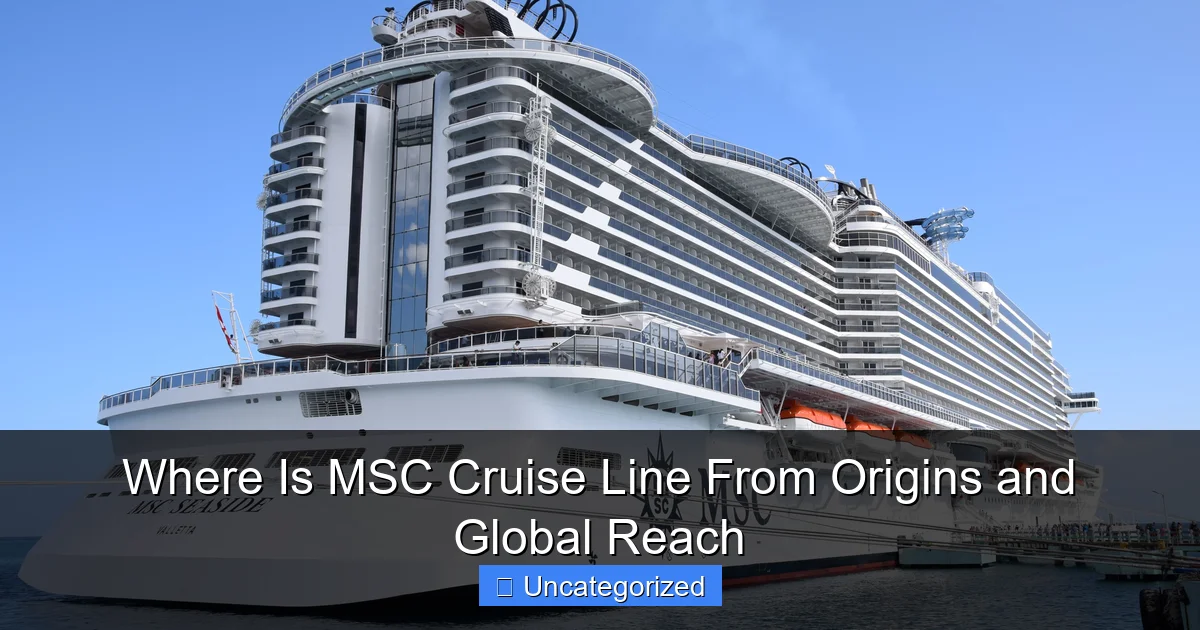
- Seaside-class: Designed for tropical destinations, these 154,000-ton ships (e.g., MSC Seaside, MSC Seaview) feature an innovative “beach condo” layout with glass elevators, outdoor promenades, and expansive pool decks. They sail primarily in the Caribbean and South America.
< Meraviglia-class: At 171,598 tons, these are among the world’s largest cruise ships. MSC Meraviglia (2017) and MSC Bellissima (2019) boast 1,000+ crew, a 1,200-seat theater, and the “Galleria Meraviglia”—a 96-meter-long indoor promenade with shops, bars, and LED ceilings. These ships operate in the Caribbean, Mediterranean, and Asia.
These classes reflect MSC’s strategy to compete with Royal Caribbean and Carnival by offering megaship experiences with Italian flair.
Future-Forward: World-Class and LNG-Powered Ships (2020–Present)
MSC’s latest innovation is the World-class, a 205,700-ton series that redefines sustainability and luxury:
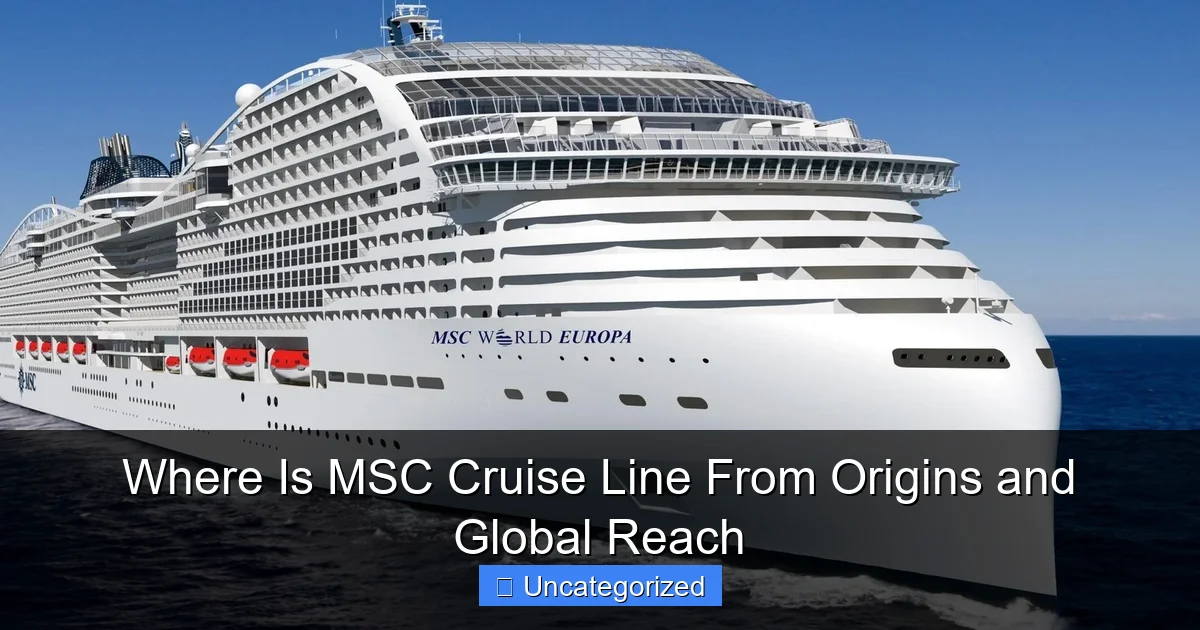
- MSC World Europa (2022): The first LNG-powered cruise ship, reducing CO2 emissions by 25%. Features include a 104-meter-long “World Promenade,” a robot bartender, and 100% energy-efficient lighting.
- MSC World America (2025): Designed specifically for the U.S. market, it will feature a “Caribbean-inspired” design, a new family zone, and a 360-degree theater.
By 2030, MSC plans to have 24 ships in its fleet, with a total capacity of over 100,000 berths—a 300% increase from 2010.
4. Global Reach: Itineraries and Market Expansion
Geographic Footprint: Where MSC Sails
MSC Cruises operates in 100+ countries, with itineraries spanning all seven continents. Its global presence is organized into four key regions:
- Europe: The largest market, with year-round Mediterranean cruises (Barcelona, Rome, Athens) and seasonal Baltic/Northern Europe routes. Ships like MSC Grandiosa and MSC Preziosa sail here.
- Caribbean: A major hub for North American travelers. Ports include Miami, Nassau, St. Thomas, and MSC’s private island, Ocean Cay (Bahamas). The MSC Seaside and Meraviglia classes dominate this region.
- Asia-Pacific: Rapidly growing, with ships based in Shanghai, Singapore, and Sydney. Popular destinations include Japan, Vietnam, and Australia. MSC partners with local tour operators to offer culturally immersive excursions.
- South America and Africa: Seasonal routes in Brazil, Argentina, South Africa, and the Indian Ocean. Ships like MSC Splendida and MSC Fantasia serve these markets.
Private Destinations: Ocean Cay and Beyond
MSC’s private island, Ocean Cay MSC Marine Reserve (Bahamas), is a cornerstone of its Caribbean strategy. Opened in 2019, the 95-acre island features:
- White-sand beaches and crystal-clear waters
- Snorkeling reefs and water sports
- Local Bahamian culture (music, food, art)
- Sustainability initiatives (coral reef restoration, solar power)
MSC plans to develop additional private destinations in the Mediterranean and Southeast Asia by 2030, enhancing its “exclusive experience” appeal.
Market-Specific Strategies
MSC tailors its offerings to regional preferences:
- North America: Larger ships, longer itineraries, and family-friendly activities (e.g., LEGO® play areas).
- Asia: Smaller ships, shorter cruises, and cultural programming (e.g., Chinese New Year celebrations).
- Europe: Emphasis on port-intensive itineraries and local cuisine.
5. Sustainability and Innovation: A Forward-Thinking Approach
LNG and Hybrid Technologies
MSC is investing heavily in sustainability. The World-class ships use liquefied natural gas (LNG), cutting sulfur emissions by 99% and nitrogen oxides by 85%. Future ships will feature hybrid propulsion, combining LNG with battery power for zero-emission docking.
Waste and Water Management
MSC’s “Zero Harm to the Environment” program includes:
- Advanced wastewater treatment systems (100% of wastewater is treated to exceed international standards)
- Plastic-free initiatives (no single-use plastics onboard)
- Food waste reduction (AI-driven inventory systems)
For example, MSC Grandiosa recycles 90% of its waste and uses shore power in ports like Copenhagen and Hamburg.
Ocean Cay: A Living Laboratory
Ocean Cay isn’t just a resort—it’s a sustainability project. MSC has:
- Restored 100,000+ coral fragments
- Planted 10,000 native plants
- Partnered with local Bahamian communities for conservation
This aligns with MSC’s goal to achieve carbon neutrality by 2050.
6. The Future of MSC: Where Is It Headed?
Fleet Expansion and New Markets
MSC’s 2025–2030 strategy includes:
- Launching MSC World America (U.S. focus)
- Expanding in Asia with new ships for the Chinese market
- Developing expedition cruises (Antarctica, Galápagos) with smaller, eco-friendly vessels
Technology and Guest Experience
MSC is investing in:
- AI concierges (via the MSC for Me app)
- Virtual reality excursions (previewing ports before booking)
- Contactless check-in (biometric scanning)
Global Partnerships
MSC collaborates with brands like LEGO, Jean-Philippe Maury (pastry chef), and MSC Foundation to enhance guest experiences and sustainability efforts.
Data Table: MSC Cruise Line Fleet Overview (2024)
| Ship Class | Ships | Launch Year | Size (Gross Tonnage) | Passenger Capacity | Key Features | Primary Regions |
|---|---|---|---|---|---|---|
| Musica-class | MSC Musica, Orchestra, Poesia, Magnifica | 2006–2010 | 89,600–95,117 | 2,550–3,274 | Classic design, Mediterranean focus | Europe, South America |
| Seaside-class | MSC Seaside, Seaview | 2017–2018 | 153,516–154,011 | 5,179 | Beach condo layout, outdoor promenade | Caribbean, South America |
| Meraviglia-class | MSC Meraviglia, Bellissima, Grandiosa, Virtuosa, Euribia | 2017–2023 | 171,598–181,541 | 4,888–6,334 | Galleria promenade, LED ceiling, family zones | Caribbean, Europe, Asia |
| World-class | MSC World Europa, World America (2025) | 2022–2025 | 205,700–215,000 | 6,762 | LNG-powered, World Promenade, robot bartender | Caribbean, U.S., Europe |
Conclusion: A Global Brand with Italian Soul
So, where is MSC Cruise Line from? The answer is both simple and complex. MSC Cruise Line is from Italy, born from the Aponte family’s shipping legacy and Mediterranean passion. But it’s also from Geneva, Switzerland, where its corporate structure enables global agility. It’s from Miami, Shanghai, and Southampton, where regional teams craft market-specific experiences. And it’s from the future, where innovation and sustainability drive its next chapter.
What sets MSC apart is its ability to balance tradition and progress. Whether you’re sipping espresso in a Roman-style piazza on MSC Grandiosa, snorkeling in the crystal waters of Ocean Cay, or exploring a futuristic World-class ship, you’re experiencing a brand that honors its roots while boldly sailing toward new horizons. As MSC continues to expand—adding ships, destinations, and tech—it remains a testament to the power of vision, family, and the enduring allure of the sea. For cruisers seeking a blend of Italian elegance, global adventure, and forward-thinking values, MSC isn’t just a cruise line—it’s a world of its own.
Frequently Asked Questions
Where is MSC Cruise Line from originally?
MSC Cruise Line, officially known as MSC Cruises, was founded in 1987 in Naples, Italy, by the Aponte family. The company began as a subsidiary of the Mediterranean Shipping Company (MSC), a global shipping giant established in 1970.
Is MSC Cruise Line an Italian company?
Yes, MSC Cruise Line is an Italian-Swiss company with roots in Italy, where it was founded. However, its parent company, MSC, is headquartered in Geneva, Switzerland, giving it a dual European heritage.
Where is MSC Cruise Line based today?
While MSC Cruises maintains strong ties to its Italian origins, its operational headquarters are in Geneva, Switzerland. This strategic location supports its global expansion and fleet management across six continents.
What does “MSC” stand for in MSC Cruise Line?
MSC stands for Mediterranean Shipping Company, the parent company of MSC Cruises. The cruise line leverages the shipping giant’s logistics expertise, which explains its strong presence in Mediterranean and international waters.
Where does MSC Cruise Line sail from?
MSC Cruise Line sails from over 20 major ports worldwide, including Miami (USA), Barcelona (Spain), and Dubai (UAE). Its itineraries cover the Caribbean, Mediterranean, Northern Europe, Asia, and South America, reflecting its global reach.
How has MSC Cruise Line expanded globally?
Starting from its Italian roots, MSC Cruise Line has grown into the world’s third-largest cruise brand by fleet size. It now operates 23 ships with plans for LNG-powered vessels, targeting markets in North America, Asia, and beyond.