Featured image for where do cruise lines dump their sewage
Image source: foe.org
Cruise lines dump millions of gallons of treated sewage into the ocean daily, often just miles from shore, relying on outdated systems that barely meet minimal international standards. While regulations ban raw waste discharge, “treated” effluent still contains harmful bacteria, chemicals, and plastics, threatening marine ecosystems and coastal health—raising urgent questions about industry accountability.
Key Takeaways
- Cruise ships must treat sewage before discharging in regulated zones.
- Advanced systems reduce waste impact, but enforcement varies globally.
- Illegal dumping occurs in international waters despite strict laws.
- Graywater discharge is less regulated but still harms marine ecosystems.
- Choose eco-conscious lines with transparent waste management policies.
- Support stricter regulations to hold cruise lines accountable.
📑 Table of Contents
- The Shocking Reality Behind Cruise Ship Waste Disposal
- How Cruise Ships Generate and Store Sewage
- Legal Regulations Governing Sewage Disposal
- The Shocking Truth: Where and How Sewage Is Actually Dumped
- Environmental and Health Impacts of Cruise Ship Sewage
- What Cruise Lines Are Doing to Improve (and What You Can Do)
- Conclusion: The Path to Cleaner Seas
The Shocking Reality Behind Cruise Ship Waste Disposal
When you picture a luxurious cruise vacation, your mind likely drifts to white-sand beaches, gourmet dining, and endless entertainment. But beneath the glittering surface of these floating resorts lies a darker truth: the massive amounts of sewage and waste they generate daily. With tens of thousands of passengers and crew aboard, cruise ships produce hundreds of thousands of gallons of sewage every single day. This begs the question: Where do cruise lines dump their sewage? The answer might shock you.
The cruise industry is a multi-billion-dollar global enterprise, and while it promises eco-friendly adventures, the reality of its waste management practices has long been a subject of controversy. From raw sewage to treated blackwater, the disposal methods vary widely depending on regulations, technology, and corporate ethics. As environmental awareness grows, so does scrutiny of how cruise lines handle their waste. This blog post dives deep into the systems, regulations, and shocking truths behind cruise ship sewage disposal—uncovering what happens after you flush and where that waste really ends up.
How Cruise Ships Generate and Store Sewage
To understand where cruise lines dump their sewage, we must first explore how it’s produced, stored, and treated onboard. A typical modern cruise ship with 3,000 passengers and 1,200 crew members can generate over 210,000 gallons (800,000 liters) of sewage per day. This includes everything from human waste (blackwater) to wastewater from sinks, showers, and laundry (graywater). The volume is staggering—equivalent to the daily sewage output of a small city.
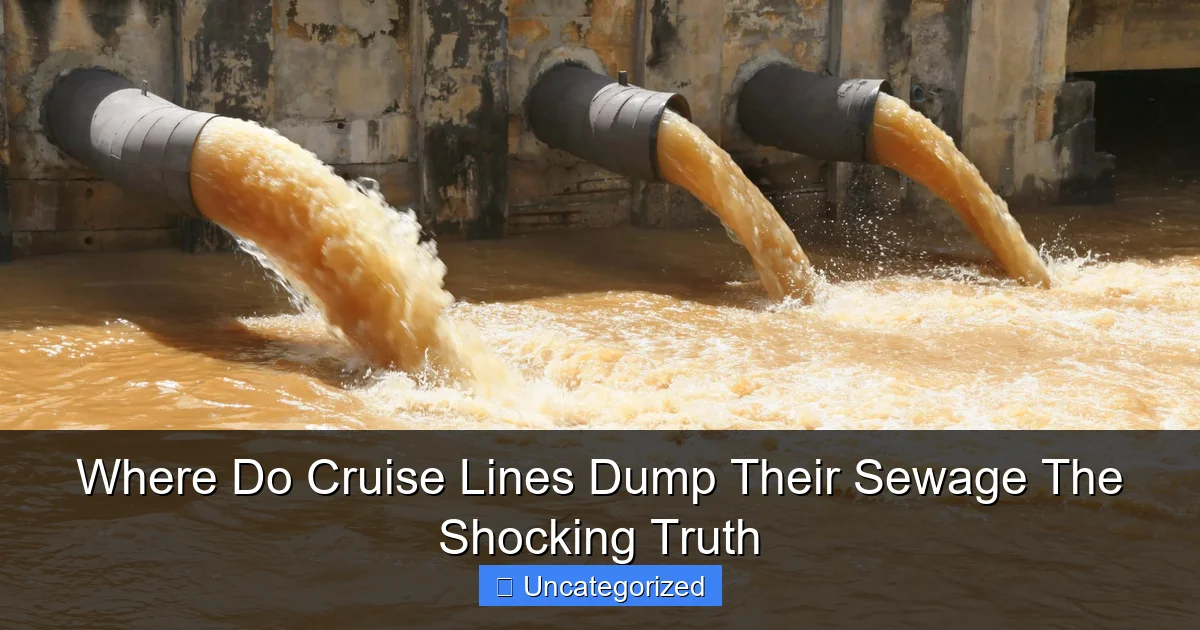
Visual guide about where do cruise lines dump their sewage
Image source: foe.org
Sources of Sewage on Cruise Ships
- Toilets (Blackwater): The most concentrated form of sewage, containing human waste, toilet paper, and cleaning chemicals. This is the primary concern for environmental and health regulators.
- Graywater: Wastewater from sinks, showers, bathtubs, and laundry. While less toxic than blackwater, it still contains detergents, oils, food particles, and bacteria.
- Galley (Kitchen) Waste: Includes food scraps, grease, and cleaning runoff. Often mixed with graywater but can be separately managed in advanced systems.
- Medical Waste: Specialized sewage from medical centers, which may require incineration or chemical treatment.
- Laundry and Cleaning Runoff: Contains bleach, fabric softeners, and microplastics.
Onboard Storage and Treatment Systems
Cruise ships don’t simply dump sewage directly into the ocean. Instead, they rely on a combination of storage tanks and advanced treatment technologies:
- Holding Tanks: Sewage is collected in large, sealed tanks located deep within the ship’s hull. These tanks can hold tens of thousands of gallons and are designed to prevent leaks and odors.
- Marine Sanitation Devices (MSDs): Mandatory on all U.S.-registered ships and widely used globally, MSDs treat blackwater using biological, chemical, and filtration processes. The U.S. Coast Guard classifies MSDs into three types (I, II, III), with Type III being the most advanced and capable of producing effluent safe enough to discharge near shore.
- Advanced Wastewater Purification Systems (AWPS): Used by many major cruise lines (e.g., Royal Caribbean, Carnival, Norwegian), these systems go beyond MSDs. They use membrane filtration, UV disinfection, and nitrogen/phosphorus removal to meet or exceed international standards. Some systems can treat water to drinking-quality standards, though it’s not consumed.
- Incineration: For solid waste and sludge from treatment, incinerators are used to reduce volume and eliminate pathogens. The ash is then stored and offloaded in ports.
Example: Royal Caribbean’s Oasis-class ships use AWPS that process up to 1.2 million gallons of wastewater daily. Their system removes 99.9% of bacteria and meets Alaska’s strict discharge standards—even though they don’t sail there.
Legal Regulations Governing Sewage Disposal
The question of where cruise lines dump sewage isn’t answered by technology alone—it’s heavily influenced by international, national, and regional laws. These regulations determine when, where, and how ships can discharge waste.
International Maritime Organization (IMO) Standards
The IMO, a United Nations agency, sets global rules through the International Convention for the Prevention of Pollution from Ships (MARPOL), specifically Annex IV, which governs sewage discharge.
- Raw Sewage Discharge: Prohibited within 3 nautical miles of shore. Between 3 and 12 nautical miles, ships must discharge through a certified MSD Type II or better.
- Treated Sewage Discharge: Allowed beyond 3 nautical miles if treated to IMO standards. Beyond 12 miles, raw or treated sewage can be discharged with fewer restrictions.
- Special Areas: Regions like the Baltic Sea, Mediterranean, and Antarctic are designated “special areas” with zero discharge policies for sewage unless treated to the highest standards.
U.S. Environmental Protection Agency (EPA) and VIDA
The Clean Water Act and the Vessel Incidental Discharge Act (VIDA) govern sewage discharge in U.S. waters. VIDA, passed in 2018, replaced patchwork state laws with a federal standard.
- No Discharge Zones (NDZs): Established in sensitive areas like Puget Sound, Florida Keys, and parts of California. In NDZs, even treated sewage must be offloaded to shore and cannot be discharged at sea.
- Alaska’s Standards: Among the strictest in the world. Ships must treat sewage to a level equivalent to municipal wastewater treatment plants. The Alaska Cruise Ship Program requires monthly testing and public reporting.
- California: Prohibits discharge of sewage within 3 miles of shore unless treated to AWPS standards. Graywater discharge is also restricted in certain zones.
Regional and Port-Specific Rules
Beyond international and national laws, individual countries and ports enforce their own rules:
- European Union: Requires ships to use MSDs and bans sewage discharge in designated “sensitive sea areas.” The EU also mandates port reception facilities for waste offloading.
- Caribbean Nations: Some islands lack adequate port reception facilities, forcing ships to store waste for days or discharge offshore—often in violation of local laws.
- Canada: Prohibits sewage discharge in the Great Lakes and enforces strict rules in British Columbia.
Tip: Cruise lines often adjust their discharge practices based on the region. For example, a ship sailing from Miami to the Bahamas will follow different rules than one sailing from Barcelona to the Greek Islands.
The Shocking Truth: Where and How Sewage Is Actually Dumped
Despite regulations, the reality of cruise ship sewage disposal is far more complex—and sometimes, disturbing. While most reputable cruise lines comply with the law, loopholes, outdated technology, and lax enforcement allow for troubling practices.
Discharge at Sea: The Most Common Practice
The majority of treated sewage from cruise ships is discharged into the open ocean, typically beyond 3–12 nautical miles from shore. This is legal under MARPOL and U.S. law, provided the effluent meets treatment standards.
- Volume: A single cruise ship can discharge 50,000 to 100,000 gallons of treated sewage daily during a week-long voyage.
- Location: Most discharges occur in deep, open waters—far from coral reefs, fishing zones, and marine sanctuaries. However, in busy shipping lanes or near island chains, discharges can still impact marine life.
- Monitoring: Discharge is logged in the ship’s Oil Record Book (ORB), which is subject to inspection. However, self-reporting and lack of real-time monitoring make enforcement difficult.
Illegal Dumping and “Sewage Dumping Scandals”
Despite regulations, illegal dumping has plagued the industry for decades. Notable cases include:
- Princess Cruises (2016): Fined $40 million for dumping oily waste and falsifying records. The company used a “magic pipe” to bypass treatment systems and discharge directly into the sea.
- Carnival Corporation (2020): Ordered to pay $20 million in fines after violating probation from a previous environmental conviction. Investigators found evidence of sewage and plastic being dumped in protected areas.
- Norwegian Cruise Line (2017): Fined $1.2 million for discharging graywater in U.S. waters without proper treatment.
These cases highlight a troubling pattern: profit-driven shortcuts and lax oversight can lead to deliberate violations.
Graywater: The Overlooked Pollutant
While blackwater gets the most attention, graywater is often discharged with minimal treatment—or none at all. Unlike sewage, graywater is not regulated under MARPOL Annex IV. This means:
- Graywater can be discharged anywhere, even within 3 miles of shore.
- It contains harmful chemicals (detergents, disinfectants) and microplastics that harm marine ecosystems.
- A 2019 study by the University of Exeter found that graywater from cruise ships can contain antibiotic-resistant bacteria and endocrine disruptors.
Example: In Alaska, cruise lines are required to treat graywater to the same standards as blackwater—but in the Caribbean, many ships discharge it untreated.
Environmental and Health Impacts of Cruise Ship Sewage
The consequences of improper sewage disposal extend far beyond the ship’s hull. The environmental and public health impacts are profound and often underreported.
Marine Ecosystem Damage
- Eutrophication: Excess nitrogen and phosphorus from sewage can cause algal blooms, deplete oxygen, and create “dead zones” where marine life cannot survive.
- Coral Reef Degradation: Discharges near sensitive reefs (e.g., in the Caribbean or South Pacific) can smother coral with sediment and introduce pathogens.
- Bioaccumulation: Toxins in sewage (e.g., heavy metals, pharmaceuticals) enter the food chain, affecting fish, shellfish, and ultimately humans.
Public Health Risks
- Beach Contamination: In areas with weak enforcement, sewage plumes can reach shore, contaminating beaches and posing risks to swimmers and surfers.
- Drinking Water Threats: In coastal communities reliant on desalination or groundwater, sewage runoff can compromise water quality.
- Antibiotic Resistance: Sewage containing human waste can spread drug-resistant bacteria into marine environments.
Case Study: The Florida Keys
The Florida Keys National Marine Sanctuary is a prime example of the risks. With over 1,000 cruise ships visiting annually, the area has seen:
- Elevated fecal coliform levels in coastal waters.
- Declining coral cover in areas near popular cruise routes.
- Calls from environmental groups to ban all sewage discharge within 12 miles of the reef.
In response, the EPA designated the Keys as a No Discharge Zone for sewage in 2021—a major victory for conservationists.
What Cruise Lines Are Doing to Improve (and What You Can Do)
The cruise industry is under increasing pressure to clean up its act. While some lines are leading the way, others lag behind. Here’s what’s changing—and how passengers can make a difference.
Industry Innovations and Best Practices
- Zero-Discharge Policies: Some lines, like Hurtigruten and Silversea, have pledged to eliminate all sewage and graywater discharge in sensitive areas. They use advanced AWPS and offload waste in ports.
- Shore-to-Ship Waste Offloading: Major ports (e.g., Seattle, Vancouver, Barcelona) now offer dedicated facilities for cruise ship waste. Ships can offload sewage, sludge, and graywater for proper treatment on land.
- LNG-Powered Ships: While focused on fuel, LNG ships often include upgraded wastewater systems. For example, Carnival’s AIDAnova uses an AWPS that treats water to “near-potable” quality.
- Transparency: Lines like Royal Caribbean publish annual sustainability reports detailing their waste management practices.
How Passengers Can Make a Difference
- Choose Eco-Friendly Lines: Research a cruise line’s environmental policies. Look for certifications like Blue Flag or membership in the Cruise Lines International Association (CLIA) with strong sustainability commitments.
- Support No Discharge Zones: Advocate for NDZs in your favorite cruise destinations. Contact local officials or join environmental groups.
- Reduce Onboard Waste: Limit water use, avoid single-use plastics, and report suspicious discharge (e.g., discolored water near shore) to authorities.
- Ask Questions: When booking, inquire about a ship’s wastewater system. Lines with AWPS are more likely to minimize environmental impact.
Data Table: Cruise Line Wastewater Systems (2023)
| Cruise Line | Fleet Size | Advanced Wastewater System? | No Discharge Policy? | Notable Environmental Certification |
|---|---|---|---|---|
| Royal Caribbean | 27 ships | Yes (AWPS on all new ships) | Partial (in NDZs) | ISO 14001, Green Marine |
| Carnival | 86 ships | Yes (AWPS on 40+ ships) | No | ISO 14001 |
| Norwegian | 18 ships | Yes (AWPS on 12 ships) | No | Green Marine |
| Hurtigruten | 14 ships | Yes (all ships) | Yes (in Arctic & Antarctica) | Blue Flag, ISO 14001 |
| Disney | 5 ships | Yes (AWPS on all) | No | ISO 14001 |
Conclusion: The Path to Cleaner Seas
The question of where cruise lines dump their sewage reveals a complex web of technology, regulation, and corporate responsibility. While modern cruise ships are far more advanced than their predecessors, the sheer volume of waste they generate—and the loopholes in enforcement—mean that the oceans are still paying a price.
From illegal dumping scandals to the overlooked dangers of graywater, the truth is that not all cruise lines operate with the same level of integrity. However, progress is being made. Stricter regulations, public pressure, and technological innovation are pushing the industry toward more sustainable practices. The rise of zero-discharge policies, shore-based treatment, and transparency offers hope for cleaner seas.
As passengers, we hold power. By choosing responsible cruise lines, advocating for stronger regulations, and demanding accountability, we can help ensure that the next generation of cruise vacations leaves a lighter footprint on our planet. The sea may be vast, but it’s not a toilet—and it’s time the cruise industry treated it as the precious ecosystem it truly is.
Frequently Asked Questions
Where do cruise lines dump their sewage legally?
Cruise lines are permitted to dump treated sewage (called “graywater” and “blackwater”) at least 3 nautical miles from shore under international maritime laws. Advanced wastewater treatment systems (AWTS) must be used to meet environmental standards before discharge.
How do cruise ships handle sewage in sensitive areas?
In designated “special areas” like the Baltic Sea or near coral reefs, stricter rules apply—sewage dumping is banned unless treated to near-potable standards. Many lines now use holding tanks or advanced systems to comply with these zones.
Is raw sewage ever dumped from cruise ships?
Illegal raw sewage dumping does occur but is rare due to strict monitoring and fines. Most incidents involve system failures or intentional violations, with cruise lines facing multi-million-dollar penalties when caught.
What happens to cruise ship sewage near ports?
Near ports, ships typically store sewage in onboard tanks and pump it ashore to municipal systems. This “pump-out” process is required within 12 nautical miles of the U.S. coast and in many other regulated regions.
Do cruise lines report where they dump sewage?
Yes, under the International Convention for the Prevention of Pollution from Ships (MARPOL), cruise lines must log sewage discharges. However, enforcement varies, and some companies face accusations of falsifying records.
How does cruise sewage dumping impact marine life?
Even treated sewage can harm ecosystems by introducing nutrients, pathogens, and chemicals. Research shows elevated bacteria levels and algal blooms in high-traffic cruise areas, raising concerns about long-term environmental damage.