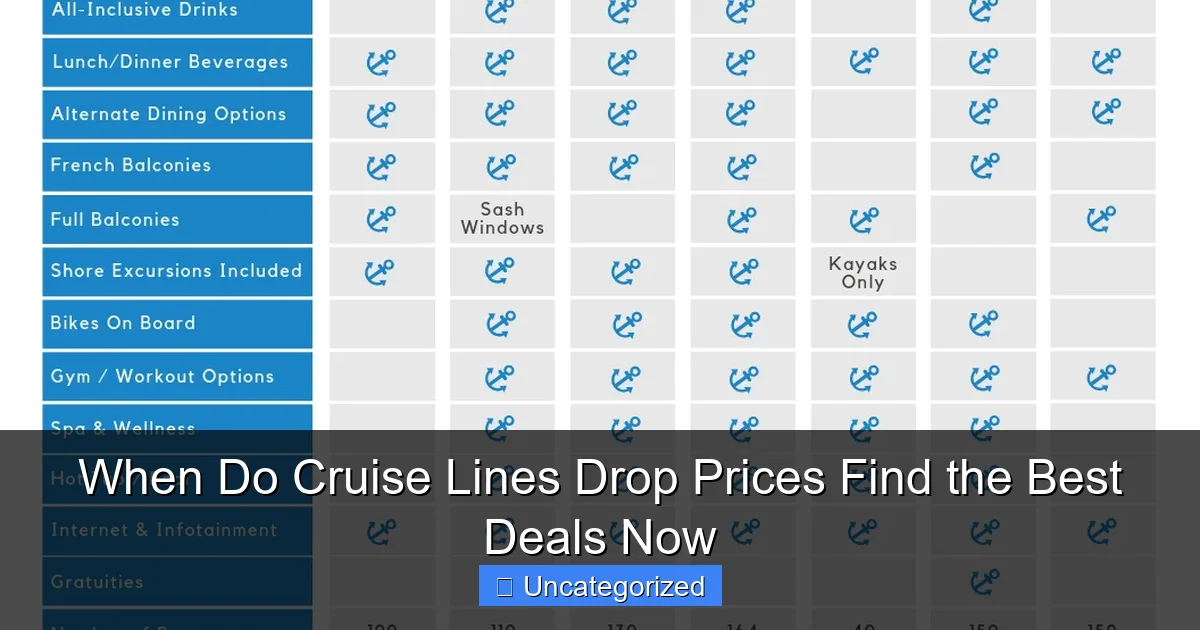
Featured image for when do cruise lines drop prices
Image source: blog.cruiseinsider.com
Cruise lines typically drop prices during off-peak seasons, last-minute booking windows (2–8 weeks before departure), and when cabins remain unsold after initial promotions. To snag the best deals, monitor pricing trends and book during wave season (January–March) or on “Black Friday” and “Cyber Monday” sales when discounts are steepest. Act fast—these deals vanish quickly as demand shifts.
Key Takeaways
- Book last-minute: Prices often drop 60–90 days before departure.
- Travel off-season: Avoid peak times for lower fares and fewer crowds.
- Monitor price trends: Use fare alerts to catch sudden price drops.
- Consider repositioning cruises: These sailings offer steep discounts and unique routes.
- Negotiate with agents: Ask for unadvertised deals or onboard credits.
- Check shoulder seasons: Slightly before/after peak times yields better rates.
📑 Table of Contents
- When Do Cruise Lines Drop Prices? Find the Best Deals Now
- Understanding How Cruise Pricing Works
- Best Times of Year to Find Cruise Price Drops
- Last-Minute Deals vs. Early Bird Discounts
- How to Monitor and Track Price Drops
- Special Events, Promotions, and Hidden Discounts
- Data Table: Average Price Drops by Booking Time
- Conclusion
When Do Cruise Lines Drop Prices? Find the Best Deals Now
Planning a vacation can be both exciting and overwhelming, especially when it comes to budgeting. One of the best ways to save money on a dream vacation is by taking advantage of cruise line price drops. But when exactly do cruise lines drop their prices? If you’re like most travelers, you’ve probably found yourself refreshing booking sites, waiting for that perfect deal to appear. The good news is that there are predictable patterns to when cruise lines reduce their prices, and understanding these can help you secure the best deals—without the stress of constant monitoring.
Whether you’re a seasoned cruiser or planning your first voyage, knowing when to book can make a significant difference in your overall experience and budget. Cruise lines operate on complex pricing models influenced by demand, seasonality, competition, and even global events. By learning the key triggers behind price drops, you can strategically time your booking to save hundreds—or even thousands—of dollars. In this comprehensive guide, we’ll explore the most effective times and methods to catch cruise line price reductions, backed by real-world examples, insider tips, and data-driven insights. From last-minute deals to early bird specials, we’ve got you covered.
Understanding How Cruise Pricing Works
Cruise lines use dynamic pricing models similar to airlines and hotels. Prices fluctuate based on a mix of internal and external factors. Understanding this system is the first step to mastering the art of booking at the right time. Unlike fixed pricing, cruise fares are designed to maximize revenue based on supply, demand, and market conditions.
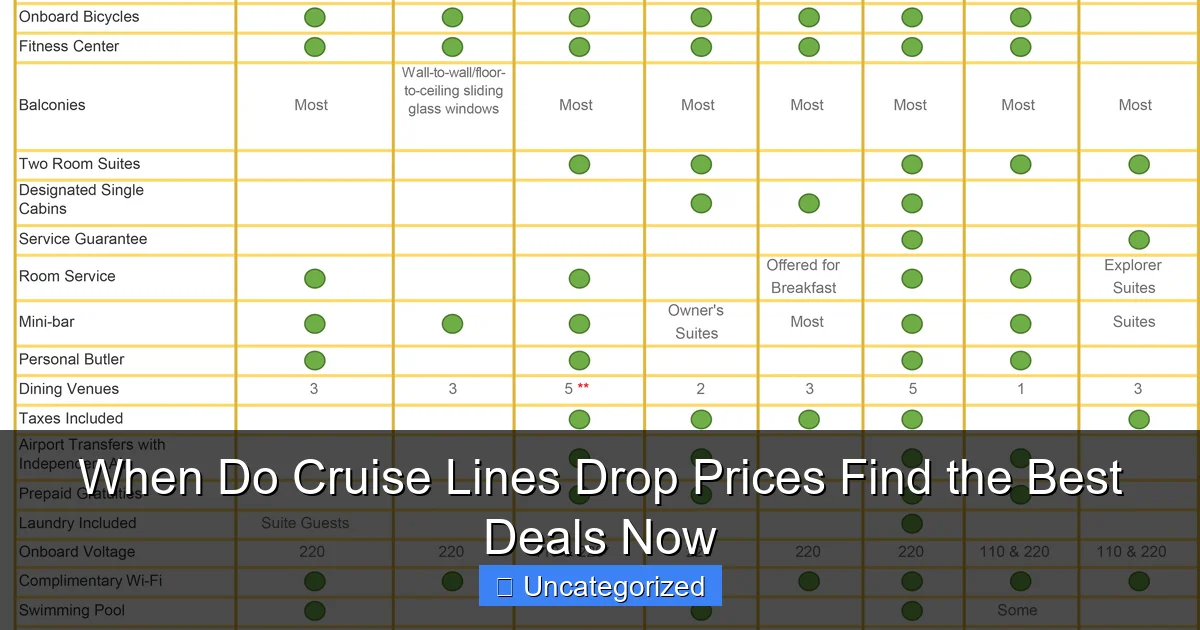
Visual guide about when do cruise lines drop prices
Image source: luxurytravelteam.com
Dynamic Pricing and Inventory Management
Cruise lines treat their ships like inventory-heavy businesses. Each cabin is a product with a limited shelf life—once the ship sails, the cabin’s revenue potential is lost. To avoid unsold inventory, cruise companies use dynamic pricing, adjusting fares in real-time based on:
- Number of cabins sold
- Time until departure
- Demand trends
- Competitor pricing
- Special events (e.g., holidays, festivals)
For example, Royal Caribbean uses a sophisticated algorithm called “Yield Management” to adjust prices. If a sailing is 80% booked six months out, they may lower prices to fill the remaining cabins. Conversely, if a cruise is nearly sold out, prices may spike due to scarcity.
Factors That Influence Cruise Pricing
Several key factors determine when and how much prices drop:
- Seasonality: High-demand periods (summer, holidays) see higher prices, while shoulder and off-seasons offer better deals.
- Cabin Type: Interior and obstructed-view cabins are typically cheaper and more likely to be discounted.
- Itinerary: Popular destinations (Caribbean, Alaska) have steeper pricing, while less-traveled routes (e.g., South America, repositioning cruises) often have lower fares.
- New Ship Launches: When a cruise line debuts a new vessel, they may offer aggressive pricing on older ships to maintain occupancy.
- Promotions and Marketing Cycles: Cruise lines run seasonal sales (e.g., “Wave Season”) to boost bookings.
For instance, Norwegian Cruise Line (NCL) often offers “Free at Sea” promotions during off-peak times, bundling perks like free drinks or airfare to entice bookings when demand is low.
Real-World Example: Carnival’s Pricing Strategy
In 2023, Carnival Cruise Line introduced a “Flash Sale” for Caribbean sailings in September—a traditionally low-demand month. They dropped interior cabin prices by 40% just two weeks before departure, filling over 90% of remaining cabins. This illustrates how cruise lines prioritize occupancy over per-cabin revenue when time is running out.
Best Times of Year to Find Cruise Price Drops
Timing is everything when it comes to securing cruise deals. Certain months and periods consistently see lower prices due to predictable demand patterns. By aligning your booking with these windows, you can maximize savings.
Wave Season: January to March (The Golden Window)
Known as Wave Season, the first three months of the year are the most popular for cruise deals. After the holiday rush, cruise lines aim to fill future sailings with aggressive promotions. According to Cruise Market Watch, over 60% of annual cruise bookings occur during Wave Season.
- Expect “Buy One, Get One 50% Off” deals
- Free upgrades (e.g., balcony to suite)
- Onboard credit offers ($100–$500 per cabin)
- Reduced deposits or free airfare
Tip: Book early in Wave Season (January–mid-February) for the best selection. By March, many popular itineraries sell out, reducing deal availability.
Shoulder Seasons: April–May and September–November
These “shoulder” periods—between peak and off-peak seasons—offer a sweet spot for deals. For example:
- Alaska: May and September sailings often have 20–30% lower prices than July–August cruises.
- Caribbean: September–November (outside hurricane season peaks) see lower demand and prices.
- Europe: April and October cruises are cheaper than June–August.
Example: In 2022, Holland America Line offered a 14-day Mediterranean cruise for $1,299 per person in October, compared to $2,199 in July—a 40% savings.
Off-Peak Months: December (Pre-Holiday) and September
December (before Christmas) and September (post-summer) are prime for last-minute price drops. Families return to school, and demand plummets. Cruise lines slash prices to fill ships. A 2023 analysis by Cruise Critic found that last-minute Caribbean cruises in September averaged $75–$100 per person, per day, compared to $150+ in summer.
Repositioning Cruises (Spring and Fall)
When ships move between regions (e.g., Europe to Caribbean in fall, Caribbean to Alaska in spring), they offer repositioning cruises—longer itineraries with significant discounts. These sailings often include:
- More sea days (lower port costs)
- Lower base prices (20–50% off)
- Unique itineraries (e.g., transatlantic crossings)
Example: A 21-day repositioning cruise from Barcelona to Miami with Princess Cruises in November 2023 was priced at $1,499 per person—less than $72 per day.
Last-Minute Deals vs. Early Bird Discounts
One of the biggest debates in cruise booking is whether to wait for last-minute deals or book early. The answer depends on your priorities: flexibility vs. savings. Both strategies have pros and cons, and knowing when each works best is key.
Last-Minute Deals: The Pros and Cons
Booking within 60–90 days of departure can yield dramatic savings, but it comes with risks:
- Pros:
- Prices can drop 30–70%
- Opportunity for free upgrades
- Less competition for deals
- Cons:
- Limited cabin selection (often only interior or obstructed views)
- Risk of no deals appearing (if the ship is nearly sold out)
- Airfare costs may rise
Tip: Use cruise deal aggregators like CruiseSheet or Cruise Critic’s Last-Minute Deals to monitor price drops. Set price alerts for your desired itinerary.
Early Bird Discounts: Locking in Value
Booking 6–12 months in advance offers:
- Best cabin selection (balconies, suites)
- Lower base prices (before demand spikes)
- Access to “early booking” promotions (e.g., free gratuities)
For example, Disney Cruise Line often releases itineraries 15 months in advance with “Early Booking” rates. A 7-night Alaska cruise booked 12 months out in 2023 was $2,499 per person, while the same sailing booked 3 months later cost $3,199.
Hybrid Strategy: The “Wait-and-Watch” Approach
The most effective strategy for many travelers is a hybrid approach:
- Book early to secure a cabin at a reasonable rate.
- Monitor prices and reprice if a better deal appears (many lines offer price protection).
- Cancel and rebook only if savings exceed cancellation fees.
Example: A family booked a 7-night Caribbean cruise with Royal Caribbean 10 months out for $3,000. Six months later, a promotion dropped the same cabin to $2,200. They rebooked and saved $800—plus received $200 in onboard credit.
How to Monitor and Track Price Drops
Waiting passively for deals won’t cut it. To catch price drops, you need proactive monitoring tools and strategies. Here’s how to stay ahead of the curve.
Use Cruise Deal Websites and Apps
Specialized platforms aggregate deals from multiple cruise lines:
- CruiseSheet: Tracks price changes in real-time with email alerts.
- Cruise Critic: Offers a “Deal Watch” tool and last-minute deal section.
- Cruise.com: Features a “Price Drop Guarantee” program.
- VacationsToGo: Known for “90-Day Ticker” with steep last-minute discounts.
Tip: Set up alerts for specific itineraries (e.g., “7-night Alaska cruise, June 2024”) to receive instant notifications.
Leverage Price Protection Programs
Many cruise lines offer price protection—if the price drops after you book, you can reprice or receive onboard credit. Examples:
- Carnival: Price drop = onboard credit equal to the difference.
- Royal Caribbean: Repricing within 48 hours of booking.
- Princess: “Best Fare Guarantee” with $100 onboard credit.
Example: A couple booked a 10-night Europe cruise with Princess for $5,000. Two months later, the price dropped to $4,200. They submitted a price protection request and received $800 in onboard credit.
Follow Cruise Lines on Social Media
Cruise lines often announce flash sales on Twitter, Instagram, and Facebook. For example, in 2023, Celebrity Cruises posted a 24-hour “Flash Sale” on Instagram with 50% off balcony cabins—available only to followers.
Book Through a Travel Agent with Price Monitoring
Experienced cruise agents use tools like CruiseMatch or VacationQuote to track prices. They can:
- Reprice your booking automatically
- Negotiate exclusive deals
- Offer “cruise-only” pricing (without airfare) for more flexibility
Tip: Ask your agent about “future cruise credits”—many lines offer discounts if you book your next cruise while onboard.
Special Events, Promotions, and Hidden Discounts
Beyond standard pricing drops, cruise lines offer unique opportunities for savings through promotions, events, and niche discounts. These often go unnoticed but can save you hundreds.
Wave Season Promotions (January–March)
As mentioned earlier, Wave Season is the king of promotions. But look beyond the basics:
- “Free Upgrades”: e.g., book oceanview, get balcony (common with NCL and Carnival).
- “Kids Sail Free”: Especially for family-friendly lines like Royal Caribbean.
- “Air + Cruise” Bundles: Save up to $1,000 on airfare with Princess or Celebrity.
Example: In January 2023, MSC Cruises offered a “Kids Sail Free” deal on 7-night Caribbean cruises—saving a family of four $1,200.
Military, Senior, and Group Discounts
Most cruise lines offer hidden discounts for:
- Military: 10–15% off (e.g., Carnival’s “Military Appreciation”).
- Seniors (55+): Special rates on select sailings (e.g., Holland America).
- Groups (8+ cabins): Free cabin, onboard credit, or upgrades.
Tip: Ask about “past guest” discounts—loyalty members often get exclusive deals.
Repositioning and Holiday Sailings
Holiday cruises (e.g., Thanksgiving, Christmas) are usually expensive, but repositioning sailings over holidays can be cheap. For example, a 14-day repositioning cruise from Europe to the Caribbean over Christmas 2023 was 30% cheaper than a traditional holiday cruise.
New Ship Launch Promotions
When a line launches a new ship (e.g., Carnival Celebration in 2022), they often discount older ships to maintain occupancy. In 2023, Carnival offered 50% off select sailings on Carnival Magic to promote their new vessel.
Data Table: Average Price Drops by Booking Time
| Booking Timeframe | Average Price Drop | Best For | Risk Level |
|---|---|---|---|
| 12–18 months out | 10–20% | Early planners, best cabin selection | Low |
| 6–12 months out | 15–30% | Balcony/suite seekers, Wave Season deals | Low |
| 3–6 months out | 20–50% | Flexible travelers, price protection users | Medium |
| 1–3 months out | 30–70% | Last-minute deals, repositioning cruises | High |
| Within 30 days | 50–80% | High-risk, high-reward (often interior cabins) | Very High |
Conclusion
Knowing when cruise lines drop prices is the ultimate tool for budget-savvy travelers. By aligning your booking strategy with predictable patterns—Wave Season, shoulder months, last-minute windows, and repositioning cruises—you can save hundreds to thousands of dollars. Combine this with proactive monitoring (price alerts, deal websites, travel agents) and take advantage of hidden discounts (military, group, loyalty), and you’ll be cruising in luxury without breaking the bank.
Remember, the best deal isn’t always the cheapest. Consider cabin type, itinerary, and onboard experience. A slightly higher price with a free balcony upgrade or onboard credit might offer better value than a bare-bones interior cabin. Whether you’re a first-time cruiser or a seasoned traveler, timing, patience, and a bit of strategy go a long way. So start planning, set those alerts, and get ready to set sail on your dream vacation—at the best price possible. The ocean awaits!
Frequently Asked Questions
When do cruise lines drop prices to attract last-minute bookings?
Cruise lines often drop prices 60–90 days before departure to fill remaining cabins, especially if bookings are slower than expected. This is a prime time to snag deals if you’re flexible with dates and destinations.
What are the best times to book a cruise for the lowest rates?
Historically, the cheapest rates appear during “wave season” (January–March) and in September–October, when demand dips. Booking during these periods increases your chances of finding major discounts and promotions.
Do cruise lines drop prices for specific destinations or itineraries?
Yes, less popular routes (e.g., repositioning cruises or off-season Alaska trips) often see steeper price cuts to boost demand. Monitor niche itineraries for unexpected deals on unique voyages.
How can I find out when cruise lines drop prices for my desired trip?
Sign up for price alerts via cruise line newsletters or third-party sites like Cruiseline.com. These tools notify you the moment prices drop for your chosen sailing, ensuring you don’t miss a deal.
Are prices lower when booking a cruise last-minute?
Sometimes, but it’s risky. While last-minute deals (1–8 weeks out) can offer big savings, availability may be limited. Always compare with advance-purchase rates to ensure the best value.
Do cruise lines offer discounts during holidays or special events?
Yes, many cruise lines run holiday-themed sales (e.g., Black Friday, Memorial Day) or loyalty program perks. These promotions often include onboard credits or cabin upgrades alongside reduced fares.