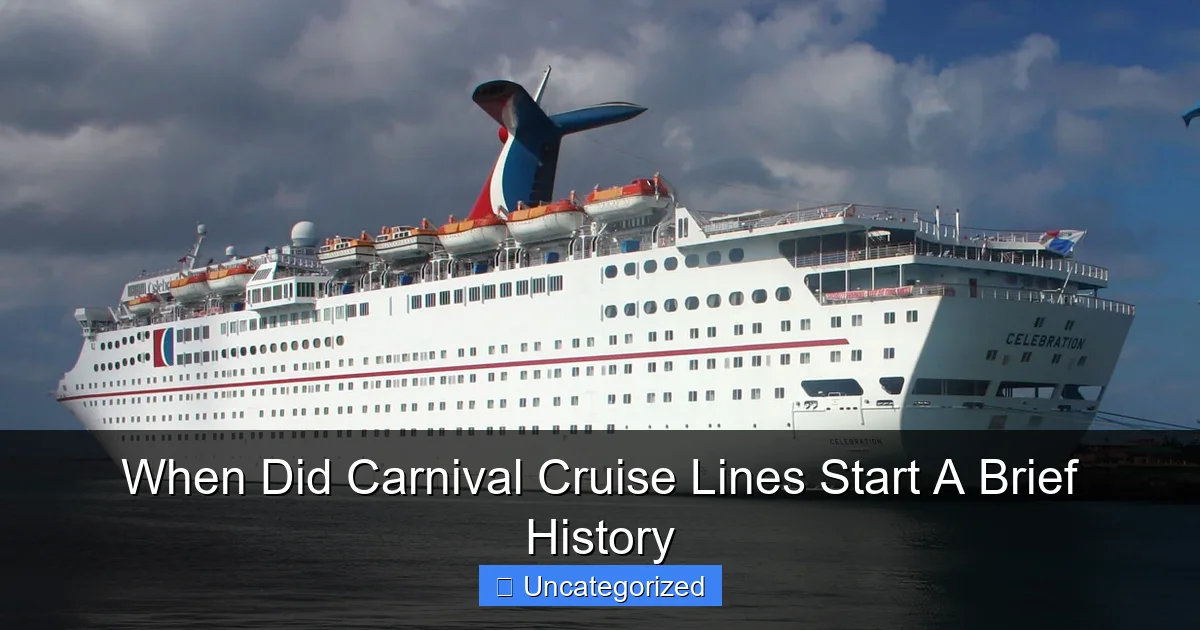
Featured image for when did carnival cruise lines start
Image source: cruisefever.net
Carnival Cruise Lines was founded in 1972, launching its first ship, the Mardi Gras, with a bold vision to make cruising fun and affordable. Dubbed the “Fun Ships” line, it quickly revolutionized the industry by attracting a younger, more casual crowd and paving the way for modern mass-market cruising.
Key Takeaways
- Carnival Cruise Lines launched in 1972 with one ship, pioneering affordable cruising.
- Founded by Ted Arison, it revolutionized the cruise industry with fun-focused voyages.
- First ship: Mardi Gras, debuted in 1972, symbolizing its festive brand identity.
- Expanded rapidly in the 1980s, adding larger ships and innovative amenities onboard.
- Became “The Fun Ships” leader by targeting younger, budget-conscious travelers early on.
- Acquired by Carnival Corp. in 1993, fueling global growth and market dominance.
📑 Table of Contents
- The Birth of a Cruise Giant: The Origins of Carnival Cruise Lines
- The Early Days: Founding and First Voyage (1972)
- Growth and Expansion: The 1980s and 1990s
- Modernization and Global Reach (2000–2010)
- Recent Developments and the Post-Pandemic Era (2010–Present)
- Key Milestones and Fleet Data
- Conclusion: From Humble Beginnings to Cruise Industry Leader
The Birth of a Cruise Giant: The Origins of Carnival Cruise Lines
When you think of vibrant, fun-filled vacations at sea, one name likely comes to mind: Carnival Cruise Lines. Known for its “Fun Ships,” lively onboard atmosphere, and affordable Caribbean getaways, Carnival has become the most recognizable cruise brand in the world. But behind the glittering pool decks, Broadway-style shows, and endless buffets lies a fascinating story of entrepreneurial vision, industry disruption, and rapid growth. The question of when did Carnival Cruise Lines start isn’t just a matter of dates and facts—it’s a tale of how one man’s dream transformed the way millions experience vacation travel.
Founded in the early 1970s, Carnival Cruise Lines emerged during a time when ocean travel was still seen as a luxury reserved for the wealthy. Air travel was becoming more accessible, and traditional ocean liners were struggling to survive. Yet, Ted Arison, an Israeli-American shipping magnate, saw an opportunity: to make cruising fun, affordable, and mainstream. His bold idea—to create a cruise line that emphasized entertainment and accessibility over formality and exclusivity—would go on to revolutionize the cruise industry. Today, Carnival Corporation & plc is the largest cruise company in the world, with a fleet that spans multiple brands and continents. But it all began with a single ship, a daring business model, and a vision to democratize sea travel.
The Early Days: Founding and First Voyage (1972)
The Visionary Behind the Brand: Ted Arison
The story of Carnival Cruise Lines begins with Ted Arison, a visionary entrepreneur with deep roots in the shipping industry. Born in 1924 in Tel Aviv, Arison immigrated to the United States in the 1950s and built a successful freight shipping business. In 1966, he co-founded Norwegian Cruise Line (NCL), but disagreements over direction led to his departure in 1971. Undeterred, Arison saw a gap in the market: a cruise line that catered to middle-class families and vacationers seeking relaxation, entertainment, and value. With $1 in capital (a symbolic gesture), he officially incorporated Carnival Cruise Lines on March 27, 1972 in Miami, Florida.
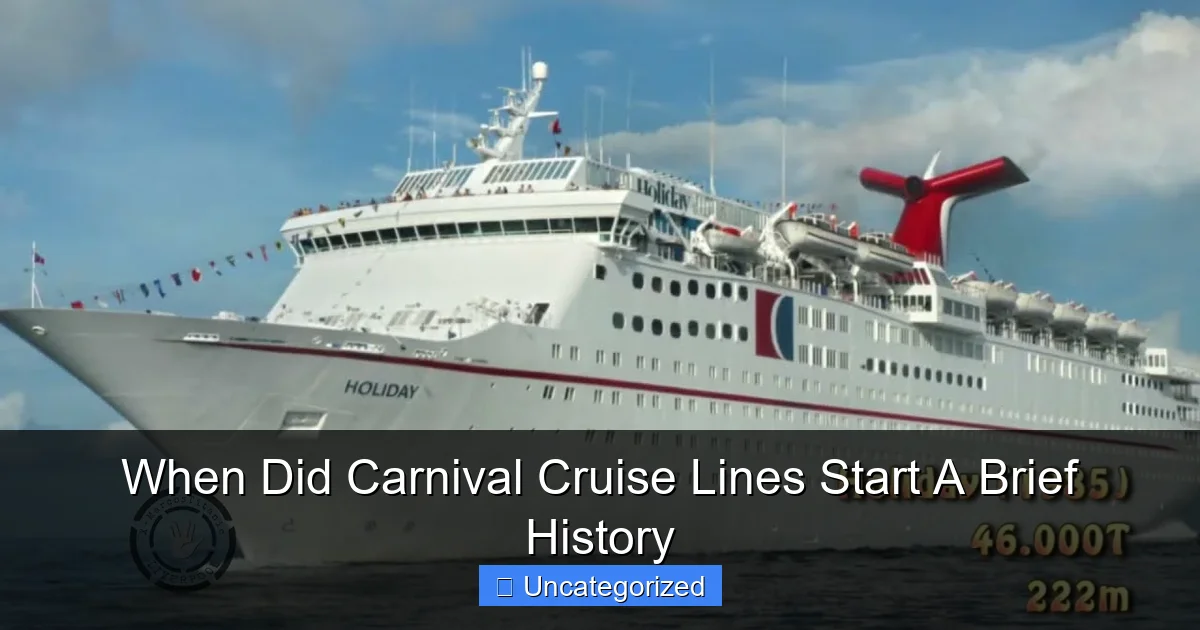
Visual guide about when did carnival cruise lines start
Image source: i.ytimg.com
The First Ship: The Mardi Gras
Carnival’s first vessel, originally named TSMS Empress of Canada, was a 1960-built ocean liner operated by the Canadian Pacific Line. Arison purchased the 18,000-ton ship for $1 million and renamed it Mardi Gras—a nod to the vibrant New Orleans festival and the festive atmosphere he wanted to create. The ship underwent a $20 million retrofit to modernize its amenities, including the addition of a disco, expanded dining options, and a more casual dress code. On March 10, 1972
The initial journey was far from smooth. The ship suffered engine trouble and had to return to Miami after only three days at sea. However, this setback did little to dampen Arison’s ambition. The second attempt in April 1972 was a success, and the Mardi Gras quickly became a symbol of Carnival’s new approach: fun, accessible, and unpretentious. The ship’s slogan, “We’re the Fun Ships,” resonated with a new generation of cruisers. To attract customers, Carnival launched aggressive marketing campaigns emphasizing affordability and entertainment. Ads featured slogans like “The Fun Way to Go” and “Cruise the Carnival Way,” highlighting onboard activities such as live music, comedy shows, and themed deck parties. Unlike traditional cruise lines, Carnival eliminated formal dress codes and encouraged a relaxed, party-like atmosphere. This strategy proved revolutionary. By 1975, Carnival was carrying over 100,000 passengers annually—a remarkable feat for a company just three years old. The 1980s marked a period of explosive growth for Carnival. The company introduced a series of new vessels that solidified its identity as the “Fun Ship” leader. In 1982, Carnival launched the Holiday, followed by the Jubilee (1986) and the Festivale (1987). These ships were larger, more modern, and packed with amenities: multiple pools, expansive dining rooms, and dedicated entertainment zones. The Fantasy-class ships, beginning with the Fantasy in 1989, became Carnival’s signature vessels, featuring a standardized design that allowed for economies of scale and faster deployment. Key to Carnival’s success was its focus on onboard revenue generation. While competitors emphasized luxury and exclusivity, Carnival invested in bars, casinos, gift shops, and specialty restaurants—creating multiple streams of income. This model allowed Carnival to keep base fares low while maximizing profits from ancillary spending. For example, by 1990, onboard revenue accounted for nearly 30% of Carnival’s total earnings, a strategy later adopted industry-wide. In 1987, Carnival went public on the NASDAQ stock exchange under the ticker symbol CCL. The IPO raised $400 million, funding further fleet expansion and marketing initiatives. By the early 1990s, Carnival had become the largest cruise line in the world by passenger volume, surpassing industry giants like Royal Caribbean and Princess Cruises. The company’s market share in North America reached 40% by 1995, a testament to its effective branding and operational efficiency. To differentiate itself, Carnival pioneered themed cruises and onboard entertainment. In 1985, it launched the “Carnival Comedy Club,” featuring stand-up comedians—a first for the cruise industry. By the 1990s, Carnival ships hosted Broadway-style productions, live bands, and even celebrity guest appearances. Themed sailings, such as “80s Music Cruises” and “Family Fun Cruises,” became popular, attracting niche audiences. This focus on entertainment helped Carnival build a loyal customer base, with repeat passengers accounting for over 50% of bookings by 1998. Entering the 21st century, Carnival faced new challenges: rising fuel costs, increased competition, and changing consumer expectations. In response, the company launched the “Evolutions of Fun” program in 2007, a $1.5 billion fleet-wide modernization effort. This initiative upgraded older ships with new features, including: These enhancements helped Carnival maintain its appeal to both families and adult travelers, bridging the gap between fun and sophistication. The 2000s saw the introduction of larger, more technologically advanced vessels. The Conquest-class (2002–2004) and Splendor-class (2008–2009) ships, each over 110,000 tons, featured innovations like: The Carnival Dream (2009) and Carnival Magic (2011) introduced the “Dream-class,” with features like the WaterWorks Aqua Park and RedFrog Pub, a Caribbean-inspired bar. These ships set new standards for onboard entertainment and guest experience. While Carnival remained dominant in North America, the 2000s marked its expansion into international markets. The company established: This global reach diversified Carnival’s customer base and reduced reliance on any single market. By 2010, the company operated 24 ships across 11 brands, including Princess Cruises and Holland America Line (acquired in 1989 and 1989, respectively). From 2010 to 2023, Carnival introduced three major new classes of ships: The Carnival Celebration (2022) and Mardi Gras (2020)—named in honor of the original ship—highlight Carnival’s commitment to innovation. The Mardi Gras features the BOLT roller coaster, the first at sea, and a three-deck atrium with a retractable roof. In response to climate concerns, Carnival has invested heavily in sustainability. Initiatives include: These efforts have earned Carnival recognition from organizations like the World Wildlife Fund (WWF) and the U.S. Environmental Protection Agency (EPA). The COVID-19 pandemic (2020–2021) brought the cruise industry to a standstill. Carnival suspended operations for 16 months, resulting in a $10.2 billion net loss in 2020. However, the company adapted quickly: By 2022, Carnival resumed full operations, with bookings surpassing pre-pandemic levels. The company reported a record $18.3 billion in revenue in 2023, driven by pent-up demand and new itineraries. Below is a timeline of Carnival Cruise Lines’ major milestones and fleet statistics: Note: Data sourced from Carnival Corporation annual reports and industry analyses. The story of when Carnival Cruise Lines started is more than a chronology of dates—it’s a narrative of innovation, resilience, and transformation. From Ted Arison’s $1 investment in 1972 to a global empire with 29 ships and 8 million annual passengers, Carnival has redefined what a cruise vacation can be. By prioritizing fun, accessibility, and value, the company broke down barriers that once made cruising a luxury for the few, making it a vacation option for the many. Today, Carnival continues to evolve, embracing technology, sustainability, and new markets. Its Excel-class LNG-powered ships and AI-driven services represent the future of cruising, while its commitment to environmental responsibility addresses the industry’s biggest challenges. As the company looks ahead to the Helios-class and beyond, one thing remains unchanged: Carnival’s mission to deliver unforgettable, fun-filled experiences at sea. For travelers, the legacy of Carnival is clear. Whether you’re enjoying a BOLT roller coaster ride, sipping a RedFrog rum drink, or relaxing in a Serenity retreat, you’re part of a 50-year journey that began with a single ship and a bold idea. As Carnival sails into the future, it carries with it the spirit of innovation that has made it the world’s most popular cruise line—and a testament to the power of vision, perseverance, and, above all, fun. Carnival Cruise Lines was founded in 1972 by Ted Arison, launching its first ship, the Mardi Gras, that same year. The company began with a single vessel offering budget-friendly Caribbean cruises from Miami. Carnival officially began operations in 1972, quickly gaining popularity for its “Fun Ship” branding and affordable vacation packages. This marked the start of Carnival’s rise as a leader in the modern cruise industry. Carnival Cruise Lines was founded by entrepreneur Ted Arison in 1972. Arison’s vision of casual, value-driven cruising transformed the brand into one of the world’s largest cruise operators. Carnival Cruise Lines started with a single ship, the Mardi Gras, purchased from another cruise company and rebranded for its inaugural 1972 season. The focus on fun, relaxed voyages set it apart from traditional luxury cruises. By the 1980s, Carnival Cruise Lines had grown rapidly, introducing larger ships and innovative onboard entertainment, solidifying its status as an industry leader. The company’s expansion began just a decade after its 1972 founding. The Mardi Gras, a converted transatlantic liner, was Carnival’s first ship when the line launched in 1972. It sailed from Miami on its maiden voyage, establishing Carnival’s base in the Caribbean cruise market.Early Marketing and Brand Identity
Growth and Expansion: The 1980s and 1990s
Fleet Expansion and the “Fun Ship” Concept
Going Public and Market Dominance
Entertainment and Themed Cruises
Modernization and Global Reach (2000–2010)
The “Evolutions of Fun” Initiative
New Ship Classes and Technological Innovation
Global Expansion and Market Diversification
Recent Developments and the Post-Pandemic Era (2010–Present)
New Ship Classes and Sustainability Efforts
Environmental and Social Responsibility
The Pandemic and Recovery
Key Milestones and Fleet Data
Year
Milestone
Fleet Size (Ships)
Passengers Carried Annually
1972
Company founded; Mardi Gras maiden voyage
1
50,000
1982
Holiday launched; “Fun Ship” branding solidified
4
300,000
1987
IPO on NASDAQ; Princess Cruises acquired
8
1 million
1996
First Fantasy-class ship (Fantasy) launched
15
3 million
2008
Splendor-class introduced; global expansion
22
5 million
2019
Pre-pandemic peak operations
27
7.5 million
2023
Post-pandemic recovery; Excel-class ships in service
29
8 million
Conclusion: From Humble Beginnings to Cruise Industry Leader
Frequently Asked Questions
When did Carnival Cruise Lines start?
What year did Carnival Cruise Lines begin operations?
Who founded Carnival Cruise Lines and when?
How did Carnival Cruise Lines get its start?
When did Carnival Cruise Lines become a major player in cruising?
What was Carnival Cruise Lines’ first ship?