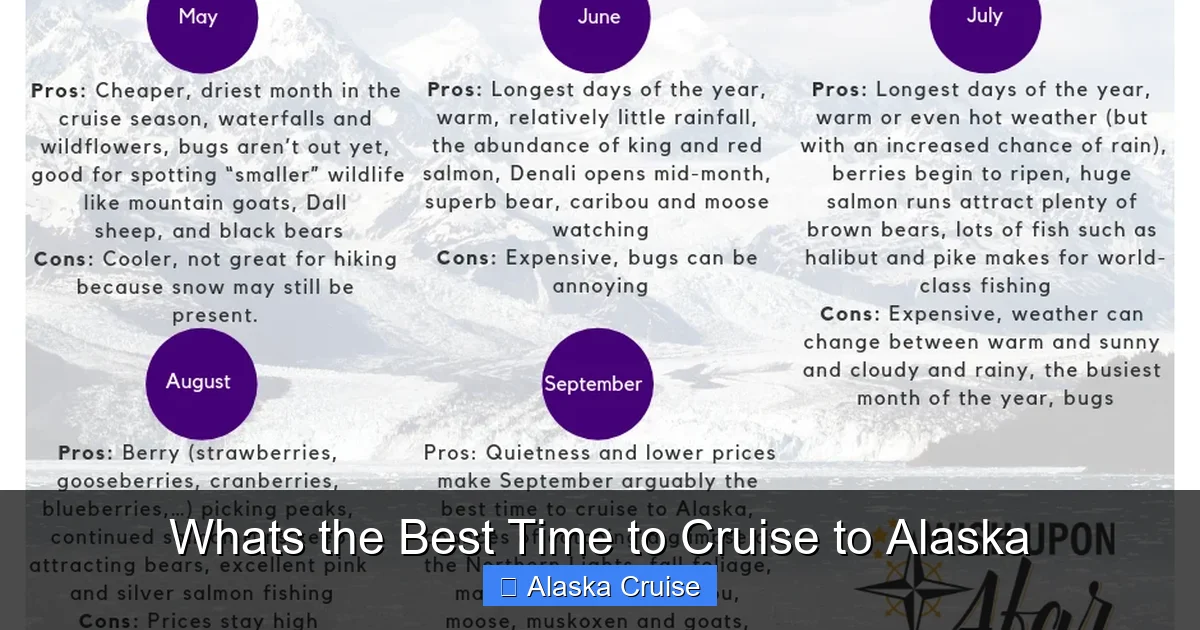
The best time to cruise to Alaska is from late May to early September, with peak season in June through August offering the warmest weather, longest days, and best wildlife viewing. However, shoulder months like May and September provide fewer crowds, lower prices, and unique seasonal experiences.
Planning a cruise to Alaska is an exciting adventure, but one of the most important decisions you’ll make is when to go. With dramatic glaciers, towering mountains, abundant wildlife, and charming coastal towns, Alaska is a destination like no other. But timing your trip right can make the difference between a good experience and an unforgettable one. So, what’s the best time to cruise to Alaska?
The short answer? Late May through early September. This window offers the most favorable weather, the best chances to see wildlife, and the full range of cruise itineraries. But within that range, each month brings its own unique charm, advantages, and trade-offs. Whether you’re looking for warm weather, fewer crowds, lower prices, or the perfect shot of a breaching whale, understanding the seasonal nuances will help you pick the ideal time for your Alaskan cruise.
In this guide, we’ll break down the pros and cons of each month, explore what to expect in terms of weather, wildlife, and scenery, and help you decide when to set sail based on your priorities. From the midnight sun of June to the crisp, quiet beauty of September, we’ll cover everything you need to know to plan the perfect Alaskan cruise.
Key Takeaways
- Peak Season (June–August): Offers the warmest weather, longest daylight hours, and peak wildlife activity, making it ideal for first-time cruisers.
- Shoulder Seasons (May & September): Feature fewer crowds, lower prices, and unique seasonal scenery, such as spring blooms or fall colors.
- Wildlife Viewing: Bears, whales, and migratory birds are most active from June to August, with humpback whales especially common in July.
- Weather Conditions: Summer months are mild (50–70°F), while May and September can be cooler and wetter, requiring layered clothing.
- Glacier Views: Glaciers are most accessible and active in summer, with calving events more frequent in warmer months.
- Cruise Availability: Most major cruise lines operate from May to September, with the highest frequency of sailings in July and August.
- Photography & Scenery: Midnight sun in June offers extended golden-hour lighting, while September brings crisp air and autumn hues.
📑 Table of Contents
Understanding Alaska’s Cruise Season
Alaska’s cruise season is relatively short, typically running from mid-May to early October. Most major cruise lines—like Holland America, Princess, Royal Caribbean, and Norwegian—begin their Alaska itineraries in late May and wrap up by mid-September. A few smaller or luxury lines may extend slightly into October, but options are limited and weather becomes more unpredictable.
The season is dictated by Alaska’s extreme climate. Winters are long, harsh, and dark, with many ports inaccessible due to ice and snow. By late spring, however, the days grow longer, temperatures rise, and the landscape comes alive. This is when the cruise ships return, bringing thousands of visitors to experience the Last Frontier.
The peak of the season falls between June and August. These months offer the most stable weather, the warmest temperatures, and the highest concentration of wildlife. But they also come with the largest crowds and the highest prices. If you’re flexible with your travel dates, you might find better value—and a more peaceful experience—by traveling during the shoulder months of May or September.
Why the Season Matters
Choosing the right time to cruise to Alaska isn’t just about comfort—it’s about access. Many of Alaska’s top attractions, like Glacier Bay National Park and Hubbard Glacier, are only accessible during the summer months when sea ice has melted and weather conditions are safe for navigation. Additionally, wildlife migration patterns, daylight hours, and even the availability of shore excursions are all influenced by the time of year.
For example, if seeing bears fishing for salmon in rivers is on your bucket list, you’ll want to aim for July or August when salmon runs are at their peak. If you’re hoping to photograph the Northern Lights, you’ll need to go in September or October—but be prepared for shorter days and colder weather.
Peak Season: June, July, and August
If you’re looking for the most reliable weather, the best wildlife viewing, and the fullest range of activities, the peak summer months of June, July, and August are your best bet. This is when Alaska truly shines.
Weather and Daylight
During these months, temperatures in coastal Alaska typically range from the mid-50s to low 70s Fahrenheit (13–22°C). It’s not tropical, but it’s pleasantly mild—especially compared to the freezing winters. Rain is possible, especially in the southeast (like Juneau and Ketchikan), but extended dry spells are common.
One of the biggest draws of a summer cruise is the nearly endless daylight. In June, the sun barely sets in places like Fairbanks and Barrow, and even in southern ports like Ketchikan, you’ll enjoy 16–18 hours of daylight. This means more time for sightseeing, photography, and enjoying the scenery. The “midnight sun” effect creates a magical, golden-hour glow that lasts for hours, perfect for capturing stunning photos.
Wildlife Viewing
Summer is prime time for wildlife. Humpback whales, orcas, and gray whales migrate north to feed in Alaska’s nutrient-rich waters. July is especially famous for whale watching, with frequent sightings in places like Icy Strait Point and Glacier Bay. Sea lions, sea otters, and puffins are also commonly seen along the coast.
On land, brown bears and black bears are active, particularly in July and August when salmon return to rivers to spawn. Popular bear-viewing spots include Anan Creek near Wrangell and Pack Creek on Admiralty Island. Birdwatchers will delight in the return of migratory species like bald eagles, puffins, and sandhill cranes.
Glacier Activity
Glaciers are a highlight of any Alaska cruise, and summer is when they’re most dynamic. Warmer temperatures cause more calving—the dramatic process where chunks of ice break off into the water. This creates thunderous splashes and floating icebergs, offering unforgettable photo opportunities. Popular glacier stops include Hubbard Glacier, Glacier Bay, and Tracy Arm Fjord.
Crowds and Costs
The downside? Peak season means peak crowds. Popular ports like Skagway, Juneau, and Ketchikan can feel busy, especially on days when multiple ships are in port. Shore excursions—like dog sledding on a glacier or whale-watching tours—sell out quickly, so booking in advance is essential.
Prices are also at their highest. Cruise fares, flights, and excursions can cost significantly more during June, July, and August. If budget is a concern, consider traveling just before or after this window.
Shoulder Seasons: May and September
For travelers seeking a more relaxed, budget-friendly experience, the shoulder months of May and September offer compelling advantages. While the weather is less predictable and daylight hours are shorter, these months come with fewer crowds, lower prices, and unique seasonal beauty.
May: The Awakening
May marks the beginning of the cruise season. The landscape is still emerging from winter, with snow lingering in higher elevations and rivers beginning to swell with meltwater. But the days are getting longer, and the first wildflowers are starting to bloom.
Temperatures in May range from the 40s to low 60s°F (4–16°C), so layers are essential. Rain is common, especially in the southeast, but sunny days are not uncommon. One of the biggest perks of a May cruise is the lack of crowds. You’ll have more space on the ship, shorter lines at ports, and a more intimate experience overall.
Wildlife is beginning to stir. Bears are emerging from hibernation and can often be spotted along riverbanks. Whales are starting to arrive, though sightings are less frequent than in summer. Bird activity increases as migratory species return.
September: The Quiet Beauty
September is a favorite among seasoned cruisers. The summer rush has faded, but the weather is still relatively mild, with temperatures in the 50s to low 60s°F (10–16°C). The air is crisp, the skies are often clear, and the fall colors begin to paint the landscape in shades of gold and red.
This is also a great time for wildlife. Bears are actively feeding in preparation for hibernation, and salmon runs are still strong in some rivers. Whale activity remains high, especially in early September. You might even catch a glimpse of the Northern Lights, which become visible as the nights grow longer.
One of the biggest draws of a September cruise is the value. Fares are lower, and many cruise lines offer end-of-season discounts. Flights to Seattle or Vancouver (common departure points) are also often cheaper. Plus, with fewer ships in port, you’ll enjoy a more peaceful experience in towns like Haines and Sitka.
Trade-Offs to Consider
While May and September offer many benefits, there are some trade-offs. Some shore excursions may not be available, especially those that rely on specific weather conditions or wildlife activity. For example, dog sledding on a glacier typically ends by early September. Additionally, daylight hours are shorter—especially in September—so you’ll have less time for exploration.
Weather can also be more variable. Rain is more likely in May, while September can bring early snow in northern regions. Packing appropriately is key: bring waterproof gear, warm layers, and sturdy footwear.
Wildlife and Nature Highlights by Month
One of the main reasons people cruise to Alaska is to experience its incredible wildlife and natural beauty. But what you see—and when—depends heavily on the time of year.
Bears
Bears are most active from late spring through early fall. In May and June, they’re often seen foraging in coastal areas and along riverbanks. By July and August, they congregate near salmon streams, providing prime viewing opportunities. Popular spots include:
– Anan Creek (near Wrangell): Famous for bear viewing platforms.
– Pack Creek (Admiralty Island): Accessible by floatplane from Juneau.
– McNeil River (not on most cruise itineraries, but worth noting for bear enthusiasts).
Whales
Whale watching is a highlight of any Alaska cruise. Humpback whales arrive in May and stay through September, with peak activity in July. Orcas (killer whales) are also common, especially in the Inside Passage. Gray whales migrate through in spring and fall.
Best whale-watching spots include:
– Icy Strait Point: Known for high whale sighting rates.
– Glacier Bay: A protected marine sanctuary with frequent whale activity.
– Frederick Sound: A hotspot for orcas and humpbacks.
Birds
Alaska is a birdwatcher’s paradise. In May and June, migratory birds return in large numbers. Puffins nest on coastal cliffs, bald eagles soar overhead, and sandhill cranes can be seen in wetlands. By August, many species begin their southward migration.
Popular birding locations:
– Stikine River Delta (near Wrangell): Home to thousands of waterfowl.
– Baranof Island: Excellent for spotting seabirds and raptors.
– Glacier Bay: Offers opportunities to see puffins and murres.
Glaciers and Ice
Glaciers are a constant presence on an Alaska cruise, but their behavior changes with the seasons. In summer, warmer temperatures lead to more calving, creating dramatic icefalls. In May and September, glaciers may be quieter, but the surrounding landscapes are more lush and colorful.
Hubbard Glacier, one of the largest in North America, is a must-see. It calves frequently in summer, sending massive ice blocks into Disenchantment Bay. Glacier Bay National Park offers a chance to see tidewater glaciers up close, with ranger-led programs on board ships.
Choosing the Right Cruise Line and Itinerary
The time of year you choose will also influence your cruise line and itinerary options. Most major lines operate from Seattle or Vancouver, with round-trip or one-way (open-jaw) routes.
Round-Trip vs. One-Way Cruises
Round-trip cruises depart and return to the same port (usually Seattle or Vancouver). These are convenient and often more affordable. One-way cruises, also known as open-jaw itineraries, start in one city and end in another (e.g., Seattle to Seward or Vancouver to Whittier). These allow you to explore more of Alaska, including Denali National Park, via land tours.
Inside Passage vs. Gulf of Alaska
There are two main types of Alaska cruise itineraries:
– **Inside Passage:** Focuses on southeastern Alaska, with stops in Ketchikan, Juneau, Skagway, and Haines. These cruises are typically 7 days and depart from Seattle or Vancouver.
– **Gulf of Alaska:** Travels further north, often including ports like Seward, Whittier, and Kodiak. These cruises may be 7–10 days and often include glacier viewing in College Fjord or Hubbard Glacier.
The Inside Passage is ideal for first-time cruisers and those interested in wildlife and small towns. The Gulf of Alaska offers more dramatic scenery and access to national parks.
Small Ships vs. Large Ships
Larger ships (like those from Royal Caribbean or Norwegian) offer more amenities, entertainment, and dining options. They’re great for families and first-time cruisers. Smaller ships (like those from UnCruise or Lindblad Expeditions) offer a more intimate experience, with greater access to remote areas and expert naturalists on board.
If you’re traveling in May or September, smaller ships may offer more flexibility and unique itineraries, as they’re less dependent on peak-season demand.
Packing Tips for Your Alaska Cruise
No matter when you go, packing smart is essential for a comfortable Alaska cruise. The weather can change quickly, and you’ll want to be prepared for rain, wind, and cool temperatures—even in summer.
Layering Is Key
The best approach is layering. Start with a moisture-wicking base layer, add a warm mid-layer (like fleece), and top it off with a waterproof and windproof outer shell. This allows you to adjust to changing conditions throughout the day.
Essential Items
– Waterproof jacket and pants
– Warm hat and gloves (even in summer)
– Sturdy, non-slip walking shoes
– Binoculars (for wildlife viewing)
– Camera with extra batteries (cold drains batteries faster)
– Reusable water bottle
– Motion sickness remedies (for rough seas)
What Not to Bring
Avoid heavy luggage—cruise cabins are small, and you’ll be moving around a lot. Leave behind formal wear unless your cruise has a special dinner night. And don’t forget to check your cruise line’s dress code and prohibited items list.
Conclusion: When Should You Go?
So, what’s the best time to cruise to Alaska? The answer depends on what you value most.
If you want the warmest weather, the best wildlife viewing, and the fullest range of activities, **June through August** is the ideal window. It’s peak season for a reason—Alaska is at its most vibrant and accessible.
But if you prefer fewer crowds, lower prices, and a more peaceful experience, consider **May or September**. These shoulder months offer unique seasonal beauty, great value, and a more intimate connection with nature.
Ultimately, there’s no bad time to cruise to Alaska during the summer season. Each month brings its own magic—from the awakening of spring to the golden hues of fall. By understanding the seasonal differences and aligning them with your travel goals, you can choose the perfect time for your Alaskan adventure.
Whether you’re watching a glacier calve under the midnight sun or spotting a bear along a quiet riverbank, an Alaska cruise is an experience you’ll never forget. So pack your bags, bring your sense of wonder, and set sail for the Last Frontier.
Frequently Asked Questions
What is the best month to see whales in Alaska?
July is the best month to see whales in Alaska, especially humpback whales. They are most active and frequently spotted in places like Icy Strait Point and Glacier Bay during this time.
Can you see the Northern Lights on an Alaska cruise?
Yes, but only in September or October when the nights are longer and darker. The Northern Lights are not visible during the summer months due to nearly constant daylight.
Is it cold on an Alaska cruise in July?
No, July is one of the warmest months, with temperatures typically ranging from 55°F to 70°F (13°C to 21°C). However, it can still feel chilly on the water, so layers are recommended.
Are Alaska cruises expensive?
Prices vary, but peak season (June–August) is the most expensive. Shoulder months like May and September offer significant savings on fares and flights.
Do I need a passport for an Alaska cruise?
It depends on your itinerary. If your cruise departs and returns to the same U.S. port (e.g., Seattle), a passport is not required but highly recommended. For international departures (e.g., Vancouver), a passport is mandatory.
What should I wear on an Alaska cruise?
Pack layers, including a waterproof jacket, warm fleece, and comfortable walking shoes. Even in summer, evenings can be cool, and rain is common.