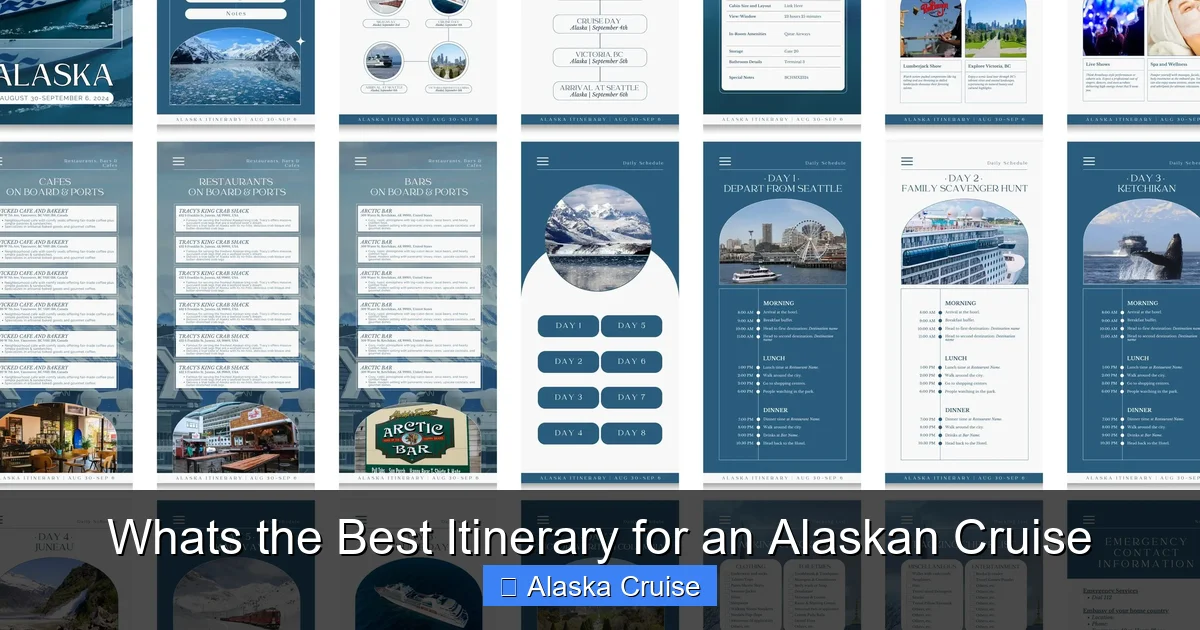
Choosing the best itinerary for an Alaskan cruise depends on your interests, travel style, and the time of year you visit. Whether you’re chasing glaciers, wildlife, or charming coastal towns, Alaska offers unforgettable experiences. This guide breaks down top routes, must-see stops, and insider tips to help you pick the perfect cruise.
Key Takeaways
- 7-day itineraries are the most popular and offer a balanced mix of scenery, wildlife, and port towns. These trips typically sail round-trip from Seattle or Vancouver, visiting key destinations like Juneau, Skagway, and Ketchikan.
- Glacier viewing is a highlight—plan for stops at Hubbard Glacier, Tracy Arm, or Glacier Bay National Park. These icy wonders are best seen between May and September when weather and visibility are optimal.
- Wildlife sightings are more common on itineraries that include remote areas like Icy Strait Point or Haines. Look for cruises that offer whale watching, bear viewing, and eagle spotting excursions.
- Shore excursions greatly enhance your experience—book early for popular activities like dog sledding or flightseeing. Many cruise lines offer bundled packages that save time and money.
- Inside Passage routes are ideal for first-time cruisers, while Gulf of Alaska cruises offer more rugged, scenic adventures. Choose based on your comfort with sea days and desire for remote exploration.
- Timing matters—peak season (June to August) offers the best weather and longest days. Shoulder months (May and September) provide fewer crowds and lower prices.
- Consider cruise line and ship size—smaller ships access narrower fjords and offer a more intimate experience. Larger ships provide more amenities and entertainment options.
📑 Table of Contents
- Why an Alaskan Cruise Should Be on Your Bucket List
- Understanding Alaskan Cruise Itineraries: The Basics
- Top Ports of Call and What to Expect
- Best Time to Cruise Alaska: Timing Your Trip
- Choosing the Right Cruise Line and Ship
- Must-Do Shore Excursions and Experiences
- Packing Tips and What to Bring
- Final Tips for the Best Alaskan Cruise Experience
Why an Alaskan Cruise Should Be on Your Bucket List
Alaska isn’t just a destination—it’s a once-in-a-lifetime experience. Imagine cruising through icy fjords, watching humpback whales breach beside your ship, and stepping ashore in historic gold rush towns. The Last Frontier offers raw, untouched beauty that’s hard to match anywhere else on Earth. Whether you’re a nature lover, history buff, or simply craving adventure, an Alaskan cruise delivers it all.
But with so many cruise lines, ships, and routes to choose from, figuring out the best itinerary for an Alaskan cruise can feel overwhelming. Do you want to see glaciers up close? Spot brown bears fishing for salmon? Or maybe you’re more interested in exploring charming coastal villages with rich Indigenous cultures? The good news? There’s an Alaska cruise itinerary for every traveler. The key is knowing what to look for and matching the route to your interests.
Understanding Alaskan Cruise Itineraries: The Basics
Alaskan cruises generally fall into two main categories: Inside Passage cruises and Gulf of Alaska cruises. Each offers a unique experience, so understanding the difference is the first step in choosing the best itinerary for your trip.
Visual guide about Whats the Best Itinerary for an Alaskan Cruise
Image source: i.pinimg.com
Inside Passage Cruises: The Classic Route
The Inside Passage is the most popular route for first-time cruisers. These itineraries typically run 7 days and sail round-trip from cities like Seattle, Washington, or Vancouver, British Columbia. The journey winds through a network of protected waterways, lush rainforests, and dramatic coastlines.
Ports of call often include Ketchikan, known as the “Salmon Capital of the World” and home to vibrant Native Alaskan totem poles; Juneau, the state capital accessible only by boat or plane, where you can hike to Mendenhall Glacier or take a whale-watching tour; and Skagway, a well-preserved gold rush town with historic boardwalks and the famous White Pass & Yukon Route Railway.
One of the biggest advantages of Inside Passage cruises is their predictability. The waters are calm, the ports are well-developed for tourism, and the scenery is consistently stunning. This makes them ideal for families, older travelers, or anyone who prefers a more relaxed pace.
Gulf of Alaska Cruises: The Scenic Adventure
If you’re looking for a more rugged, immersive experience, a Gulf of Alaska cruise might be the best itinerary for you. These trips usually last 7 to 14 days and often sail one-way between Vancouver or Seattle and Seward or Whittier (near Anchorage). This route includes longer sea days but rewards travelers with access to remote wilderness areas.
Key highlights include Glacier Bay National Park, a UNESCO World Heritage Site where you can witness massive tidewater glaciers calving into the sea; Hubbard Glacier, one of the largest glaciers in North America; and Icy Strait Point, a private destination owned by the Huna Tlingit people, offering bear-viewing tours and zip-lining through old-growth forests.
Gulf of Alaska itineraries are perfect for travelers who want to maximize glacier viewing and wildlife encounters. They’re also great for those who don’t mind spending a day or two at sea—these stretches often offer breathtaking views of snow-capped mountains and passing whales.
Top Ports of Call and What to Expect
No matter which itinerary you choose, certain ports stand out as must-see destinations. Here’s a closer look at the most popular stops and what makes each one special.
Juneau: The Heart of Alaska’s Capital
Juneau is the only state capital in the U.S. that can’t be reached by road—making it a true Alaskan adventure. Nestled between the mountains and the sea, Juneau offers a mix of urban charm and wild beauty. One of the top attractions is the Mendenhall Glacier, a 13-mile-long glacier just 12 miles from downtown. You can hike the trails, take a guided tour, or even kayak near its edge.
Whale watching is another Juneau highlight. Humpback whales are frequently spotted in the surrounding waters, especially from May to September. Many cruise lines offer whale-watching excursions that include a naturalist guide and high-speed boat rides. Don’t miss the Alaska State Museum or a visit to the Mount Roberts Tramway, which offers panoramic views of the city and surrounding wilderness.
Skagway: Step Back into the Gold Rush Era
Skagway looks like it’s been frozen in time since the late 1800s. This historic town was once the gateway to the Klondike Gold Rush, and today, it’s a National Historic Landmark with preserved buildings, wooden sidewalks, and costumed interpreters.
The White Pass & Yukon Route Railway is the star attraction. This narrow-gauge railroad climbs over 2,800 feet in just 20 miles, offering jaw-dropping views of waterfalls, gorges, and mountain peaks. It’s one of the most scenic train rides in the world and a must-do for history and scenery lovers.
For outdoor enthusiasts, Skagway offers hiking, gold panning, and even dog sledding on a glacier (via helicopter tour). The town is small, so you can easily explore on foot, but be sure to book excursions in advance—they fill up fast.
Ketchikan: Gateway to the Tongass National Forest
Known as the “Salmon Capital of the World,” Ketchikan is surrounded by the lush Tongass National Forest, the largest national forest in the U.S. The town itself is built on stilts over the water, with colorful buildings and a strong Indigenous culture.
Visit the Totem Heritage Center to see authentic totem poles and learn about the Tlingit, Haida, and Tsimshian peoples. You can also take a cultural tour to Metlakatla, a nearby Native village, or go on a fishing charter to try your hand at catching salmon.
For nature lovers, the Misty Fjords National Monument is a short flight away. This remote wilderness area features dramatic cliffs, waterfalls, and pristine lakes—best seen from a small plane or seaplane tour.
Seward and Whittier: Doorways to Kenai Fjords
These two ports, located near Anchorage, are the starting points for Gulf of Alaska cruises and gateway to Kenai Fjords National Park. From here, you can take a boat tour to see glaciers, sea lions, puffins, and even orcas.
Seward is a charming fishing town with a laid-back vibe. Visit the Alaska SeaLife Center, where you can see sea otters, puffins, and even touch a starfish. Whittier, on the other hand, is known for its unique tunnel—the only way in or out is through a one-lane tunnel shared by cars and trains.
Best Time to Cruise Alaska: Timing Your Trip
Alaska’s cruise season runs from mid-May to mid-September, but the best time to go depends on what you want to see and do.
Peak Season: June to August
This is the most popular time to cruise Alaska, and for good reason. The weather is mild (average highs of 60–70°F), the days are long (up to 19 hours of daylight in June), and wildlife is most active. Glaciers are calving, bears are fishing for salmon, and whales are feeding in the nutrient-rich waters.
However, peak season also means larger crowds, higher prices, and limited availability. If you’re flexible, consider booking early—many cruise lines open reservations up to a year in advance.
Shoulder Seasons: May and September
Traveling in May or September offers several advantages. You’ll find fewer tourists, lower prices, and more availability. The scenery is still stunning, with spring blooms in May and fall colors in September.
One trade-off is weather—May can be chilly and rainy, while September may have shorter days and cooler temperatures. Wildlife is still visible, but some species (like bears) may be less active as they prepare for winter.
If you’re on a budget or prefer a quieter experience, the shoulder seasons are an excellent choice. Just pack layers and be prepared for variable conditions.
Choosing the Right Cruise Line and Ship
Not all Alaskan cruises are created equal. The cruise line and ship size can greatly impact your experience, so it’s important to choose wisely.
Major Cruise Lines: What Sets Them Apart
Celebrity Cruises and Holland America Line are known for their focus on destination immersion. They offer longer port stays, expert naturalists on board, and educational programs about Alaska’s culture and ecology.
Princess Cruises operates the “North to Alaska” program, which includes enhanced shore excursions, local cuisine, and cultural performances. They also have a strong presence in Alaska, with multiple ships and itineraries.
Royal Caribbean and NCL (Norwegian) cater to families and travelers who want a mix of adventure and onboard entertainment. Their ships feature rock climbing walls, water slides, and Broadway-style shows—perfect if you want more than just scenery.
Ship Size: Intimate vs. Luxurious
Smaller ships (under 1,000 passengers) can access narrower fjords and remote areas that larger vessels can’t reach. They often offer a more personalized experience, with fewer crowds and more interaction with crew and naturalists.
Larger ships (2,000+ passengers) provide more amenities—multiple dining options, spas, theaters, and kids’ clubs. They’re ideal for families or travelers who want a resort-like experience at sea.
If glacier viewing is your top priority, consider a ship that sails into Tracy Arm or Endicott Arm—these narrow fjords are only accessible to smaller vessels. Larger ships may view glaciers from a distance, which can still be spectacular but less immersive.
Must-Do Shore Excursions and Experiences
Shore excursions are where an Alaskan cruise truly comes to life. These guided tours let you get up close with nature, history, and local culture. Here are some of the best experiences to consider.
Glacier and Ice Adventures
Nothing compares to standing in front of a massive glacier. Options include kayaking near Mendenhall Glacier, taking a helicopter tour to land on a glacier, or joining a dog sledding expedition (yes, on real snow!). These tours are thrilling and unforgettable, but they can be pricey—budget $200–$500 per person.
Wildlife Viewing
Alaska is a wildlife paradise. Whale-watching tours are available in nearly every port, with humpbacks, orcas, and gray whales commonly spotted. For bears, head to Pack Creek on Admiralty Island or Anan Creek near Wrangell—both offer guided bear-viewing tours during salmon runs.
Birdwatchers will love Steller sea lions, puffins, and bald eagles. Many excursions include a naturalist guide who can point out species and explain their behaviors.
Cultural and Historical Tours
Learn about Alaska’s rich Indigenous heritage with visits to Native villages, totem parks, and cultural centers. In Ketchikan, the Tongass Historical Museum offers insights into the region’s logging and fishing history. In Juneau, the Alaska State Museum showcases art, artifacts, and stories from Alaska’s diverse communities.
Don’t miss a chance to try local cuisine—Alaskan king crab, fresh salmon, and reindeer sausage are regional specialties. Many excursions include food tastings or visits to local markets.
Packing Tips and What to Bring
Packing for an Alaskan cruise requires preparation. The weather can change quickly, and you’ll want to be ready for rain, wind, and cool temperatures—even in summer.
Layering Is Key
Bring a waterproof jacket, fleece or down vest, and moisture-wicking base layers. A hat, gloves, and warm socks are also essential, especially for glacier tours or early morning excursions.
Footwear Matters
Comfortable, waterproof hiking boots are a must for shore excursions. Many trails are muddy or uneven, and you’ll want good traction. Pack a pair of casual shoes for onboard use.
Don’t Forget the Extras
Bring binoculars for wildlife spotting, a reusable water bottle, and sunscreen (yes, even in Alaska—the sun reflects off the water and snow). A small backpack is useful for day trips, and don’t forget your camera or phone with extra batteries.
Most cruise lines have laundry facilities, so you don’t need to overpack. Check your cruise line’s dress code for formal nights—some require jackets or dresses.
Final Tips for the Best Alaskan Cruise Experience
To make the most of your trip, keep these final tips in mind:
- Book early—popular itineraries and excursions sell out months in advance.
- Arrive a day early to avoid travel delays and explore your departure city.
- Download offline maps and guides—cell service is limited in remote areas.
- Stay flexible—weather can affect schedules, but it’s all part of the adventure.
- Talk to locals—Alaskans are friendly and full of great tips.
An Alaskan cruise isn’t just a vacation—it’s a journey into one of the most beautiful and wild places on Earth. With the right itinerary, you’ll return home with memories that last a lifetime.
Frequently Asked Questions
What is the best month to take an Alaskan cruise?
The best month for an Alaskan cruise is July, when the weather is warmest, wildlife is most active, and daylight lasts up to 19 hours. June and August are also excellent, offering great scenery and fewer crowds than peak summer.
How many days should an Alaskan cruise be?
A 7-day cruise is ideal for most travelers, offering a balanced mix of port stops, glacier viewing, and sea days. Longer 10- to 14-day itineraries are better for those who want more remote exploration and fewer crowds.
Can you see glaciers on an Alaskan cruise?
Yes, glacier viewing is a highlight of most Alaskan cruises. Popular spots include Hubbard Glacier, Tracy Arm, and Glacier Bay National Park. Smaller ships can get closer to the ice for a more immersive experience.
What should I wear on an Alaskan cruise?
Pack in layers: a waterproof jacket, fleece, warm base layers, hat, gloves, and waterproof boots. Even in summer, temperatures can drop, especially on excursions or at sea.
Are Alaskan cruises family-friendly?
Yes, many cruise lines offer family-friendly amenities like kids’ clubs, entertainment, and educational programs. Shore excursions can be adapted for all ages, making it a great trip for families.
Do I need to book shore excursions in advance?
Yes, popular excursions like whale watching, dog sledding, and flightseeing often sell out quickly. Booking in advance ensures you get your top choices and sometimes saves money with bundled packages.