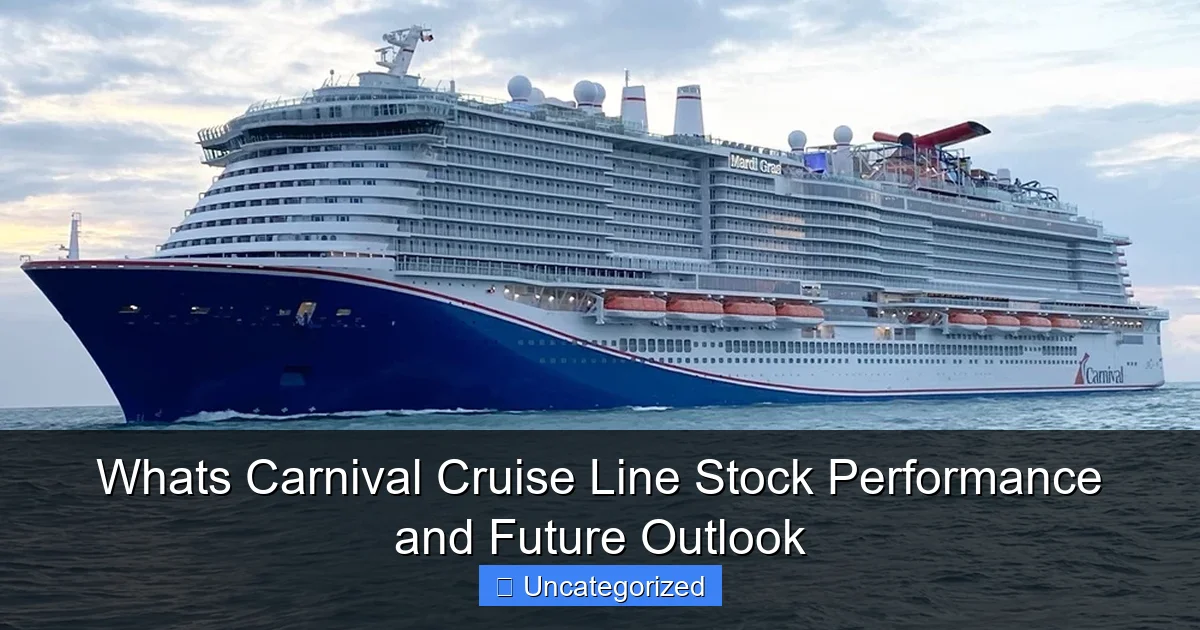
Featured image for what’s carnival cruise line stock
Image source: cruisemapper.com
Carnival Cruise Line’s stock (CCL) has shown strong recovery momentum post-pandemic, driven by record bookings and improved pricing power. Despite near-term volatility from fuel costs and economic uncertainty, the company’s aggressive debt reduction and expanded fleet efficiency signal a bullish long-term outlook. Investors should watch 2024-2025 capacity growth and consumer demand trends as key performance indicators.
Key Takeaways
- Carnival’s stock rebounded strongly post-pandemic, signaling renewed investor confidence in travel recovery.
- Monitor fuel costs closely—they heavily impact Carnival’s profitability and operational margins.
- Bookings remain robust, reflecting sustained consumer demand for cruise vacations.
- Debt reduction is critical; Carnival must improve balance sheet health to stabilize stock performance.
- Expand premium offerings to boost revenue per passenger and attract higher-spending demographics.
- Watch geopolitical risks—global tensions can disrupt itineraries and investor sentiment.
📑 Table of Contents
- Understanding Carnival Cruise Line Stock: A Deep Dive into Its Performance and Future Outlook
- Historical Stock Performance: From Pandemic Lows to Recovery Highs
- Key Factors Influencing Carnival Cruise Line Stock Valuation
- Competitive Landscape and Industry Trends
- Recent Financial Data and Key Metrics
- Future Outlook: What’s Next for Carnival Cruise Line Stock?
- Conclusion: Is Carnival Cruise Line Stock a Buy?
Understanding Carnival Cruise Line Stock: A Deep Dive into Its Performance and Future Outlook
When you think of a vacation on the high seas, Carnival Cruise Line likely comes to mind. As one of the most recognizable names in the cruise industry, Carnival has built a legacy of fun, relaxation, and unforgettable experiences for millions of travelers. But beyond the sun-drenched decks and tropical destinations, there’s a financial story unfolding in the stock market that’s equally compelling. Investors, both seasoned and new, are increasingly asking: What’s Carnival Cruise Line stock performance and future outlook? The answer is more nuanced than a simple buy or sell signal—it involves a complex interplay of economic trends, industry dynamics, and post-pandemic recovery.
Carnival Corporation & plc (NYSE: CCL, LSE: CCL) is not just a single brand but a global powerhouse that includes Carnival Cruise Line, Princess Cruises, Holland America Line, Seabourn, and several other cruise brands. As the largest cruise company in the world by revenue and fleet size, its stock is a barometer for the entire leisure travel sector. Whether you’re a retail investor looking to diversify your portfolio or a financial analyst tracking consumer behavior, understanding the trajectory of Carnival’s stock offers valuable insights into broader market trends. In this comprehensive guide, we’ll explore the historical performance of Carnival Cruise Line stock, the key factors influencing its valuation, recent financial data, competitive landscape, and what the future might hold in an evolving travel economy.
Historical Stock Performance: From Pandemic Lows to Recovery Highs
The Pre-Pandemic Boom (2015–2019)
Before the global pandemic, Carnival Cruise Line stock (CCL) enjoyed a relatively stable and upward trajectory. Between 2015 and 2019, CCL traded in the range of $40 to $60 per share, with a peak of around $57 in early 2018. During this period, the company benefited from strong consumer demand, rising disposable incomes, and a growing middle class in emerging markets. The cruise industry was expanding, with new ships being launched annually and itineraries reaching more exotic destinations. Carnival’s consistent dividend payments (which were suspended in 2020) and share buybacks also made it an attractive option for income-focused investors.

Visual guide about what’s carnival cruise line stock
Image source: logos-world.net
For example, in 2017, Carnival reported a record $3.1 billion in net income, driven by increased ticket prices and onboard spending. The stock reflected this success, outperforming the S&P 500 in several quarters. Investors who bought CCL at $40 in 2016 and held through 2019 saw returns of over 30%, not including dividends. This era was marked by confidence in the cruise model: predictable revenue streams, high customer retention, and strong brand loyalty.
The Pandemic Crash and Recovery (2020–2022)
Then came 2020. The global shutdown of the cruise industry due to the COVID-19 pandemic sent CCL into a freefall. In March 2020, the stock plummeted from around $45 to just $7.75—a staggering 83% drop in a matter of weeks. The company halted operations, laid off staff, and faced unprecedented financial strain. To survive, Carnival raised over $20 billion in debt and equity offerings, diluting shareholders and increasing leverage.
However, the story didn’t end there. By 2021, as vaccines rolled out and travel restrictions eased, Carnival began a slow but steady recovery. The stock rebounded to over $30 by mid-2021, fueled by pent-up demand and aggressive marketing campaigns like “Cruise with Confidence.” Yet, volatility remained high. In 2022, macroeconomic headwinds—rising interest rates, inflation, and recession fears—pushed CCL back down to $10–$15 range. The stock became a textbook case of a “recovery play” with significant upside potential but also high risk.
2023–2024: Signs of Stabilization
Fast forward to 2023 and early 2024, and Carnival Cruise Line stock has shown signs of stabilization. As of Q1 2024, CCL trades between $15 and $18, with improving financials and record booking volumes. In its Q4 2023 earnings call, Carnival reported a 70% year-over-year increase in net revenue, reaching $5.4 billion, and a 25% increase in customer deposits compared to 2019. The company has also reduced its debt by $3 billion since 2022 through asset sales and refinancing, signaling improved balance sheet health.
For investors, this period represents a pivotal moment: Carnival is no longer in survival mode. It’s now in growth mode, with a clear path to profitability. The stock’s recovery is not just about returning to pre-pandemic levels—it’s about adapting to a new travel landscape where sustainability, digitalization, and customer experience are paramount.
Key Factors Influencing Carnival Cruise Line Stock Valuation
1. Consumer Demand and Booking Trends
One of the most critical drivers of CCL’s stock performance is consumer demand. After years of travel restrictions, people are eager to cruise again. Carnival reported that 2023 bookings surpassed 2019 levels, with a 30% increase in new-to-cruise customers. This is significant because first-time cruisers are more price-sensitive and less brand-loyal, meaning Carnival must invest in marketing and onboard experiences to retain them.
Practical Tip: Watch Carnival’s monthly booking reports and investor presentations. A consistent increase in customer deposits (a leading indicator of future revenue) is a bullish signal. For example, in January 2024, Carnival announced a record $3.8 billion in customer deposits, up from $3 billion in the same period in 2023.
2. Fuel and Operating Costs
Cruise lines are energy-intensive, with fuel accounting for 10–15% of operating costs. When oil prices rise—as they did in 2022 due to the Ukraine war—profit margins shrink. Carnival has responded by investing in LNG (liquefied natural gas)-powered ships, which are 20–25% more fuel-efficient than traditional vessels. The company plans to have 11 LNG ships in its fleet by 2025, reducing both costs and carbon emissions.
Additionally, Carnival has implemented dynamic pricing models, adjusting ticket prices based on demand, seasonality, and fuel costs. This helps protect margins during volatile periods. For instance, during the 2022 oil price spike, Carnival increased ticket prices by 5–8% on select itineraries, which helped offset higher fuel expenses.
3. Debt Management and Financial Health
Carnival’s debt load remains a concern. As of Q4 2023, the company had $27 billion in total debt, down from $30 billion in 2022 but still high. The company’s debt-to-EBITDA ratio is around 8x, which is above the industry average of 5x. However, Carnival has made progress in refinancing high-interest debt. In 2023, it issued $1.5 billion in bonds at 6.5%, replacing older debt with rates as high as 11%.
Investor Insight: A declining debt-to-EBITDA ratio and improving cash flow from operations are positive signs. Carnival’s operating cash flow turned positive in Q3 2023 ($1.2 billion), up from a $500 million outflow in Q3 2022. This suggests the company is generating enough cash to service its debt and fund growth.
4. Regulatory and Environmental Pressures
The cruise industry faces increasing scrutiny over environmental impact. Regulations like the IMO 2020 (which limits sulfur emissions) and the EU’s Emissions Trading System (ETS) are pushing companies to adopt cleaner technologies. Carnival has committed to net-zero emissions by 2050 and is investing in shore power, advanced wastewater treatment, and carbon offset programs.
While these initiatives increase short-term costs, they enhance long-term sustainability and brand reputation. For example, Carnival’s “Green Cruising” program has been well-received by eco-conscious travelers, helping to differentiate it from competitors. Failure to meet environmental standards could lead to fines, route restrictions, or reputational damage—all of which would negatively impact stock performance.
5. Geopolitical and Macroeconomic Risks
Cruise lines are sensitive to global events. The Red Sea crisis in 2023 forced Carnival to reroute ships, increasing fuel costs and reducing itinerary appeal. Similarly, economic downturns can lead to lower discretionary spending, directly affecting cruise bookings. Inflation in 2022–2023 led some consumers to delay vacations, though demand has remained resilient.
Tip for Investors: Monitor macroeconomic indicators like consumer confidence, inflation rates, and GDP growth. A strong economy generally supports higher cruise demand, while a recession can lead to cancellations and price wars among cruise lines.
Competitive Landscape and Industry Trends
Major Competitors: Royal Caribbean and Norwegian
Carnival operates in a highly competitive market dominated by three major players: Royal Caribbean Group (RCL) and Norwegian Cruise Line Holdings (NCLH). Together, these three companies control over 70% of the global cruise market. Each has a distinct strategy:
- Carnival: Focuses on mass-market appeal, family-friendly experiences, and value pricing.
- Royal Caribbean: Invests in high-tech ships (e.g., Quantum-class) and premium experiences.
- Norwegian: Targets younger demographics with flexible dining and entertainment options.
In terms of stock performance, Royal Caribbean has outperformed Carnival in recent years, with RCL trading near $140 in early 2024 compared to CCL’s $17. This gap reflects RCL’s stronger balance sheet, lower debt, and more aggressive digital transformation. However, Carnival’s larger fleet and global reach give it scale advantages in cost efficiency and route diversity.
Emerging Trends: Digitalization and Personalization
The cruise industry is undergoing a digital revolution. Carnival has invested heavily in mobile apps, AI-driven customer service, and onboard Wi-Fi. Its “Carnival Hub” app allows guests to book excursions, order food, and manage itineraries—increasing convenience and boosting onboard revenue. In 2023, Carnival reported a 40% increase in app usage, with guests spending 25% more on average compared to non-app users.
Personalization is another key trend. Carnival uses data analytics to tailor marketing, pricing, and onboard experiences. For example, if a customer frequently books spa treatments, they might receive targeted discounts via email or the app. This level of customization improves customer satisfaction and lifetime value—both of which are reflected in stock performance over time.
Sustainability and ESG Investing
Environmental, Social, and Governance (ESG) factors are increasingly important to investors. Carnival has improved its ESG score in recent years, earning an “A-” from MSCI in 2023. Initiatives include:
- Reducing single-use plastics by 50% since 2018.
- Launching the first LNG-powered cruise ship in North America (Carnival Mardi Gras).
- Investing in community programs in port cities.
Strong ESG performance can attract institutional investors and lower the cost of capital. For example, in 2023, Carnival secured $1 billion in green bonds, which carry lower interest rates due to their sustainability credentials.
Recent Financial Data and Key Metrics
Q4 2023 Earnings Snapshot
Carnival’s Q4 2023 results (ended November 30, 2023) provide a clear picture of its recovery. Below is a summary of key financial metrics:
| Metric | Q4 2023 | Q4 2022 | Change |
|---|---|---|---|
| Net Revenue | $5.4 billion | $3.8 billion | +42% |
| Net Income (Loss) | ($400 million) | ($1.6 billion) | Improved by $1.2B |
| Customer Deposits | $3.8 billion | $3.0 billion | +27% |
| Operating Cash Flow | $1.2 billion | ($500 million) | Positive turn |
| Fleet Utilization | 95% | 70% | +25 pts |
While Carnival still reported a net loss in Q4 2023, the improvement from a $1.6 billion loss in Q4 2022 is significant. The company expects to return to profitability in 2024, with full-year net income projected between $1.0 and $1.3 billion. This turnaround is driven by higher ticket prices, increased onboard spending, and cost optimization.
Key Performance Indicators (KPIs) to Watch
For investors, the following KPIs are essential for evaluating Carnival’s stock:
- Load Factor: Measures the percentage of available passenger capacity sold. In Q4 2023, it was 105% (due to double occupancy), indicating strong demand.
- Onboard Revenue per Passenger per Day (OBP): Carnival reported $78 in Q4 2023, up from $65 in 2019.
- Debt-to-EBITDA: Currently 8x, but expected to fall below 6x by 2025.
- Return on Invested Capital (ROIC): Improved to 4.2% in 2023 from -3.1% in 2022.
Tracking these metrics quarterly can help investors assess Carnival’s operational efficiency and long-term potential.
Future Outlook: What’s Next for Carnival Cruise Line Stock?
Growth Opportunities
Carnival has several growth levers to pull in the coming years:
- New Ship Deliveries: The company will take delivery of 10 new ships between 2024 and 2027, including the Carnival Jubilee (2024) and Carnival Firenze (2024). These ships feature innovative designs, larger capacities, and advanced sustainability features.
- Expansion in Asia and Australia: Carnival is increasing its presence in high-growth markets like China and Australia, where cruise penetration is still low.
- Premiumization: The company is upgrading its onboard offerings (e.g., fine dining, luxury suites) to attract higher-spending customers.
These initiatives could boost revenue by 5–7% annually over the next five years, according to analyst estimates.
Risks and Challenges
Despite the optimism, Carnival faces risks:
- Recession Sensitivity: If the U.S. or global economy enters a recession, cruise demand could decline sharply.
- Labor Shortages: The cruise industry is facing a shortage of skilled workers, which could delay ship operations and increase costs.
- Climate Change: Rising sea levels and extreme weather events could disrupt itineraries and increase insurance costs.
Investors should monitor these risks closely, especially during economic downturns.
Analyst Sentiment and Price Targets
As of early 2024, analyst sentiment on CCL is cautiously optimistic. Of 18 analysts covering the stock:
- 6 rate it “Strong Buy,”
- 7 rate it “Buy,”
- 4 rate it “Hold,”
- 1 rates it “Sell.”
The average 12-month price target is $22, with a high of $30 and a low of $15. This suggests potential upside of 25–75% from current levels, assuming Carnival achieves its profitability and deleveraging goals.
Conclusion: Is Carnival Cruise Line Stock a Buy?
The question of whether Carnival Cruise Line stock is a buy depends on your investment strategy, risk tolerance, and time horizon. For long-term investors, the story is compelling. Carnival is the leader in a recovering industry, with strong brand recognition, a global fleet, and a clear path to profitability. The stock’s current valuation—trading at a price-to-sales (P/S) ratio of 1.1x—is below its historical average of 2.5x, suggesting it may be undervalued.
However, it’s not without risks. The company’s high debt load, sensitivity to economic cycles, and operational challenges mean that volatility is likely to persist. Investors should consider Carnival as a growth-at-a-reasonable-price (GARP) opportunity rather than a stable dividend stock (dividends remain suspended).
Practical Takeaway: If you’re considering investing in CCL, do so with a long-term perspective. Monitor key metrics like customer deposits, debt levels, and load factors. Diversify your portfolio to mitigate risk. And remember—cruise stocks are cyclical. They thrive in good economic times and struggle during downturns. But with Carnival’s aggressive recovery plan, strong demand, and industry-leading scale, the future looks brighter than it has in years.
In the end, Carnival Cruise Line stock isn’t just about numbers on a balance sheet. It’s about the return of wanderlust, the resilience of the travel industry, and the enduring human desire to explore the world. For investors willing to ride the waves, the journey could be as rewarding as the destination.
Frequently Asked Questions
What is Carnival Cruise Line’s stock symbol?
Carnival Cruise Line’s stock trades under the ticker symbol CCL on the New York Stock Exchange (NYSE). It is also part of the S&P 500 index, making it a widely tracked leisure industry stock.
How has Carnival Cruise Line stock performed in recent years?
Carnival Cruise Line stock (CCL) saw significant volatility due to pandemic-related disruptions but has gradually rebounded with the return of global travel demand. Investors should monitor its recovery trajectory and debt management strategies for long-term performance insights.
Is Carnival Cruise Line stock a good investment right now?
While CCL stock offers growth potential as the cruise industry recovers, it remains sensitive to economic cycles and fuel costs. Consider analyzing recent earnings reports, booking trends, and macroeconomic factors before investing.
What factors influence Carnival Cruise Line’s stock price?
Key drivers include quarterly earnings, consumer travel demand, fuel prices, geopolitical stability, and debt levels. News about fleet expansions or sustainability initiatives can also impact Carnival Cruise Line stock performance.
Does Carnival Cruise Line pay dividends on its stock?
As of 2023, Carnival suspended its dividend to prioritize debt reduction post-pandemic. Future dividend reinstatement will depend on sustained profitability and improved financial health.
What is the future outlook for Carnival Cruise Line stock?
The long-term outlook hinges on the company’s ability to manage debt, capitalize on pent-up travel demand, and adapt to environmental regulations. Analysts remain cautiously optimistic, citing strong booking trends and cost-cutting measures.