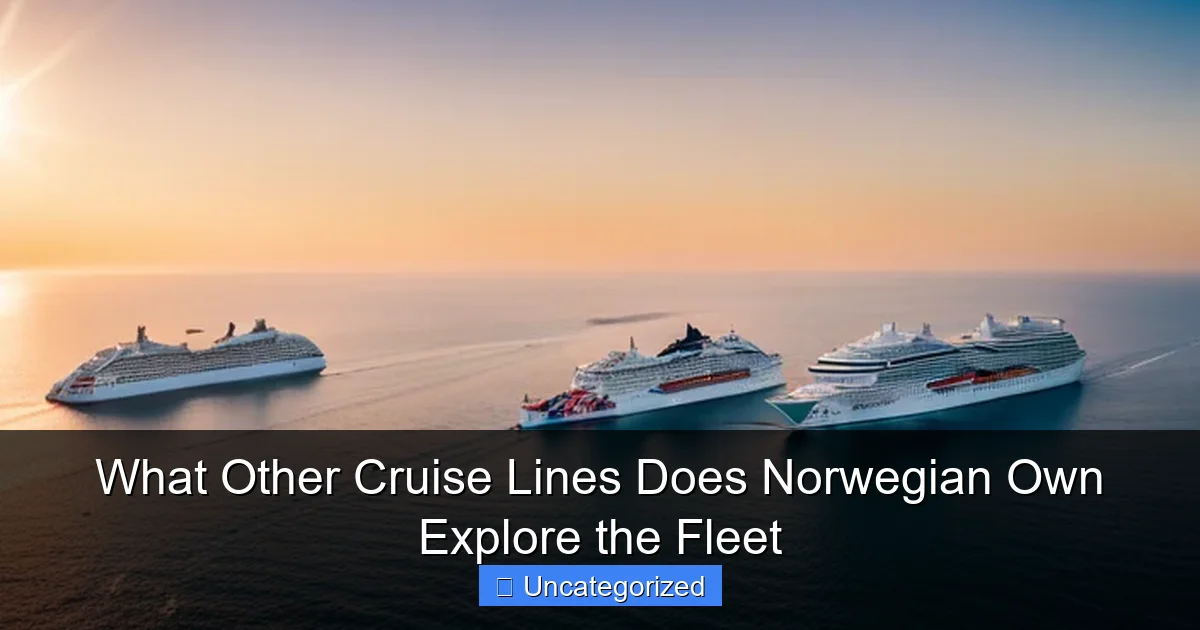
Featured image for what other cruise lines does norwegian own
Image source: voyagerinfo.com
Norwegian Cruise Line Holdings owns three major cruise brands: Norwegian Cruise Line, Oceania Cruises, and Regent Seven Seas Cruises. This powerful portfolio spans from fun-filled, freestyle cruising to ultra-luxury, all-inclusive experiences, giving travelers diverse vacation options under one corporate umbrella. Each brand operates independently but shares resources and innovation across the fleet.
Key Takeaways
- Norwegian owns Oceania Cruises: Upscale, small-ship luxury cruising with global itineraries.
- Regent Seven Seas Cruises is included: All-inclusive luxury voyages with high-end amenities.
- Diverse brands under one umbrella: Combines casual, luxury, and premium cruising experiences.
- Fleet expansion strategy: Focuses on unique, destination-rich itineraries across all brands.
- Shared innovation across lines: Norwegian’s tech and dining concepts enhance sister brands.
- Target different traveler types: Budget to luxury, all under Norwegian’s corporate portfolio.
📑 Table of Contents
- What Other Cruise Lines Does Norwegian Own? A Deep Dive into the Norwegian Cruise Line Holdings Empire
- Norwegian Cruise Line Holdings: The Corporate Parent Behind the Brands
- Norwegian Cruise Line: The Freestyle Pioneer
- Oceania Cruises: The “Premium” Middle Ground
- Regent Seven Seas Cruises: The Ultra-Luxury Crown Jewel
- Fleet Comparison and Strategic Synergies
- Why This Matters for Cruisers: Choosing Your Perfect Voyage
What Other Cruise Lines Does Norwegian Own? A Deep Dive into the Norwegian Cruise Line Holdings Empire
When most travelers think of Norwegian Cruise Line (NCL), they picture the vibrant, Freestyle Cruising experience—open dining, relaxed dress codes, and innovative ships like the Norwegian Encore or Norwegian Prima. But behind this household name lies a much larger, strategically diversified cruise conglomerate: Norwegian Cruise Line Holdings Ltd. (NCLH). This global hospitality giant doesn’t just operate the Norwegian brand—it owns and manages a multi-billion-dollar portfolio of premium, luxury, and upscale cruise lines, each with its own unique identity, target audience, and fleet. Understanding what other cruise lines Norwegian owns isn’t just a matter of trivia; it’s a window into how modern cruise corporations leverage brand differentiation, market segmentation, and operational synergy to dominate the high-seas vacation industry.
As one of the “Big Three” cruise corporations alongside Carnival Corporation & plc and Royal Caribbean Group, Norwegian Cruise Line Holdings has spent over a decade acquiring and cultivating a diverse family of brands. These aren’t just subsidiaries—they’re carefully curated experiences designed to appeal to different traveler demographics: from budget-conscious families to ultra-luxury seekers, adventure travelers to wellness enthusiasts. Whether you’re a loyal NCL guest curious about sister brands or a first-time cruiser evaluating options, knowing the full scope of Norwegian’s fleet empowers you to choose the perfect cruise line for your next vacation. In this comprehensive guide, we’ll explore every cruise line under the Norwegian umbrella, their flagship ships, unique selling points, and how they fit into the larger corporate strategy. From the casual elegance of Oceania Cruises to the white-glove service of Regent Seven Seas Cruises, we’ll uncover what other cruise lines Norwegian owns—and why this matters for your next voyage.
Norwegian Cruise Line Holdings: The Corporate Parent Behind the Brands
The Strategic Vision of a Multi-Brand Empire
Norwegian Cruise Line Holdings Ltd. (NCLH), headquartered in Miami, Florida, is not a single cruise line but a publicly traded parent company (NYSE: NCLH) that operates through three distinct brands: Norwegian Cruise Line, Oceania Cruises, and Regent Seven Seas Cruises. This multi-brand model, often called a “house of brands” strategy, allows NCLH to capture multiple market segments simultaneously without diluting the identity of any one brand. While Norwegian Cruise Line targets the mainstream, value-conscious traveler with its Freestyle Cruising concept, Oceania and Regent cater to the premium and luxury segments, respectively. This segmentation enables NCLH to compete directly with rivals like Royal Caribbean (which owns Celebrity Cruises and Silversea) and Carnival (which owns Princess, Holland America, and Seabourn), ensuring a presence in every tier of the cruise market.
Visual guide about what other cruise lines does norwegian own
Image source: cruisefever.net
The company’s growth has been fueled by strategic acquisitions and organic fleet expansion. NCLH went public in 2013, and since then, it has invested heavily in ship modernization, sustainability initiatives, and digital innovation. For example, the 2014 acquisition of Prestige Cruise Holdings—parent company of Oceania and Regent—marked a pivotal moment, instantly elevating NCLH’s position in the luxury cruise space. Today, NCLH operates a fleet of over 30 ships across its three brands, with more under construction. The corporate structure allows for shared resources—such as procurement, marketing, and environmental compliance—while maintaining brand autonomy in guest experience, cuisine, and service standards. This balance of centralization and differentiation is key to NCLH’s success.
Why Own Multiple Cruise Lines? The Business Case
- Market Diversification: By owning brands across price points (from $1,000 to $20,000+ per person for a 7-night cruise), NCLH mitigates risk. When budget travelers cut spending, luxury guests may still book high-end suites.
- Cross-Brand Loyalty: Frequent cruisers often “trade up” from Norwegian to Oceania or Regent. NCLH’s loyalty programs, like Latitudes (Norwegian), Oceania’s OLife, and Regent’s Seven Seas Society, encourage this progression.
- Operational Synergy: Shared port operations, fuel procurement, and environmental initiatives (e.g., LNG-powered ships) reduce costs. For instance, the Norwegian Prima and Regent Seven Seas Splendor both use advanced wastewater treatment systems.
- Global Reach: Each brand has distinct itineraries. Norwegian dominates Caribbean and Alaska, Oceania focuses on longer, destination-rich voyages, and Regent offers ultra-luxury world cruises.
Tip: If you’re loyal to one NCLH brand, explore sister lines for unique perks. For example, Oceania’s “OLife Ultimate” package includes free airfare, while Regent’s “All-Inclusive” model covers everything from excursions to premium drinks.
Norwegian Cruise Line: The Freestyle Pioneer
Brand Identity and Target Audience
Norwegian Cruise Line (NCL) is the original and most accessible brand under NCLH. Founded in 1966, it revolutionized cruising with Freestyle Cruising—a concept that eliminated rigid dining times, formal nights, and assigned seating. Today, NCL targets families, couples, and solo travelers who value flexibility, affordability, and entertainment. Its ships feature water slides, go-kart tracks (on the Breakaway and Prima classes), Broadway shows, and diverse dining options (from sushi bars to Texas BBQ). With 18 ships in operation and 3 more under construction (including the Norwegian Aqua, launching in 2025), NCL is the largest brand in the NCLH portfolio by fleet size.
Key demographics include:
- Families with children (e.g., Norwegian Encore’s Splash Academy)
- Budget-conscious travelers (base fares start at ~$500 for a 7-night cruise)
- Millennials and Gen Z (social media-friendly venues like The Waterfront)
Flagship Ships and Innovations
NCL’s fleet is divided into classes, each with distinct features:
- Prima Class (e.g., Norwegian Prima, Viva): The newest and most innovative, with infinity pools, a three-level racetrack, and “Ocean Boulevard” outdoor promenade.
- Breakaway Plus Class (e.g., Norwegian Bliss, Encore): Large ships with Broadway shows (Jersey Boys, Six), go-karts, and specialty dining (e.g., Cagney’s Steakhouse).
- Breakaway Class (e.g., Norwegian Breakaway): Smaller than Breakaway Plus but still packed with amenities like the Waterfront dining promenade.
Tip: Book a Norwegian Prima cruise for the best of NCL’s new innovations, including the “Ocean Walk” glass bridge and the “Galaxy Pavilion” VR experience.
Oceania Cruises: The “Premium” Middle Ground
Elevated Experience, Intimate Ships
Acquired by NCLH in 2014, Oceania Cruises occupies the “premium” segment—above Norwegian but below Regent. With just 8 ships (including the new Vista class), Oceania focuses on destination immersion, gourmet cuisine, and smaller, elegant ships (684–1,250 guests). Unlike NCL’s party atmosphere, Oceania offers a refined, adults-oriented experience with a 1.5:1 guest-to-crew ratio, ensuring personalized service. Its tagline, “The Finest Cuisine at Sea,” is backed by partnerships with culinary giants like Chef Jacques Pépin and the Culinary Center for cooking classes.
Oceania’s target audience includes:
- Empty nesters and retirees seeking cultural enrichment
- Foodies drawn to its 10 specialty restaurants (e.g., Polo Grill, Toscana)
- Travelers who prefer longer itineraries (10–24 nights) to lesser-known ports (e.g., Croatia’s Hvar, Vietnam’s Da Nang)
Flagship Ships and Unique Features
- Vista Class (e.g., Oceania Vista, Allura): The newest ships, featuring “Owner’s Suites” with private verandas and butler service, and the “Aquamar Spa + Vitality Center.”
- Marina Class (e.g., Oceania Marina): Mid-sized ships with a library, wine-tasting room, and “Waves” water sports platform.
- Regatta Class (e.g., Oceania Regatta): Refurbished older ships with classic elegance and smaller guest capacity.
Tip: Oceania’s “OLife Ultimate” package (included on most sailings) adds free airfare, shore excursions, and a beverage package—making it a better value than base fares suggest.
Regent Seven Seas Cruises: The Ultra-Luxury Crown Jewel
All-Inclusive Opulence
Regent Seven Seas Cruises is NCLH’s luxury flagship, competing with Silversea and Seabourn. With 6 ships (including the new Seven Seas Grandeur), Regent defines “all-inclusive” by covering everything: flights, shore excursions, premium drinks, gratuities, and even pre-cruise hotel stays. Ships carry 490–750 guests, with a 1:1.3 guest-to-crew ratio. The brand’s “Seven Seas” name reflects its focus on global itineraries, including world cruises and polar expeditions (e.g., Antarctica on the Seven Seas Explorer).
Regent’s audience includes:
- High-net-worth individuals (average cruise cost: $8,000–$20,000 per person)
- Repeat cruisers seeking white-glove service (e.g., butler-serviced suites)
- Adventure travelers (expedition-style excursions with naturalists)
Flagship Ships and Signature Experiences
- Explorer Class (e.g., Seven Seas Explorer): The “most luxurious ship ever built,” with a $5,000/night suite, Canyon Ranch Spa, and a 2:1 guest-to-crew ratio.
- Splendor Class (e.g., Seven Seas Splendor): Sister ship to Explorer, with a 3,000-bottle wine cellar and “Constellation Theater.”
- Grandeur Class (e.g., Seven Seas Grandeur): The newest, featuring a “Regent Suite” with a $10,000/night price tag and a private spa.
Tip: Regent’s “Free Unlimited Shore Excursions” program includes private tours and helicopter rides—ideal for travelers who want curated, high-end experiences.
Fleet Comparison and Strategic Synergies
How the Brands Complement Each Other
While each NCLH brand has a distinct identity, they share strategic synergies:
- Itinerary Diversity: Norwegian dominates the Caribbean (e.g., Norwegian Joy in Alaska), Oceania offers 180-day world cruises, and Regent focuses on ultra-luxury destinations (e.g., the Galápagos).
- Technology Sharing: All brands use NCLH’s “Cruise Freedom” app for mobile check-in, dining reservations, and onboard spending.
- Sustainability Initiuses: NCLH’s “Sail & Sustain” program (e.g., LNG-powered ships, zero single-use plastics) applies to all three brands.
Data Table: NCLH Fleet Overview
| Brand | Ships (2024) | Guest Capacity | Avg. Fare (7-night) | Key Feature |
|---|---|---|---|---|
| Norwegian Cruise Line | 18 | 3,900–4,300 | $1,000–$3,000 | Freestyle Cruising, go-karts, Broadway shows |
| Oceania Cruises | 8 | 684–1,250 | $3,000–$6,000 | Destination immersion, gourmet cuisine |
| Regent Seven Seas | 6 | 490–750 | $8,000–$20,000 | All-inclusive luxury, butler service |
Tip: Use this table to match your budget and travel style. For a $5,000 budget, Oceania offers the best balance of luxury and value.
Why This Matters for Cruisers: Choosing Your Perfect Voyage
Matching Your Travel Style to the Right Brand
Understanding what other cruise lines Norwegian owns helps you make an informed choice:
- For Families: Norwegian’s kid-friendly activities and budget fares win.
- For Foodies: Oceania’s culinary focus and free excursions shine.
- For Luxury Seekers: Regent’s all-inclusive model and butler service are unbeatable.
Future Trends and What’s Next
NCLH’s 2023–2025 plans include:
- 3 new Prima-class ships for Norwegian (2025–2027)
- Oceania’s Allura (2025) with enhanced spa facilities
- Regent’s Seven Seas Grandeur (2023) and a new class in development
The takeaway? Norwegian Cruise Line Holdings isn’t just a parent company—it’s a curator of unforgettable experiences. Whether you’re sipping champagne in Regent’s Regent Suite or racing go-karts on Norwegian’s Prima, the NCLH fleet has a ship for every dream.
Frequently Asked Questions
What other cruise lines does Norwegian own?
Norwegian Cruise Line Holdings Ltd. owns three major cruise brands: Norwegian Cruise Line, Oceania Cruises, and Regent Seven Seas Cruises. These brands operate independently but share resources under the same parent company.
Is Oceania Cruises part of the Norwegian fleet?
Yes, Oceania Cruises is owned by Norwegian Cruise Line Holdings and focuses on upper-premium, destination-rich voyages with mid-sized ships. It complements Norwegian’s portfolio by offering a more refined, intimate cruising experience.
Does Norwegian Cruise Line own Regent Seven Seas?
Regent Seven Seas Cruises is fully owned by Norwegian Cruise Line Holdings and is its luxury all-inclusive brand. It features high-end amenities, spacious suites, and personalized service across its fleet.
Are there any other cruise lines under Norwegian’s ownership?
Currently, Norwegian Cruise Line Holdings operates only three brands: Norwegian, Oceania, and Regent Seven Seas. There are no other cruise lines under its ownership as of 2024.
How does Norwegian’s fleet compare to its sister brands?
Norwegian Cruise Line focuses on freestyle cruising with large, innovative ships, while sister brands Oceania and Regent cater to luxury travelers with smaller vessels. Each brand targets different price points and experiences under the same corporate umbrella.
What other cruise lines does Norwegian own for budget-conscious travelers?
Norwegian Cruise Line itself serves as the more affordable, mainstream option within the Norwegian-owned fleet. Its sister brands, Oceania and Regent, are premium and luxury-focused, so Norwegian is the best fit for budget-friendly cruising.