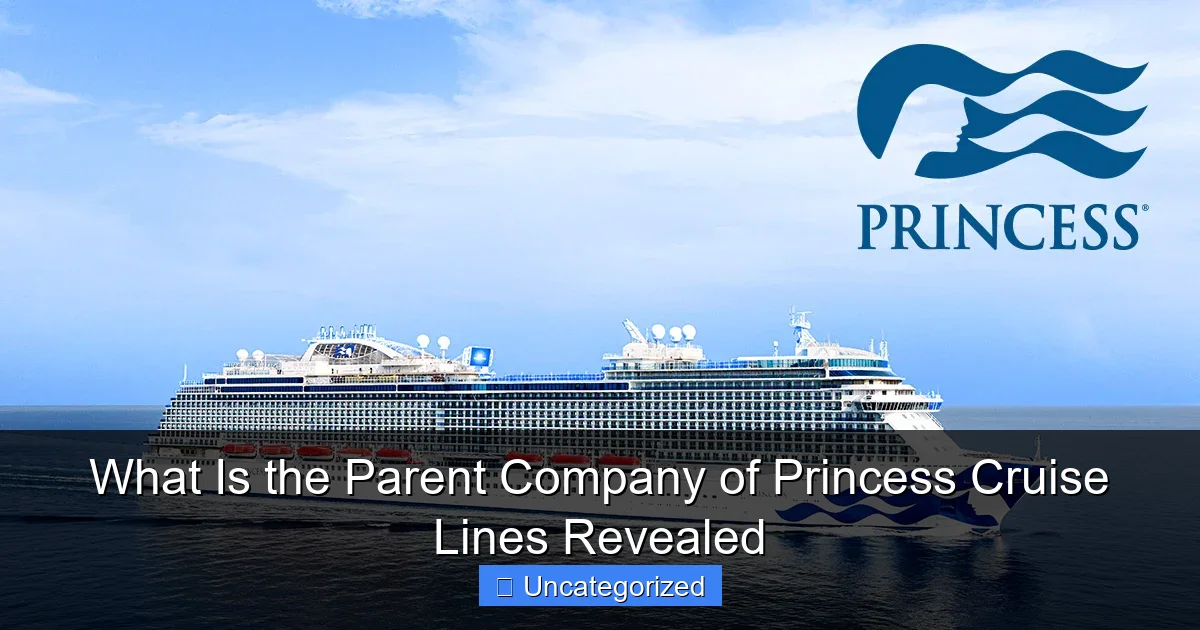
Featured image for what is the parent company of princess cruise lines
Image source: princess.com
Princess Cruise Lines is owned by Carnival Corporation & plc, the world’s largest cruise company, which operates a portfolio of 10 global cruise line brands. This powerhouse parent company ensures Princess Cruises benefits from extensive resources, global reach, and decades of maritime expertise.
Key Takeaways
- Princess Cruise Lines is owned by Carnival Corporation, a global cruise leader.
- Founded in 1965, Princess operates under Carnival’s premium brand portfolio.
- Shared resources with sister brands like Holland America and Seabourn for operational efficiency.
- Stock investors should note Carnival Corp (CCL) trades publicly on NYSE.
- Global reach leverages Carnival’s worldwide network and purchasing power.
- Brand autonomy allows Princess to maintain unique identity despite corporate ownership.
📑 Table of Contents
- The Hidden Giant Behind the Princess: Unveiling the Parent Company of Princess Cruise Lines
- The Parent Company Revealed: Carnival Corporation & plc
- From Humble Beginnings to Corporate Integration: Princess’s Journey
- How Carnival Corporation Powers Princess Cruises
- Competitive Advantages: Why the Parent Company Matters
- Future Outlook: Princess in the Carnival Ecosystem
- Conclusion: The Power Behind the Princess
The Hidden Giant Behind the Princess: Unveiling the Parent Company of Princess Cruise Lines
When you picture a Princess Cruise Lines voyage, you likely envision the iconic “Love Boat” theme song, elegant ships gliding through the Caribbean, or the breathtaking views of Alaska’s glaciers. For decades, Princess has cultivated a reputation for refined luxury, innovative onboard experiences, and global itineraries that span all seven continents. But behind every successful cruise line, there’s often a much larger corporate entity pulling the strings—strategically managing finances, operations, and brand expansion. Have you ever wondered: What is the parent company of Princess Cruise Lines?
This question isn’t just about corporate hierarchy—it’s about understanding the global cruise industry’s intricate ecosystem. The answer reveals a story of mergers, acquisitions, and strategic branding that has shaped not only Princess but also the entire modern cruising experience. Whether you’re a frequent cruiser, a travel industry professional, or simply curious about the business behind the vacation, knowing the parent company of Princess Cruise Lines unlocks insights into how your favorite cruise line operates, evolves, and competes in a $150+ billion global market. In this deep dive, we’ll explore the corporate lineage of Princess, its relationship with its parent company, and how this connection impacts everything from pricing to sustainability initiatives.
The Parent Company Revealed: Carnival Corporation & plc
The parent company of Princess Cruise Lines is Carnival Corporation & plc, one of the largest and most influential travel leisure companies in the world. Often referred to simply as Carnival Corporation, this dual-listed entity is a global powerhouse with a portfolio of 10 cruise line brands, including Princess, Carnival Cruise Line, Holland America Line, and Seabourn. But what makes this parent company so significant, and how does it maintain such a diverse yet cohesive brand family?
Visual guide about what is the parent company of princess cruise lines
Image source: cruisemapper.com
A Dual-Listed Global Entity
Carnival Corporation & plc operates as a dual-listed company (DLC), meaning it is incorporated in both the United States and the United Kingdom. This unique structure allows the company to maintain separate legal entities—Carnival Corporation (based in Miami, Florida) and Carnival plc (based in Southampton, UK)—while functioning as a single economic unit. This arrangement, established in 2003, provides strategic advantages, including access to capital markets in both regions, tax efficiencies, and enhanced corporate governance. The DLC structure is rare in the travel industry and reflects Carnival’s long-term vision for global dominance.
Financial and Operational Scale
With over 90 ships across its brands and more than 150,000 employees worldwide, Carnival Corporation generates annual revenues exceeding $20 billion (pre-pandemic levels, with steady recovery post-2021). The company controls approximately 45% of the global cruise market, making it the undisputed leader in the industry. This scale enables Carnival to negotiate favorable deals with shipbuilders (like Meyer Werft and Fincantieri), fuel suppliers, and port authorities—cost savings that trickle down to brands like Princess, allowing for competitive pricing and enhanced onboard amenities.
Brand Portfolio Strategy
Carnival Corporation’s strategy is built on brand segmentation. Each cruise line in its portfolio targets a different demographic or travel style:
- Carnival Cruise Line – Fun, affordable, family-friendly
- Princess Cruises – Mid-to-upscale, destination-focused, “premium” experience
- Holland America Line – Traditional, elegant, longer itineraries
- Seabourn – Ultra-luxury, all-suite, personalized service
- AIDA Cruises – German-speaking, vibrant, European-focused
This segmentation allows Carnival to capture diverse market segments without internal competition. Princess, positioned as a “premium” brand, benefits from Carnival’s centralized R&D, marketing, and supply chain while maintaining its distinct identity.
From Humble Beginnings to Corporate Integration: Princess’s Journey
Princess Cruise Lines didn’t start as a Carnival subsidiary. Its journey to becoming part of a global cruise empire is a story of ambition, innovation, and strategic acquisition. Understanding this history helps explain why the relationship between Princess and Carnival is both symbiotic and carefully managed.
Founding and Early Growth (1965–1988)
Princess Cruises was founded in 1965 by Stanley McDonald, a California businessman, with the purchase of the Princess Patricia, a former ocean liner. The company’s early focus was on cruises to Mexico and the Caribbean, but it gained international fame in 1977 when it partnered with Aaron Spelling to sponsor the hit TV series The Love Boat. The show, which ran for 10 seasons, turned Princess into a household name and revolutionized cruise marketing. By the 1980s, Princess had expanded to Alaska, the South Pacific, and Europe, becoming one of the first cruise lines to offer “destination immersion” experiences.
The P&O Acquisition (1988–2000)
In 1988, Princess was acquired by Peninsular and Oriental Steam Navigation Company (P&O), a British shipping conglomerate. Under P&O, Princess underwent significant expansion, launching larger ships like the Regal Princess and Golden Princess and entering new markets like Asia. P&O also acquired other cruise lines, including P&O Cruises and Swan Hellenic, creating a multi-brand structure that foreshadowed Carnival’s strategy. However, P&O’s cruise division struggled with profitability and branding inconsistencies, prompting a major shift.
Carnival’s Strategic Takeover (2000–Present)
In 2000, Carnival Corporation acquired P&O’s cruise division in a landmark $5.4 billion deal—the largest in cruise industry history at the time. This acquisition brought Princess, P&O Cruises, and AIDA Cruises under Carnival’s umbrella. The deal was driven by Carnival’s CEO, Micky Arison, who saw an opportunity to consolidate the fragmented premium cruise market. Carnival retained Princess as a standalone brand but integrated it into its centralized operations:
- Shared IT systems for reservations, guest management, and logistics
- Joint procurement for food, beverages, and supplies
- Cross-training of senior management and crew
- Unified sustainability initiatives (e.g., Clean Air Technology, waste reduction)
Today, Princess operates as a semi-autonomous brand within Carnival, with its own CEO, marketing team, and ship design philosophy—but with Carnival’s financial and operational backbone.
How Carnival Corporation Powers Princess Cruises
While Princess Cruises maintains its brand identity, its success is deeply intertwined with Carnival Corporation’s resources, expertise, and global infrastructure. Here’s how the parent company directly impacts Princess’s operations, guest experience, and innovation.
Fleet Development and Shipbuilding
Carnival Corporation negotiates all new ship contracts on behalf of its brands. For example, the Discovery Princess (launched in 2022) was built at Fincantieri’s shipyard in Italy, with Carnival securing a multi-ship order that included vessels for Princess, Holland America, and Carnival Cruise Line. This bulk purchasing reduces costs and ensures consistent design standards. Carnival’s investment in LNG (liquefied natural gas) propulsion and hybrid technologies also trickles down to Princess, with newer ships like the Discovery Princess featuring advanced environmental systems.
Technology and Digital Innovation
Carnival’s $1+ billion investment in digital transformation directly benefits Princess. Key examples include:
- MedallionClass – Princess’s signature wearable tech (a quarter-sized disc) enables contactless payments, keyless stateroom entry, and personalized service. This tech was developed in-house by Carnival’s innovation arm, Carnival Horizon.
- OceanMedallion – A companion app that allows pre-cruise check-in, itinerary customization, and real-time ship tracking. The app is powered by Carnival’s centralized IT infrastructure.
- AI and Data Analytics – Carnival uses AI to predict guest preferences (e.g., dining, excursions) and optimize staffing. Princess leverages this data to enhance guest satisfaction scores.
Global Marketing and Sales
Carnival Corporation’s massive marketing budget (over $500 million annually) funds global campaigns that promote the entire portfolio. For Princess, this means:
- Co-branded promotions (e.g., “Carnival Corporation Presents Princess Cruises’ Alaska Season”)
- Shared loyalty programs – While Princess has its own Captain’s Circle program, it’s integrated with Carnival’s broader loyalty ecosystem, allowing points to be earned across brands.
- Trade partnerships – Carnival negotiates group deals with travel agencies and tour operators, giving Princess access to a wider customer base.
Sustainability and Regulatory Compliance
Carnival’s “Sustainability from the Start” program sets environmental standards for all brands. Princess adheres to Carnival’s global policies on:
- Emissions reduction (e.g., scrubbers, LNG fuel)
- Waste management (e.g., zero-discharge initiatives)
- Marine conservation (e.g., partnerships with WWF, Ocean Conservancy)
For example, Princess’s Sky Princess (2019) features a “Green Marine” certification and shore power connectivity—requirements set by Carnival’s corporate ESG (Environmental, Social, Governance) goals.
Competitive Advantages: Why the Parent Company Matters
The relationship between Princess Cruises and Carnival Corporation isn’t just about ownership—it’s a strategic partnership that creates tangible advantages in a fiercely competitive industry. Here’s how Carnival’s backing gives Princess an edge over independent rivals like Royal Caribbean or Norwegian Cruise Line.
Economies of Scale
Carnival’s massive purchasing power reduces costs across the board. For example:
- A single contract with Royal Caribbean Group for fuel supply covers all Carnival brands, lowering per-gallon costs.
- Bulk orders of food and beverages (e.g., 100,000 bottles of wine) are negotiated at discounted rates.
- Shared port fees in key destinations (e.g., Miami, Barcelona) reduce docking expenses.
These savings allow Princess to offer competitive pricing while maintaining profit margins. A 2023 industry report found that Carnival brands have 15–20% lower operating costs than non-affiliated cruise lines.
Risk Mitigation and Crisis Management
Carnival’s global infrastructure provides a safety net during disruptions. During the COVID-19 pandemic, Carnival:
- Coordinated health protocols across all brands, ensuring consistent safety standards.
- Negotiated with governments for repatriation of crew and passengers.
- Funded R&D for new sanitation technologies (e.g., UV air filtration).
Princess benefited from these efforts, with a faster return-to-sailing timeline than many competitors.
Talent Development and Crew Training
Carnival operates the largest maritime training academy in the world—the Carnival Maritime Academy in Hamburg, Germany. All Princess crew members undergo training here, ensuring standardized service quality. Additionally, Carnival’s “Crew Connect” program offers career advancement across brands, allowing Princess staff to transfer to Holland America or Seabourn—increasing retention and morale.
Brand Synergy Without Cannibalization
Unlike some competitors (e.g., Royal Caribbean’s overlapping Celebrity and Royal brands), Carnival’s segmentation strategy prevents internal competition. Princess focuses on “premium” experiences (e.g., Alaska, Europe), while Carnival Cruise Line targets budget travelers. This clarity strengthens marketing and avoids brand dilution.
Future Outlook: Princess in the Carnival Ecosystem
As the cruise industry evolves, the Princess-Carnival relationship will play a pivotal role in shaping the future of ocean travel. Here’s what to expect in the coming years.
Fleet Expansion and Innovation
Carnival has committed to a $10 billion fleet renewal program (2022–2030), including:
- Five new ships for Princess by 2027, featuring LNG propulsion and AI-driven guest experiences.
- Expansion of the MedallionClass ecosystem, with plans for augmented reality (AR) excursions and biometric boarding.
Princess will also pilot hydrogen fuel cell technology on select itineraries, aligning with Carnival’s 2030 carbon reduction targets.
Market Expansion
Carnival is investing heavily in emerging markets, and Princess will be a key player. Upcoming initiatives include:
- New homeports in India and the Middle East (e.g., Dubai, Mumbai).
- Customized itineraries for Asian travelers, with Mandarin-speaking staff and local cuisine.
- Partnerships with local tour operators to offer immersive cultural experiences.
Sustainability Leadership
Carnival’s 2030 goals include:
- Reducing carbon emissions by 40% (vs. 2008 levels).
- Eliminating single-use plastics fleetwide.
- Investing $200 million in shore power infrastructure.
Princess will lead in eco-tourism, with plans for “zero-impact” itineraries in sensitive regions like Antarctica and the Galápagos.
| Aspect | Princess Cruises | Carnival Corporation Support |
|---|---|---|
| Fleet Size | 15 ships (as of 2023) | 90+ ships across 10 brands |
| Revenue (2023) | $3.2 billion (estimated) | $22.8 billion (total) |
| Key Technology | MedallionClass, OceanMedallion | Developed by Carnival Horizon |
| Environmental Initiatives | LNG propulsion, shore power | Corporate ESG program |
| Market Share | 12% of premium cruise market | 45% of global cruise market |
Conclusion: The Power Behind the Princess
The answer to “What is the parent company of Princess Cruise Lines?” is more than a corporate footnote—it’s the key to understanding how Princess thrives in a complex, competitive industry. Carnival Corporation & plc isn’t just a parent; it’s a strategic partner that provides Princess with financial strength, technological innovation, global reach, and operational resilience. From the MedallionClass wearable to LNG-powered ships, every aspect of the modern Princess experience is shaped by Carnival’s resources and vision.
For travelers, this relationship means greater value, enhanced safety, and unforgettable experiences—backed by a company with the scale to deliver. For the cruise industry, it sets a benchmark for how parent companies can empower brands without stifling their identity. As Princess continues to explore new horizons, its connection to Carnival ensures that the “Love Boat” legacy will sail on—stronger, smarter, and more sustainable than ever.
Frequently Asked Questions
What is the parent company of Princess Cruise Lines?
Princess Cruise Lines is owned by Carnival Corporation & plc, the world’s largest cruise vacation group. This parent company operates multiple cruise brands globally, including Princess, Carnival, and Holland America.
Is Princess Cruises part of Carnival Corporation?
Yes, Princess Cruises is a wholly owned subsidiary of Carnival Corporation & plc, which acquired the brand in 2003. The company oversees Princess’s operations while maintaining its distinct identity.
Who owns Princess Cruise Lines and other major cruise brands?
Carnival Corporation & plc, the parent company of Princess Cruise Lines, also owns nine other cruise lines, including Costa, P&O, and Seabourn. It became a dual-listed company with Carnival plc in 2003.
How does Carnival Corporation support Princess Cruise Lines?
As the parent company, Carnival Corporation provides Princess with resources for shipbuilding, marketing, and global expansion. However, Princess retains its unique branding and onboard experience.
What is the history behind Princess Cruise Lines’ parent company?
Princess Cruise Lines was founded in 1965 and became a key asset for Carnival Corporation after its 2003 acquisition. The parent company has since grown Princess into one of the top premium cruise lines.
Does the parent company of Princess Cruise Lines operate in the luxury segment?
While Princess focuses on premium cruising, its parent company, Carnival Corporation, also owns luxury brands like Seabourn and Regent Seven Seas. Princess itself offers elevated experiences but not ultra-luxury.