MSC Cruise Line stands for “Mediterranean Shipping Company,” a global leader in maritime logistics that expanded into luxury cruising. The name reflects its roots in shipping excellence while highlighting its evolution into a premium cruise brand known for innovation and world-class service.
Key Takeaways
- MSC stands for Mediterranean Shipping Company, the world’s largest container shipping operator.
- MSC Cruises is a separate division focused exclusively on luxury cruise vacations.
- Founded in 1987, it’s now a top global cruise line with rapid expansion.
- Family-owned heritage ensures personalized service and Italian-inspired hospitality onboard.
- Global itineraries cover over 100 destinations, from the Med to South America.
- Modern fleet features cutting-edge sustainability and innovative onboard experiences.
📑 Table of Contents
- What Is MSC Cruise Line Stand For? Unveiling the Meaning Behind the Name
- The Origin of MSC: From Cargo to Cruises
- The Meaning Behind the Acronym: More Than Just Letters
- MSC’s Growth Strategy: How the Name Reflects Expansion
- The Role of Sustainability and Innovation in the MSC Identity
- MSC’s Global Reach and Cultural Impact
- Data Snapshot: MSC Cruises at a Glance
- Conclusion: The Enduring Legacy of MSC
What Is MSC Cruise Line Stand For? Unveiling the Meaning Behind the Name
When you hear the name MSC Cruise Line, you might immediately picture luxurious ships gliding through the Mediterranean, exotic ports of call, and a world of onboard entertainment and relaxation. But have you ever paused to wonder what the acronym MSC actually stands for? It’s not just a random set of letters—there’s a rich history, a global vision, and a legacy behind those three letters. In this deep dive, we’ll uncover the true meaning of MSC, explore its origins, and understand how it has evolved into one of the world’s most prominent and fastest-growing cruise lines.
MSC Cruises, a household name in the cruise industry today, is more than just a vacation provider—it’s a symbol of Italian excellence, maritime tradition, and international expansion. From its roots in cargo shipping to becoming a leader in passenger cruise experiences, the journey of MSC is as fascinating as the destinations it serves. Whether you’re a seasoned cruiser, a first-time traveler, or simply curious about the brand, understanding what MSC stands for offers insight into the company’s values, ambitions, and commitment to quality. Let’s set sail on this informative voyage and decode the mystery behind the name.
The Origin of MSC: From Cargo to Cruises
The Birth of Mediterranean Shipping Company
The acronym MSC originally stands for Mediterranean Shipping Company, a name that reflects the company’s humble beginnings in the shipping and logistics industry. Founded in 1970 by Italian entrepreneur Gianluigi Aponte, MSC began as a modest cargo shipping business with a single vessel, the Sant Anna, operating between the Mediterranean and the Red Sea. Aponte, a former sea captain, recognized the growing demand for international freight services and built a company grounded in reliability, innovation, and customer service.
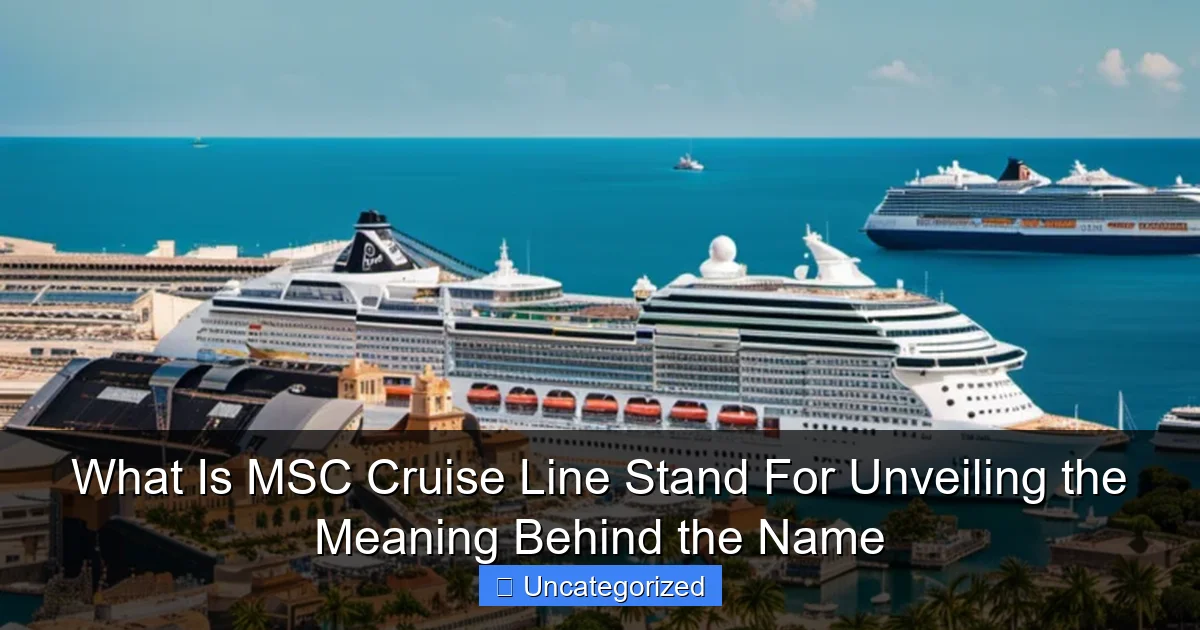
Visual guide about what is msc cruise line stand for
Image source: voyagerinfo.com
Unlike many cruise lines that evolved from passenger-focused maritime ventures, MSC’s foundation was in container shipping—a critical sector in global trade. The company quickly expanded its fleet and routes, becoming a major player in the international logistics market. By the 1980s, MSC had established a presence in over 100 countries, with a fleet of more than 100 container vessels. This logistics expertise laid the groundwork for the company’s later diversification into the cruise industry.
Transition from Freight to Fun: The Birth of MSC Cruises
In the late 1990s, as global tourism surged and cruise vacations gained popularity, Gianluigi Aponte and his family saw an opportunity to leverage their maritime expertise in a new domain: passenger cruising. In 1995, MSC entered the cruise market with the launch of its first cruise ship, the MSC Monterey, a reconditioned vessel originally built for another operator.
This strategic pivot marked the birth of MSC Cruises, a new division dedicated to providing European-style luxury and family-friendly vacations. The Aponte family retained full ownership of the company, ensuring a consistent vision and a long-term growth strategy. The cruise line was designed to reflect the Aponte family’s Italian heritage—offering authentic Mediterranean cuisine, warm hospitality, and elegant ship design—while also appealing to a global audience.
Tip: If you’re researching the history of cruise lines, pay attention to their parent companies. MSC’s roots in shipping give it unique advantages in logistics, fuel efficiency, and port operations, which directly benefit passengers through smoother itineraries and lower operational costs.
The Meaning Behind the Acronym: More Than Just Letters
MSC as a Symbol of Global Reach
While MSC technically stands for Mediterranean Shipping Company, the acronym has taken on a broader, more symbolic meaning in the context of the cruise line. For modern travelers, MSC has become synonymous with Modern, Stylish, and Comfortable cruising experiences. The brand has intentionally cultivated this perception through its ship design, onboard amenities, and marketing campaigns.
The cruise line’s ships are designed with a contemporary aesthetic—featuring sleek lines, expansive glass atriums, and spacious public areas. The MSC Meraviglia class, for example, includes high-tech features like the MSC for Me digital platform, which allows guests to book excursions, order food, and manage their itinerary via a mobile app. This modern approach reflects the company’s evolution from a traditional shipping firm to a tech-savvy, customer-centric cruise operator.
Cultural Identity and Brand Evolution
Another layer of meaning behind MSC lies in its cultural identity. The company proudly promotes its Italian roots, from the design of its ships (often created by Italian architects and interior designers) to the onboard dining experience. Authentic Italian restaurants like Eataly and Butcher’s Cut are staples across the fleet, offering dishes prepared with imported Italian ingredients.
However, MSC is not just Italian—it’s international. The cruise line operates in over 100 countries and sails to more than 300 destinations worldwide. It serves a diverse clientele, with multilingual staff, global entertainment options, and itineraries tailored to regional preferences. For example, ships sailing in the Caribbean may feature Latin music nights and tropical cuisine, while those in Northern Europe might offer Nordic saunas and Scandinavian design elements.
Example: The MSC World Europa, launched in 2022, is the first LNG-powered cruise ship in the world. Its name and design reflect MSC’s commitment to sustainability and global innovation—two values that are now central to the MSC brand, even if they weren’t part of the original meaning of the acronym.
MSC’s Growth Strategy: How the Name Reflects Expansion
Fleet Expansion and Global Ambitions
Since its entry into the cruise industry, MSC has pursued an aggressive fleet expansion strategy. As of 2024, the company operates over 20 cruise ships, with more under construction in shipyards across Europe, including Chantiers de l’Atlantique in France. The new ships are part of the World Class and Seaside EVO series, designed to offer larger capacities, more entertainment zones, and enhanced sustainability features.
This growth is a direct reflection of the company’s original mission: to connect the world. Just as MSC’s cargo ships linked continents through trade, its cruise ships connect people through travel and cultural exchange. The name MSC now represents a global network of experiences, from the fjords of Norway to the beaches of Bali.
Market Positioning and Competitive Edge
MSC Cruises has positioned itself as a premium, family-friendly cruise line that offers high value for money. Unlike luxury lines like Regent or Seabourn, MSC focuses on affordability without sacrificing quality. It’s often compared to Royal Caribbean and Norwegian Cruise Line but stands out with its European flair and multigenerational appeal.
Key competitive advantages include:
- Family-friendly policies: Kids sail free on many itineraries, and onboard facilities include kids’ clubs, teen zones, and family staterooms.
- European design: Ships feature open-air promenades, Italian marble, and elegant lounges.
- Global itineraries: MSC offers unique destinations like the Canary Islands, South Africa, and the Middle East—routes less common among U.S.-based cruise lines.
- Onboard innovation: The MSC for Me app, virtual reality experiences, and AI-powered concierge services enhance guest engagement.
Tip: When booking an MSC cruise, consider the ship class. The World Class ships (e.g., MSC World Europa) offer more space per guest and advanced technology, making them ideal for tech-savvy travelers or those seeking a more premium experience.
The Role of Sustainability and Innovation in the MSC Identity
Environmental Commitment: From Shipping to Cruising
Given MSC’s origins in shipping, the company has always prioritized efficiency and environmental responsibility. This ethos carries over to its cruise operations. In 2022, MSC launched the MSC World Europa, the first LNG-powered cruise ship, reducing CO₂ emissions by up to 25% compared to conventional fuels. The ship also features advanced wastewater treatment systems and shore power connectivity.
MSC has committed to achieving net-zero greenhouse gas emissions by 2050, aligning with the International Maritime Organization (IMO) targets. The company is investing in alternative fuels like hydrogen and biofuels, as well as carbon offset programs for guests who want to travel more sustainably.
Innovation in Guest Experience
MSC doesn’t just innovate in sustainability—it’s a leader in guest experience technology. The MSC for Me platform uses AI and data analytics to personalize the cruise experience. For example:
- Guests can receive real-time notifications about dining availability or show schedules.
- The app can suggest activities based on past behavior (e.g., spa visits, excursions).
- Wearable tech (like MSC’s wristband) allows contactless payments and room access.
Additionally, MSC has partnered with Cirque du Soleil at Sea, offering exclusive acrobatic shows on select ships. These performances blend technology, artistry, and storytelling—further reinforcing the brand’s identity as modern, dynamic, and culturally rich.
Example: The MSC Seascape features a 1,000-foot-long zip line, a VR arcade, and a 1,200-seat theater. These attractions appeal to younger travelers and families, expanding MSC’s market reach beyond traditional cruisers.
MSC’s Global Reach and Cultural Impact
International Itineraries and Local Engagement
MSC Cruises sails to every inhabited continent, with itineraries designed to showcase local culture, cuisine, and history. The company partners with local artisans, chefs, and tour operators to create authentic shore excursions. For instance:
- In Japan, MSC offers tea ceremony experiences and visits to UNESCO World Heritage sites.
- In Brazil, guests can participate in samba dance classes and Amazon rainforest tours.
- In the Mediterranean, MSC promotes sustainable tourism by limiting ship traffic in sensitive areas like Venice.
This approach not only enhances the guest experience but also supports local economies—a key part of MSC’s corporate social responsibility (CSR) strategy.
Brand Recognition and Market Share
Today, MSC Cruises is the world’s third-largest cruise line by passenger capacity, behind Carnival Corporation and Royal Caribbean Group. It’s the fastest-growing major cruise line, with a compound annual growth rate (CAGR) of over 10% since 2010. The company serves over 2 million passengers annually and has a strong presence in key markets like Europe, North America, South America, and the Middle East.
MSC’s brand identity—rooted in the original meaning of Mediterranean Shipping Company—has evolved into a global symbol of accessible luxury, innovation, and cultural connection. The acronym no longer just represents a shipping business; it embodies a vision of uniting people through travel, technology, and tradition.
Data Snapshot: MSC Cruises at a Glance
| Metric | Value (2024) | Notes |
|---|---|---|
| Founded | 1970 (Shipping), 1995 (Cruises) | Aponte family-owned |
| Fleet Size | 22 active ships | +5 under construction |
| Passenger Capacity | Over 60,000 per sailing | Largest ship: MSC World Europa (6,762 guests) |
| Destinations | 300+ ports | Global coverage |
| LNG-Powered Ships | 2 (as of 2024) | MSC World Europa, MSC Euribia |
| Annual Passengers | 2.2 million | Pre-pandemic levels exceeded |
| Net-Zero Target | 2050 | Aligned with IMO |
This data underscores how MSC has transformed from a regional shipping firm into a global cruise powerhouse. The name MSC now represents not just a company, but a movement toward responsible, inclusive, and innovative travel.
Conclusion: The Enduring Legacy of MSC
So, what does MSC Cruise Line stand for? At its core, it stands for Mediterranean Shipping Company—a legacy of maritime excellence, global trade, and family ownership. But today, it represents far more. MSC is a symbol of modern luxury, environmental responsibility, cultural authenticity, and technological innovation. It’s a brand that honors its past while boldly embracing the future.
From the Aponte family’s vision in 1970 to the launch of the world’s first LNG-powered cruise ship in 2022, MSC has consistently redefined what it means to be a cruise line. Whether you’re drawn to its Italian elegance, family-friendly policies, or global itineraries, one thing is clear: MSC is not just a name—it’s a promise. A promise of unforgettable journeys, sustainable practices, and a world more connected through travel.
As MSC continues to expand its fleet, innovate its guest experiences, and champion environmental stewardship, the meaning behind the acronym will only grow richer. The next time you board an MSC ship, remember: you’re not just on a vacation. You’re part of a legacy—one that began with a single cargo ship and now sails the seven seas, connecting cultures, and creating memories. That’s the true meaning of MSC.
Frequently Asked Questions
What does MSC Cruise Line stand for?
MSC Cruise Line stands for Maritime Shipping Company, reflecting its origins as a Mediterranean shipping business. The name highlights its core focus on maritime travel and global connectivity.
Is MSC an acronym for Mediterranean Shipping Company?
Yes, MSC originally stood for Mediterranean Shipping Company, the parent corporation founded in 1970. While the cruise division retains the MSC name, it operates under this broader shipping legacy.
What is the meaning behind the MSC Cruise Line name?
The MSC name symbolizes the brand’s roots in Mediterranean maritime tradition and its evolution into a global cruise leader. It underscores their commitment to ocean travel and international destinations.
Why is MSC Cruise Line associated with Switzerland?
Though MSC stands for Maritime/Mediterranean Shipping Company, the cruise line is headquartered in Geneva, Switzerland. This Swiss base adds a layer of European luxury and operational efficiency to its brand identity.
Does MSC Cruise Line have ties to cargo shipping?
Yes, the cruise line is a division of Mediterranean Shipping Company, one of the world’s largest cargo shipping firms. This connection ensures logistical expertise and global port access for their cruise operations.
How did MSC Cruise Line expand from shipping to cruising?
Founded as a cargo carrier, MSC leveraged its maritime expertise to launch cruises in 1987. The MSC name now represents both its shipping heritage and its modern, family-friendly vacation offerings.