Featured image for what does msc stand for in cruise lines
Image source: cruiseexpert.info
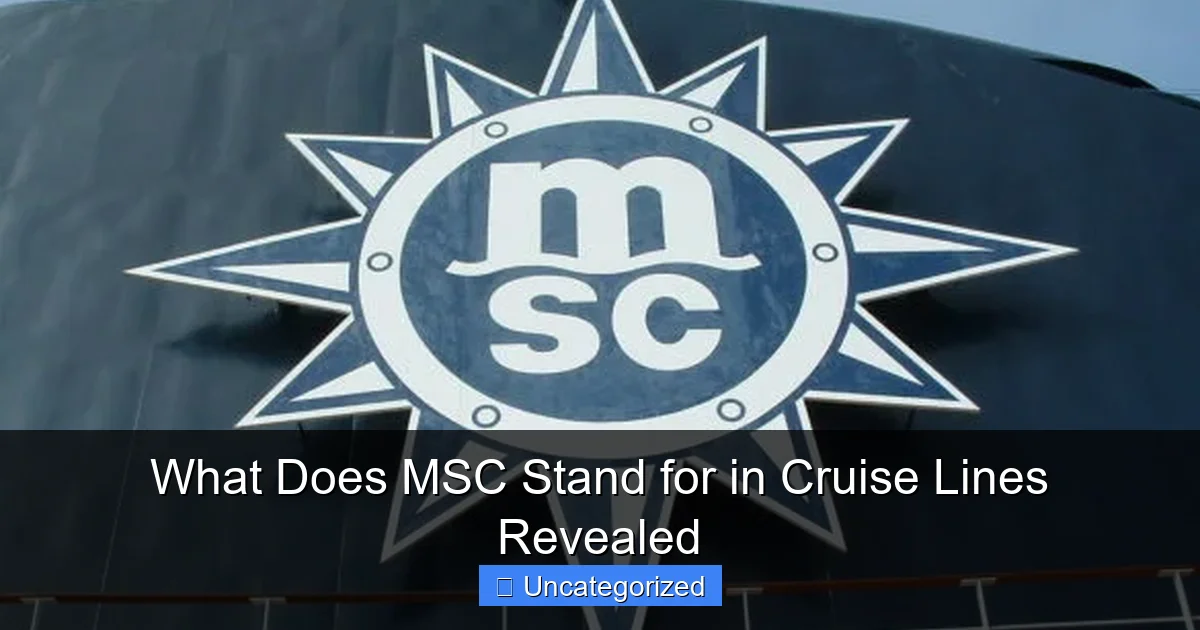
MSC stands for Mediterranean Shipping Company, the global logistics giant behind the popular MSC Cruises brand. Founded in 1970, this Swiss-based line has grown into one of the world’s largest cruise operators, combining European flair with family-friendly innovation. Discover how MSC’s maritime roots shape its modern fleet and unforgettable voyages.
Key Takeaways
- MSC stands for Mediterranean Shipping Company: A global leader in shipping and cruise travel.
- Founded in 1970: Rapidly expanded into one of the world’s top cruise brands.
- European roots, global reach: Offers diverse itineraries across all major cruise regions.
- Modern, innovative fleet: Features eco-friendly ships with cutting-edge onboard technology.
- Multilingual, family-friendly: Designed for international travelers with kids’ programs and diverse dining.
- Focuses on value: Competitive pricing without sacrificing quality or experience.
📑 Table of Contents
- What Does MSC Stand for in Cruise Lines Revealed
- The Origins of MSC: From Shipping Giant to Cruise Powerhouse
- What Does MSC Stand For? Decoding the Brand Identity
- MSC Cruises: Fleet, Itineraries, and Unique Offerings
- Sustainability and Innovation: MSC’s Green Initiatives
- MSC for Families: Kid-Friendly Features and Onboard Experiences
- Why Choose MSC? Weighing the Pros and Cons
What Does MSC Stand for in Cruise Lines Revealed
When planning a cruise vacation, you’ve likely come across the name MSC Cruises and wondered, “What does MSC stand for?” The acronym MSC might seem like just another industry shorthand, but it carries a rich legacy and a global footprint in the world of maritime travel. Whether you’re a seasoned cruiser or a first-time explorer, understanding the meaning behind MSC can deepen your appreciation for one of the fastest-growing cruise lines in the world. Beyond being a simple acronym, MSC represents a story of innovation, family legacy, and a commitment to connecting cultures through the seas.
MSC stands for Mediterranean Shipping Company, the world’s largest container shipping line by capacity, founded in 1970 by Italian entrepreneur Gianluigi Aponte. While the company began as a freight shipping business, its expansion into the cruise industry through MSC Cruises in 1989 transformed it into a major player in the leisure travel sector. Today, MSC Cruises operates a fleet of over 20 ships, serving more than 200 destinations across six continents. The cruise line is known for its European flair, family-friendly offerings, and aggressive fleet expansion, including the revolutionary World Class ships. But what does this acronym truly signify beyond the letters? Let’s dive into the origins, operations, and global impact of MSC in the cruise industry.
The Origins of MSC: From Shipping Giant to Cruise Powerhouse
From Cargo to Cruising: A Strategic Pivot
MSC’s journey into the cruise industry began in the late 1980s when the Aponte family, led by Gianluigi Aponte, recognized the untapped potential of the leisure maritime market. The company’s first cruise venture was modest—purchasing and refurbishing the Monterey, a former ocean liner, and rebranding it as MSC Monterey in 1989. This marked the official launch of MSC Cruises, a subsidiary of Mediterranean Shipping Company. The decision to enter the cruise business wasn’t just about diversification; it was a strategic move to leverage MSC’s existing expertise in shipbuilding, logistics, and maritime operations.
Visual guide about what does msc stand for in cruise lines
Image source: cruiseexpert.info
Unlike many cruise lines that started as leisure-focused companies, MSC brought a unique advantage: deep knowledge of ship design, fuel efficiency, and port operations from its shipping roots. This foundation allowed MSC Cruises to scale rapidly, with a focus on cost-effective operations and high-capacity vessels. For example, the MSC Lirica class ships, launched in the early 2000s, were designed with modular construction techniques borrowed from container ship engineering, reducing build time and costs.
Family Legacy and Global Expansion
The Aponte family remains deeply involved in both the shipping and cruise divisions, with Gianluigi’s son, Diego Aponte, serving as President and CEO of MSC Cruises. This family-led approach has fostered a culture of long-term vision and innovation. Under their leadership, MSC Cruises has grown from a regional player to a global brand, with ships sailing in the Caribbean, Mediterranean, Asia, South America, and even the Arctic.
A key milestone was the acquisition of MSC Cruises USA in 2014, which established a dedicated North American presence. This move was critical for tapping into the lucrative U.S. cruise market, where MSC now offers year-round sailings from ports like Miami, Fort Lauderdale, and New York. The family’s hands-on management style ensures consistency in branding and service quality, a trait that sets MSC apart from publicly traded cruise giants like Carnival or Royal Caribbean.
What Does MSC Stand For? Decoding the Brand Identity
The Meaning Behind the Letters
While MSC officially stands for Mediterranean Shipping Company, the cruise line has evolved its identity beyond this literal translation. In the context of leisure travel, “MSC” has come to represent Modern, Sophisticated, and Connected—a tagline that reflects its commitment to cutting-edge design, cultural immersion, and global connectivity. The brand’s visual identity, with its sleek blue logo and wave motif, symbolizes the fusion of tradition and innovation.
For instance, the MSC Seaside class ships (launched in 2017) feature a revolutionary “seafront promenade” design, with 80% of staterooms offering ocean views and a glass-bottomed walkway suspended over the water. This design philosophy—prioritizing guest experience and connection to the sea—embodies the “Connected” aspect of the MSC identity. Similarly, the line’s emphasis on Italian-inspired cuisine, multilingual staff, and onboard entertainment (like Cirque du Soleil-style shows) highlights its “Sophisticated” ethos.
MSC as a Cultural Ambassador
MSC Cruises positions itself as a bridge between cultures, with itineraries that celebrate local traditions. For example, the MSC Grandiosa offers a “Taste of the Mediterranean” culinary program, where chefs from Greece, Spain, and Morocco prepare regional dishes. The line also partners with UNESCO to promote sustainable tourism in World Heritage Sites like Venice and Dubrovnik.
Tip: When booking an MSC cruise, look for MSC for Me—a digital platform that lets you pre-plan shore excursions, dining, and activities. It’s a great way to experience the “Connected” side of MSC, with real-time updates and personalized recommendations.
MSC Cruises: Fleet, Itineraries, and Unique Offerings
Fleet Overview: From Classic to Futuristic
MSC Cruises’ fleet is divided into six classes, each with distinct features:
- Fantasia Class: The first “mega-ships” (139,000 GT), featuring the MSC Yacht Club—a private, all-inclusive suite area.
- Lirica Class: Smaller, mid-range ships ideal for port-rich itineraries.
- Seaside Class: Designed for sun-seekers, with expansive outdoor decks and a “seafront promenade.”
- Meraviglia Class: High-tech vessels with LED sky domes, robot bartenders, and 12 dining venues.
- World Class: The future of cruising, with LNG-powered engines and a revolutionary “Y-shaped” design (e.g., MSC World Europa).
- Musica Class: A blend of elegance and affordability, popular for Mediterranean sailings.
The World Class ships, like MSC World Europa (2022), are particularly groundbreaking. With a capacity of 6,762 guests, they feature the world’s first cruise ship powered by liquefied natural gas (LNG), reducing CO2 emissions by up to 25%. The ship’s “World Promenade” is a 104-meter-long outdoor walkway with a retractable glass roof—a nod to MSC’s “Connected” vision.
Itineraries: A Global Reach with Local Flair
MSC Cruises sails to over 200 destinations, with a focus on:
- The Mediterranean: 7-night sailings to Barcelona, Naples, and Athens, often with overnight stays in port.
- The Caribbean: Year-round departures from Miami, including stops at MSC’s private island, Ocean Cay.
- Asia: Growing presence in China, Japan, and Southeast Asia, with Mandarin-speaking staff and local cuisine.
- Exotic Routes: Transatlantic crossings, Arctic expeditions, and repositioning cruises.
Example: The MSC Grandiosa offers a 14-night “Grand Voyage” from Genoa to New York, with stops in Lisbon, Bermuda, and Charleston. These itineraries cater to travelers seeking both relaxation and cultural exploration.
Sustainability and Innovation: MSC’s Green Initiatives
LNG-Powered Ships: A Leap Toward Eco-Friendly Cruising
MSC Cruises has invested over $3 billion in sustainable technologies, making it a leader in green maritime travel. The World Class ships are powered by LNG, the cleanest fossil fuel available, cutting sulfur oxide emissions by 99% and nitrogen oxides by 85%. Additionally, MSC is testing hydrogen fuel cells and carbon capture systems for future ships.
Data Table: MSC’s LNG-Powered Fleet
| Ship Name | Launch Year | Capacity (Guests) | Emissions Reduction (vs. Traditional Fuel) |
|---|---|---|---|
| MSC World Europa | 2022 | 6,762 | CO2: 25% lower |
| MSC Euribia | 2023 | 6,327 | CO2: 30% lower |
| MSC World America | 2025 (Planned) | 6,850 | CO2: 35% lower |
Ocean Cay: A Private Island with a Green Mission
MSC’s private island in the Bahamas, Ocean Cay, is a model for sustainable tourism. The island was restored from a former sand mining site, with over 1,000 native plants replanted and a coral reef protection program. Guests can enjoy eco-friendly activities like snorkeling in marine reserves or attending beach clean-up events.
Tip: Book a “Sustainability Shore Excursion” at Ocean Cay, such as a guided tour of the island’s solar-powered facilities or a workshop on coral reef restoration.
MSC for Families: Kid-Friendly Features and Onboard Experiences
MSC’s “Kids Sail Free” Program
One of MSC’s standout features is its family-friendly approach. The line offers a “Kids Sail Free” promotion on select sailings, allowing children under 18 to cruise for free when sharing a cabin with two paying adults. This policy has made MSC a top choice for budget-conscious families.
Onboard, kids are spoiled for choice with:
- MSC Kids Club: Divided by age (3-6, 7-11, 12-14, 15-17), with activities like LEGO playrooms, dance classes, and teen lounges.
- Family Cabins: Spacious staterooms with bunk beds, pull-out sofas, and connecting doors.
- Entertainment: Character meet-and-greets (e.g., Peppa Pig), mini-golf, and water parks.
All-Inclusive Add-Ons: The MSC Yacht Club
For families seeking luxury, the MSC Yacht Club offers an “all-inclusive” experience with:
- Private concierge and butler service
- Exclusive dining (Le Grill, Top Sail Lounge)
- Priority embarkation and disembarkation
- Private pool and sun deck
Example: The Yacht Club on MSC Seaview includes a 24-hour butler and access to the “Top Sail Lounge,” where families can enjoy panoramic ocean views and complimentary cocktails.
Why Choose MSC? Weighing the Pros and Cons
The Advantages of Cruising with MSC
- Value for Money: Competitive pricing, especially with Kids Sail Free.
- Global Itineraries: Unique ports like Ha Long Bay (Vietnam) and the Norwegian Fjords.
- Innovation: LNG-powered ships, AI-powered navigation, and digital platforms like MSC for Me.
- Cultural Immersion: Onboard cooking classes, local entertainment, and multilingual staff.
Potential Drawbacks to Consider
- Service Variability: As a rapidly expanding line, service quality can differ between ships.
- Onboard Language: While English is widely spoken, some activities (e.g., trivia nights) may be in Italian or Spanish.
- Gratuities: Unlike some competitors, MSC charges automatic gratuities (around $12–$15 per person/day).
Tip: To avoid language barriers, download the MSC for Me app before boarding. It includes real-time translations for announcements and menus.
So, what does MSC stand for in cruise lines? It’s far more than an acronym—it’s a symbol of maritime mastery, global connection, and family-friendly innovation. From its humble beginnings as a shipping company to its status as a cruise industry disruptor, MSC has redefined what it means to sail the seas. Whether you’re drawn to the eco-friendly LNG-powered ships, the culturally rich itineraries, or the unbeatable value for families, MSC Cruises offers a unique blend of tradition and forward-thinking design. As the line continues to expand its fleet and sustainability initiatives, one thing is clear: MSC isn’t just keeping pace with the future of cruising—it’s helping to shape it. So next time you see those three letters, remember: they stand for a world of possibilities waiting to be explored.
Frequently Asked Questions
What does MSC stand for in cruise lines?
MSC stands for “Mediterranean Shipping Company,” the parent organization of MSC Cruises. Originally a cargo shipping giant, the company expanded into the cruise industry in the 1980s.
Is MSC Cruises part of the Mediterranean Shipping Company?
Yes, MSC Cruises is a subsidiary of the Mediterranean Shipping Company, a global leader in cargo logistics. This connection often leads to confusion about the cruise line’s origins and scale.
Why is MSC Cruises sometimes called “MSC” instead of its full name?
The acronym “MSC” is used for branding consistency and global recognition, as the parent company (Mediterranean Shipping Company) is already widely known by this abbreviation. It also simplifies marketing across international markets.
What does the MSC stand for in MSC Cruises’ logo?
The logo’s “MSC” retains the same meaning: Mediterranean Shipping Company. The iconic blue wave in the logo symbolizes the cruise line’s maritime heritage and Mediterranean roots.
How did MSC Cruises get its name?
MSC Cruises adopted the acronym from its parent company, Mediterranean Shipping Company, to leverage its established reputation in shipping. The name reflects its evolution from cargo to luxury cruising.
Is there a difference between MSC the cruise line and MSC the shipping company?
Yes, while both share the same acronym (MSC), the cruise line focuses on passenger travel, and the parent company handles cargo logistics. They operate as separate divisions under the same corporate umbrella.