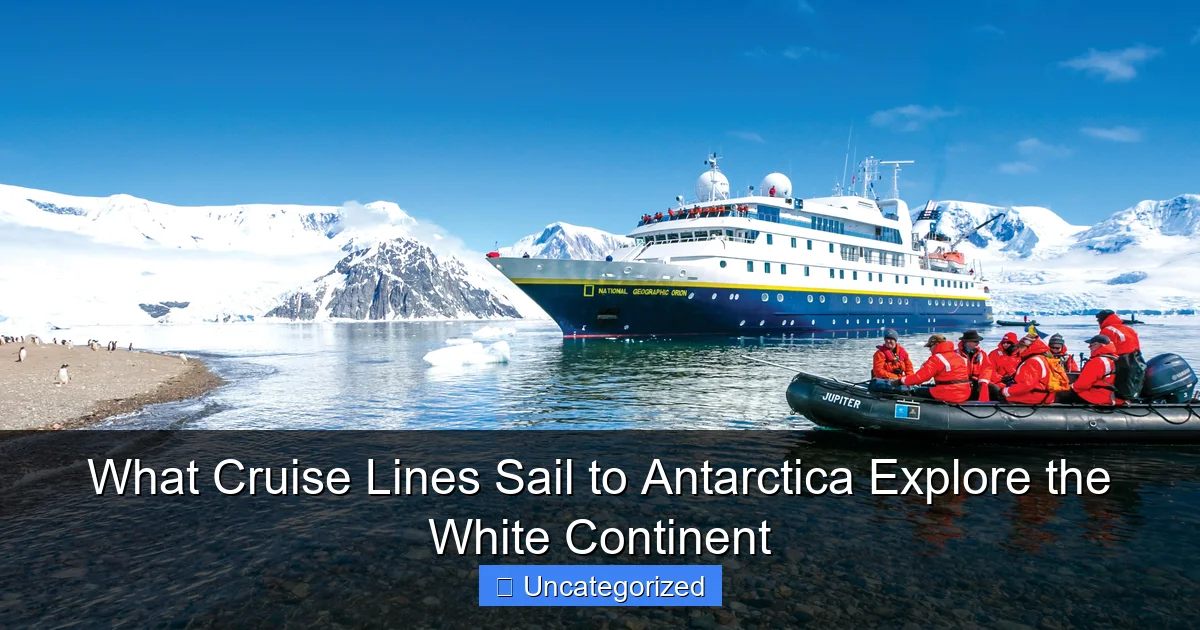
Featured image for what cruise lines sail to antarctica
Image source: s3.amazonaws.com
Several major cruise lines, including Ponant, Hurtigruten, and Silversea, offer expeditions to Antarctica, combining luxury, adventure, and expert-led exploration of the remote White Continent. These operators provide specialized ice-class ships, guided landings, and immersive experiences—from penguin encounters to kayaking among icebergs—ensuring unforgettable polar journeys. Smaller vessels and eco-focused lines like Quark Expeditions and Lindblad Expeditions-National Geographic lead the way in sustainable, up-close Antarctic exploration.
Key Takeaways
- Choose expedition lines: Opt for specialized operators like Quark or G Adventures for expert-led Antarctic exploration.
- Small ships excel: Vessels under 200 passengers offer better landings and wildlife access.
- Season matters: November to March provide optimal weather and wildlife viewing conditions.
- IAATO compliance: Verify cruise lines follow strict environmental guidelines for responsible travel.
- Trip length varies: Select 10–21-day itineraries based on your time and interests.
- Budget accordingly: Prices range from $5,000 to $15,000+; book early for best rates.
📑 Table of Contents
- What Cruise Lines Sail to Antarctica: Explore the White Continent
- Why Antarctica? The Allure of the Last Frontier
- Top Cruise Lines Sailing to Antarctica: A Comprehensive Guide
- Choosing the Right Cruise: Key Factors to Consider
- The Journey to Antarctica: Crossing the Drake Passage
- Environmental Responsibility and Sustainable Travel
- Preparing for Your Antarctic Adventure: Practical Tips
- Data Table: Comparison of Top Antarctic Cruise Lines
- Conclusion: Embark on the Adventure of a Lifetime
What Cruise Lines Sail to Antarctica: Explore the White Continent
Imagine standing on the deck of a ship as towering icebergs drift past, their jagged edges glowing in the ethereal polar light. The air is crisp, the silence profound—until a penguin’s call or a humpback whale’s breach shatters the stillness. Antarctica, the world’s last true wilderness, remains one of the most remote, pristine, and awe-inspiring destinations on Earth. For adventurous travelers, visiting the White Continent is a once-in-a-lifetime experience—a journey into a world untouched by time, where glaciers calve into the ocean, colonies of penguins march across ice, and the midnight sun casts golden hues over a frozen landscape.
Reaching Antarctica is not as simple as booking a flight and a hotel. Due to its extreme remoteness and fragile ecosystem, the continent is accessible almost exclusively by specialized cruise ships that navigate the treacherous waters of the Southern Ocean. These voyages typically depart from southern ports like Ushuaia, Argentina, or Punta Arenas, Chile, and cross the infamous Drake Passage—a rite of passage for every Antarctic explorer. But not all cruises are created equal. From small expedition vessels offering immersive landings to luxury ships with five-star amenities, the what cruise lines sail to Antarctica question has a diverse and fascinating answer. Whether you’re a seasoned explorer or a first-time polar traveler, choosing the right cruise line can make or break your Antarctic dream.
Why Antarctica? The Allure of the Last Frontier
Antarctica is more than just a bucket-list destination—it’s a scientific marvel, a natural wonder, and a symbol of global conservation. With no permanent human population, the continent is governed by the Antarctic Treaty, an international agreement that prioritizes peace, science, and environmental protection. This unique status means that every visitor must tread lightly, adhering to strict guidelines set by the International Association of Antarctica Tour Operators (IAATO).
Visual guide about what cruise lines sail to antarctica
Image source: cruisetraveloutlet.com
The Unmatched Natural Beauty
From the dramatic peaks of the Antarctic Peninsula to the vast ice shelves of the Weddell Sea, the continent offers unparalleled scenery. Visitors often describe the experience as otherworldly—glaciers that stretch for miles, icebergs sculpted by wind and water into surreal shapes, and skies filled with albatrosses and petrels. The wildlife is equally captivating: colonies of Adélie, chinstrap, and gentoo penguins; leopard seals lounging on ice floes; and orcas patrolling the icy waters. The sound of Antarctica—the crack of ice, the splash of a whale, the wind howling across the tundra—is as memorable as its sights.
Adventure and Education Combined
Most Antarctic cruises are more than just sightseeing trips—they are immersive educational experiences. Naturalist guides, glaciologists, marine biologists, and historians lead lectures, Zodiac excursions, and shore landings. Passengers learn about climate change, polar ecosystems, and the history of early explorers like Shackleton and Scott. Many ships even offer citizen science programs, allowing travelers to contribute to real research projects on penguin populations or microplastic pollution.
Exclusive Access and Intimacy
Due to IAATO regulations, only a limited number of visitors are allowed on land at any given time. This ensures minimal environmental impact and creates a sense of intimacy. You’re not just a tourist; you’re a guest in a fragile, protected realm. The small group sizes on most Antarctic cruises—often fewer than 200 passengers—mean you’ll share landings with just a few dozen others, making the experience feel personal and profound.
Top Cruise Lines Sailing to Antarctica: A Comprehensive Guide
When it comes to what cruise lines sail to Antarctica, the options range from rugged, expedition-focused vessels to ultra-luxury ships with spas and fine dining. Below are the leading operators, each offering a unique take on the Antarctic journey.
1. Hurtigruten Expeditions
Hurtigruten is a pioneer in polar exploration, with over 130 years of experience in Arctic and Antarctic waters. Their Antarctic fleet includes the MS Roald Amundsen and MS Fridtjof Nansen, hybrid-powered ships designed for sustainability and comfort. These vessels carry around 500 passengers and offer a mix of lectures, Zodiac cruises, and kayaking excursions.
- Highlights: Hybrid propulsion reduces emissions; onboard science center; expert-led lectures; polar plunge opportunity.
- Best for: Eco-conscious travelers who want a balance of adventure and comfort.
- Sample itinerary: 11-day “Antarctic Explorer” from Ushuaia, including the Antarctic Peninsula and South Shetland Islands.
2. Quark Expeditions
Quark Expeditions is a leader in small-ship Antarctic travel, operating vessels like the Ultramarine and Ocean Adventurer. With capacities of 199 and 132 passengers respectively, these ships prioritize flexibility and adventure. Quark is known for offering the highest number of landings per voyage and unique activities like overnight camping and helicopter tours (available on select ships).
- Highlights: Twin-engine helicopters for aerial sightseeing; expert polar guides; robust safety protocols.
- Best for: Adventurers seeking off-the-beaten-path experiences and active excursions.
- Sample itinerary: 13-day “Antarctic Express: Fly the Drake” (fly one way, cruise the other).
3. Lindblad Expeditions (in partnership with National Geographic)
Lindblad Expeditions offers a premium, educational-focused Antarctic experience. Their ships, including the National Geographic Resolution and Endurance, carry around 126–138 passengers and feature state-of-the-art technology, including remotely operated vehicles (ROVs) for underwater exploration. The partnership with National Geographic brings in world-class photographers, scientists, and naturalists.
- Highlights: ROV dives; photo workshops; citizen science programs; luxury amenities.
- Best for: Travelers who value education, photography, and high-end comfort.
- Sample itinerary: 14-day “Antarctica, South Georgia & the Falkland Islands” (epic wildlife journey).
4. Silversea Expeditions
Silversea redefines luxury polar travel with ships like the Silver Endeavour and Silver Cloud. These vessels carry up to 274 passengers and offer butler service, fine dining, a spa, and a pool. Despite the luxury, Silversea maintains a strong focus on exploration, with expert guides and daily Zodiac landings.
- Highlights: All-suite accommodations; inclusive drinks and gratuities; private balconies; enrichment programs.
- Best for: Luxury seekers who don’t want to sacrifice adventure.
- Sample itinerary: 10-day “Antarctic Peninsula” with optional kayaking and snorkeling.
5. Ponant
Ponant, a French luxury line, operates the Le Lyrial and Le Boréal in Antarctica. These sleek, modern ships carry 184–264 passengers and offer a refined, elegant experience. Ponant emphasizes sustainability, with advanced wastewater treatment and reduced emissions.
- Highlights: French gourmet cuisine; onboard wellness programs; multilingual staff; immersive lectures.
- Best for: Francophiles and travelers who appreciate European elegance.
- Sample itinerary: 13-day “Antarctica: The White Continent” with stops at Deception Island and Paradise Bay.
Choosing the Right Cruise: Key Factors to Consider
With so many what cruise lines sail to Antarctica options, how do you choose the right one? The answer depends on your travel style, budget, and priorities. Here are the key factors to consider:
Ship Size and Passenger Capacity
IAATO regulations require that no more than 100 passengers land at a site at one time. Smaller ships (under 200 passengers) can offer more frequent and flexible landings, as they can split into smaller groups. Larger ships (200–500 passengers) may limit landings to once per day and require longer waits. However, larger vessels are more stable in rough seas, which can be a major advantage when crossing the Drake Passage.
- Small ships (under 200 pax): More landings, more intimate, more agile. Ideal for adventure-focused travelers.
- Mid-size (200–300 pax): Balance of comfort and flexibility. Good for first-time polar travelers.
- Large ships (300+ pax): More amenities, better stability, but fewer landings. Best for those prioritizing comfort.
Itinerary and Duration
Antarctic cruises range from 10 to 21 days. Shorter trips (10–12 days) focus on the Antarctic Peninsula, while longer itineraries include South Georgia and the Falkland Islands—regions teeming with wildlife like king penguins, elephant seals, and albatrosses.
- Short cruises (10–12 days): Best for first-timers or those with limited time. Focus on the Peninsula.
- Medium cruises (13–15 days): Include more remote areas like the Weddell Sea or South Shetlands.
- Long cruises (16–21 days): The “grand tour” of Antarctica, covering the Peninsula, South Georgia, and the Falklands.
Activities and Adventure Options
Not all cruises offer the same activities. Some lines specialize in:
- Zodiac cruising: Standard on all expeditions. Great for wildlife spotting and ice exploration.
- Kayaking: Offered by Quark, Lindblad, and Hurtigruten. Requires physical fitness and experience.
- Snorkeling and diving: Available on select ships (e.g., Silversea, Quark). A rare and unforgettable experience.
- Helicopter tours: Offered by Quark and Hurtigruten. Provides aerial views of glaciers and remote areas.
- Camping: Available on Quark and Lindblad. Spend a night under the stars on the ice.
Budget and Inclusions
Antarctic cruises are not cheap—prices range from $5,000 to $25,000+ per person. However, inclusions vary widely:
- Budget-friendly: Hurtigruten, Ponant (mid-range). May not include airfare or pre/post-cruise hotels.
- Mid-range: Lindblad, Quark. Often include one-way flights (e.g., fly the Drake) and some excursions.
- Luxury: Silversea, Seabourn. All-inclusive: drinks, gratuities, Wi-Fi, and some excursions.
The Journey to Antarctica: Crossing the Drake Passage
For most Antarctic cruises, the journey begins in Ushuaia, Argentina, the southernmost city in the world. From here, ships cross the Drake Passage—a 600-nautical-mile stretch of ocean separating South America from Antarctica. This passage is notorious for its rough seas, with waves reaching up to 30 feet. But it’s also a critical part of the experience, offering a chance to spot albatrosses, petrels, and even whales.
Drake Lake vs. Drake Shake
Travelers often refer to the passage as either the Drake Lake (calm seas) or the Drake Shake (rough seas). The weather is unpredictable, but most ships take 48–60 hours to cross. Larger vessels are more stable, while smaller ships may feel the motion more. Tips for surviving the Drake:
- Pack seasickness medication (e.g., Dramamine, Scopolamine patches).
- Stay hydrated and avoid heavy meals.
- Keep your cabin door closed and use handrails when moving.
- Take advantage of onboard lectures and enrichment programs to distract yourself.
Flying the Drake: A Smoother Alternative
For those who dread the sea crossing, Quark Expeditions and Lindblad Expeditions offer “fly-cruise” options. Passengers fly from Punta Arenas, Chile, to King George Island (Antarctica) in a 2-hour flight, then board the ship. The return journey is by sea. This reduces travel time and avoids the Drake Passage entirely. However, flights are weather-dependent and can be delayed or canceled.
What to Expect on the Peninsula
Once you reach the Antarctic Peninsula, the real adventure begins. Common landing sites include:
- Port Lockroy: A historic British research station turned museum and post office.
- Deception Island: A volcanic caldera with hot springs and a penguin colony.
- Paradise Bay: A stunning fjord surrounded by glaciers.
- Cuverville Island: Home to a large gentoo penguin rookery.
- Pleneau Island: Known for its iceberg graveyard and leopard seals.
Each landing is led by certified guides, and visitors must follow strict rules: stay on marked paths, keep a 5-meter distance from wildlife, and avoid touching anything.
Environmental Responsibility and Sustainable Travel
Antarctica is one of the most pristine environments on Earth, and its preservation is critical. The IAATO enforces strict guidelines to minimize human impact, and all cruise lines must adhere to these standards. But travelers also have a responsibility to travel sustainably.
How Cruise Lines Are Going Green
Many Antarctic operators are investing in eco-friendly technology:
- Hybrid and LNG-powered ships: Hurtigruten’s MS Roald Amundsen is the world’s first hybrid-powered cruise ship.
- Advanced wastewater treatment: Ponant and Lindblad treat all wastewater before discharge.
- Zero single-use plastics: Most lines have eliminated plastic bottles, straws, and utensils.
- Carbon offset programs: Some lines offer optional carbon offsets for flights and cruises.
What Travelers Can Do
As a visitor, you can help protect Antarctica by:
- Choosing an IAATO-member cruise line.
- Following all guidelines during landings (e.g., no feeding wildlife, no littering).
- Supporting conservation organizations like the Antarctic and Southern Ocean Coalition (ASOC).
- Offsetting your carbon footprint through reputable programs.
- Spreading awareness about Antarctic conservation after your trip.
Sustainable travel isn’t just about the environment—it’s about ensuring future generations can experience the magic of Antarctica. When you choose a responsible cruise line and travel mindfully, you become part of the solution.
Preparing for Your Antarctic Adventure: Practical Tips
An Antarctic cruise is a major undertaking, and proper preparation is key to a successful and enjoyable trip.
Packing Essentials
The weather in Antarctica is unpredictable, with temperatures ranging from 30°F to -20°F (-1°C to -29°C). You’ll need:
- Layered clothing: Base layers (merino wool), mid-layers (fleece), outer layers (waterproof jacket and pants).
- Footwear: Waterproof boots (provided by most ships), thermal socks, and camp shoes.
- Accessories: Gloves, hat, buff, sunglasses (UV-protective), and sunscreen (yes, even in Antarctica!).
- Camera gear: Waterproof bag, extra batteries (they drain faster in cold), and a polarizing filter.
- Personal items: Seasickness meds, hand warmers, and a reusable water bottle.
Health and Safety
All ships have medical facilities, but it’s wise to:
- Check your travel insurance covers polar regions.
- Bring a comprehensive first-aid kit.
- Inform the crew of any medical conditions.
- Stay hydrated and avoid overexertion during landings.
Booking and Timing
The Antarctic cruise season runs from November to March, with each month offering unique experiences:
- November–December: Early season. Ice is thicker, penguins are courting, and landscapes are pristine.
- January–February: Peak season. Milder weather, penguin chicks, and whales.
- March: Late season. Fewer crowds, seal pups, and the chance to see leopard seals hunting.
Book at least 12–18 months in advance, especially for popular itineraries like South Georgia. Use a reputable travel agent or book directly through the cruise line for the best deals.
Data Table: Comparison of Top Antarctic Cruise Lines
| Cruise Line | Ship Example | Passenger Capacity | Starting Price (USD) | Key Features | Best For |
|---|---|---|---|---|---|
| Hurtigruten Expeditions | MS Roald Amundsen | 530 | $7,500 | Hybrid propulsion, science center, polar plunge | Eco-conscious travelers |
| Quark Expeditions | Ultramarine | 199 | $9,995 | Helicopters, camping, kayaking | Adventure seekers |
| Lindblad Expeditions | NG Resolution | 138 | $12,500 | ROV dives, photo workshops, luxury | Educators, photographers |
| Silversea Expeditions | Silver Endeavour | 274 | $14,000 | Butler service, fine dining, spa | Luxury travelers |
| Ponant | Le Lyrial | 184 | $8,200 | French cuisine, wellness, elegance | Francophiles, mid-range luxury |
Note: Prices are approximate per person for a 12-day itinerary and may vary based on cabin type and season.
Conclusion: Embark on the Adventure of a Lifetime
Antarctica is not just a destination—it’s a transformative journey. From the moment you cross the Drake Passage to the last Zodiac ride back to the ship, every second is filled with wonder, discovery, and a deep connection to nature. Whether you choose a rugged expedition with Quark, a luxury retreat with Silversea, or an educational odyssey with Lindblad, the what cruise lines sail to Antarctica question has a solution for every type of traveler.
As you plan your trip, remember that Antarctica is fragile. Travel responsibly, respect the environment, and embrace the adventure with humility and curiosity. This is not just a vacation—it’s a chance to witness one of the last true wild places on Earth, to stand in awe of its beauty, and to return home with stories that will last a lifetime. So pack your bags, prepare your camera, and get ready to explore the White Continent. Your Antarctic adventure awaits.
Frequently Asked Questions
What cruise lines sail to Antarctica?
Several expedition cruise lines sail to Antarctica, including Quark Expeditions, G Adventures, Hurtigruten, and Silversea. These operators specialize in polar voyages, offering itineraries from 10 to 21 days with expert guides and ice-strengthened ships. Look for Antarctica cruise lines with IAATO membership for eco-friendly practices.
Which cruise line is best for an Antarctica adventure?
The “best” depends on your priorities: Quark Expeditions and G Adventures are ideal for budget-conscious travelers seeking active excursions, while Silversea and Ponant offer luxury amenities. All provide Zodiac landings, wildlife viewing, and expert-led lectures about the White Continent.
Do mainstream cruise lines sail to Antarctica?
No, mainstream lines like Royal Caribbean or Carnival don’t sail to Antarctica due to the region’s remoteness and specialized requirements. Instead, Antarctica cruise lines focus on small-ship expeditions with experienced crews and polar-class vessels to navigate icy waters.
What is the average cost of an Antarctica cruise?
Prices range from $5,000 to $20,000+ per person, depending on the cruise line, cabin type, and itinerary length. Budget-focused lines like G Adventures offer shorter trips, while luxury operators (e.g., Seabourn) include premium services and longer expeditions.
When is the best time to book an Antarctica cruise?
The Antarctic season runs from November to March (summer in the Southern Hemisphere). Book 12–18 months early for peak dates (December–January), though last-minute deals may arise. Early booking ensures cabin availability and better pricing.
Are there family-friendly Antarctica cruise lines?
Yes, some lines like Hurtigruten and Lindblad Expeditions (with National Geographic) cater to families, offering educational programs for kids and flexible itineraries. Note that most require children to be at least 8–12 years old due to safety and logistical challenges.