Featured image for what country is disney cruise line registered
Image source: mymickeyvacation.com
Disney Cruise Line is officially registered in the Bahamas, a strategic choice that ensures operational flexibility and adherence to international maritime standards in 2026. This island nation provides favorable tax policies and a trusted regulatory framework, allowing Disney to maintain its signature guest experience while sailing global waters.
Key Takeaways
- Disney Cruise Line is registered in the Bahamas for operational and tax efficiency.
- Flag state compliance ensures adherence to international maritime laws and safety standards.
- Bahamas registry offers financial benefits including lower corporate taxes and fees.
- Ships fly the Bahamian flag but are managed from Disney’s U.S. headquarters.
- Registry impacts legal jurisdiction for incidents occurring in international waters.
- Future changes unlikely unless global maritime regulations shift significantly.
📑 Table of Contents
- The Magic Behind the Registry: Where Disney Cruise Line Calls Home in 2026
- Understanding Ship Registration: The Concept of the “Flag State”
- Disney Cruise Line’s Flag State: The Bahamas and Beyond
- The Role of the Bahamas Maritime Authority (BMA)
- Comparing Flag States: Why Not Panama or Liberia?
- Corporate Structure and Legal Ownership of Disney Cruise Ships
- Conclusion: The Strategic Choice Behind the Flag
The Magic Behind the Registry: Where Disney Cruise Line Calls Home in 2026
Few names in the world of travel evoke as much wonder and excitement as Disney Cruise Line. From its whimsical staterooms to Broadway-caliber stage shows, the Disney brand has redefined family vacations at sea. But behind the pixie dust and enchanted experiences lies a complex logistical and legal framework—one that raises an intriguing question: What country is Disney Cruise Line registered in? While guests may sail through international waters, visit exotic ports, and even board in multiple countries, the official registration of a cruise ship is a critical factor in determining safety regulations, tax obligations, labor laws, and maritime compliance.
In 2026, as Disney Cruise Line continues to expand its fleet with new ships like the Disney Adventure and Disney Destiny, understanding its country of registry becomes more relevant than ever. The answer isn’t as simple as pointing to Orlando or Anaheim. Instead, it involves a strategic blend of maritime law, corporate structure, and global operational efficiency. This article dives deep into the world of ship registration, uncovering the truth behind Disney Cruise Line’s flag state, the implications for travelers, and why this seemingly bureaucratic detail matters more than you might think.
Understanding Ship Registration: The Concept of the “Flag State”
Before we explore Disney Cruise Line’s specific registration, it’s essential to understand what ship registration—often referred to as “flagging”—really means. Every commercial vessel, from cargo freighters to luxury liners, must be registered under a sovereign nation’s maritime authority. This country is known as the flag state, and it holds legal jurisdiction over the ship regardless of where it sails.
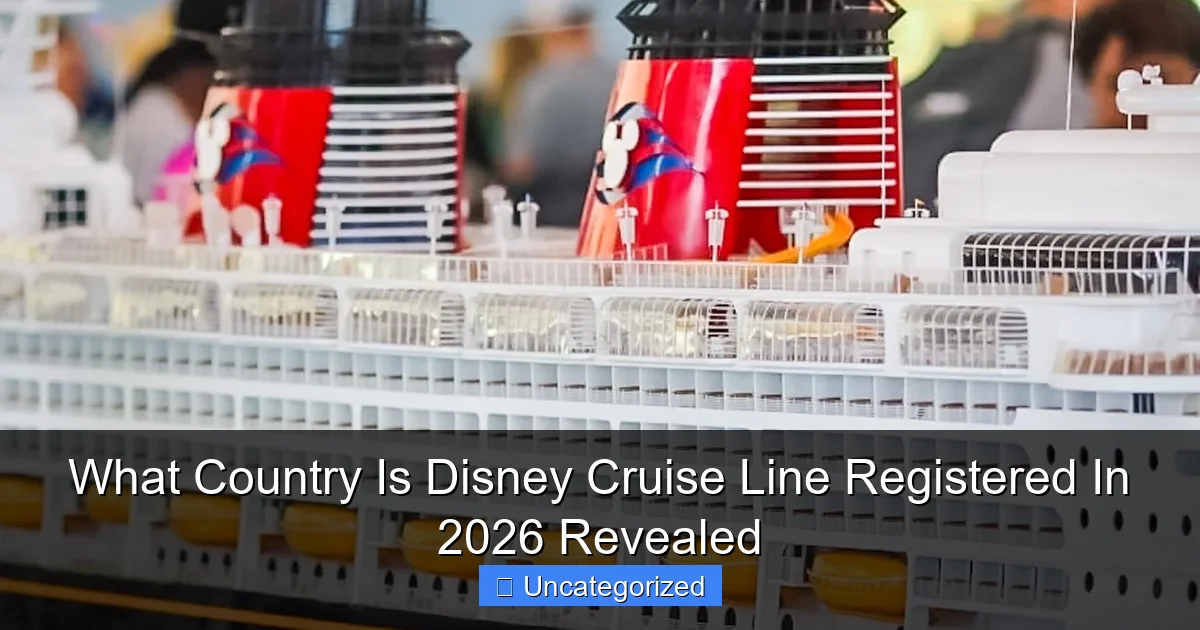
Visual guide about what country is disney cruise line registered
Image source: dvcshop.com
What Is a Flag State?
A flag state is the country where a ship is registered and under whose laws it operates. This includes:
- Enforcing international maritime safety standards (e.g., SOLAS – Safety of Life at Sea)
- Overseeing labor conditions for crew members
- Conducting inspections and certifications
- Handling legal disputes and liability claims
- Determining tax treatment for the vessel and its operations
For example, if a Disney ship experiences an incident while docked in Nassau, the flag state—not the Bahamas—has the primary authority to investigate and regulate compliance.
Why Do Cruise Lines Choose Certain Flags?
Not all flag states are equal. Some countries offer favorable conditions that make them attractive to cruise operators. These include:
- Lower taxation: Some nations impose minimal or zero taxes on international earnings.
- Streamlined bureaucracy: Faster registration and renewal processes.
- Strong safety and environmental standards: Enhances brand reputation and insurability.
- Labor flexibility: Allows for international crew hiring without strict local labor laws.
Disney Cruise Line, like most major cruise operators, doesn’t register its ships in the United States. Instead, it strategically selects a flag state that balances legal protection, operational efficiency, and global credibility. But which country fits the bill?
The Myth of “American Flag” Cruise Ships
Many travelers assume that because Disney is an American company with headquarters in Burbank, California, its ships fly the U.S. flag. However, due to the Jones Act—a federal law requiring ships carrying passengers between U.S. ports to be built, owned, and crewed by Americans—most large cruise lines avoid U.S. registration. The cost of compliance (e.g., U.S.-built ships, U.S.-citizen crews) is prohibitively high for mass-market operations.
As a result, nearly all major cruise lines, including Disney, Royal Caribbean, and Carnival, register their ships under open registries—countries that allow foreign-owned and foreign-crewed vessels to fly their flag. This brings us to the core of our investigation: where does Disney actually register?
Disney Cruise Line’s Flag State: The Bahamas and Beyond
As of 2026, the vast majority of Disney Cruise Line’s fleet is registered in The Bahamas. This includes the Disney Magic, Disney Wonder, Disney Dream, Disney Fantasy, and the Disney Wish. The upcoming Disney Destiny, set to launch in late 2025 and sail throughout 2026, will also be flagged in The Bahamas.
Why The Bahamas?
The Bahamas has long been a preferred flag state for major cruise lines, and for good reason:
- Proximity to the U.S.: The Bahamas is just 50 miles off the coast of Florida, making logistics and crew rotation easier.
- Reputable maritime authority: The Bahamas Maritime Authority (BMA) is a member of the International Maritime Organization (IMO) and adheres to strict safety and environmental protocols.
- Tax efficiency: The Bahamas does not impose income tax on international shipping operations.
- Political stability: A stable government and English-speaking legal system reduce operational risks.
- Strong reputation: Over 1,000 ships fly the Bahamian flag, including vessels from Carnival, Royal Caribbean, and MSC.
Disney’s choice of The Bahamas reflects a broader industry trend. According to the 2025 World Shipping Council report, over 70% of the global cruise fleet is registered in just three countries: The Bahamas, Panama, and Liberia. The Bahamas alone accounts for approximately 25% of all cruise ship registrations.
Is It Just The Bahamas?
While The Bahamas is the primary flag state, Disney Cruise Line has shown flexibility in registration. The Disney Adventure, a new ship launching in 2025 for the Asian market (based in Singapore), is registered in Singapore. This strategic shift is due to:
- Regional operational needs: Sailing primarily in Southeast Asian waters with local ports of call.
- Government partnerships: Singapore offers incentives for cruise operators to establish regional hubs.
- Enhanced credibility with local regulators: A Singapore-flagged ship may face fewer bureaucratic hurdles in Asian ports.
This dual-registry model—Bahamas for the Atlantic and Caribbean fleet, Singapore for the Asia-Pacific—demonstrates Disney’s adaptability in a globalized cruise industry.
How Registration Affects the Guest Experience
You might wonder: does the flag state impact my vacation? While you won’t see the Bahamian flag flying from the bow (Disney ships fly the Disney flag and a Bahamian ensign), the registry influences:
- Safety standards: Bahamian-registered ships must pass rigorous BMA inspections annually.
- Emergency protocols: The flag state oversees evacuation drills and medical response systems.
- Environmental compliance: The Bahamas enforces IMO rules on waste discharge and emissions.
- Onboard legal matters: Disputes or incidents are governed by Bahamian law, though Disney handles guest relations internally.
In short, the flag state is the invisible guardian of your cruise experience—ensuring safety, legality, and accountability behind the scenes.
The Role of the Bahamas Maritime Authority (BMA)
To understand why The Bahamas is such a trusted flag state, we must examine the Bahamas Maritime Authority (BMA), the government agency responsible for ship registration, safety, and compliance.
BMA’s Global Reputation
Founded in 1996, the BMA has rapidly become one of the world’s most respected maritime regulators. It is:
- White-listed by the Paris and Tokyo MOUs: These are international port state control agreements that identify high-quality flag states. Ships from white-listed countries are less likely to be detained during port inspections.
- Member of the IMO: The BMA implements and enforces all major international treaties, including MARPOL (pollution prevention) and STCW (crew training).
- ISO 9001 certified: Demonstrates a commitment to quality management systems in maritime oversight.
In 2024, the BMA conducted over 1,200 vessel inspections, with a 98.6% compliance rate among registered cruise ships—a testament to its rigorous standards.
Registration Process and Requirements
To register a ship in The Bahamas, Disney Cruise Line (through its parent company, DCL Ship Management, Inc.) must:
- Submit detailed vessel specifications and ownership documents
- Appoint a local Bahamian agent for legal representation
- Ensure the ship meets SOLAS, MARPOL, and ISPS (security) standards
- Pay annual tonnage and registration fees (based on gross tonnage)
- Undergo initial and periodic surveys by BMA surveyors
For example, the Disney Wish, which is 144,000 gross tons, pays approximately $180,000 annually in registration fees. This investment ensures ongoing compliance and access to the BMA’s 24/7 incident response team.
Environmental and Safety Oversight
The BMA is particularly proactive in environmental protection. In 2023, it introduced the Green Ship Initiative, which rewards ships with advanced wastewater treatment, LNG propulsion, or shore power compatibility. The Disney Wish qualifies for this program due to its:
- Advanced exhaust gas cleaning systems (scrubbers)
- Shore power capability in ports like Port Canaveral
- Zero-discharge policy in sensitive marine areas
<
This alignment with environmental standards enhances Disney’s sustainability branding and reduces regulatory risk in eco-conscious markets like Europe and California.
Comparing Flag States: Why Not Panama or Liberia?
Given that Panama and Liberia are also major flag states for cruise ships, why does Disney prefer The Bahamas? A side-by-side comparison reveals key differences.
Panama: The World’s Largest Flag
Panama registers over 8,000 ships, including many cargo vessels. While it offers:
- Lower registration fees
- Faster processing times
- No tonnage tax for foreign-owned ships
It has faced criticism for:
- Lower inspection frequency (averaging every 18 months vs. BMA’s 12 months)
- Higher port state detention rates (3.2% vs. BMA’s 1.4% in 2024)
- Perceived laxity in crew welfare enforcement
For a brand like Disney, which emphasizes safety, family-friendliness, and premium service, Panama’s reputation is a liability.
Liberia: A Growing Competitor
Liberia, managed by the Liberia International Ship & Corporate Registry (LISCR), has improved its standards in recent years. It offers:
- Strong IMO compliance
- Modern digital registration platform
- Competitive fee structure
However, it still carries historical stigma from past safety incidents and is less geographically convenient for Disney’s primary routes. Additionally, the BMA’s English-language documentation and U.S.-aligned legal system provide smoother integration for Disney’s American corporate structure.
Data Table: Flag State Comparison (2024-2025)
| Flag State | Total Cruise Ships Registered | Avg. Port Detention Rate | Annual Registration Fee (140k GT) | IMO White List? | Proximity to U.S. East Coast |
|---|---|---|---|---|---|
| The Bahamas | 127 | 1.4% | $180,000 | Yes | 50 miles |
| Panama | 98 | 3.2% | $135,000 | Yes | 1,500 miles |
| Liberia | 65 | 2.1% | $145,000 | Yes | 4,000 miles |
| Singapore | 22 | 0.9% | $210,000 | Yes | 8,000 miles |
This data illustrates why The Bahamas remains Disney’s flag of choice for its core fleet: optimal balance of cost, compliance, proximity, and reputation.
Corporate Structure and Legal Ownership of Disney Cruise Ships
While the flag state is The Bahamas, the ownership and management structure of Disney Cruise Line is more complex. Understanding this helps clarify how Disney maintains control while benefiting from foreign registration.
Disney Cruise Line’s Corporate Entities
Disney Cruise Line operates through several subsidiaries:
- DCL Ship Management, Inc. (incorporated in the U.S.) – responsible for day-to-day operations, crew hiring, and guest services.
- Disney Cruise Line Holdings Ltd. (registered in the Cayman Islands) – owns the vessels and holds the Bahamian registration.
- Bahamas-based agents – serve as legal representatives for each ship, handling port calls and regulatory filings.
This structure allows Disney to:
- Minimize U.S. tax exposure (Cayman Islands has no corporate tax)
- Maintain operational control through U.S.-based management
- Comply with Bahamian registration requirements via local agents
Why the Cayman Islands?
The Cayman Islands is a British Overseas Territory known for its financial neutrality and lack of direct taxation. By registering the ship-owning entity here, Disney avoids U.S. corporate income tax on international cruise revenue. However, this is not tax evasion—it’s a legal and common practice in global shipping.
Passenger Rights and Legal Jurisdiction
When you book a Disney cruise, your contract is governed by U.S. law (specifically Florida law, as Disney Cruise Line’s headquarters are in Cape Canaveral). This means:
- Your consumer rights are protected under U.S. consumer protection laws
- Disputes are typically resolved in U.S. courts
- Medical care and safety standards are managed by Disney, not the flag state
However, in rare cases—such as a criminal incident at sea—the Bahamian flag state may assert jurisdiction. Disney works closely with Bahamian authorities to ensure seamless coordination, minimizing guest impact.
Conclusion: The Strategic Choice Behind the Flag
So, what country is Disney Cruise Line registered in as of 2026? The answer is nuanced: The Bahamas for its primary fleet, and Singapore for its Asia-based Disney Adventure. This dual-flag strategy reflects Disney’s global ambitions, operational pragmatism, and commitment to safety and compliance.
Choosing The Bahamas isn’t just about tax savings—it’s a calculated decision rooted in maritime excellence. The BMA’s rigorous standards, geographic proximity to Disney’s home ports, and strong international reputation make it the ideal flag state for a brand that values trust, transparency, and the magic of a seamless guest experience.
For travelers, the flag state may seem like a technical detail, but it underpins everything from onboard safety to environmental stewardship. When you step aboard a Disney cruise in 2026, know that the Bahamian flag (or Singaporean flag, in Asia) isn’t just a legal formality—it’s a symbol of quality, responsibility, and the invisible infrastructure that keeps the magic afloat.
As Disney continues to expand its fleet and explore new markets, one thing is certain: the choice of flag state will remain a cornerstone of its maritime strategy. Whether you’re sailing from Port Canaveral to Castaway Cay or embarking from Singapore to Bali, the flag on the stern is a quiet reminder that even in the world of fantasy, real-world logistics matter.
Frequently Asked Questions
What country is Disney Cruise Line registered in for 2026?
Disney Cruise Line is officially registered in the Bahamas, a common choice for major cruise lines due to favorable maritime laws and tax benefits. This registration remains consistent through 2026, ensuring operational compliance under Bahamian jurisdiction.
Why is Disney Cruise Line registered in the Bahamas?
The Bahamas offers cruise lines streamlined regulatory processes and financial advantages, making it a strategic base for operations. Disney Cruise Line, like many competitors, leverages these benefits while maintaining U.S.-based headquarters in Florida.
Does Disney Cruise Line’s registration affect safety or service quality?
No, the Bahamian registration doesn’t compromise safety or service. Disney adheres to strict international maritime standards and its own high-quality protocols, ensuring a premium experience regardless of the flag state.
Is Disney Cruise Line a U.S. company if it’s registered in the Bahamas?
Yes, Disney Cruise Line is a U.S. company (a subsidiary of The Walt Disney Company) but registers its ships in the Bahamas for legal and operational reasons. This dual structure is common in the cruise industry.
What country is Disney Cruise Line registered in for tax purposes?
For tax and operational purposes, Disney Cruise Line’s vessels are registered in the Bahamas, which reduces corporate tax burdens. However, the company still pays U.S. taxes on domestic earnings.
Can Disney Cruise Line change its registration country in 2026?
While possible, it’s unlikely Disney Cruise Line will change its Bahamian registration in 2026, as the framework is well-established. Any shift would require significant regulatory or financial incentives.