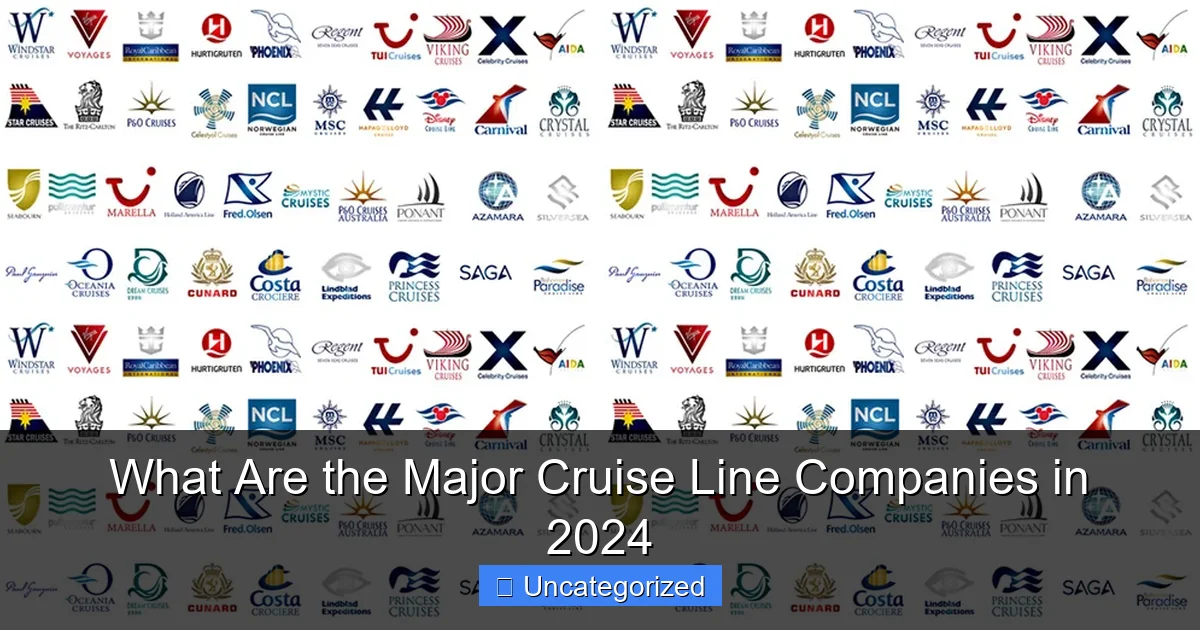
Featured image for what are the major cruise line companies
Image source: shiplife.org
The major cruise line companies in 2024 are dominated by three global powerhouses: Carnival Corporation, Royal Caribbean Group, and Norwegian Cruise Line Holdings, collectively operating over 60% of the world’s cruise capacity. These industry leaders continue to innovate with larger ships, sustainable practices, and immersive destinations, shaping the future of modern cruising.
Key Takeaways
- Carnival Corporation leads with 9 global brands and diverse itineraries.
- Royal Caribbean excels in innovation with record-breaking mega-ships.
- Norwegian Cruise Line offers freestyle cruising and no set dining times.
- MSC Cruises focuses on European charm and affordable luxury options.
- Disney Cruise Line dominates family vacations with themed experiences.
- Virgin Voyages targets adults with modern, inclusive luxury cruising.
- Holland America specializes in premium, destination-focused voyages.
📑 Table of Contents
- The Evolution of Cruising: A 2024 Landscape
- The Big Three: Corporate Titans Shaping the Industry
- Luxury and Expedition: The High-End and Adventure Segments
- Regional and Cultural Specialists: Cruising with a Local Touch
- Innovation and Sustainability: The Future of Cruising
- Choosing the Right Cruise Line: A Practical Guide
- Conclusion: Navigating the Seas of Choice in 2024
The Evolution of Cruising: A 2024 Landscape
As the world rebounds from global disruptions and travelers rediscover the joy of exploration, the cruise industry has emerged stronger, more innovative, and more diverse than ever. In 2024, cruising isn’t just about luxury liners and buffet spreads—it’s a dynamic ecosystem of experiences, sustainability efforts, and technological advancements that cater to every type of traveler. From families seeking all-inclusive resorts at sea to adventure seekers craving remote Arctic voyages, the major cruise line companies have adapted, expanded, and redefined what it means to set sail. With over 30 million passengers expected to cruise globally this year, the competition among industry leaders is fiercer than ever, driving unprecedented value and variety for consumers.
But with so many brands, sub-brands, and niche offerings, choosing the right cruise line can feel overwhelming. The cruise industry is dominated by a handful of corporate giants, each with distinct personalities, target demographics, and operational philosophies. Understanding who these players are, what they offer, and how they differentiate themselves is crucial for making an informed decision. Whether you’re a first-time cruiser or a seasoned sea traveler, this guide to the major cruise line companies in 2024 will help you navigate the waters of choice with confidence. We’ll explore the industry’s key players, their unique selling points, fleet innovations, and how they’re shaping the future of maritime travel.
The Big Three: Corporate Titans Shaping the Industry
The global cruise market is largely controlled by three parent corporations—Carnival Corporation & plc, Royal Caribbean Group, and Norwegian Cruise Line Holdings Ltd. Collectively, they operate over 80% of the world’s cruise capacity, making them the undisputed leaders in the industry. Their dominance isn’t just about size; it’s about strategic diversification, brand segmentation, and relentless innovation in both onboard experiences and sustainability initiatives.

Visual guide about what are the major cruise line companies
Image source: rifeconsultancy.com
Carnival Corporation & plc: The Volume Leader
Headquartered in Miami and with dual corporate registrations in the U.S. and UK, Carnival Corporation is the world’s largest cruise operator, managing 10 distinct brands across various market segments. Its portfolio includes household names like Carnival Cruise Line, Princess Cruises, Holland America Line, and Costa Cruises. In 2024, Carnival operates 90+ ships with a total passenger capacity exceeding 250,000 berths. The company’s strategy revolves around brand differentiation—each line targets a specific audience:
- Carnival Cruise Line: Fun, affordable, family-friendly with vibrant entertainment and casual dining.
- Princess Cruises: Premium experience with emphasis on destination immersion (e.g., Alaska, Mediterranean).
- Holland America Line: Traditional, elegant, and ideal for mature travelers seeking refined service.
- Seabourn: Ultra-luxury, all-suite, with private yacht-like service and inclusive amenities.
Pro Tip: Carnival’s “Carnival Fun Italian Style” ships, like the Carnival Venezia, blend Italian flair with American-style entertainment—perfect for cruisers who want European charm without transatlantic flights.
Royal Caribbean Group: Innovation and Scale
Royal Caribbean Group (RCG) is renowned for pushing the boundaries of what a cruise ship can be. Home to Royal Caribbean International, Celebrity Cruises, and Silversea Cruises, RCG is known for megaships and cutting-edge technology. The Icon of the Seas, launched in 2024, is the largest cruise ship ever built (250,800 GT, 5,610 guests), featuring a waterpark, ice-skating rink, and the first suspended open-air pool at sea.
- Royal Caribbean International: Action-packed, family-oriented, with onboard thrills like surf simulators and robotic bars.
- Celebrity Cruises: Modern luxury, sophisticated design, and wellness-focused programming.
- Silversea Cruises: All-inclusive, small-ship expeditions with private butler service and destination expertise.
RCG is also investing heavily in sustainability, with a goal of net-zero emissions by 2050. Their “Destination Net Zero” initiative includes LNG-powered ships and advanced wastewater treatment systems.
Norwegian Cruise Line Holdings: Flexibility and Freedom
Norwegian Cruise Line Holdings (NCLH) owns Norwegian Cruise Line, Oceania Cruises, and Regent Seven Seas Cruises. Their tagline, “Freestyle Cruising,” emphasizes flexibility—no fixed dining times, open-seating restaurants, and relaxed dress codes. This appeals to younger travelers and those who dislike rigid schedules.
- Norwegian Cruise Line (NCL): Vibrant, casual, with Broadway shows and diverse dining options (over 25 restaurants on the Norwegian Prima).
- Oceania Cruises: Upscale, culinary-focused, with gourmet dining and destination-rich itineraries.
- Regent Seven Seas Cruises: All-inclusive luxury, including airfare, excursions, and premium drinks.
In 2024, NCLH launched the Norwegian Aqua, featuring the world’s first hybrid roller coaster and water slide, the “Aqua Slidecoaster.”
Luxury and Expedition: The High-End and Adventure Segments
While the Big Three dominate mass-market cruising, the luxury and expedition segments are growing rapidly, driven by affluent travelers seeking exclusivity, authenticity, and off-the-beaten-path experiences. These niches are served by specialized brands that prioritize small ships, expert guides, and immersive itineraries.
Ultra-Luxury Leaders: Silversea, Regent, and Seabourn
As mentioned, Silversea Cruises (owned by Royal Caribbean Group) and Regent Seven Seas (NCLH) lead the ultra-luxury space with all-inclusive pricing, spacious suites, and personalized service. Key differentiators:
- Silversea: “White-glove” butler service, 1:1 staff-to-guest ratio, and access to remote destinations (Antarctica, Amazon).
- Regent: All suites are ocean-view or balcony, and fares include airfare, transfers, and unlimited shore excursions.
- Seabourn: Focus on wellness (Seabourn Ovation features a “Mindful Living” program with yoga and meditation).
Example: A 14-day Silversea voyage to the Arctic includes helicopter tours, Zodiac landings, and lectures by marine biologists—ideal for nature lovers.
Expedition and Adventure: Lindblad, Hurtigruten, and Ponant
For travelers seeking adventure, Lindblad Expeditions (in partnership with National Geographic) and Ponant (French-owned) are top choices. These companies operate small vessels (100–200 guests) equipped with Zodiacs, kayaks, and scientific equipment.
- Lindblad Expeditions: Focus on conservation and education. Ships like National Geographic Endurance feature underwater cameras and hydrophones.
- Ponant: Luxury meets adventure. Their Le Commandant Charcot is the world’s first hybrid electric polar exploration ship (LNG and battery-powered).
- Hurtigruten Expeditions: Norwegian heritage, eco-friendly practices, and unique itineraries (e.g., “Svalbard in Depth”).
Pro Tip: Expedition cruises often include expert-led excursions, so pack binoculars and a good camera. These voyages are less about onboard amenities and more about experiencing nature.
The Rise of Boutique and Niche Brands
Beyond the giants, boutique lines like Virgin Voyages, Scenic, and Aqua Expeditions are carving out niches. Virgin Voyages (founded by Richard Branson) targets adults-only (18+), with a “rebellious luxe” vibe, tattoo parlors, and no kids’ clubs. Meanwhile, Scenic Luxury Cruises & Tours offers all-inclusive river and ocean cruises with private balconies and butler service.
Regional and Cultural Specialists: Cruising with a Local Touch
While global brands dominate, regional specialists offer unique cultural insights and itineraries tailored to specific destinations. These lines often partner with local communities, employ native guides, and design menus with regional flavors.
Asia-Pacific: Dream Cruises and Resorts World Cruises
Asia’s cruise market is booming, with Dream Cruises (part of Genting Hong Kong) and Resorts World Cruises leading the charge. Dream’s Global Dream (launching 2024) will be the largest ship in Asia (208,000 GT), featuring a 1,000-seat theater and Asian-themed dining.
- Target Market: Chinese and Southeast Asian travelers.
- Unique Features: Mahjong parlors, tea ceremonies, and regional cuisine (e.g., dim sum, laksa).
Example: A 5-day Dream Cruises voyage from Shanghai to Fukuoka includes a visit to a Japanese onsen (hot spring) and a kimono rental experience.
Mediterranean and Europe: MSC Cruises and TUI Cruises
MSC Cruises (Mediterranean Shipping Company) is the world’s largest privately-owned cruise line. With a fleet of 22 ships, MSC blends European elegance with family-friendly amenities. Their “MSC for Me” app offers real-time navigation and personalized itineraries.
- MSC World Europa: The first LNG-powered cruise ship (2022), with a 104-meter-long promenade and 11 dining venues.
- TUI Cruises (German-owned): Targets European couples and families with German-language service and wellness programs.
Pro Tip: MSC’s “Kids Sail Free” promotion is a great value for families—book an adult, and kids under 18 sail free on select sailings.
Australia and New Zealand: P&O Cruises Australia and Cunard
P&O Cruises Australia focuses on domestic itineraries (Great Barrier Reef, Tasmania) with a relaxed, casual vibe. Cunard Line, a historic British brand, offers transatlantic crossings and world voyages with a formal, traditional atmosphere.
- Cunard’s Queen Mary 2: The only ocean liner offering regular transatlantic service (Southampton to New York).
- P&O’s Pacific Encounter: Features Australian-themed entertainment and local produce.
Innovation and Sustainability: The Future of Cruising
In 2024, the major cruise lines are investing heavily in sustainability, technology, and guest experience to stay competitive and meet evolving consumer expectations. These efforts are not just about compliance—they’re about redefining what modern cruising can be.
Green Initiatives: LNG, Hydrogen, and Shore Power
The cruise industry is under pressure to reduce emissions, and leading companies are responding:
- Royal Caribbean: LNG-powered Icon of the Seas cuts CO2 emissions by 20%.
- Carnival: “Green Cruising” initiative includes LNG ships, advanced wastewater treatment, and shore power connectivity (to reduce engine use in port).
- Norwegian Cruise Line: Testing hydrogen fuel cells on the Norwegian Aqua.
Data Point: According to CLIA (Cruise Lines International Association), 70% of new cruise ships ordered in 2023–2024 are LNG or hydrogen-ready.
Tech-Forward Experiences: Apps, AI, and Onboard Connectivity
Cruise lines are leveraging technology to enhance the guest experience:
- Royal Caribbean’s “Cruise Planner” app: Allows pre-booking of excursions, dining, and spa services.
- Norwegian’s “Freestyle Daily” app: Provides real-time updates on events, weather, and itinerary changes.
- MSC’s “MSC for Me”: Uses AI to recommend activities based on guest preferences.
Pro Tip: Download your cruise line’s app before boarding. Many offer exclusive deals (e.g., 20% off spa treatments) for app users.
Health and Wellness: The New Onboard Priority
Post-pandemic, health and wellness have become central to cruise design:
- Seabourn’s “Mindful Living” program: Yoga, meditation, and wellness lectures.
- Oceania’s “Culinary Center”: Hands-on cooking classes with Michelin-starred chefs.
Celebrity’s “The Retreat”: A private, suite-only area with a dedicated restaurant and pool.
Choosing the Right Cruise Line: A Practical Guide
With so many options, selecting the right cruise line depends on your priorities—budget, destination, onboard experience, and travel style. Here’s a data-driven comparison to help you decide:
| Cruise Line | Target Audience | Avg. Ship Size (GT) | Price Range (per person, 7-day cruise) | Unique Feature |
|---|---|---|---|---|
| Carnival Cruise Line | Families, budget travelers | 130,000 | $500–$1,200 | WaterWorks waterpark, Seuss at Sea |
| Royal Caribbean International | Adventure seekers, families | 168,000 | $1,200–$2,500 | FlowRider surf simulator, robotic bar |
| Norwegian Cruise Line | Young adults, couples | 146,000 | $900–$2,000 | Freestyle Dining, Broadway shows |
| Princess Cruises | Seniors, destination lovers | 145,000 | $1,000–$2,200 | Discovery at Sea enrichment, Alaska expertise |
| Silversea Cruises | Affluent, luxury travelers | 36,000 | $4,000–$10,000+ | All-inclusive, private butler service |
| Lindblad Expeditions | Adventure, eco-conscious | 5,000 | $6,000–$15,000 | Zodiac landings, National Geographic experts |
When choosing, consider:
- Itinerary: Some lines specialize in regions (e.g., Princess in Alaska, Hurtigruten in Norway).
- Onboard Culture: Formal (Cunard) vs. casual (NCL).
- Value: All-inclusive lines (Regent, Silversea) may cost more upfront but save money on extras.
- Sustainability: Check if the line uses LNG, shore power, or has a carbon offset program.
Pro Tip: Book through a travel advisor—many offer perks like onboard credit, free upgrades, or exclusive excursions.
Conclusion: Navigating the Seas of Choice in 2024
The cruise industry in 2024 is a vibrant tapestry of options, from the megaships of Royal Caribbean to the intimate yachts of Silversea and the eco-conscious voyages of Lindblad. The major cruise line companies have evolved beyond mere transportation—they’re curators of experiences, innovators in sustainability, and ambassadors of global exploration. Whether you’re drawn to the thrill of a surf simulator, the serenity of a polar expedition, or the elegance of a transatlantic crossing, there’s a cruise line tailored to your dreams.
As you plan your next voyage, remember that the “best” cruise line isn’t about size or fame—it’s about alignment with your values, interests, and travel style. Use the insights from this guide to compare offerings, ask the right questions, and book with confidence. The open sea awaits, and with the right partner, your 2024 cruise could be the journey of a lifetime. Bon voyage!
Frequently Asked Questions
What are the major cruise line companies in 2024?
The major cruise line companies in 2024 include Royal Caribbean International, Carnival Cruise Line, Norwegian Cruise Line, MSC Cruises, Princess Cruises, and Holland America Line. These brands dominate the industry with large fleets, global itineraries, and diverse onboard experiences.
Which is the largest cruise line by fleet size?
MSC Cruises currently holds the title of the largest cruise line by fleet size, with over 20 modern ships and ambitious expansion plans. Royal Caribbean closely follows, known for operating some of the world’s largest and most innovative vessels.
What are the best luxury cruise lines in 2024?
Top luxury cruise lines in 2024 include Regent Seven Seas Cruises, Seabourn, Silversea, and Oceania Cruises. These brands focus on all-inclusive packages, gourmet dining, and personalized service for discerning travelers.
Are there family-friendly options among major cruise line companies?
Yes, Royal Caribbean and Carnival Cruise Line are leaders in family-friendly cruising, offering kids’ clubs, water parks, and Broadway-style shows. Norwegian Cruise Line also excels with its “Freestyle Cruising” concept, catering to multigenerational groups.
How do major cruise lines differ in pricing and target audiences?
Carnival and Norwegian focus on budget-friendly, casual vacations, while Princess and Holland America attract older, traditional cruisers. Luxury lines like Regent and Seabourn target affluent travelers with premium pricing and exclusive perks.
What major cruise lines offer world cruises or unique itineraries?
Holland America Line, Princess Cruises, and Oceania Cruises are renowned for extended world cruises and off-the-beaten-path destinations. Cunard Line also stands out for its iconic Transatlantic crossings and themed voyages.