
Featured image for should i invest in norwegian cruise line stock
Image source: image.slidesharecdn.com
Investing in Norwegian Cruise Line stock offers high-risk, high-reward potential as the cruise industry rebounds post-pandemic. With strong booking trends, aggressive debt management, and expanding fleets, NCLH is positioned for growth, but macroeconomic volatility and high leverage remain key concerns. Only investors with a high risk tolerance and long-term horizon should consider adding NCLH to their portfolio.
Key Takeaways
- Evaluate recovery trends: Assess post-pandemic rebound and booking demand sustainability.
- Analyze debt levels: High leverage remains a risk despite improving cash flow.
- Monitor pricing power: Rising ticket prices signal strong consumer demand.
- Compare industry peers: Benchmark against Carnival and Royal Caribbean’s performance.
- Track fuel costs: Volatility impacts margins; hedging strategies are critical.
- Consider long-term growth: Fleet expansion plans may boost future earnings.
📑 Table of Contents
- Should I Invest in Norwegian Cruise Line Stock? A Deep Dive
- 1. The Norwegian Cruise Line Story: Who Are They?
- 2. Financial Health: Is Norwegian Cruise Line on Solid Ground?
- 3. Industry Trends: Is the Cruise Market Growing?
- 4. Competitive Landscape: How Does NCL Stack Up?
- 5. Risks and Rewards: The Investor’s Checklist
- 6. The Verdict: Should You Invest in Norwegian Cruise Line Stock?
Should I Invest in Norwegian Cruise Line Stock? A Deep Dive
Imagine you’re standing on the deck of a massive cruise ship, the ocean stretching endlessly in every direction. The sun is setting, the breeze is cool, and you’re sipping a cocktail—life feels good. Now, picture owning a tiny piece of that ship. That’s what investing in Norwegian Cruise Line (NCL) stock feels like: a chance to own a slice of the luxury, adventure, and (hopefully) profits of one of the world’s most recognized cruise companies.
But here’s the thing: just because a stock feels like a vacation doesn’t mean it’s a good investment. Cruise lines, including Norwegian Cruise Line, have had a wild ride over the past few years. The pandemic shut everything down. Then, as travel roared back, inflation, rising fuel costs, and changing consumer habits created new challenges. So, should you invest in Norwegian Cruise Line stock? Is it a smart long-term play or a risky bet on a fickle industry?
In this deep dive, we’ll explore everything you need to know: the company’s financial health, industry trends, risks, growth opportunities, and what real-world investors should consider before hitting “buy.” Whether you’re a seasoned investor or just starting out, this guide will help you make an informed decision—no crystal ball required.
1. The Norwegian Cruise Line Story: Who Are They?
A Brief History and Market Position
Norwegian Cruise Line, founded in 1966, is one of the “Big Three” cruise operators alongside Carnival and Royal Caribbean. Known for its “Freestyle Cruising” concept—meaning no assigned dining times, flexible schedules, and a more casual vibe—NCL carved out a niche for travelers who want freedom and fun without the formalities.
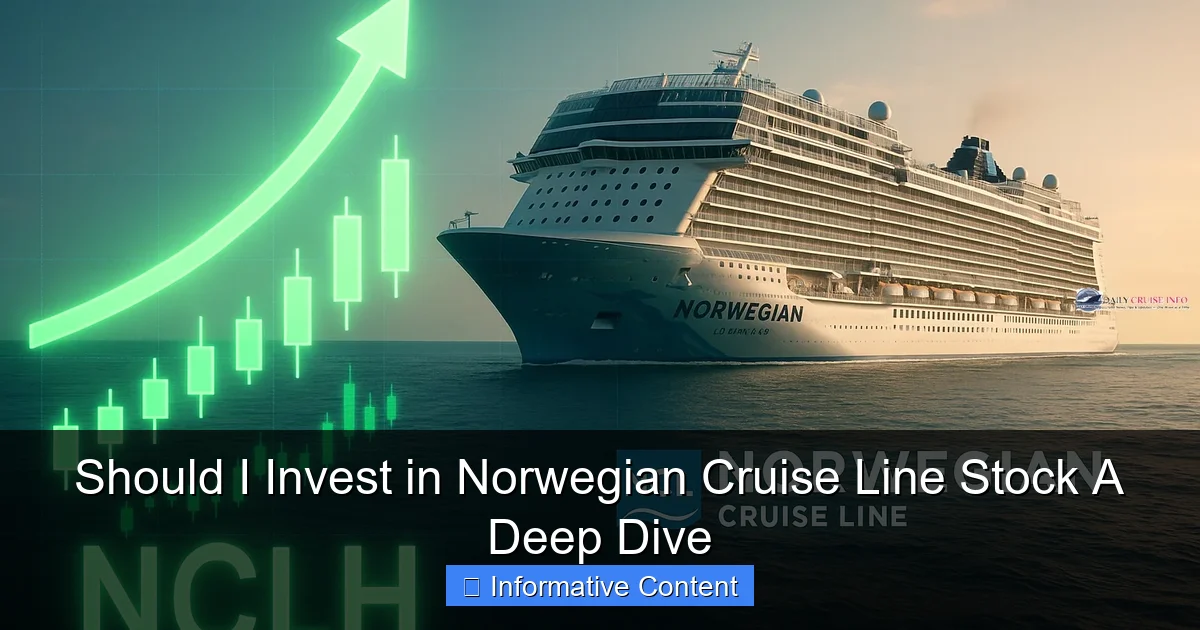
Visual guide about should i invest in norwegian cruise line stock
Image source: dailycruiseinfo.com
Today, the company operates a fleet of 18 ships under three brands: Norwegian Cruise Line, Oceania Cruises (luxury, smaller ships), and Regent Seven Seas Cruises (all-inclusive, ultra-luxury). This multi-brand strategy allows NCL to serve a wide range of customers—from budget-conscious millennials to high-net-worth retirees.
As of 2024, Norwegian Cruise Line Holdings (NCLH) trades on the NYSE under the ticker NCLH. It’s a mid-cap stock with a market cap hovering around $10 billion, making it a significant player in the leisure sector but not as large as some tech or healthcare giants.
What Sets NCL Apart?
- Innovation in Design: NCL has invested heavily in new ships like the Norwegian Prima and Norwegian Viva, which feature modern amenities, open-air spaces, and tech-forward guest experiences.
- Brand Diversification: While NCL targets the mid-to-upper market, Oceania and Regent cater to affluent travelers. This diversification reduces reliance on any single segment.
- Global Footprint: NCL operates in the Caribbean, Europe, Alaska, Asia, and more, giving it geographic resilience.
But here’s a reality check: being unique doesn’t automatically mean profitable. Let’s look under the hood at the financials.
2. Financial Health: Is Norwegian Cruise Line on Solid Ground?
Revenue and Profit Trends (2020–2024)
To decide if you should invest in Norwegian Cruise Line stock, you need to understand its financial performance—especially after the pandemic. Here’s a snapshot:
- 2020: Revenue dropped to $1.3 billion (from $6.5 billion in 2019) due to global shutdowns. Net loss: $4.5 billion.
- 2021: Gradual reopening. Revenue: $1.8 billion. Still a net loss of $1.6 billion.
- 2022: Strong rebound. Revenue: $4.7 billion. Net loss reduced to $2.3 billion—still not profitable, but improving.
- 2023: Revenue: $8.5 billion. First profitable year since 2019. Net income: $308 million.
- 2024 (Q1): Revenue up 12% year-over-year. Earnings per share (EPS): $0.20—positive momentum.
That’s a dramatic turnaround. After two years of bleeding red ink, NCL turned a corner in 2023. But profitability is just one piece of the puzzle.
Debt and Liquidity: The Elephant in the Room
During the pandemic, NCL, like its peers, borrowed heavily to survive. As of Q1 2024:
- Total Debt: $13.2 billion
- Cash & Cash Equivalents: $1.8 billion
- Debt-to-Equity Ratio: 4.1 (high, but down from 5.8 in 2022)
High debt is a major concern. While NCL is generating more cash, it still needs to service that debt—especially with interest rates higher than in 2020. The company has been actively refinancing debt at better rates, but it remains a risk.
Think of it like this: if you had a credit card with a $13,000 balance and only $1,800 in savings, you’d be cautious about spending more. NCL is in a similar boat. They’re improving, but they’re not out of the woods yet.
Margins and Cost Structure
Operating margins have improved from negative in 2020 to around 12% in 2023. That’s still lower than pre-pandemic levels (18–20%), but it’s progress. Key cost drivers:
- Fuel: 15–20% of operating costs. Volatile prices (especially post-Ukraine war) can squeeze margins.
- Labor: Crewing costs rose due to labor shortages and wage increases.
- Port Fees & Taxes: Increasing globally, especially in popular destinations like the Caribbean and Mediterranean.
Bottom line: NCL is financially healthier than it was, but it’s still sensitive to external shocks. If fuel prices spike or demand softens, profits could vanish quickly.
3. Industry Trends: Is the Cruise Market Growing?
Post-Pandemic Travel Boom
The travel industry is in a golden era. After years of lockdowns, people are eager to explore. In 2023, 29 million passengers took a cruise—up from 19 million in 2022 and nearing the 32 million peak in 2019 (CLIA data). This resurgence is a tailwind for NCL.
But it’s not just about pent-up demand. Younger travelers (Millennials and Gen Z) are increasingly choosing experiential travel over material goods. Cruises offer a blend of relaxation, adventure, and social connection—perfect for this mindset.
Changing Consumer Preferences
Today’s cruisers want:
- Personalization: AI-driven itineraries, app-based booking, and on-demand services.
- Sustainability: Eco-friendly ships, reduced emissions, and responsible tourism.
- Flexibility: Refundable bookings, shorter cruises, and last-minute deals.
NCL is adapting. For example:
- The Norwegian Prima features LNG-ready engines and reduced single-use plastics.
- NCL’s “Free at Sea” promotion offers flexible packages (drinks, dining, excursions).
- Partnerships with local communities to promote cultural experiences.
However, competitors like Royal Caribbean are investing even more in tech and sustainability. NCL is keeping up, but not leading.
Geopolitical and Environmental Risks
Cruise lines are exposed to global risks:
- Geopolitical Tensions: Conflicts in the Middle East, Eastern Europe, or Asia could disrupt itineraries.
- Natural Disasters: Hurricanes, wildfires, or pandemics (yes, we’re still in the “what if” phase) can halt operations.
- Regulation: Stricter emissions laws (e.g., EU’s Fit for 55) may require costly ship retrofits.
For example, in 2023, NCL rerouted several Caribbean voyages due to hurricane risks. While they managed it well, such events can hurt revenue and investor confidence.
4. Competitive Landscape: How Does NCL Stack Up?
Market Share and Pricing Power
The cruise industry is highly concentrated. The “Big Three” (Carnival, Royal Caribbean, NCL) control over 80% of the global market. Here’s how they compare:
| Company | Market Cap (2024) | Fleet Size | Revenue (2023) | Net Income (2023) | Debt-to-Equity |
|---|---|---|---|---|---|
| Carnival (CCL) | $25B | 89 ships | $21.6B | $1.3B | 3.2 |
| Royal Caribbean (RCL) | $38B | 65 ships | $13.9B | $1.7B | 2.8 |
| Norwegian (NCLH) | $10B | 18 ships | $8.5B | $308M | 4.1 |
Key takeaways:
- NCL is the smallest of the three by market cap and fleet size.
- Its revenue and profits are significantly lower than Carnival and Royal Caribbean.
- Its debt burden is the highest—a red flag for risk-averse investors.
But smaller doesn’t always mean worse. NCL’s multi-brand strategy gives it a unique advantage in targeting luxury travelers, a segment with higher margins and less price sensitivity.
Innovation and Brand Strength
Royal Caribbean leads in scale and innovation (e.g., the Icon of the Seas, the world’s largest cruise ship). Carnival focuses on volume and affordability, appealing to budget travelers.
NCL’s edge? Brand differentiation and customer experience. Their “Freestyle Cruising” model is still popular, and their Oceania and Regent brands are highly rated in luxury travel circles.
However, NCL spends less on R&D and tech than its rivals. Royal Caribbean’s app, for example, offers real-time navigation, dining reservations, and even AI-powered concierge services. NCL’s app is functional but not groundbreaking.
If you’re investing for long-term growth, ask: Can NCL keep up with tech and sustainability trends without falling behind?
5. Risks and Rewards: The Investor’s Checklist
Potential Upsides
Despite the risks, there are compelling reasons to consider investing in Norwegian Cruise Line stock:
- Strong Demand: Cruising is back—and growing. NCL’s 2024 bookings are up 25% year-over-year.
- Margin Expansion: As occupancy rises and costs stabilize, profits could grow faster than revenue.
- New Ships: The Norwegian Aqua (launching 2025) and Regent Grandeur (2023) could attract premium customers and boost pricing power.
- Dividend Potential: NCL suspended its dividend in 2020 but may reinstate it by 2025 if cash flow improves. That could attract income investors.
- Valuation: At a P/E ratio of ~20 (2024), NCL is cheaper than RCL (~28) and CCL (~25). If earnings grow, the stock could rise.
For example, in 2023, when NCL reported its first profit, the stock jumped 18% in a single day. That’s the kind of momentum that excites investors.
Serious Risks to Watch
But don’t get carried away. Here are the risks that could sink your investment:
- Debt Load: High leverage means NCL has less flexibility during downturns. A recession or fuel crisis could force asset sales or dilutive equity offerings.
- Consumer Sensitivity: Cruises are discretionary spending. If inflation stays high or wages stagnate, people may cut back.
- Regulatory Pressure: Stricter environmental rules could require billions in retrofits. The EU’s new emissions standards, for instance, may force older ships to be scrapped early.
- Competition: Royal Caribbean and Carnival have deeper pockets. They can outspend NCL on marketing, tech, and new ships.
- Stock Volatility: NCLH is a cyclical stock. It tends to swing wildly with economic news. In 2020, it fell 90%. In 2021, it rose 120%. That’s not for the faint-hearted.
Tip: If you invest, consider dollar-cost averaging—buying small amounts over time—to reduce risk from volatility.
Who Should (and Shouldn’t) Invest?
Consider NCLH if you:
- Are bullish on the travel recovery and consumer spending.
- Can tolerate high volatility and long recovery periods.
- Believe in the luxury and experiential travel trend.
- Have a diversified portfolio (don’t put all your eggs in one basket).
Think twice (or avoid) if you:
- Need stable, predictable returns (e.g., retirees).
- Are risk-averse or can’t handle 30–50% swings in stock price.
- Prefer low-debt companies or dividend payers (NCL isn’t one yet).
6. The Verdict: Should You Invest in Norwegian Cruise Line Stock?
So, should you invest in Norwegian Cruise Line stock? The answer isn’t a simple yes or no. It depends on your goals, risk tolerance, and market outlook.
Let’s be real: NCL is a turnaround story. After a near-death experience in 2020–2021, the company is rebuilding. It’s more profitable, more efficient, and riding a wave of travel demand. The stock is undervalued relative to peers, and new ships could drive growth.
But—and this is a big but—it’s still a high-risk, high-reward play. The debt is scary. The industry is cyclical. And one global crisis (pandemic, war, recession) could send the stock tumbling again.
Here’s how I’d approach it:
- For aggressive investors: Allocate a small portion (2–5%) of your portfolio. Buy now, but be ready to hold for 3–5 years. Set a stop-loss at 20% below purchase price to limit downside.
- For moderate investors: Wait for a pullback. If the stock drops 15–20% from current levels, consider a small position. Pair it with more stable stocks (e.g., utilities, consumer staples) for balance.
- For conservative investors: Skip it. Look at dividend-paying cruise stocks (like RCL) or ETFs that include NCL but reduce single-stock risk (e.g., AdvisorShares Hotel ETF).
Remember: investing isn’t about catching the next big wave. It’s about making smart, informed decisions—even when the water looks rough.
Norwegian Cruise Line is sailing in the right direction. But the ocean is vast, the weather unpredictable, and the journey long. If you choose to invest, do it with your eyes open, your portfolio diversified, and your patience ready.
And hey, if you do buy NCLH, maybe take a cruise with them. Not just for the vacation—but to see their operations up close. After all, the best investors are the ones who experience what they own.
Happy sailing—and happy investing.
Frequently Asked Questions
Is Norwegian Cruise Line stock a good long-term investment?
Norwegian Cruise Line (NCLH) could be a strong long-term play if the travel industry continues its recovery and consumer demand for cruises remains robust. However, consider its high debt load and sensitivity to economic downturns before investing in Norwegian Cruise Line stock.
What are the biggest risks of investing in Norwegian Cruise Line stock?
The primary risks include fluctuating fuel prices, geopolitical disruptions to travel, and potential health crises that impact cruise operations. These factors make NCLH stock particularly volatile compared to other sectors.
How does Norwegian Cruise Line’s financial health compare to competitors?
NCLH carries significant debt from pandemic-era losses, putting it behind rivals like Carnival and Royal Caribbean in balance sheet strength. Monitor its quarterly earnings for progress on debt reduction when evaluating Norwegian Cruise Line stock.
Does Norwegian Cruise Line pay dividends to shareholders?
No, Norwegian Cruise Line suspended its dividend during the pandemic and has not reinstated it as of 2023. Investors seeking income may want to look elsewhere, as the company focuses on debt repayment and growth.
What key metrics should I track before investing in Norwegian Cruise Line stock?
Focus on booking trends, occupancy rates, debt-to-equity ratio, and fuel cost management—these directly impact NCLH’s profitability. Rising bookings and improving margins are bullish signals for the stock.
How has Norwegian Cruise Line’s stock performance been post-pandemic?
NCLH has rebounded sharply since 2022 but remains below pre-pandemic highs. While the recovery story is compelling, its stock remains sensitive to macroeconomic shifts and travel sentiment.