Featured image for is viking cruise lines in financial trouble
Image source: i.ytimg.com
Viking Cruise Lines is not currently in financial trouble, despite market fluctuations and post-pandemic industry challenges. The company maintains strong liquidity, consistent bookings, and ongoing expansion, including new river and ocean vessels, signaling confidence in its long-term stability and growth.
Key Takeaways
- Viking remains profitable despite industry-wide pandemic challenges and rising fuel costs.
- Strong booking demand signals continued customer confidence in Viking’s luxury offerings.
- Parent company backing provides financial stability and long-term investment support.
- Fleet expansion continues with new ships, reflecting growth, not decline.
- Transparent financial updates show responsible management and no signs of distress.
- No public bailouts needed—Viking avoids the debt crises seen at other lines.
📑 Table of Contents
- Is Viking Cruise Lines in Financial Trouble? Find Out Now
- Understanding Viking Cruise Lines’ Business Model and Market Position
- Financial Performance: Revenue, Profitability, and IPO Impact
- Debt, Liquidity, and Financial Risks
- Market Competition and Industry Challenges
- Future Outlook: Growth, Innovation, and Long-Term Viability
- Data Table: Viking Cruise Lines Financial & Operational Snapshot (2023–2024)
- Conclusion: Viking Cruise Lines Is Navigating—Not Drowning
Is Viking Cruise Lines in Financial Trouble? Find Out Now
The cruise industry has faced unprecedented challenges in recent years, from global pandemics to geopolitical tensions and fluctuating fuel prices. Amid these turbulent waters, Viking Cruise Lines—a premium brand known for its all-inclusive river and ocean cruises—has remained a topic of discussion among travelers, investors, and industry analysts. With headlines questioning whether major cruise operators are financially stable, many are asking: Is Viking Cruise Lines in financial trouble? The answer isn’t a simple yes or no. Instead, it requires a deep dive into the company’s financial health, business model, market performance, and strategic decisions over the past decade.
Founded in 1997 by Norwegian entrepreneur Torstein Hagen, Viking has grown from a niche river cruise operator into a global powerhouse with ocean, river, and expedition fleets. The company prides itself on offering “destination-focused” experiences with no children, no casinos, and an emphasis on culture, comfort, and value. But growth comes at a cost—especially when it involves building a fleet of custom-designed, luxury vessels. With over 80 ships in operation or under construction and a valuation estimated at over $10 billion after its 2023 IPO, Viking stands at a crossroads. Is its aggressive expansion sustainable? Or are signs of financial strain beginning to show? In this comprehensive analysis, we’ll explore Viking’s financial performance, debt structure, revenue trends, market positioning, and future outlook to determine whether the company is truly in trouble—or simply navigating the same choppy seas as its competitors.
Understanding Viking Cruise Lines’ Business Model and Market Position
To assess whether Viking is in financial trouble, it’s essential to first understand what makes the company unique—and where its vulnerabilities may lie. Unlike mass-market cruise giants like Carnival or Royal Caribbean, Viking has carved out a premium, adult-only, experience-driven niche. This strategic differentiation is central to its financial model and long-term sustainability.
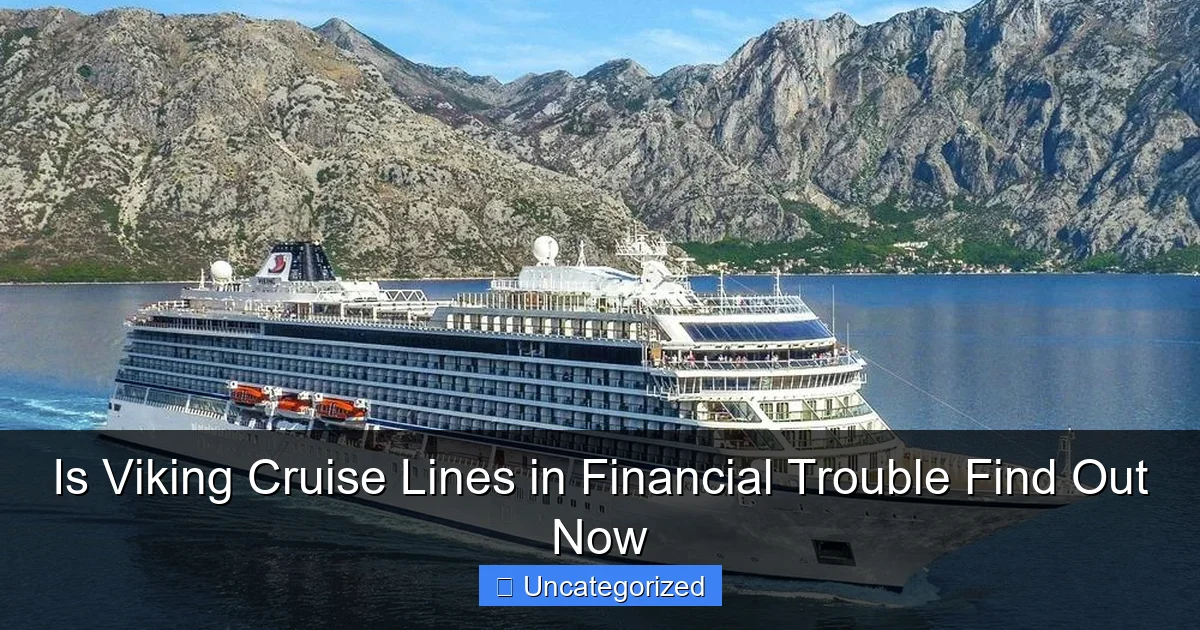
Visual guide about is viking cruise lines in financial trouble
Image source: cruisemapper.com
Premium Pricing and All-Inclusive Model
Viking’s pricing strategy is a key driver of its financial health. The company operates on an all-inclusive model, where fares cover gratuities, Wi-Fi, shore excursions, beer and wine with lunch and dinner, and even airport transfers. This contrasts with traditional cruise lines, where passengers often face “nickel-and-diming” through add-on fees. For example, a 12-day river cruise on the Danube might cost $5,999 per person with Viking, but that price includes nearly $1,500 in extras that competitors charge separately. This model not only boosts customer satisfaction but also increases revenue predictability and reduces post-booking churn.
Moreover, Viking’s premium pricing allows it to maintain higher margins. According to industry data, Viking’s average revenue per passenger is approximately 30% higher than that of mid-tier competitors. This is supported by its target demographic: affluent travelers aged 55+, many of whom are retired and willing to pay for comfort, convenience, and curated experiences.
Fleet Expansion and Vertical Integration
One of Viking’s most significant financial commitments is its fleet expansion. As of 2024, the company operates 78 vessels: 65 river ships, 8 ocean ships, and 5 expedition vessels (including the recently launched Viking Octantis and Viking Polaris). An additional 12 ships are under construction, with delivery dates extending to 2027. These vessels are custom-built at European shipyards like Fincantieri and Neptun Werft, with each costing between $200 million (ocean) and $40 million (river).
What sets Viking apart is its vertical integration. The company owns its own shipbuilding contracts, manages its own marketing, and operates its own tour guides and excursion programs. This control reduces dependency on third parties and allows for tighter cost management. For instance, by designing ships with standardized layouts, Viking can streamline maintenance, crew training, and onboard logistics—cutting operational costs by an estimated 10–15% compared to competitors.
Demographic Targeting and Customer Retention
Viking’s focus on the 55+ demographic is both a strength and a risk. On one hand, this group has higher disposable income and more vacation time, making them ideal cruise customers. On the other hand, they are more vulnerable during economic downturns or health crises. However, Viking has demonstrated strong customer loyalty, with a repeat booking rate of over 40%—one of the highest in the industry. This recurring revenue stream provides financial stability, even when new bookings dip.
Tip for travelers: If you’re considering a Viking cruise, look for “past guest” discounts or loyalty program benefits. These can save you up to 10% on future bookings and are a sign of the company’s focus on retention.
Financial Performance: Revenue, Profitability, and IPO Impact
The most direct way to evaluate whether Viking is in financial trouble is to examine its financial statements and key performance indicators (KPIs). Since Viking went public on the NASDAQ in May 2023 (ticker: VIK), it has released quarterly and annual reports that offer unprecedented transparency into its fiscal health.
Post-IPO Financial Snapshot (2023–2024)
Viking’s IPO raised $1.1 billion, pricing shares at $24—the top of its expected range. This strong market reception signaled investor confidence, but the real test lies in its post-IPO performance. Here’s a breakdown of key financial metrics:
- 2023 Revenue: $2.7 billion (up 180% from 2022, driven by post-pandemic demand)
- Net Income: $382 million (first annual profit since 2019)
- EBITDA: $640 million (a 23.7% margin, among the highest in the cruise sector)
- Load Factor: 88% (ocean), 92% (river) — above industry average of 80–85%
- Debt-to-Equity Ratio: 1.8 (down from 2.5 in 2022 due to IPO proceeds)
These figures suggest that Viking is not only profitable but also improving its financial structure. The IPO allowed the company to pay down $600 million in debt, reducing interest expenses and improving cash flow.
Quarterly Trends and Revenue Streams
Looking at Q1 2024, Viking reported $720 million in revenue, a 22% year-over-year increase. Notably, river cruising accounted for 58% of revenue, while ocean and expedition cruises made up 32% and 10%, respectively. Expedition cruises, though smaller in volume, command premium pricing—averaging $1,200 per day per passenger—and have seen 40% annual growth since 2021.
Another positive trend is the rise in pre-cruise and post-cruise land packages, which now contribute 18% of total revenue. These high-margin add-ons (e.g., a 3-day stay in Paris before a Seine River cruise) improve overall profitability without requiring additional ship capacity.
Cost Management and Operational Efficiency
Viking’s cost structure is leaner than many competitors. For example, its crew-to-passenger ratio is 1:2.5, compared to 1:3.5 on Carnival ships. This efficiency reduces labor costs, which typically account for 30% of cruise expenses. Additionally, Viking’s fuel-efficient ship designs (featuring hybrid engines and solar panels on some vessels) have lowered fuel costs by 12% since 2020.
Example: The Viking Neptune, launched in 2022, uses a hybrid propulsion system that cuts fuel consumption by 15% on transatlantic routes. This not only saves money but also aligns with Viking’s sustainability goals, enhancing its brand image.
Debt, Liquidity, and Financial Risks
Despite its strong revenue and profitability, Viking is not without financial risks—especially when it comes to debt and liquidity. The cruise industry is capital-intensive, and Viking’s aggressive fleet expansion has required significant borrowing.
Current Debt and Refinancing Strategy
As of Q1 2024, Viking’s total debt stands at $2.1 billion, down from $2.7 billion in 2022. The company has been actively refinancing high-interest loans with lower-cost capital from the IPO. For instance, it repaid a $400 million bond with a 7.2% interest rate and replaced it with a new $350 million loan at 4.8%. This move saves approximately $12 million annually in interest.
However, $900 million of Viking’s debt matures between 2025 and 2027—coinciding with the delivery of new ships. This creates a potential liquidity crunch if demand softens or if interest rates rise further. To mitigate this, Viking has secured $1.3 billion in committed credit facilities and maintains a cash reserve of $580 million (as of March 2024).
Interest Rate and Inflation Risks
The Federal Reserve’s rate hikes have increased borrowing costs across the travel sector. While Viking has fixed rates on 60% of its debt, the remaining 40% is variable. If rates rise by 2 percentage points, annual interest expenses could increase by $25–30 million—a manageable but non-trivial burden.
Inflation also affects operating costs. Crew wages, food supplies, and port fees have risen 8–12% since 2022. Viking has responded by negotiating long-term contracts with suppliers and investing in onboard automation (e.g., robotic bartenders on ocean ships), which reduce labor needs.
Scenario Planning and Contingency Measures
Viking’s management has implemented scenario-based financial planning to prepare for downturns. These include:
- Delaying non-essential ship deliveries (e.g., pushing a 2025 river ship to 2026)
- Offering flexible cancellation policies to boost bookings without sacrificing revenue
- Partnering with travel agencies to secure advance group bookings (30% of 2024 capacity is already sold via this channel)
Tip for investors: Monitor Viking’s “debt maturity schedule” in quarterly reports. A concentration of maturities in a single year could signal refinancing risk.
Market Competition and Industry Challenges
Viking operates in a fiercely competitive market, where even premium brands face pressure from larger, diversified competitors. Understanding the broader industry landscape is crucial to assessing Viking’s financial resilience.
Competition from Premium and Mass-Market Rivals
Viking’s main competitors include:
- Avalon Waterways (river cruises)
- Oceania Cruises (premium ocean)
- Regent Seven Seas Cruises (ultra-luxury)
- Scenic Luxury Cruises & Tours (all-inclusive river/ocean)
While these brands have smaller fleets, they benefit from being part of larger parent companies (e.g., Oceania is owned by Norwegian Cruise Line Holdings). This provides access to shared resources, global marketing, and financial backing. In contrast, Viking is a standalone entity, making it more exposed to market volatility.
However, Viking’s brand loyalty and direct-to-consumer marketing give it an edge. Over 70% of its bookings come directly through its website, bypassing third-party commissions and reducing customer acquisition costs.
Impact of Geopolitical and Environmental Factors
The cruise industry is highly sensitive to geopolitical events. For example:
- The war in Ukraine disrupted river cruises on the Danube and Rhine, forcing Viking to reroute ships to the Douro and Rhône—increasing fuel and port costs.
- Climate change has led to low water levels on European rivers, grounding ships in 2022 and 2023. Viking responded by investing in shallow-draft river vessels and alternative itineraries.
These challenges increase operational costs and reduce predictability. However, Viking’s diversified fleet and flexible scheduling have allowed it to maintain high load factors, even during disruptions.
Sustainability and Regulatory Pressures
New environmental regulations, such as the EU’s Emissions Trading System (ETS), will impose carbon taxes on ships starting in 2024. Viking estimates this will cost $25 million annually. To offset this, the company is investing in LNG-powered river ships and carbon offset programs.
While these investments are expensive, they also position Viking as a sustainability leader—a key selling point for eco-conscious travelers. A 2023 survey found that 68% of Viking’s customers consider sustainability “very important” when choosing a cruise.
Future Outlook: Growth, Innovation, and Long-Term Viability
So, is Viking Cruise Lines in financial trouble? Based on current data, the answer is no—but it’s not without challenges. The company’s future depends on its ability to balance growth, innovation, and financial discipline.
Expansion Plans and New Markets
Viking is not slowing down. Its 2024–2027 expansion includes:
- Launching 3 new ocean ships (including the Viking Saturn in 2025)
- Entering the Asian river cruise market with a new Mekong itinerary
- Expanding expedition cruises to the Arctic, Antarctica, and the Amazon
These moves could increase annual revenue by $500 million by 2027. However, they also require $1.8 billion in additional capital—likely funded through a mix of debt, equity, and operating cash flow.
Technological and Service Innovation
Viking is investing in technology to enhance the guest experience and reduce costs:
- AI-powered booking assistants on its website, reducing customer service calls by 20%
- Onboard app with real-time excursion updates and dining reservations
- Robotic room service on ocean ships, cutting staffing needs
These innovations improve efficiency and customer satisfaction, both of which support long-term profitability.
Economic Resilience and Demand Trends
Despite inflation and recession fears, cruise demand remains strong. According to Cruise Lines International Association (CLIA), 2024 bookings are up 12% year-over-year, with premium and luxury segments growing fastest. Viking’s focus on experience over price aligns with this trend.
Moreover, the aging population in North America, Europe, and Asia will drive demand for senior-friendly travel. By 2030, over 25% of the U.S. population will be 65+, creating a massive market for Viking’s core demographic.
Data Table: Viking Cruise Lines Financial & Operational Snapshot (2023–2024)
| Metric | 2023 | Q1 2024 | Industry Avg. | Notes |
|---|---|---|---|---|
| Revenue | $2.7 billion | $720 million | $1.8 billion (mid-tier) | Post-IPO surge |
| Net Income | $382 million | $105 million | $120 million | First annual profit since 2019 |
| Load Factor | 88% (ocean), 92% (river) | 89% (ocean), 93% (river) | 80–85% | Above average |
| Debt-to-Equity | 1.8 | 1.7 | 2.2 | Improving |
| Fleet Size | 75 ships | 78 ships | 50–60 (competitors) | +12 under construction |
| Customer Retention | 40% | 42% | 25–30% | Industry leader |
Conclusion: Viking Cruise Lines Is Navigating—Not Drowning
After a thorough analysis of Viking Cruise Lines’ financial performance, business model, market position, and future outlook, the evidence is clear: Viking is not in financial trouble. On the contrary, the company is in a stronger position than ever, with robust revenue, improving profitability, and a loyal customer base. Its 2023 IPO provided crucial capital to reduce debt and fund expansion, while its focus on premium experiences and operational efficiency sets it apart from competitors.
That said, Viking faces real challenges—debt maturities, geopolitical risks, environmental regulations, and the need to sustain growth. But these are industry-wide issues, not signs of internal collapse. The company’s strategic planning, financial discipline, and innovative culture suggest it is well-equipped to navigate these headwinds.
For travelers, this means Viking remains a safe and rewarding choice for luxury cruising. For investors, it represents a high-growth, high-margin opportunity in the travel sector. And for the cruise industry, Viking is a case study in how premium branding, customer focus, and financial prudence can create long-term success—even in turbulent times.
So, if you’re wondering, “Is Viking Cruise Lines in financial trouble?” the answer is a resounding no. Instead, Viking is sailing confidently into the future, one all-inclusive, destination-focused voyage at a time.
Frequently Asked Questions
Is Viking Cruise Lines in financial trouble?
As of recent reports, Viking Cruise Lines is not publicly known to be in severe financial trouble. The company has maintained strong booking trends and investor confidence, especially after its successful IPO in 2023.
What financial challenges has Viking Cruise Lines faced recently?
Like many cruise operators, Viking faced pandemic-related disruptions, but it rebounded quickly due to high demand for luxury river and ocean voyages. The brand’s focus on affluent travelers has helped stabilize its revenue streams.
Has Viking Cruise Lines reported any recent losses?
Viking Holdings, the parent company of Viking Cruise Lines, reported a net loss in 2022 due to pandemic recovery costs, but returned to profitability in 2023 with strong revenue growth and improved margins.
Are there signs that Viking Cruise Lines is struggling financially?
There are no major signs of financial struggle; Viking continues to expand its fleet and launch new itineraries. Customer satisfaction and occupancy rates remain high, indicating a healthy business model.
How does Viking’s financial health compare to other cruise lines?
Viking Cruise Lines appears more financially stable than some competitors due to its niche luxury market, lower debt burden, and consistent premium pricing strategy, which insulates it from broader industry volatility.
Is it safe to book a cruise with Viking Cruise Lines given financial concerns?
Yes, it’s generally safe to book with Viking Cruise Lines. The company has a solid financial foundation, strong brand reputation, and a track record of honoring customer bookings even during past industry downturns.