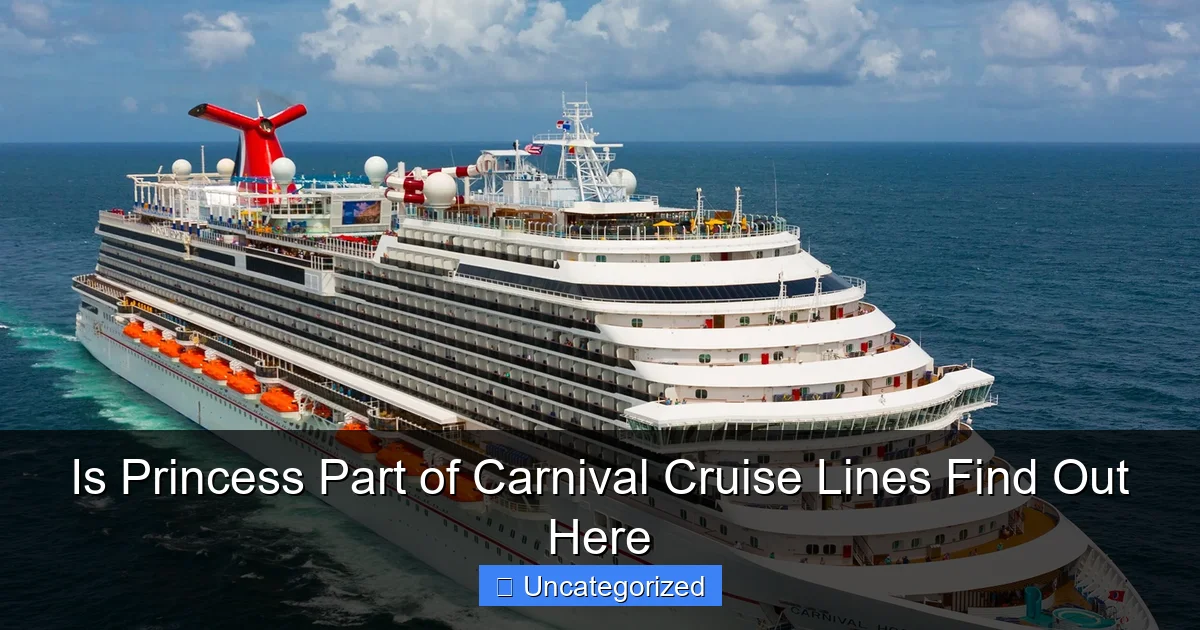
Featured image for is princess part of carnival cruise lines
Image source: cruisetotravel.com
Princess Cruises is not part of Carnival Cruise Lines—it is, in fact, a wholly owned subsidiary of Carnival Corporation & plc, the world’s largest cruise company. While both brands operate under the same corporate umbrella, they maintain distinct identities, fleets, and guest experiences.
Key Takeaways
- Princess Cruises is not part of Carnival Cruise Lines—they are separate brands under Carnival Corporation.
- Both brands share corporate ownership but maintain distinct itineraries, services, and onboard experiences.
- Carnival Corporation is the world’s largest cruise company, operating 9 major brands globally.
- Princess offers premium, destination-focused voyages, while Carnival emphasizes fun, casual cruising.
- No cross-brand loyalty benefits—rewards and perks are not transferable between Princess and Carnival.
- Check official websites for accurate info to avoid confusion about brand affiliations and offerings.
📑 Table of Contents
- Is Princess Part of Carnival Cruise Lines? Find Out Here
- The Corporate Ownership: Who Owns Princess and Carnival?
- Brand Identity and Target Audience: How Princess and Carnival Differ
- Fleet and Itineraries: Comparing Ships and Destinations
- Onboard Experience: Service, Dining, and Entertainment
- Frequently Asked Questions (Answered in Context)
- Conclusion: The Final Verdict
Is Princess Part of Carnival Cruise Lines? Find Out Here
When planning a cruise vacation, one of the first questions travelers often ask is: Which cruise line is the best fit for my vacation style? With so many brands, itineraries, and onboard experiences, the choices can feel overwhelming. Among the most well-known names in the industry are Princess Cruises and Carnival Cruise Lines. Both offer a wide range of destinations, from tropical Caribbean escapes to exotic Alaskan adventures and transatlantic voyages. But a common point of confusion arises: Is Princess part of Carnival Cruise Lines? At first glance, the two may seem like sister brands—both American, both popular, and both with large fleets—but the reality is more nuanced.
This comprehensive guide dives deep into the corporate structures, brand identities, operational differences, and guest experiences of Princess and Carnival. Whether you’re a first-time cruiser or a seasoned traveler trying to decide between the two, understanding the relationship (or lack thereof) between these cruise giants can help you make a smarter, more informed choice. By the end of this article, you’ll not only know whether Princess is part of Carnival, but also how their parent companies, onboard cultures, and target audiences differ—and which line might better suit your next sea adventure.
The Corporate Ownership: Who Owns Princess and Carnival?
Understanding the Parent Company: Carnival Corporation & plc
To answer the central question—Is Princess part of Carnival Cruise Lines?—we must first look at the corporate umbrella that both brands fall under. Princess Cruises is not part of Carnival Cruise Lines as a subsidiary or sister brand in the traditional sense, but both are owned by the same global parent company: Carnival Corporation & plc. This dual-listed company, formed in 2003 through the merger of Carnival Corporation (USA) and P&O Princess Cruises (UK), is the world’s largest leisure travel company by fleet size, revenue, and passenger volume.
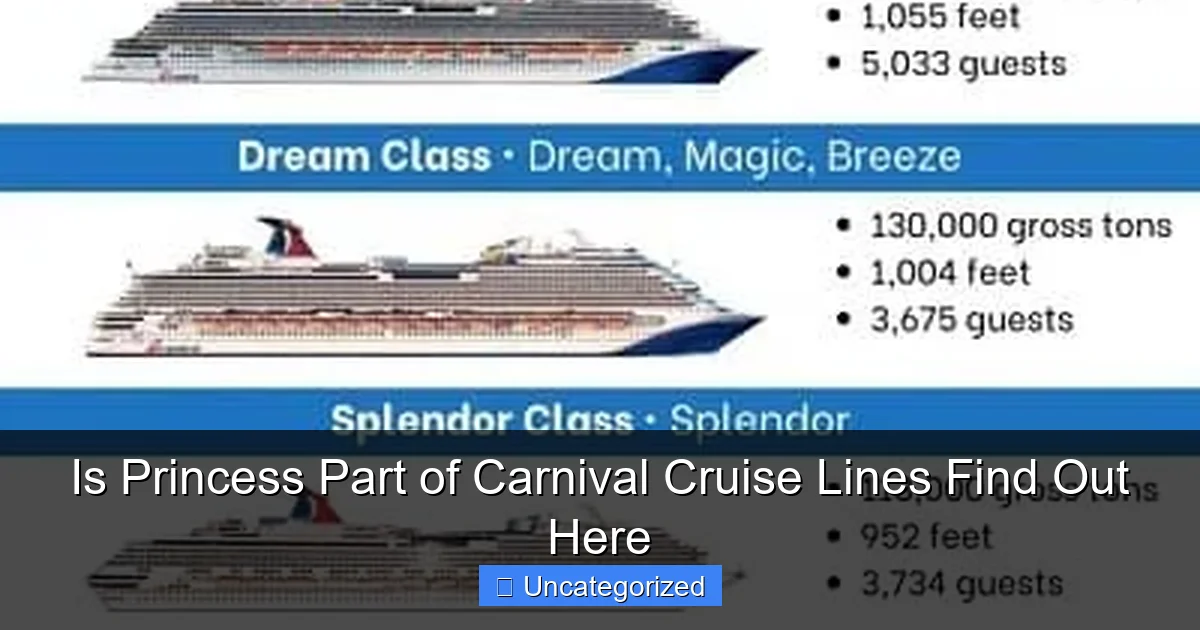
Visual guide about is princess part of carnival cruise lines
Image source: shipboardcruiser.com
Carnival Corporation & plc operates 10 distinct cruise brands, each with its own identity, target market, and operational style. These include:
- Carnival Cruise Line
- Princess Cruises
- Holland America Line
- Seabourn
- Costa Cruises
- AIDA Cruises
- Cunard
- P&O Cruises (UK)
- P&O Cruises Australia
- Fathom (now inactive)
So, while Princess Cruises is not a division of Carnival Cruise Lines, it is owned by the same parent corporation. Think of it like General Motors owning Chevrolet, Cadillac, and Buick—each brand operates independently but shares corporate resources, procurement, and strategic oversight. This structure allows Princess and Carnival to maintain distinct branding and guest experiences while benefiting from economies of scale in areas like shipbuilding, fuel procurement, and marketing.
Historical Background: How Princess Became Part of the Carnival Family
The story of Princess Cruises joining Carnival Corporation & plc is a tale of global consolidation in the cruise industry. Princess Cruises was originally founded in 1965 as a subsidiary of P&O (Peninsular and Oriental Steam Navigation Company), a British shipping and logistics giant. In 2000, P&O acquired Princess Cruises outright, rebranding the combined entity as P&O Princess Cruises.
In 2003, a landmark merger occurred: Carnival Corporation acquired P&O Princess Cruises in a $5.4 billion deal, creating the dual-listed Carnival Corporation & plc. This merger was not without controversy—Carnival had to fend off a competing bid from Royal Caribbean—but ultimately prevailed. The result was the formation of the world’s largest cruise company, with a combined fleet of over 70 ships at the time.
Today, Princess Cruises operates as an independent brand under the Carnival Corporation umbrella, with its own CEO, marketing strategy, and fleet management. The brand maintains its headquarters in Santa Clarita, California, and continues to emphasize its signature “MedallionClass” experience and premium positioning—distinct from Carnival Cruise Line’s more casual, fun-focused approach.
Brand Identity and Target Audience: How Princess and Carnival Differ
Princess Cruises: The Premium, Refined Experience
Princess Cruises positions itself as a premium cruise line, appealing to travelers who value elegance, personalized service, and immersive destination experiences. The brand’s slogan, “Come Back New,” reflects its focus on transformation through travel—whether it’s exploring ancient ruins in Greece, cruising through the glaciers of Alaska, or attending a Broadway-style show onboard.
Key characteristics of the Princess brand include:
- MedallionClass Technology: A wearable device (the OceanMedallion) that replaces traditional room keys, enables touchless boarding, and powers personalized service, from ordering drinks to tracking luggage.
- Destination Immersion: Princess emphasizes “More Ashore” itineraries, with longer port stays and curated shore excursions.
- Onboard Culture: More formal evenings (e.g., “formal nights”), a focus on fine dining, and a quieter, more relaxed ambiance compared to Carnival.
- Target Demographic: Typically attracts middle- to upper-income travelers aged 45–65, including couples, empty nesters, and retirees.
For example, on a 7-day Alaska cruise with Princess, guests might enjoy a gourmet dinner at Crown Grill, attend a lecture by a natural historian, and disembark for a full-day whale-watching tour—all while wearing their OceanMedallion for seamless service.
Carnival Cruise Line: The Fun, Affordable, and Lively Option
In contrast, Carnival Cruise Line markets itself as “The World’s Most Popular Cruise Line,” with a focus on fun, affordability, and high-energy entertainment. The brand’s slogan, “Fun Ships,” encapsulates its party-friendly, family-oriented atmosphere.
Key traits of Carnival include:
- Affordable Pricing: Carnival often offers the lowest base fares in the industry, with frequent sales and last-minute deals.
- Onboard Activities: Water slides, pool parties, comedy shows, live music, and themed nights (e.g., “80s Rock Night”).
- Casual Dining: Buffets, Guy’s Burger Joint, BlueIguana Cantina, and 24-hour pizza—ideal for families and budget-conscious travelers.
- Target Demographic: Appeals to younger travelers, families with children, and first-time cruisers seeking a lively, no-frills vacation.
A typical Carnival cruise might feature a full-day at sea with a poolside DJ, a family game show, and a midnight chocolate buffet—all designed to keep guests entertained and engaged.
Practical Example: Choosing Between Princess and Carnival
Imagine two travelers:
- Traveler A: A retired couple from Chicago planning a 14-day Mediterranean cruise. They want a quiet cabin, fine dining, and cultural excursions. They value comfort and personal attention. Princess Cruises is the better fit.
- Traveler B: A family of four from Texas with two young kids. They’re looking for a 5-day Caribbean cruise with lots of activities, affordable dining, and kid-friendly entertainment. Carnival Cruise Line is the ideal choice.
While both brands are under the same parent company, their guest experiences are worlds apart. Choosing the right one depends on your vacation goals, budget, and travel companions.
Fleet and Itineraries: Comparing Ships and Destinations
Princess Cruises Fleet: Innovation and Size
As of 2024, Princess Cruises operates a fleet of 15 ships, ranging from mid-sized vessels like the Royal Princess (3,560 passengers) to the massive Discovery Princess (3,660 passengers). The fleet is divided into classes:
- Royal Class: Includes Royal, Regal, Majestic, Sky, Enchanted, and Discovery Princess—largest in the fleet, featuring MedallionClass technology, multiple dining venues, and expansive outdoor spaces.
- Grand Class: Mid-sized ships like Grand Princess and Caribbean Princess, offering a balance of amenities and intimacy.
- Sun Class: Smaller vessels such as Sun Princess and Dawn Princess, ideal for longer, more immersive itineraries.
Princess is known for its global reach, offering cruises to over 330 destinations in 110 countries. Popular itineraries include:
- Alaska (summer)
- Mediterranean (spring/fall)
- Caribbean (year-round)
- Transatlantic crossings
- World cruises (90+ days)
Carnival Cruise Line Fleet: Fun and Flexibility
Carnival operates the largest fleet in the Carnival Corporation, with 25 ships across multiple classes. The fleet includes:
- Excel Class: The newest, largest ships—Carnival Celebration, Mardi Gras, and Carnival Jubilee—featuring BOLT, the first roller coaster at sea, and the “Ultimate Playground” water park.
- Dream Class: Dream, Magic, Breeze—large ships with extensive dining and entertainment options.
- Conquest Class: Mid-sized vessels like Conquest and Valor, offering a balance of fun and comfort.
- Sunshine Class: Formerly Spirit Class, now upgraded with Carnival’s “Fun Ship 2.0” features.
Carnival’s itineraries focus heavily on short, affordable Caribbean cruises, with frequent 3- to 7-day sailings from ports like Miami, Port Canaveral, and Galveston. However, the line also offers:
- Alaska (summer)
- Mexico (Pacific and Baja)
- Canada/New England (fall)
- Transatlantic repositioning cruises
Data Table: Fleet and Itinerary Comparison (2024)
| Feature | Princess Cruises | Carnival Cruise Line |
|---|---|---|
| Number of Ships | 15 | 25 |
| Largest Ship | Discovery Princess (3,660 passengers) | Mardi Gras (5,282 passengers) |
| Flagship Technology | OceanMedallion (personalized service) | Fun Hub App (mobile check-in, dining reservations) |
| Most Popular Itinerary | 7-Day Alaska (Vancouver to Whittier) | 4-Day Bahamas (Miami to Nassau) |
| Unique Onboard Feature | Discovery at Sea (educational programs) | BOLT Roller Coaster (first at sea) |
| Average Base Fare (7-day) | $1,200–$1,800 | $600–$900 |
| Onboard Dining Style | Fine dining, specialty restaurants, wine bars | Casual buffets, food trucks, 24-hour options |
This table highlights the key differences in scale, technology, pricing, and guest experience. While both brands offer Caribbean cruises, Princess leans into longer, destination-focused sailings, while Carnival dominates the short, affordable market.
Onboard Experience: Service, Dining, and Entertainment
Service and Staffing: Personalized vs. High-Volume
One of the most noticeable differences between Princess and Carnival is the level of service. Princess Cruises emphasizes personalized, attentive service, with a higher staff-to-guest ratio and training focused on hospitality. The OceanMedallion enhances this by enabling crew to anticipate guest needs—e.g., remembering drink preferences or delivering towels to a sunbed.
Carnival, by contrast, operates with a high-volume, high-energy model. Staff are trained for efficiency and fun, with a focus on keeping the party going. While service is friendly and helpful, it’s less personalized due to the larger guest counts and shorter itineraries.
Dining: From Gourmet to Grab-and-Go
Dining is a major differentiator:
- Princess Cruises: Offers a mix of complimentary dining (main dining room, buffet) and specialty restaurants like Sabatini’s (Italian), Crown Grill (steakhouse), and SHARE by Curtis Stone (modern cuisine). Themed dinners (e.g., “Alaskan Salmon Night”) enhance the destination experience.
- Carnival Cruise Line: Features a wide range of casual options, including Guy Fieri’s Burger Joint, BlueIguana Cantina (Mexican), and 24-hour pizza. Specialty dining (e.g., Fahrenheit 555 steakhouse) is available but less emphasized.
Tip: If you love trying new cuisines and fine wines, Princess is the clear winner. If you prefer quick, hearty meals between activities, Carnival delivers.
Entertainment and Activities: Quiet Elegance vs. Non-Stop Fun
Entertainment styles reflect brand identity:
- Princess: Broadway-style shows, classical music, enrichment lectures, and quiet lounges. The “Princess Theater” hosts high-quality productions, while the “Wheelhouse Bar” offers jazz and cocktails.
- Carnival: Live bands, comedy clubs, karaoke, and high-energy deck parties. The “Limelight Lounge” features stand-up comedy, and “Liquid Lounge” hosts interactive game shows.
For families, Carnival’s Camp Ocean and Dr. Seuss-themed activities are a major draw. Princess offers “Youth & Teen Centers” but with fewer structured programs.
Frequently Asked Questions (Answered in Context)
Can I Use Carnival Loyalty Benefits on Princess Cruises?
No. While both brands are under Carnival Corporation, they operate separate loyalty programs:
- Carnival: VIFP (Very Important Fun Person) Club, with tiers based on cruise days.
- Princess: Captain’s Circle, with benefits like onboard credits and priority boarding.
Points and benefits are not transferable between brands, though some corporate promotions may overlap.
Do Princess and Carnival Share Ships?
No. Each brand maintains its own fleet. However, ship designs may be similar—e.g., both use Royal Caribbean’s “Oasis-class” platform for large vessels—due to shared shipyard partnerships (e.g., Meyer Werft in Germany).
Which Is Better for First-Time Cruisers?
Carnival is often recommended for first-timers due to its lower prices, short itineraries, and easy-to-navigate onboard activities. Princess is better for travelers seeking a more relaxed, destination-focused experience.
Conclusion: The Final Verdict
So, is Princess part of Carnival Cruise Lines? The answer is a definitive no—but with an important caveat: both are owned by Carnival Corporation & plc, the world’s largest cruise company. They are independent brands with distinct identities, target audiences, and guest experiences.
Princess Cruises offers a premium, refined vacation with personalized service, destination immersion, and innovative technology like the OceanMedallion. It’s ideal for travelers who value comfort, culture, and a quieter atmosphere.
Carnival Cruise Line delivers high-energy, affordable fun with a focus on entertainment, family activities, and casual dining. It’s perfect for budget-conscious travelers, families, and those who want non-stop excitement.
Ultimately, the choice between Princess and Carnival comes down to your vacation style, budget, and travel goals. Whether you’re sipping champagne on a Medallion-enabled deck or racing down a water slide at sea, both brands offer unforgettable experiences—just under different umbrellas.
Now that you know the truth behind their corporate relationship and brand differences, you can confidently choose the cruise line that best fits your dream vacation. Happy sailing!
Frequently Asked Questions
Is Princess part of Carnival Cruise Lines?
No, Princess Cruises is not part of Carnival Cruise Lines. While both are major cruise brands, they operate under separate parent companies—Princess is owned by Carnival Corporation & plc, but maintains its own distinct identity, ships, and itineraries.
Are Carnival and Princess Cruise Lines related?
Yes, they are related through shared ownership. Both Carnival Cruise Lines and Princess Cruises are subsidiaries of Carnival Corporation & plc, one of the world’s largest leisure travel companies, but each brand operates independently with unique offerings.
Can I use Carnival Cruise loyalty points on Princess Cruises?
No, Carnival’s loyalty program (VIFP Club) and Princess’s Captain’s Circle are separate. Points earned with one brand cannot be used on the other, as each cruise line manages its own rewards program despite their corporate connection.
Is Princess Cruise Line more upscale than Carnival?
Generally, yes. Princess Cruises is often seen as more premium, with a focus on refined dining, enrichment programs, and global itineraries, while Carnival Cruise Lines emphasizes fun, casual, and family-friendly experiences at a lower price point.
Do Carnival and Princess share ships or itineraries?
No, they do not share ships or itineraries. Each brand operates its own fleet and designs distinct voyages, though their parent company, Carnival Corporation, may coordinate port allocations or logistics behind the scenes.
Why do some people confuse Princess with Carnival Cruise Lines?
The confusion arises because both brands are under Carnival Corporation & plc, leading to assumptions of a direct relationship. However, Princess Cruises and Carnival Cruise Lines are separate entities with different onboard experiences, target audiences, and marketing strategies.