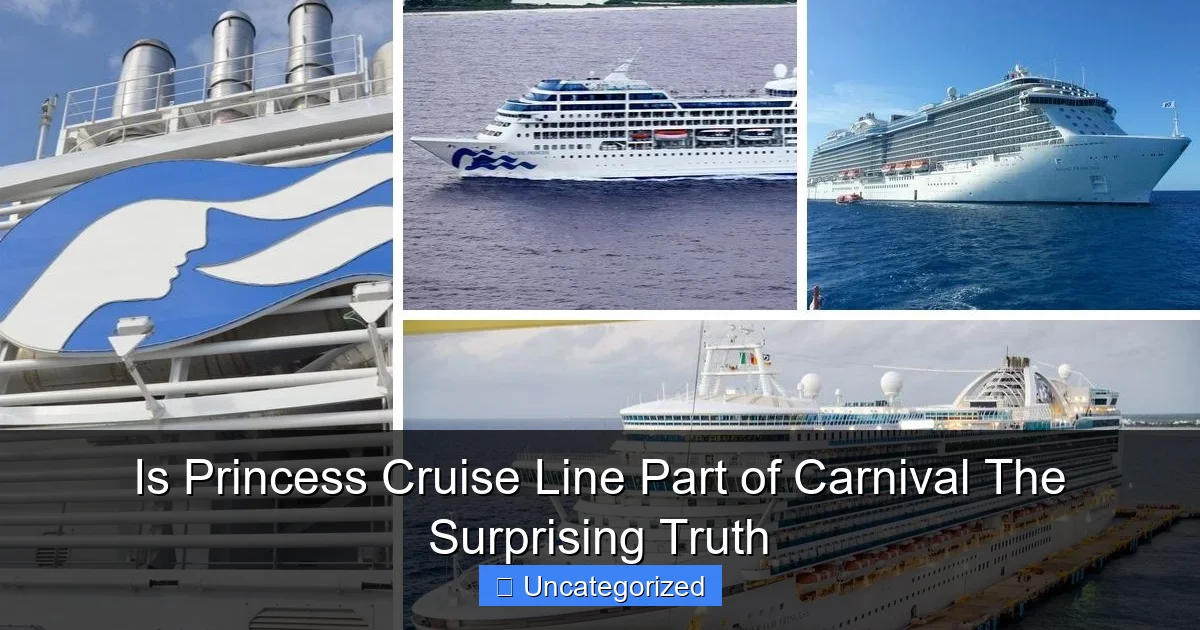
Featured image for is princess cruise line part of carnival
Image source: cruisefever.net
Yes, Princess Cruise Line is part of Carnival Corporation & plc, the world’s largest cruise company, operating under its portfolio since 2003. Despite shared ownership, Princess maintains its distinct brand identity, offering unique itineraries and onboard experiences separate from Carnival Cruise Line.
Key Takeaways
- Princess is owned by Carnival: A subsidiary under Carnival Corporation since 2003.
- Independent operations matter: Princess maintains unique branding and cruise experiences.
- Shared resources benefit guests: Access to Carnival’s global ports and innovations.
- No onboard mixing: Ships and itineraries remain separate from Carnival Cruise Line.
- Loyalty programs differ: Princess Captain’s Circle is not linked to Carnival’s program.
- Same parent, different feel: Princess targets a more premium, refined audience.
📑 Table of Contents
- The Cruise Industry’s Family Tree: A Hidden Connection Revealed
- The Corporate Structure: How Princess Fits into Carnival Corporation
- Brand Identity vs. Corporate Ownership: How Princess Stays Distinct
- The MedallionClass Revolution: A Carnival-Backed Innovation
- Loyalty Programs and Cross-Brand Benefits
- Data Table: Carnival Corporation Brand Comparison
- Conclusion: The Best of Both Worlds
The Cruise Industry’s Family Tree: A Hidden Connection Revealed
When you picture a luxurious cruise vacation, your mind might drift to the elegant ships of Princess Cruise Line, gliding through the fjords of Norway or the turquoise waters of the Caribbean. Known for its refined onboard experience, exceptional service, and innovative features like the Princess MedallionClass, Princess Cruises has carved a unique niche in the cruise industry. But behind the polished veneer of its brand identity lies a surprising corporate connection that many travelers don’t know about: Princess Cruise Line is part of Carnival Corporation. Yes, the same Carnival Corporation that owns the more budget-friendly, fun-focused Carnival Cruise Line. This revelation often shocks first-time cruisers and seasoned travelers alike. How can such different brands—one synonymous with luxury and sophistication, the other with vibrant entertainment and value—exist under the same corporate umbrella?
The answer lies in the complex, fascinating world of cruise conglomerates. The modern cruise industry is dominated not by individual companies, but by a handful of global giants that own multiple brands, each targeting different demographics, budgets, and vacation styles. Understanding this structure is key to making informed decisions when booking your next cruise. Whether you’re a budget-conscious family looking for a fun-filled week at sea or a retiree seeking a quiet, scenic journey through the Mediterranean, knowing the corporate relationships behind the brands can help you anticipate the onboard experience, service standards, and even the loyalty program benefits. So, is Princess Cruise Line part of Carnival? The truth is not only surprising but also a testament to the strategic brilliance of modern corporate branding in the travel industry.
The Corporate Structure: How Princess Fits into Carnival Corporation
To understand the relationship between Princess Cruise Line and Carnival, we need to dive into the corporate structure of Carnival Corporation & plc, one of the world’s largest leisure travel companies. Founded in 1972, Carnival Corporation has grown through a series of strategic acquisitions, brand integrations, and market expansions to become a global cruise powerhouse. Today, it operates under a dual-listed company (DLC) structure with Carnival plc, its UK-based counterpart, but functions as a single economic entity. This structure allows the company to leverage economies of scale, shared technology, and centralized operations while maintaining distinct brand identities for its various cruise lines.
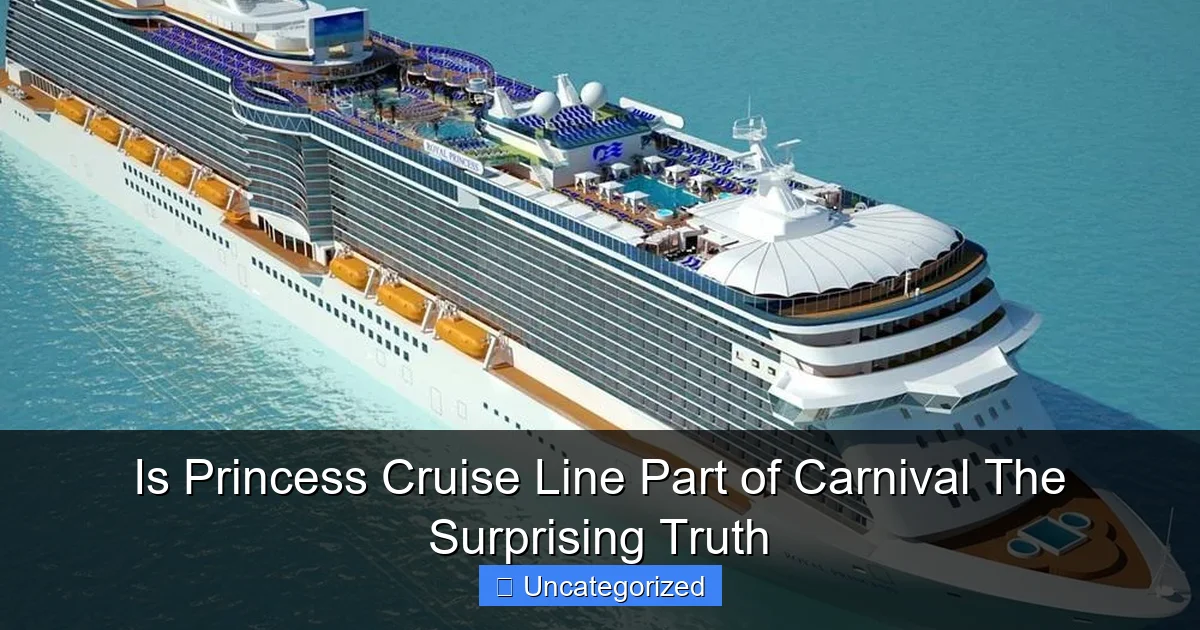
Visual guide about is princess cruise line part of carnival
Image source: cruisemapper.com
The 10 Brands Under the Carnival Umbrella
Carnival Corporation owns and operates 10 distinct cruise brands, each tailored to a specific market segment. These include:
- Carnival Cruise Line – Known for its fun, casual, and value-driven cruises
- Princess Cruises – Focused on mid-to-upscale experiences with global itineraries
- Holland America Line – Traditional, elegant cruises with a focus on enrichment and destination immersion
- Seabourn Cruise Line – Ultra-luxury, all-suite, all-inclusive voyages
- Cunard Line – British heritage, transatlantic crossings, and formal elegance
- AIDA Cruises – German-market, youth-oriented, entertainment-focused
- Costa Cruises – Italian-style cruising with a European flair
- P&O Cruises (UK) – British market, family-friendly, and heritage-focused
- P&O Cruises (Australia) – Tailored to the Australian market
- Fathom – A now-defunct social impact travel brand (ceased operations in 2017)
This diverse portfolio allows Carnival Corporation to capture a wide range of travelers—from budget-conscious families to high-net-worth individuals—without cannibalizing its own market share. Princess Cruises sits comfortably in the mid-upscale tier, offering a balance of luxury, comfort, and value that appeals to couples, retirees, and adventure-seekers alike.
Why the Parent Company Matters to Travelers
While the brands operate independently, the shared corporate ownership means that Princess Cruises benefits from Carnival Corporation’s massive purchasing power, global port partnerships, and advanced technology infrastructure. For example, the development of the MedallionClass system—a wearable device that enables keyless stateroom entry, personalized service, and contactless payments—was funded and developed at the corporate level. This innovation was first rolled out on Princess ships but has since been adopted by other Carnival brands, showcasing how shared resources can enhance the guest experience across the portfolio.
Additionally, Carnival Corporation’s centralized booking systems, loyalty programs, and marketing campaigns allow Princess Cruises to maintain high standards of service and consistency while reducing operational costs. This synergy is a win-win: Princess retains its brand identity and premium positioning, while Carnival Corporation maximizes profitability through economies of scale.
Brand Identity vs. Corporate Ownership: How Princess Stays Distinct
One of the most impressive aspects of Carnival Corporation’s strategy is its ability to maintain strong, differentiated brand identities across its portfolio. While the corporate parent provides infrastructure and resources, each brand operates with a high degree of autonomy in areas like ship design, onboard programming, cuisine, and guest experience. This is especially true for Princess Cruises, which has cultivated a reputation for elegance, comfort, and destination-focused itineraries.
Princess Cruises’ Unique Positioning
Princess Cruises is often described as the “middle ground” between Carnival’s more casual brands and its ultra-luxury lines like Seabourn. It targets travelers who want a refined experience without the formality of Cunard or the price tag of Seabourn. Key differentiators include:
- Global Itineraries – Princess offers some of the most extensive global routes, including Alaska, the South Pacific, Antarctica, and world cruises lasting 100+ days.
- Onboard Enrichment – Programs like “Discovery at Sea” (in partnership with Discovery Channel), “Shakespeare at Sea,” and “The World of Wine” appeal to intellectually curious travelers.
- MedallionClass Technology – A game-changer in cruise innovation, offering seamless service, personalized recommendations, and enhanced safety.
- Dining Options – From casual buffets to fine dining restaurants like Sabatini’s (Italian) and Crown Grill (steakhouse), Princess caters to diverse palates.
- Entertainment – Broadway-style shows, live music, and outdoor movies under the stars (Movies Under the Stars) create a vibrant yet relaxed atmosphere.
These elements are carefully curated to reflect Princess’s brand promise: “Come Back New.” The focus is on personal growth, discovery, and rejuvenation—values that resonate with its target demographic.
Operational Independence and Brand Autonomy
Despite being part of Carnival Corporation, Princess Cruises operates with a dedicated executive team, design department, and marketing division. For instance, the Princess Cruises headquarters is located in Santa Clarita, California, separate from Carnival Cruise Line’s Miami base. This physical and operational separation helps maintain brand integrity. Ship interiors, crew training, and even the uniforms are designed specifically for Princess, ensuring a cohesive experience that feels distinct from other Carnival brands.
Moreover, Princess has its own loyalty program—Cruise Personalizer—and its own set of onboard policies, such as dress codes (semi-formal nights are optional, unlike Cunard’s strict formal nights). These nuances reinforce the idea that while the corporate parent provides support, the brand itself is in control of its identity.
The MedallionClass Revolution: A Carnival-Backed Innovation
One of the most significant developments in recent cruise history is the launch of Princess MedallionClass, a technology platform that redefines the onboard experience. The OceanMedallion, a quarter-sized wearable device, enables a suite of features that make cruising more seamless, personalized, and efficient. But what many travelers don’t realize is that this innovation was made possible by Carnival Corporation’s investment and infrastructure.
How the OceanMedallion Works
The OceanMedallion is given to each passenger before boarding and connects to a network of sensors, cameras (used for security, not surveillance), and mobile apps. Key features include:
- Keyless Entry – No more room keys; the medallion unlocks your stateroom as you approach.
- Contactless Payments – Link your credit card to the medallion for easy purchases onboard.
- Personalized Service – Crew can see your preferences (e.g., favorite drink, dining time) and offer tailored recommendations.
- Wayfinding – Use the app to navigate the ship, find friends, or locate your next activity.
- Interactive Games – Participate in scavenger hunts, trivia, and other games via the medallion.
- Enhanced Safety – In emergencies, the medallion helps track passenger locations.
This technology was first introduced on the Regal Princess in 2017 and has since been rolled out across the entire Princess fleet. It’s now considered a benchmark in the cruise industry, with competitors like Royal Caribbean and Norwegian Cruise Line developing similar systems.
The Role of Carnival Corporation
While Princess Cruises is the face of MedallionClass, the technology, software, and hardware were developed by Carnival Corporation’s Global Experience and Innovation Team, based in Seattle. The project required over $1 billion in investment, including partnerships with tech giants like Intel, Microsoft, and NCR. Carnival Corporation’s ability to fund such a large-scale initiative—and share it across brands (e.g., Carnival’s “Ocean” program, Seabourn’s “Seabourn Source”)—demonstrates the power of corporate ownership in driving innovation.
For travelers, this means that choosing Princess Cruises isn’t just about the brand—it’s about accessing cutting-edge technology that enhances the entire vacation experience. And because the system is shared across Carnival brands, loyal cruisers can enjoy similar innovations even when they switch lines.
Loyalty Programs and Cross-Brand Benefits
One of the most practical advantages of being part of Carnival Corporation is the interoperability of loyalty programs. While each brand has its own rewards system, Carnival has introduced cross-brand benefits that allow travelers to earn and redeem points across multiple lines. This is a game-changer for frequent cruisers who enjoy variety.
Princess Cruises’ Cruise Personalizer
Princess’s loyalty program, Cruise Personalizer, rewards passengers with points for every cruise taken. Benefits include:
- Priority check-in and boarding
- Complimentary specialty dining
- Exclusive onboard events and parties
- Discounts on future cruises
- Personalized service based on past preferences
As you move up the tiers (Silver, Gold, Ruby, Platinum, Elite, and Elite Plus), the perks become more generous. For example, Elite members receive a complimentary cruise for two after 1,000 cruise days.
Carnival’s Cross-Brand Loyalty Initiative
In 2022, Carnival Corporation launched a unified loyalty framework that allows points earned on one brand (e.g., Princess) to be used for discounts or perks on another (e.g., Holland America). While not fully integrated yet, this initiative signals a move toward greater connectivity. For example:
- A passenger who accumulates 500 points on Princess Cruises could receive a $50 onboard credit on a future Carnival Cruise Line trip.
- Elite members from any Carnival brand may receive priority boarding on sister ships during special promotions.
- Shared access to corporate-owned private destinations (e.g., Princess Cays, Half Moon Cay) across brands.
This flexibility is particularly valuable for travelers who want to explore different cruise experiences without starting from scratch with a new loyalty program. It also incentivizes brand switching while maintaining customer loyalty to the Carnival ecosystem.
Data Table: Carnival Corporation Brand Comparison
To better understand how Princess Cruises fits into the Carnival family, here’s a comparison of key features across selected brands:
| Brand | Market Position | Avg. Cruise Length | Onboard Vibe | Loyalty Program | Unique Feature |
|---|---|---|---|---|---|
| Carnival Cruise Line | Budget-friendly | 3-7 days | Fun, casual, family-oriented | Carnival VIFP Club | WaterWorks, Seuss at Sea |
| Princess Cruises | Mid-upscale | 7-14 days (up to 100+) | Elegant, relaxed, destination-focused | Cruise Personalizer | MedallionClass, Movies Under the Stars |
| Holland America Line | Premium | 7-21 days | Traditional, refined, enrichment-focused | Mariner Society | BB King’s Blues Club, Culinary Arts Center |
| Seabourn Cruise Line | Ultra-luxury | 7-14 days | All-inclusive, intimate, service-intensive | Seabourn Club | All-suite ships, complimentary premium drinks |
| Cunard Line | Luxury (British heritage) | 7-21 days (transatlantic) | Formal, elegant, classic | World Club | Transatlantic crossings, White Star Service |
Conclusion: The Best of Both Worlds
So, is Princess Cruise Line part of Carnival? The answer is a resounding yes—but that doesn’t diminish its unique identity or value proposition. In fact, being part of Carnival Corporation is one of Princess Cruises’ greatest strengths. It provides access to unparalleled resources, cutting-edge technology, and a global network of ports and partners, all while allowing the brand to maintain its distinct personality, refined service, and destination-focused itineraries.
For travelers, this corporate relationship offers significant benefits: more innovation, better loyalty rewards, and greater flexibility across the Carnival family. Whether you’re a first-time cruiser or a seasoned veteran, choosing Princess Cruises means you’re not just booking a vacation—you’re entering a well-oiled, globally connected ecosystem designed to deliver exceptional experiences. The surprising truth? Sometimes, the best things in travel come from a shared family tree.
Frequently Asked Questions
Is Princess Cruise Line part of Carnival Corporation?
Yes, Princess Cruise Line is a subsidiary of Carnival Corporation & plc, the world’s largest cruise company. It operates as a standalone brand under Carnival’s portfolio, maintaining its own identity and unique offerings.
What cruise lines does Carnival Corporation own?
Carnival Corporation owns 9 major cruise brands, including Princess Cruise Line, Carnival Cruise Line, Holland America Line, and Costa Cruises. Each brand caters to different markets while sharing corporate resources and operational support.
Is Princess Cruise Line owned by Carnival or Royal Caribbean?
Princess Cruise Line is exclusively owned by Carnival Corporation, not Royal Caribbean Group. The two companies are separate competitors, though both are major players in the cruise industry.
Does Carnival Corporation control Princess Cruise Line’s operations?
While Carnival Corporation provides financial and strategic oversight, Princess Cruise Line manages its own day-to-day operations, branding, and itineraries. This structure allows Princess to maintain its premium cruise experience while benefiting from corporate synergies.
Why did Carnival Corporation acquire Princess Cruise Line?
Carnival Corporation purchased Princess in 2003 to expand its global reach and diversify its offerings. The acquisition added Princess’s renowned Alaska cruises and premium positioning to Carnival’s multi-brand strategy.
Are Princess and Carnival Cruise Line ships the same?
No, Princess and Carnival Cruise Line operate distinct fleets with different designs, amenities, and target audiences. While both are under Carnival Corporation, Princess focuses on premium experiences while Carnival emphasizes fun, casual cruising.