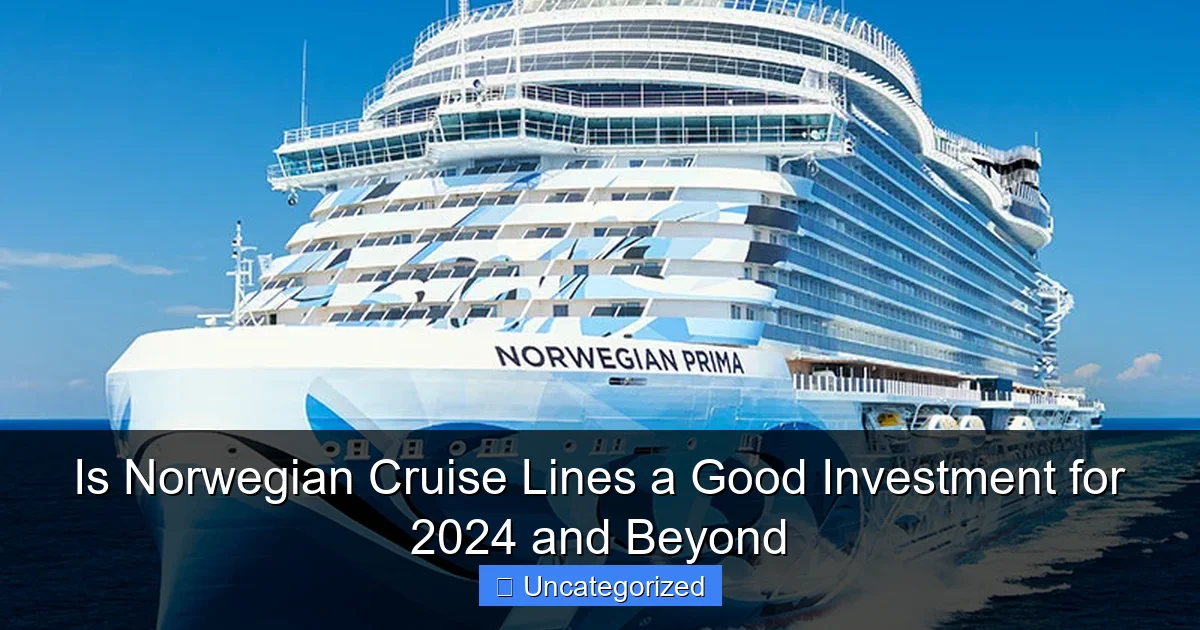
Featured image for is norwegian cruise lines a good investment
Image source: cruiseindustrynews.com
Norwegian Cruise Line Holdings (NCLH) presents a compelling but high-risk investment opportunity in 2024, driven by strong post-pandemic travel demand and aggressive fleet expansion. With revenue nearing pre-COVID levels and a focus on premium experiences, NCLH is well-positioned to capitalize on the booming cruise market, though debt levels and economic volatility remain key concerns. For long-term investors with a tolerance for cyclical risk, NCLH offers growth potential—but careful monitoring of macroeconomic trends and balance sheet improvements is essential.
Key Takeaways
- Strong post-pandemic recovery: Norwegian Cruise Lines shows robust revenue growth and booking momentum.
- Debt remains a concern: High leverage requires monitoring refinancing risks and interest costs.
- Premium pricing strategy: Focus on luxury and experiences may boost long-term margins.
- Expanding fleet investments: New ships enhance competitiveness but increase capital expenditure pressure.
- Geopolitical risks persist: Global instability could impact travel demand and fuel costs.
- Strong 2024 outlook: Near-term performance looks solid, but long-term hinges on debt and demand.
📑 Table of Contents
- Is Norwegian Cruise Lines a Good Investment for 2024 and Beyond?
- 1. Financial Performance and Balance Sheet Health
- 2. Competitive Positioning and Brand Differentiation
- 3. Industry Trends and Market Demand
- 4. Risks and Challenges to Consider
- 5. Valuation and Investment Metrics
- 6. Final Assessment: Is Norwegian Cruise Lines a Good Investment?
Is Norwegian Cruise Lines a Good Investment for 2024 and Beyond?
The travel and leisure industry has undergone a dramatic transformation in the wake of the global pandemic, and few sectors have experienced as much volatility—or as much potential—as the cruise industry. Among the major players, Norwegian Cruise Lines (NCL) has emerged as a company worth watching for investors eyeing long-term growth in the post-pandemic travel rebound. With a fleet of over 20 modern ships, a strong brand identity, and a growing focus on innovation, sustainability, and premium experiences, Norwegian Cruise Lines is positioning itself not just to recover, but to thrive in the evolving travel landscape of 2024 and beyond.
But is Norwegian Cruise Lines a good investment? This question hinges on a complex interplay of financial health, industry trends, competitive positioning, and macroeconomic factors. For investors, the decision to allocate capital to NCL requires a deep dive into the company’s operational strategy, financial performance, and future outlook. Unlike traditional industries, the cruise sector is highly sensitive to consumer sentiment, fuel prices, geopolitical risks, and regulatory changes. Yet, with global demand for experiential travel surging—especially among younger demographics—NCL may be riding a wave of opportunity. In this comprehensive analysis, we’ll explore whether Norwegian Cruise Lines presents a compelling investment case for the coming years, examining everything from balance sheet strength to market positioning and long-term growth catalysts.
1. Financial Performance and Balance Sheet Health
Revenue Recovery and Profitability Trends
Norwegian Cruise Lines Holdings Ltd. (NCLH), the parent company of Norwegian Cruise Line, Oceania Cruises, and Regent Seven Seas Cruises, has shown a strong recovery trajectory since the pandemic-induced shutdowns. In 2023, NCLH reported total revenue of $8.5 billion, a dramatic increase from just $1.3 billion in 2021 and $6.5 billion in 2022. This upward trend continued into 2024, with Q1 2024 revenue reaching $2.2 billion, up 32% year-over-year, driven by higher passenger volumes, increased onboard spending, and improved pricing power.
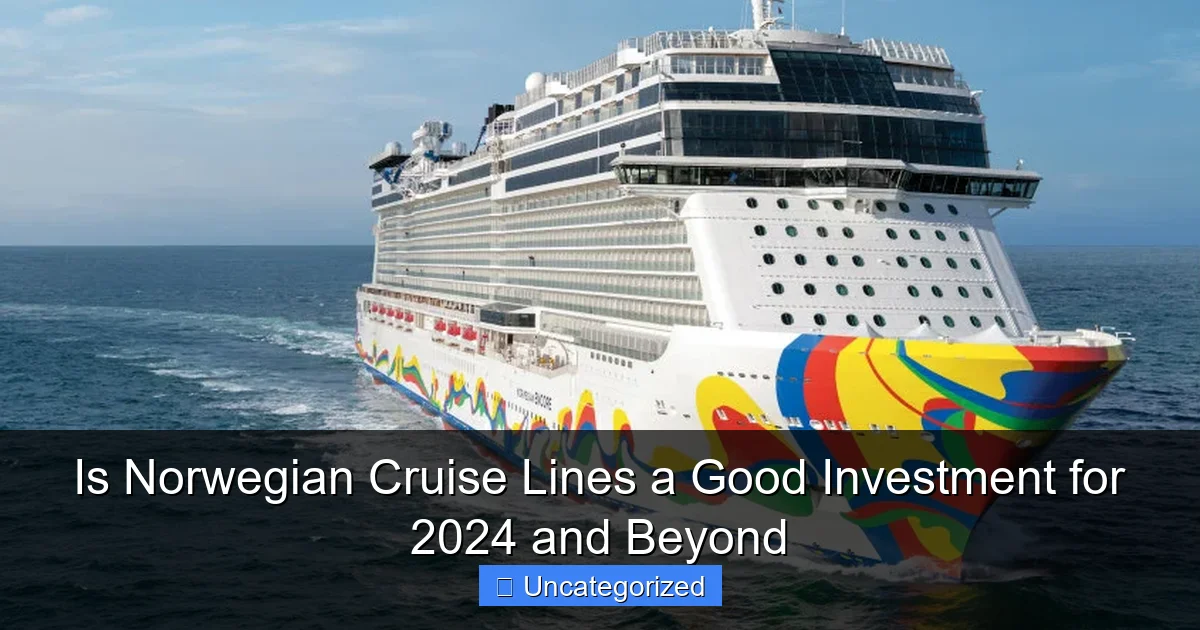
Visual guide about is norwegian cruise lines a good investment
Image source: media.shermanstravel.com
More importantly, the company has returned to adjusted net income profitability. In Q1 2024, NCLH reported an adjusted net income of $235 million, a significant turnaround from a $470 million loss in the same quarter of 2023. This shift reflects not only higher revenues but also improved cost management and operational efficiency. The company’s focus on premium pricing and dynamic pricing models has allowed it to maintain strong yield growth—up 12% in 2023 compared to 2019 levels—despite rising fuel and labor costs.
Debt Load and Liquidity Position
One of the biggest concerns during the pandemic was NCLH’s ballooning debt. At its peak in 2021, the company’s net debt stood at over $14 billion, raising red flags among investors. However, the company has made aggressive efforts to deleverage. As of Q1 2024, net debt has been reduced to approximately $11.2 billion, with plans to bring it below $10 billion by 2025 through a combination of cash flow generation, asset sales, and refinancing at lower interest rates.
The company maintains a strong liquidity position, with $1.8 billion in unrestricted cash and $2.1 billion in available credit lines. This provides a solid buffer against economic downturns or operational disruptions. Furthermore, NCLH has extended its debt maturities, with no significant maturities due before 2026, reducing near-term refinancing risk. This improved balance sheet health is critical for investor confidence, especially in a capital-intensive industry like cruising.
Free Cash Flow and Capital Allocation
Free cash flow (FCF) is a key metric for evaluating the sustainability of a cruise line’s operations. In 2023, NCLH generated $1.1 billion in operating cash flow, with capital expenditures of $750 million—primarily for fleet maintenance and new ship construction. This resulted in positive FCF of $350 million, a milestone not seen since 2019. In 2024, the company expects FCF to exceed $600 million, driven by higher EBITDA and disciplined CapEx.
NCLH has also signaled a shift in capital allocation strategy. While it has not yet reinstated a dividend (suspended since 2020), management has indicated that shareholder returns—including dividends and share buybacks—are under review for 2025, assuming continued financial improvement. For long-term investors, this could signal future income potential and enhanced shareholder value.
2. Competitive Positioning and Brand Differentiation
Premium and Luxury Segment Focus
One of Norwegian Cruise Lines’ key strengths lies in its diversified brand portfolio. Unlike some competitors that focus solely on mass-market cruising, NCLH operates across three distinct segments: Norwegian Cruise Line (mainstream), Oceania Cruises (upper-premium), and Regent Seven Seas Cruises (luxury all-inclusive). This multi-brand strategy allows the company to capture a broader customer base, from budget-conscious travelers to high-net-worth individuals seeking all-inclusive luxury experiences.
Oceania and Regent have particularly benefited from the “revenge travel” phenomenon, where affluent travelers are spending more on high-end experiences after pandemic restrictions. In 2023, Regent Seven Seas achieved record load factors (over 95%) and onboard revenue per passenger, with average ticket prices exceeding $5,000. This segment now accounts for over 20% of NCLH’s total revenue and is growing at a faster rate than the mainstream Norwegian brand.
Innovation in Onboard Experience and Technology
NCL has invested heavily in differentiating its onboard experience. The company’s “Free at Sea” program—offering perks like free airfare, specialty dining, Wi-Fi, and shore excursions—has been a major driver of customer acquisition and retention. Unlike competitors with rigid pricing, NCL’s flexible packages allow guests to customize their vacations, enhancing perceived value and satisfaction.
Technology also plays a growing role. NCL has launched the Norwegian Edge digital platform, which includes a mobile app for check-in, dining reservations, shore excursion bookings, and real-time updates. The app has over 2 million active users and has contributed to a 25% increase in pre-cruise onboard spending. Additionally, the company is piloting AI-driven personalization tools to recommend activities and services based on guest preferences, improving engagement and revenue per passenger.
Fleet Modernization and Newbuilds
NCLH is in the midst of a $1.5 billion fleet modernization program. The company has ordered four new Prima Plus class ships, with the first, Norwegian Prima, launched in 2022. These vessels feature larger staterooms, expanded outdoor spaces, and innovative attractions like the world’s first three-deck go-kart track at sea. The next ship, Norwegian Viva, launched in 2023, and two more are scheduled for delivery in 2025 and 2026.
These new ships are not only more fuel-efficient but also designed to attract younger travelers with Instagram-worthy spaces and adventure-based amenities. The company estimates that the newbuilds will increase annual capacity by 8% by 2026 and contribute to a 15% improvement in EBITDA margin due to higher pricing and onboard spending.
3. Industry Trends and Market Demand
Post-Pandemic Travel Rebound
The global cruise industry is experiencing a strong rebound. According to the Cruise Lines International Association (CLIA), global cruise passenger volume reached 32 million in 2023, surpassing pre-pandemic levels for the first time. CLIA forecasts 35 million passengers in 2024 and 38 million by 2026. This growth is fueled by pent-up demand, rising disposable incomes, and a shift toward experiential travel over material goods.
Norwegian Cruise Lines has capitalized on this trend. In 2023, NCLH carried 2.1 million passengers, up 45% from 2022. Load factors (percentage of cabins filled) averaged 98%, with some sailings exceeding 100% due to double occupancy and upgrades. The company’s 2024 booking curve is the strongest in its history, with 80% of capacity already sold for the year—well ahead of 2019 levels.
Demographic Shifts and New Customer Segments
Historically, the cruise industry catered primarily to retirees. But today, NCL is successfully attracting younger travelers. Data from the company shows that 35% of new bookings in 2023 were from travelers aged 18–45, up from 22% in 2019. This shift is driven by social media marketing, influencer partnerships, and themed cruises (e.g., music, wellness, adventure).
For example, NCL’s “Sail with a Star” series—where celebrities perform onboard—has drawn thousands of millennials and Gen Z travelers. The company also launched “Cruise with Pride” sailings, which have become annual events with high demand. These initiatives not only boost bookings but also enhance brand loyalty and social media visibility.
Geographic Expansion and Emerging Markets
While the U.S. remains NCL’s largest market (accounting for 60% of revenue), the company is aggressively expanding into Asia, Latin America, and Europe. In 2023, NCL launched its first year-round deployment in Japan, with the Norwegian Spirit operating out of Yokohama. The company also introduced new itineraries in Southeast Asia, including Vietnam, Thailand, and Malaysia, targeting the growing middle class in these regions.
Additionally, NCL is investing in homeporting ships in emerging cruise hubs like Dubai and Mumbai. These strategic moves diversify revenue sources, reduce dependence on North American demand, and position the company for long-term global growth.
4. Risks and Challenges to Consider
Macroeconomic and Geopolitical Risks
Despite strong demand, the cruise industry remains vulnerable to external shocks. Inflation, rising interest rates, and a potential recession could dampen consumer spending on discretionary travel. In 2023, fuel prices spiked to over $1,000 per metric ton, squeezing margins across the sector. Although NCL has hedged 60% of its 2024 fuel needs, volatility remains a concern.
Geopolitical tensions—such as conflicts in the Middle East, Red Sea shipping disruptions, or political instability in key destinations—can force itinerary changes or cancellations. For example, in early 2024, NCL rerouted several Mediterranean cruises due to Houthi attacks on ships in the Red Sea, increasing fuel costs and reducing guest satisfaction. While the company has contingency plans, such events highlight operational fragility.
Environmental Regulations and Sustainability Pressure
Environmental scrutiny is intensifying. The International Maritime Organization (IMO) has set a target to reduce shipping emissions by 50% by 2050. NCLH has committed to a 30% reduction in carbon intensity by 2030 and is investing in LNG-powered ships (like Norwegian Prima) and shore power connections at ports.
However, compliance comes at a cost. Retrofitting existing ships, adopting cleaner fuels, and meeting ESG reporting standards require significant investment. Failure to meet sustainability goals could lead to regulatory fines, reputational damage, or exclusion from green investment funds—potentially affecting valuation.
Competition and Market Saturation
The cruise industry is highly competitive, with Royal Caribbean, Carnival Corporation, and MSC Cruises all expanding their fleets and offering aggressive pricing. While NCL differentiates through its brand mix and onboard experience, price wars could erode margins. In 2023, Carnival launched a “Buy One, Get One 50% Off” promotion, forcing NCL to respond with limited-time offers, squeezing short-term profitability.
Additionally, the rapid expansion of new ships across the industry raises concerns about market saturation. If demand growth slows, overcapacity could lead to lower pricing power and reduced returns on investment. NCL must balance fleet growth with demand trends to avoid this risk.
5. Valuation and Investment Metrics
Stock Performance and Analyst Sentiment
Norwegian Cruise Lines Holdings (NCLH) trades on the NYSE under the ticker NCLH. As of mid-2024, the stock is priced around $22 per share, up from a low of $7 in 2020. Year-to-date, NCLH has outperformed the S&P 500 and the broader leisure sector, gaining 38%.
Analyst sentiment is cautiously optimistic. Of the 22 analysts covering NCLH, 12 rate it a “Buy,” 8 a “Hold,” and 2 a “Sell.” The average 12-month price target is $26.50, implying a 20% upside. Key bullish arguments include strong booking momentum, margin expansion, and deleveraging progress. Bears point to macroeconomic risks and high debt levels.
Key Financial Ratios and Comparisons
| Metric | NCLH (2023) | Royal Caribbean (2023) | Carnival (2023) | Industry Avg. |
|---|---|---|---|---|
| Price-to-Earnings (P/E) | 18.5x | 20.1x | 16.8x | 18.0x |
| EV/EBITDA | 9.2x | 10.5x | 8.7x | 9.0x |
| Debt/EBITDA | 5.1x | 4.8x | 6.3x | 5.5x |
| ROE | 14.2% | 16.8% | 9.5% | 12.0% |
| Free Cash Flow Yield | 3.8% | 4.2% | 2.9% | 3.5% |
The table above shows that NCLH trades at a moderate valuation relative to peers. Its P/E and EV/EBITDA ratios are in line with the industry, while its ROE is strong, indicating efficient use of equity. However, its Debt/EBITDA remains high, reflecting past borrowing. The improving FCF yield is a positive sign for future shareholder returns.
Long-Term Growth Catalysts
Several factors could drive NCLH’s stock higher in the coming years:
- EBITDA margin expansion: Target of 35% by 2026 (up from 28% in 2023), driven by pricing power and cost control.
- Deleveraging: Net debt reduction to below $10 billion by 2025 could lead to credit rating upgrades and lower interest costs.
- Shareholder returns: Potential dividend reinstatement or buybacks in 2025.
- New market penetration: Expansion in Asia and Latin America could add $500 million in annual revenue by 2027.
- Digital transformation: AI and data analytics could increase onboard spending by 10–15%.
6. Final Assessment: Is Norwegian Cruise Lines a Good Investment?
So, is Norwegian Cruise Lines a good investment for 2024 and beyond? The answer depends on your risk tolerance, investment horizon, and market outlook. For long-term, growth-oriented investors, NCLH presents a compelling opportunity. The company has demonstrated resilience, strong demand recovery, and a clear path to financial improvement. Its multi-brand strategy, focus on innovation, and expansion into new markets position it well to capitalize on the global travel boom.
However, it’s not without risks. The high debt load, macroeconomic sensitivity, and competitive pressures mean that NCLH is not a “set-it-and-forget-it” investment. It requires active monitoring. Investors should consider:
- Buying in stages (dollar-cost averaging) to mitigate volatility.
- Focusing on the 2025–2027 horizon, when deleveraging and margin expansion are expected to accelerate.
- Using stop-loss orders to protect against sudden downturns.
- Diversifying within the travel sector to balance exposure.
For those with a moderate to high risk appetite, Norwegian Cruise Lines offers a unique blend of cyclical recovery, structural growth, and operational innovation. While it may not be the safest stock in the market, its upside potential—driven by strong demand, improving margins, and strategic execution—makes it a worthy consideration for a diversified portfolio. As the world continues to embrace travel as a core part of life, NCLH is not just riding the wave—it’s helping to shape the future of cruising.
In conclusion, Norwegian Cruise Lines is more than a post-pandemic rebound story. It’s a company in transformation, leveraging its brands, technology, and global reach to build a sustainable, profitable business. For investors willing to navigate the risks, the journey with NCL could be a rewarding one—both financially and experientially.
Frequently Asked Questions
Is Norwegian Cruise Lines a good investment in 2024?
Norwegian Cruise Lines (NCL) shows potential as a 2024 investment due to strong post-pandemic demand, record bookings, and expansion of its fleet. However, investors should monitor debt levels and macroeconomic factors like fuel costs and consumer spending trends.
What are the biggest risks for Norwegian Cruise Lines investors?
NCL faces risks including high debt ($13+ billion), sensitivity to economic downturns, and geopolitical disruptions in key markets like Europe and the Caribbean. These factors could impact profitability despite current revenue growth.
How does Norwegian Cruise Lines compare to Carnival and Royal Caribbean?
NCL differentiates itself with premium experiences and newer ships but carries higher leverage than Carnival or Royal Caribbean. While all three benefit from pent-up travel demand, NCL’s valuation and growth strategy make it a more aggressive play in the cruise sector.
Does Norwegian Cruise Lines pay dividends to shareholders?
No, NCL suspended its dividend in 2020 and has not reinstated it as of 2024, prioritizing debt reduction instead. Income-focused investors may prefer competitors with stronger balance sheets and dividend policies.
What financial metrics should I watch for NCL stock?
Key metrics include net leverage ratio (currently ~4x), occupancy rates (approaching 110% in 2023), and yield growth. Improving these indicators could signal stronger long-term viability for Norwegian Cruise Lines as an investment.
Can Norwegian Cruise Lines sustain growth beyond 2024?
NCL’s growth depends on maintaining pricing power, expanding in Asia, and managing costs. If the company executes its strategy while reducing debt, it could remain a compelling cruise stock for long-term investors.