
Featured image for is norwegian cruise line stock a good buy
Image source: i.ytimg.com
Norwegian Cruise Line stock presents a high-risk, high-reward opportunity as travel demand rebounds and debt concerns linger. With strong booking trends and improved pricing power signaling a recovery, the stock could surge if the company executes on its cost-cutting and balance sheet goals. However, macroeconomic volatility and rising interest rates remain key risks to watch.
Key Takeaways
- Evaluate financial health: Check NCLH’s debt levels and cash flow stability before investing.
- Monitor travel demand: Rising bookings signal growth, but seasonality impacts performance.
- Assess industry competition: Compare NCLH to rivals like Carnival and Royal Caribbean.
- Watch fuel costs: High oil prices can squeeze margins; track hedging strategies.
- Consider dividends: NCLH suspended payouts; reinstatement could boost investor confidence.
- Analyze valuation: P/E and P/S ratios may reveal if stock is over/undervalued.
📑 Table of Contents
- Introduction: The Cruise Industry’s Comeback and the Norwegian Opportunity
- Norwegian Cruise Line’s Financial Health: A Closer Look at the Numbers
- Industry Trends and Competitive Positioning
- Valuation and Stock Performance: Is NCLH Undervalued?
- Risks and Challenges: What Could Go Wrong?
- Growth Strategy and Future Outlook
- Data Snapshot: Norwegian Cruise Line vs. Peers (Q2 2023)
- Conclusion: Is Norwegian Cruise Line Stock a Good Buy Right Now?
Introduction: The Cruise Industry’s Comeback and the Norwegian Opportunity
The cruise industry, once brought to a standstill by the global pandemic, has roared back to life with remarkable momentum. After two years of suspended operations, port closures, and massive financial losses, cruise lines are now navigating a sea of pent-up demand, rising ticket prices, and a resurgence in consumer confidence. Among the major players in this revitalized sector, Norwegian Cruise Line Holdings Ltd. (NCLH) stands out as a compelling case study for investors seeking exposure to the travel and leisure recovery. With its fleet of 29 ships, diverse itineraries, and a brand known for innovation—such as the industry’s first “Free at Sea” all-inclusive packages—Norwegian has positioned itself not just to survive but to thrive in the post-pandemic era.
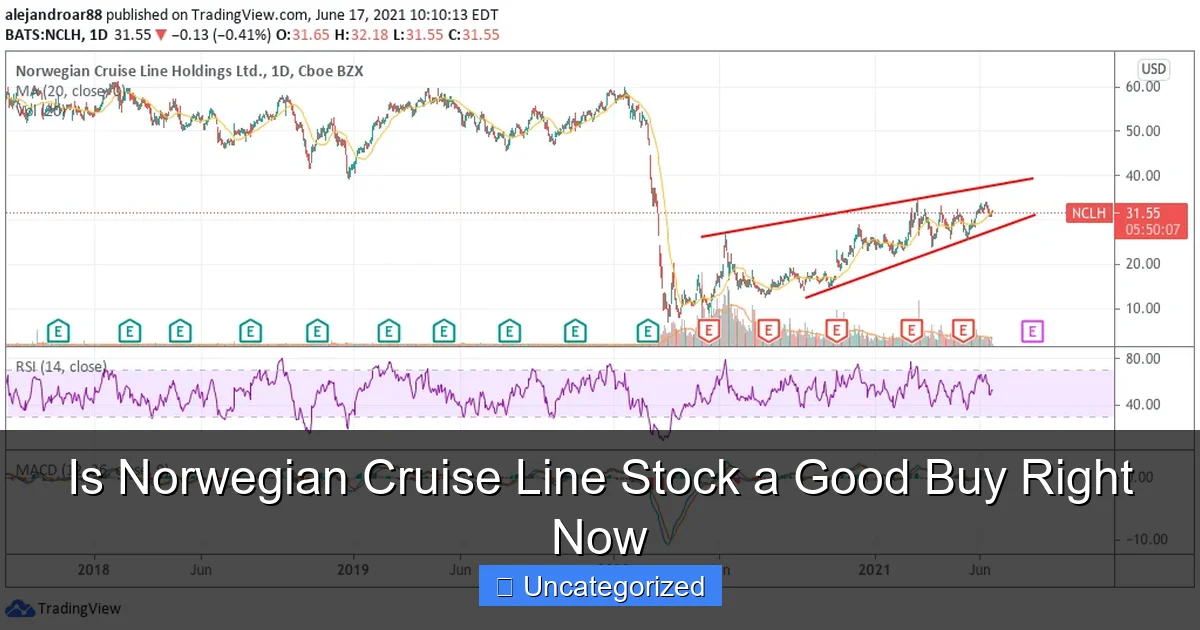
But is Norwegian Cruise Line stock a good buy right now? This question has become increasingly relevant as the stock has fluctuated between $12 and $22 over the past 18 months, reflecting both optimism about the recovery and lingering concerns over debt, macroeconomic headwinds, and operational risks. For investors, the decision hinges on a complex mix of financial metrics, industry trends, competitive positioning, and macroeconomic conditions. In this comprehensive analysis, we’ll dive deep into Norwegian’s financial health, growth strategy, competitive landscape, valuation, and future outlook to determine whether NCLH is a smart addition to your portfolio—or a speculative bet best left to risk-tolerant traders.
Norwegian Cruise Line’s Financial Health: A Closer Look at the Numbers
Revenue Recovery and Profitability Trends
Norwegian Cruise Line’s financial performance has shown a dramatic turnaround since the lows of 2020 and 2021. In Q4 2022, the company reported $1.5 billion in revenue—up from just $17 million in the same quarter of 2021. By Q1 2023, revenue had climbed to $1.8 billion, and in Q2 2023, it hit $2.1 billion, representing a year-over-year increase of over 170%. More importantly, the company achieved its first quarterly net income since 2019 in Q4 2022, with $1.1 million in profit, and maintained profitability through the first half of 2023.
Visual guide about is norwegian cruise line stock a good buy
Image source: economywatch.com
This recovery is driven by several key factors: higher occupancy rates (approaching 110% in some quarters due to strong demand), rising ticket prices (up 15–20% year-over-year), and increased onboard spending. Norwegian’s “Premium Plus” pricing strategy—offering enhanced experiences like specialty dining, beverage packages, and excursions—has helped boost per-passenger revenue. For example, in Q2 2023, the average revenue per passenger per day was $290, up from $235 in Q2 2019.
Debt and Liquidity: A Double-Edged Sword
One of the most scrutinized aspects of Norwegian’s financials is its debt burden. At the end of Q2 2023, the company reported total debt of approximately $12.8 billion, with net debt (debt minus cash) at $10.4 billion. While this is down from a peak of over $14 billion in 2021, it remains a significant liability, especially in a rising interest rate environment. The company’s interest expense in Q2 2023 was $245 million, up from $187 million in Q2 2019.
However, Norwegian has taken aggressive steps to manage its debt. In 2022, it completed a $1.1 billion equity offering and refinanced over $3 billion in debt at more favorable terms. The company also extended maturities, pushing out near-term obligations. As of mid-2023, Norwegian had $1.8 billion in cash and $2.1 billion in undrawn credit facilities, providing a cushion to handle volatility.
Tip for investors: Monitor the company’s debt-to-EBITDA ratio. In Q2 2023, it stood at 6.2x, down from over 12x in 2021. The industry benchmark is around 3–4x, so while improvement is evident, Norwegian still has work to do.
Free Cash Flow and Capital Allocation
Free cash flow (FCF) is another critical metric. In Q2 2023, Norwegian generated $345 million in operating cash flow and spent $290 million on capital expenditures (mainly maintenance and new ship investments), resulting in $55 million in FCF. While modest, this marks a major shift from negative FCF in 2020–2021. Management has guided for positive full-year FCF in 2023 and 2024, with plans to use excess cash to pay down debt and potentially reinstate dividends (suspended in 2020).
The company’s capital allocation strategy is now more disciplined. Instead of aggressive fleet expansion, Norwegian is focusing on fleet optimization—retrofitting older ships, improving energy efficiency, and enhancing guest experiences. For example, the 2023 retrofit of the Norwegian Joy included upgraded staterooms, new dining venues, and enhanced Wi-Fi, leading to higher customer satisfaction and pricing power.
Industry Trends and Competitive Positioning
The Broader Cruise Market Recovery
The global cruise industry is on a strong rebound. According to the Cruise Lines International Association (CLIA), global cruise capacity is expected to reach 105% of 2019 levels by the end of 2023, with 31.5 million passengers—up from 6 million in 2021. Demand is being fueled by:
- Pent-up demand: Consumers delayed vacations during the pandemic and are now eager to travel.
- Demographic shifts: Millennials and Gen Z are showing higher interest in experiential travel, including cruises.
- Inflation hedge: Cruise vacations offer fixed pricing, which appeals in an inflationary environment.
- New ship launches: Norwegian’s 2023 debut of the Norwegian Prima, the first in its new Prima class, generated significant buzz and premium pricing.
Norwegian’s “Freestyle Cruising” model—offering flexible dining, no formal dress codes, and a wide range of onboard activities—resonates with younger travelers seeking freedom and customization. This differentiates it from more traditional lines like Carnival, which still emphasizes structured itineraries.
Competitive Landscape: Norwegian vs. Royal Caribbean and Carnival
Norwegian competes primarily with Royal Caribbean Group (RCL) and Carnival Corporation (CCL). Here’s how they stack up:
- Fleet size and age: Norwegian has 29 ships (average age: 12 years), compared to 47 for Carnival (14 years) and 63 for Royal Caribbean (10 years). Newer ships typically have better fuel efficiency, higher guest ratings, and command premium pricing.
- Geographic focus: Norwegian has a strong presence in Europe (Mediterranean, Scandinavia) and Alaska, while Royal Caribbean leads in the Caribbean and Carnival dominates the mass-market segment.
- Brand positioning: Norwegian targets the “premium” segment (above Carnival, below luxury lines like Regent Seven Seas), while Royal Caribbean leans into “premium adventure” with high-tech attractions like skydiving simulators and robot bartenders.
- Financial flexibility: Royal Caribbean has a stronger balance sheet (lower debt-to-EBITDA at ~4x), but Norwegian is closing the gap faster due to aggressive cost controls.
Example: The Norwegian Prima achieved an average ticket price of $280 per day in its first quarter of operation—18% higher than the company average. This shows Norwegian’s ability to innovate and capture premium demand.
Differentiation Through Innovation and Sustainability
Norwegian is investing heavily in digital transformation and sustainability to stay competitive. Its “Norwegian Cruise Line App” allows guests to book dining, excursions, and entertainment, reducing wait times and improving satisfaction. The company is also retrofitting ships with advanced wastewater treatment systems and piloting LNG (liquefied natural gas) fuel for new builds.
In 2023, Norwegian launched the “Sustainable Sailing” initiative, aiming to reduce carbon intensity by 30% by 2030. While not as aggressive as Royal Caribbean’s net-zero pledge, it positions Norwegian as a responsible player in an industry under increasing ESG scrutiny.
Valuation and Stock Performance: Is NCLH Undervalued?
Price-to-Earnings (P/E) and Forward Multiples
As of August 2023, Norwegian Cruise Line’s stock trades at around $18 per share, giving it a trailing P/E ratio of approximately 22x (based on annualized earnings of $0.80 per share). The forward P/E (based on 2024 estimates of $1.50 per share) is around 12x. For comparison:
- Carnival (CCL): Forward P/E of 15x
- Royal Caribbean (RCL): Forward P/E of 10x
- S&P 500 average: Forward P/E of 20x
At first glance, Norwegian appears fairly valued or slightly undervalued compared to its peers, especially given its faster earnings growth trajectory. Analysts project 2024 EPS of $1.50–$1.75, implying 90–110% year-over-year growth. If achieved, this would make Norwegian one of the fastest-growing stocks in the travel sector.
Price-to-Sales (P/S) and Enterprise Value-to-EBITDA (EV/EBITDA)
Norwegian’s P/S ratio is 1.3x, below Carnival’s 1.8x and Royal Caribbean’s 1.6x. This suggests the market is pricing Norwegian more conservatively, possibly due to its higher debt load. However, its EV/EBITDA ratio is 9.5x (based on 2024 EBITDA estimates of $2.4 billion), which is in line with the industry average of 9–11x.
Tip: Use the EV/EBITDA metric to compare capital-intensive companies like cruise lines. A lower ratio may indicate a better value, but consider debt levels and growth prospects.
Analyst Sentiment and Target Prices
Wall Street is cautiously optimistic. As of August 2023, 14 out of 18 analysts rate NCLH as a “Buy” or “Strong Buy,” with an average 12-month price target of $24.50—a 36% upside from current levels. The highest target is $30 (JPMorgan), citing strong booking trends and margin expansion.
However, bearish analysts (like those at UBS) argue that Norwegian’s valuation is already pricing in a full recovery and that any macroeconomic downturn (e.g., recession, oil price spikes) could derail earnings. They point to the stock’s high beta (1.8), meaning it’s more volatile than the market.
Risks and Challenges: What Could Go Wrong?
Macroeconomic and Geopolitical Risks
The cruise industry is highly sensitive to macroeconomic conditions. Key risks include:
- Recession: A downturn could reduce discretionary spending on vacations.
- Inflation: Rising fuel, labor, and food costs squeeze margins.
- Geopolitical instability: Conflicts in Europe or the Middle East could disrupt itineraries (e.g., Norwegian canceled several Mediterranean cruises in 2022 due to the Ukraine war).
- Fuel prices: Oil accounts for ~15% of operating costs. A spike to $100+ per barrel could pressure profitability.
Norwegian is hedging 60% of its 2023–2024 fuel needs, but the remaining 40% is exposed to market fluctuations.
Operational and Reputational Risks
Operational challenges include:
- Port congestion: Popular destinations like Barcelona and Santorini are experiencing overcrowding, leading to delays.
- Labor shortages: Crew recruitment and retention remain difficult, especially for skilled positions.
- Health concerns: While rare, norovirus outbreaks can damage reputation. Norwegian’s “Cleanliness Commitment” program has reduced incidents by 40% since 2019.
Reputational risk is also tied to ESG performance. Environmental groups criticize cruise lines for emissions and waste. Norwegian must balance growth with sustainability to avoid regulatory penalties and consumer backlash.
Execution Risk and Debt Refinancing
Norwegian’s ability to execute its turnaround plan is critical. Delays in ship deliveries (e.g., the Norwegian Viva, due in 2023) could disrupt capacity growth. Additionally, the company must refinance $2.5 billion in debt by 2025. If interest rates remain high, refinancing costs could rise, impacting earnings.
Tip: Watch Norwegian’s quarterly earnings calls for updates on debt maturities and capex plans. Management’s guidance on free cash flow and leverage ratios will be key indicators.
Growth Strategy and Future Outlook
Fleet Expansion and New Markets
Norwegian plans to add two new ships per year through 2027, including the Norwegian Viva (2023) and the Norwegian Aqua (2025). These vessels will feature LNG engines, larger staterooms, and enhanced sustainability features. The company is also exploring new markets:
- Asia-Pacific: Resuming cruises to Japan and Southeast Asia in 2024.
- Australia/New Zealand: Expanding seasonal itineraries.
- Expedition cruises: Partnering with Lindblad Expeditions to offer polar and Galapagos voyages.
These expansions could open new revenue streams and diversify geographic risk.
Digital Transformation and Customer Loyalty
Norwegian is investing in AI-driven personalization. Its “Guest Intelligence Platform” uses data from past cruises to recommend excursions, dining, and entertainment. Early results show a 15% increase in onboard spending among targeted guests.
The company’s loyalty program, “Latitudes,” has 12 million members. A recent revamp added tiered benefits (e.g., free Wi-Fi, priority boarding), boosting retention and reducing marketing costs.
Long-Term Earnings Potential
If Norwegian achieves its 2024–2025 targets—$2.50–$3.00 in EPS, 10–12% annual revenue growth, and debt-to-EBITDA below 4x—the stock could trade at $30–$35 based on a 12x P/E multiple. This would represent 60–90% upside from current levels.
However, success depends on sustained demand, cost discipline, and favorable macro conditions. Investors should be prepared for volatility but could benefit from long-term capital appreciation.
Data Snapshot: Norwegian Cruise Line vs. Peers (Q2 2023)
| Metric | Norwegian (NCLH) | Carnival (CCL) | Royal Caribbean (RCL) |
|---|---|---|---|
| Market Cap | $7.8B | $15.2B | $22.5B |
| Forward P/E | 12x | 15x | 10x |
| Debt-to-EBITDA | 6.2x | 7.1x | 4.0x |
| Q2 Revenue (YoY %) | +170% | +130% | +150% |
| Net Income (Q2) | $120M | $60M | $320M |
| Fleet Size | 29 | 47 | 63 |
| Occupancy Rate (Q2) | 108% | 105% | 110% |
Conclusion: Is Norwegian Cruise Line Stock a Good Buy Right Now?
After a deep dive into Norwegian Cruise Line’s financials, industry dynamics, risks, and growth strategy, the answer to “Is Norwegian Cruise Line stock a good buy right now?” is nuanced but leans toward yes—with caveats.
For long-term investors with a moderate risk tolerance, NCLH offers compelling upside. The company is executing a successful turnaround, with strong revenue growth, improving margins, and a clear path to debt reduction. Its innovative fleet, digital initiatives, and premium pricing strategy position it well for the next phase of the travel recovery. At a forward P/E of 12x and a 36% upside to the average price target, the stock is attractively valued relative to its growth potential.
However, risk-averse investors should approach with caution. Norwegian remains highly leveraged, sensitive to macroeconomic shocks, and exposed to operational volatility. The stock’s high beta means it could underperform in a market downturn. Investors should consider dollar-cost averaging to mitigate timing risk.
Final tip: Monitor key indicators in the coming quarters—especially occupancy rates, fuel costs, and debt refinancing activity. If Norwegian maintains momentum, it could deliver outsized returns. But as with any cyclical stock, timing and patience are critical. For those willing to ride the waves, Norwegian Cruise Line may just be the voyage worth taking.
Frequently Asked Questions
Is Norwegian Cruise Line stock a good buy in the current market?
Norwegian Cruise Line stock (NCLH) could be a good buy for risk-tolerant investors, given the post-pandemic travel rebound and pent-up demand for cruises. However, its long-term performance depends on debt levels and industry volatility.
What are the biggest risks of investing in Norwegian Cruise Line stock?
The main risks include high debt loads, fluctuating fuel costs, and sensitivity to economic downturns or global crises. Investors should monitor the company’s quarterly earnings and balance sheet improvements.
How does Norwegian Cruise Line compare to competitors like Carnival or Royal Caribbean?
Norwegian Cruise Line stock often trades at a discount to Carnival and Royal Caribbean due to its smaller fleet but has shown strong revenue growth. Compare key metrics like occupancy rates and debt-to-equity ratios to assess value.
Does Norwegian Cruise Line pay dividends to shareholders?
No, Norwegian Cruise Line suspended its dividend during the pandemic and has not reinstated it. The company is currently focused on debt reduction and fleet expansion over shareholder payouts.
What financial metrics should I check before buying Norwegian Cruise Line stock?
Focus on NCLH’s revenue growth, operating margins, and debt-to-EBITDA ratio. Also, track booking trends and occupancy rates, as these indicate future revenue potential.
Is now a good time to buy Norwegian Cruise Line stock after recent price swings?
Timing depends on your risk appetite: recent volatility may present a buying opportunity if long-term recovery trends hold. Consider dollar-cost averaging to mitigate risks from short-term market fluctuations.