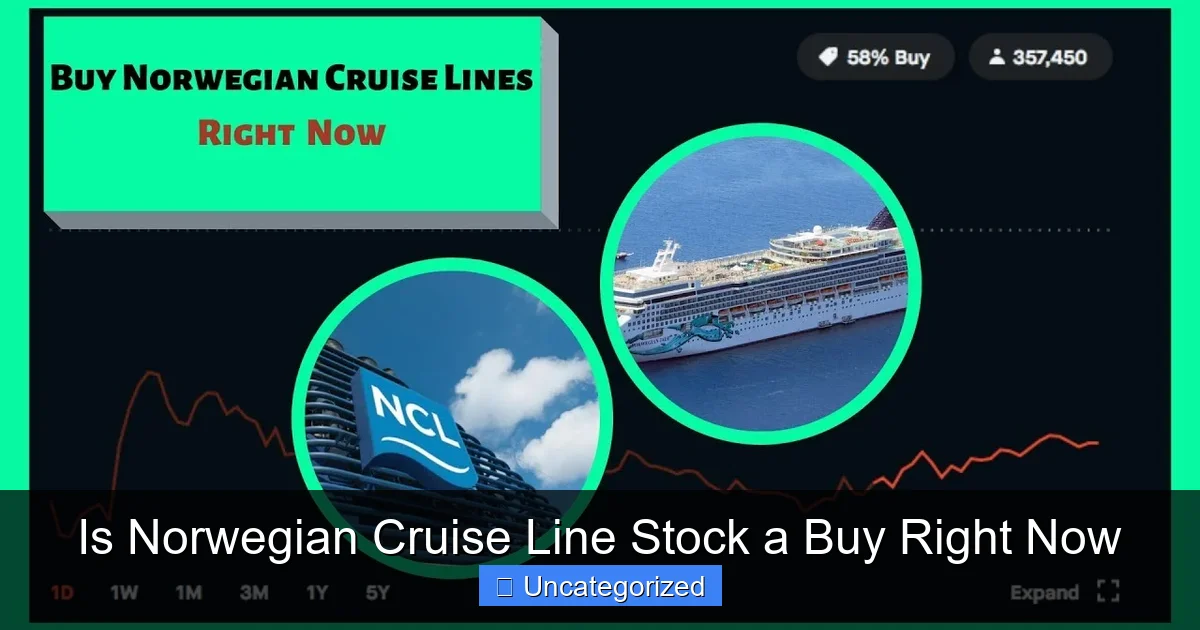
Featured image for is norwegian cruise line stock a buy
Image source: i.ytimg.com
Norwegian Cruise Line stock could be a high-risk, high-reward buy right now as the cruise industry rebounds post-pandemic, with strong booking trends and revenue growth signaling renewed consumer demand. However, lingering debt concerns and macroeconomic uncertainty warrant caution—investors should weigh the company’s turnaround progress against potential volatility before diving in.
Key Takeaways
- Evaluate financial health: Check NCLH’s debt levels and liquidity before investing.
- Monitor travel demand: Rising bookings signal strong recovery potential.
- Assess competition: Compare NCLH to rivals like Carnival and Royal Caribbean.
- Watch fuel costs: High expenses can impact profitability and margins.
- Consider long-term growth: Fleet expansion plans may boost future revenue.
- Track macroeconomic factors: Inflation and consumer spending affect cruise demand.
📑 Table of Contents
- Is Norwegian Cruise Line Stock a Buy Right Now?
- 1. Company Overview: The Norwegian Cruise Line Story
- 2. Financial Performance: Strengths and Vulnerabilities
- 3. Industry Trends: Tailwinds and Headwinds
- 4. Competitive Landscape: NCLH vs. Carnival and Royal Caribbean
- 5. Growth Catalysts and Risks
- 6. Investment Thesis: Buy, Hold, or Sell?
Is Norwegian Cruise Line Stock a Buy Right Now?
The cruise industry has long been a fascinating yet volatile segment of the travel and leisure sector, and few companies capture investor attention quite like Norwegian Cruise Line Holdings Ltd. (NYSE: NCLH). As the world emerged from the pandemic-induced travel freeze, cruise stocks roared back to life—only to face fresh turbulence from inflation, rising interest rates, and geopolitical instability. Norwegian Cruise Line (NCL), the third-largest cruise operator globally, has been at the center of this rollercoaster ride. With its bold expansion plans, aggressive pricing strategies, and a growing fleet of high-margin ships, the company has both dazzled and concerned investors in equal measure.
So, is Norwegian Cruise Line stock a buy right now? That’s the million-dollar question—literally, given the company’s market cap of over $7 billion as of mid-2024. Whether you’re a long-term investor seeking growth, a value hunter looking for a post-pandemic turnaround, or a dividend enthusiast waiting for payouts to resume, NCLH presents a complex but compelling case. In this deep dive, we’ll analyze the company’s financial health, competitive positioning, industry tailwinds and headwinds, valuation metrics, and long-term growth potential to determine whether now is the right time to board the Norwegian Cruise Line stock.
1. Company Overview: The Norwegian Cruise Line Story
A Brief History and Business Model
Founded in 1966, Norwegian Cruise Line Holdings (NCLH) operates three distinct brands: Norwegian Cruise Line, Oceania Cruises, and Regent Seven Seas Cruises. This tiered structure allows the company to target a broad spectrum of travelers—from budget-conscious families on Norwegian to ultra-luxury seekers on Regent. The company’s fleet includes 29 ships (as of 2024), with several more under construction, including the highly anticipated Norwegian Aqua, set to debut in 2025 as part of the new Prima Plus class.
Visual guide about is norwegian cruise line stock a buy
Image source: barchart-news-media-prod.aws.barchart.com
NCLH’s revenue model is multifaceted. It earns income from:
- Passenger ticket sales (base fare for cabins)
- Onboard spending (drinks, spas, excursions, casinos, specialty dining)
- Shore excursions and packages (pre-booked and onboard)
- Loyalty programs and memberships (e.g., Latitudes Rewards)
Notably, onboard revenue now accounts for over 30% of total revenue, a strategic shift that improves margins and reduces reliance on volatile ticket prices.
Fleet Modernization and Expansion
NCLH has invested heavily in fleet renewal, retiring older vessels and introducing next-generation ships with higher capacity and enhanced amenities. The Norwegian Prima and Norwegian Viva (2023) are prime examples, featuring innovative design elements like the world’s first hybrid roller coaster at sea and expanded outdoor spaces. These ships command 10–15% higher ticket prices than older vessels and generate significantly more onboard revenue.
Tip for investors: Track NCLH’s new ship delivery schedule. Each new vessel adds ~$200–300 million in annual revenue and typically achieves a payback period of 7–10 years. The company’s orderbook includes four more ships through 2027, signaling confidence in long-term demand.
2. Financial Performance: Strengths and Vulnerabilities
Revenue and Profitability Trends
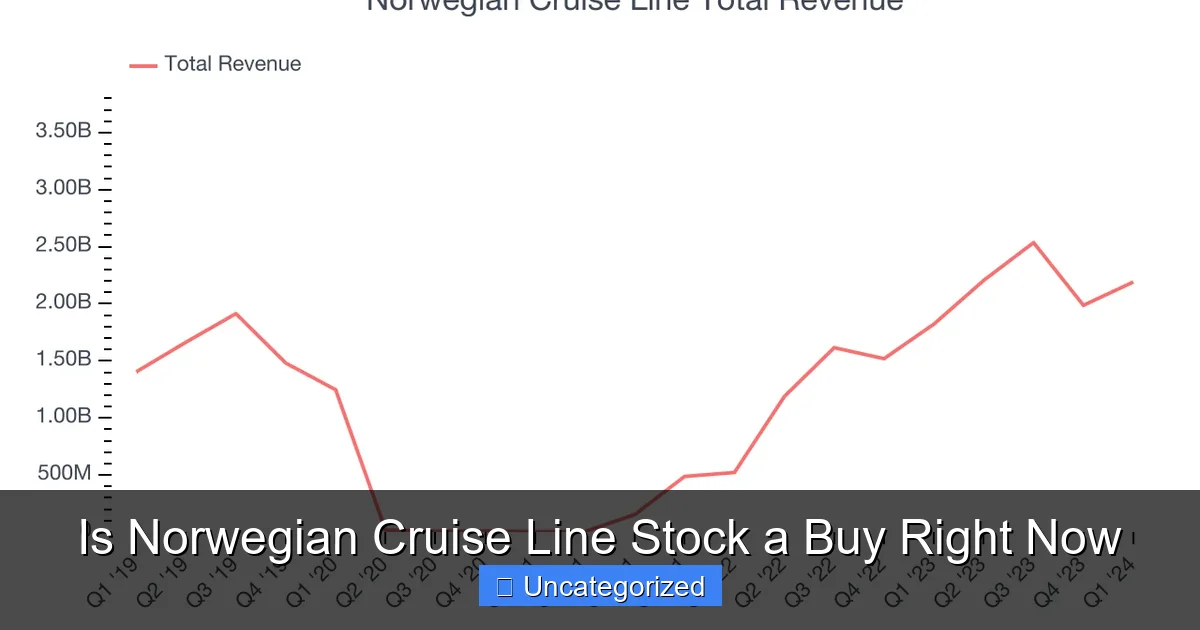
After a devastating 2020–2021, when NCLH’s revenue plummeted to $648 million (down 90% YoY), the company has staged a dramatic recovery. In 2023, revenue surged to $8.53 billion, surpassing pre-pandemic levels (2019: $6.46 billion). Net income, however, remains negative at -$1.6 billion due to high debt and interest costs, though this marks a significant improvement from -$4.5 billion in 2021.
Key financial metrics (2023 vs. 2019):
- Occupancy rate: 98% (2023) vs. 106% (2019) – slightly below peak but strong
- Average ticket price per passenger: $2,150 (2023) vs. $1,780 (2019) – up 21%
- Onboard spend per passenger: $720 (2023) vs. $580 (2019) – up 24%
- Adjusted EBITDA: $1.9 billion (2023) vs. $1.6 billion (2019)
Despite rising costs, NCLH’s EBITDA margin has stabilized at ~22%, in line with pre-pandemic levels.
Debt Burden and Liquidity
The Achilles’ heel of NCLH’s financial story is its debt load. As of Q1 2024, the company reported:
- Total debt: $13.2 billion
- Net debt/EBITDA: 6.9x (down from 10.4x in 2022)
- Interest expense: $680 million annually
While the debt-to-EBITDA ratio is improving, it remains high for the sector. Carnival (CCL) and Royal Caribbean (RCL) report ratios of 5.1x and 5.8x, respectively. High interest rates (NCLH’s average borrowing cost is ~6.5%) continue to pressure cash flow. However, the company has taken steps to mitigate risk:
- Extended debt maturities: Only $1.1 billion due before 2026
- Raised $1.2 billion in equity in 2023 to strengthen the balance sheet
- Reduced capex to $1.8 billion (2024) from $2.5 billion (2022)
Investor takeaway: NCLH’s debt is manageable if revenue growth continues, but a recession or interest rate spike could strain liquidity.
Valuation Metrics: Is the Stock Cheap?
As of mid-2024, NCLH trades at:
- Forward P/E: 14.5x (vs. industry avg. 16.2x)
- EV/EBITDA: 9.1x (vs. industry avg. 10.3x)
- Price-to-sales (P/S): 1.1x (vs. 1.4x in 2019)
On a P/E basis, NCLH appears undervalued—especially given its EBITDA recovery. However, the low P/S ratio reflects lingering concerns about long-term profitability. Analysts project 2024 EPS of $0.85 (up from $0.42 in 2023), implying a forward P/E of just 12.8x at current prices. This suggests upside potential if guidance is met.
3. Industry Trends: Tailwinds and Headwinds
Post-Pandemic Travel Boom
The global cruise market is on a tear. According to CLIA (Cruise Lines International Association), 34.7 million passengers are expected in 2024, up from 29.7 million in 2019. NCLH is benefiting from:
- Revenge travel: Consumers prioritizing experiences over goods
- Demographic shifts: Millennials and Gen Z now account for 35% of cruisers
- Itinerary innovation: New destinations (e.g., Saudi Arabia, Greenland) driving demand
NCLH’s 2024 booking data is encouraging: 75% of capacity is already booked, with pricing up 12% YoY. The company’s “Premium Cruise” strategy—focusing on longer voyages and exotic ports—is resonating.
Inflation, Fuel Costs, and Geopolitical Risks
Despite strong demand, headwinds abound:
- Fuel prices: At $750/ton (2024), bunker fuel costs are 30% above 2019 levels. NCLH uses hedging (covering 40% of 2024 needs), but volatility remains.
- Labor inflation: Crew wages up 15% since 2021 due to union agreements.
- Geopolitics: Red Sea tensions have forced rerouting of Mediterranean cruises, adding $20–30 million in annual fuel costs.
- Regulatory scrutiny: The EPA and EU are tightening emissions rules, requiring $500 million in retrofits by 2030.
Tip: Monitor NCLH’s quarterly fuel cost disclosures. A sustained drop below $600/ton would be a major tailwind.
Sustainability and ESG Pressures
NCLH has committed to net-zero emissions by 2050, with interim targets of 35% reduction by 2030. Initiatives include:
- Liquefied natural gas (LNG)-powered ships (e.g., Norwegian Prima)
- Shore power connections in 15 major ports
- Advanced wastewater treatment systems
While these efforts enhance ESG ratings (NCLH’s MSCI ESG rating is BBB), they come at a cost. Investors should weigh the long-term benefits against short-term capex burdens.
4. Competitive Landscape: NCLH vs. Carnival and Royal Caribbean
Market Share and Brand Positioning
The cruise industry is a duopoly with a challenger. As of 2024:
- Royal Caribbean (RCL): 45% market share, focus on mega-ships and tech (e.g., Icon of the Seas)
- Carnival (CCL): 40% share, value-driven, family-oriented
- Norwegian (NCLH): 15% share, premium positioning, “Freestyle Cruising” (no fixed dining times)
NCLH’s niche—offering flexibility and luxury without the price tag of Regent—gives it pricing power. Its 2023 net promoter score (NPS) of 62 outpaces CCL (54) and RCL (58).
Differentiation Through Innovation
NCLH’s competitive edge lies in:
- Ship design: Larger cabins (avg. 220 sq. ft. vs. industry 180 sq. ft.)
- Onboard experiences: Broadway shows, immersive dining (e.g., Food Network at Sea)
- Digital tools: NCL’s app allows real-time booking, reducing staffing needs
For example, the Norwegian Prima features the Ocean Boulevard, a 45,000 sq. ft. outdoor space with infinity pools and a glass walkway—a first in the industry. Such innovations drive higher occupancy and spend.
Financial Comparison
A 2023 comparison of the “Big Three”:
| Metric | NCLH | RCL | CCL |
|---|---|---|---|
| Market Cap | $7.1B | $28.4B | $22.3B |
| Net Debt/EBITDA | 6.9x | 5.8x | 5.1x |
| 2023 EBITDA Margin | 22.3% | 24.1% | 20.8% |
| Fleet Size | 29 | 67 | 88 |
| New Ships (2024–2027) | 4 | 7 | 6 |
NCLH lags in scale but matches rivals in profitability. Its smaller size allows for faster innovation and lower operational complexity.
5. Growth Catalysts and Risks
Key Growth Drivers
Several factors could propel NCLH stock higher:
- New ship deliveries: The 2025 launch of Norwegian Aqua (5,000 passengers) could add $250 million in annual revenue.
- Onboard revenue growth: Targeting 35% of total revenue by 2026 (up from 30% in 2023).
- China market reopening: NCLH plans to deploy 3 ships to Asia by 2025, a region with 20% annual growth potential.
- Share buybacks: A $500 million program (2024–2025) could boost EPS by 5–7%.
Analysts project 2025 EPS of $1.10–$1.30, implying a 10–15% CAGR from 2023.
Major Risks to Watch
Investors must consider:
- Recession sensitivity: Cruise demand drops 3–5% for every 1% rise in unemployment.
- Debt refinancing: $2.4 billion in debt matures in 2026–2027; higher rates could increase interest costs by $100 million.
- Overcapacity: The industry will add 15 new ships in 2024–2025, potentially pressuring pricing.
- Climate change: Rising sea levels and extreme weather may disrupt itineraries.
Example: In 2023, Hurricane Ian forced NCLH to cancel 12 cruises, costing $45 million in lost revenue. While rare, such events highlight operational fragility.
6. Investment Thesis: Buy, Hold, or Sell?
Why NCLH Could Be a Buy
For growth-oriented investors, NCLH offers:
- Undervalued stock: P/E and EV/EBITDA below peers
- Strong demand tailwinds: 98% occupancy and rising prices
- Margin expansion potential: Onboard revenue and new ships could boost EBITDA margin to 25% by 2026
- Shareholder returns: Buybacks and a likely dividend reinstatement (projected 2025)
At $16/share (mid-2024), the stock has 25–35% upside to a 2025 price target of $20–$22 based on 15x forward P/E.
When to Be Cautious
NCLH is not for risk-averse investors. Consider selling or holding if:
- The Fed delays rate cuts, keeping borrowing costs high
- Recession signs emerge (e.g., rising unemployment, weak consumer spending)
- Geopolitical tensions escalate (e.g., Middle East, South China Sea)
- Fuel prices spike above $800/ton
The stock is highly correlated to travel ETFs (e.g., PEJ, TRIP) and may underperform in risk-off markets.
Portfolio Strategy Tips
To invest wisely:
- Dollar-cost average: Buy in tranches to mitigate volatility
- Set stop-losses: Consider a 15% downside threshold
- Diversify: Pair NCLH with less cyclical stocks (e.g., healthcare, utilities)
- Monitor catalysts: Earnings calls (Feb, May, Aug, Nov) and new ship launches
Example: An investor allocating $10,000 might buy $3,000 now, $3,000 at $14/share, and $4,000 if the stock hits $20 with strong guidance.
In conclusion, Norwegian Cruise Line stock is a speculative buy for investors with a 3–5 year horizon. The company has navigated post-pandemic challenges with agility, and its growth initiatives are gaining traction. While risks remain—particularly around debt and macroeconomic conditions—the upside potential is compelling. For those willing to ride the waves of volatility, NCLH could be a rewarding addition to a diversified portfolio. The key is timing: buy on dips, stay informed, and prepare for the long voyage ahead.
Frequently Asked Questions
Is Norwegian Cruise Line stock a buy in 2024?
Norwegian Cruise Line stock could be a buy if you believe in the continued recovery of the travel and leisure sector. However, investors should weigh its high debt levels and sensitivity to economic downturns before investing.
What factors should I consider before buying Norwegian Cruise Line stock?
Key factors include the company’s revenue growth, debt-to-equity ratio, booking trends, and broader industry recovery. Monitor fuel costs and consumer demand, as these heavily impact profitability.
How has Norwegian Cruise Line stock performed compared to competitors?
Norwegian Cruise Line stock has shown strong post-pandemic gains, but its performance lags behind rivals like Carnival and Royal Caribbean due to higher leverage. Compare valuation metrics like P/E and revenue growth for a clearer picture.
Is Norwegian Cruise Line stock a good long-term investment?
For long-term investors, Norwegian Cruise Line offers exposure to pent-up travel demand, but its success hinges on effective debt management and sustained consumer spending. Diversification within the sector may reduce risk.
Does Norwegian Cruise Line pay dividends to shareholders?
No, Norwegian Cruise Line does not currently pay dividends, as it prioritizes debt reduction and operational recovery. Investors seeking income may prefer other stocks in the travel or hospitality space.
What are analysts saying about Norwegian Cruise Line stock?
Analysts are cautiously optimistic, with some rating Norwegian Cruise Line stock a “buy” due to strong bookings, while others cite macroeconomic risks. Always review recent analyst reports and earnings calls for updated insights.