
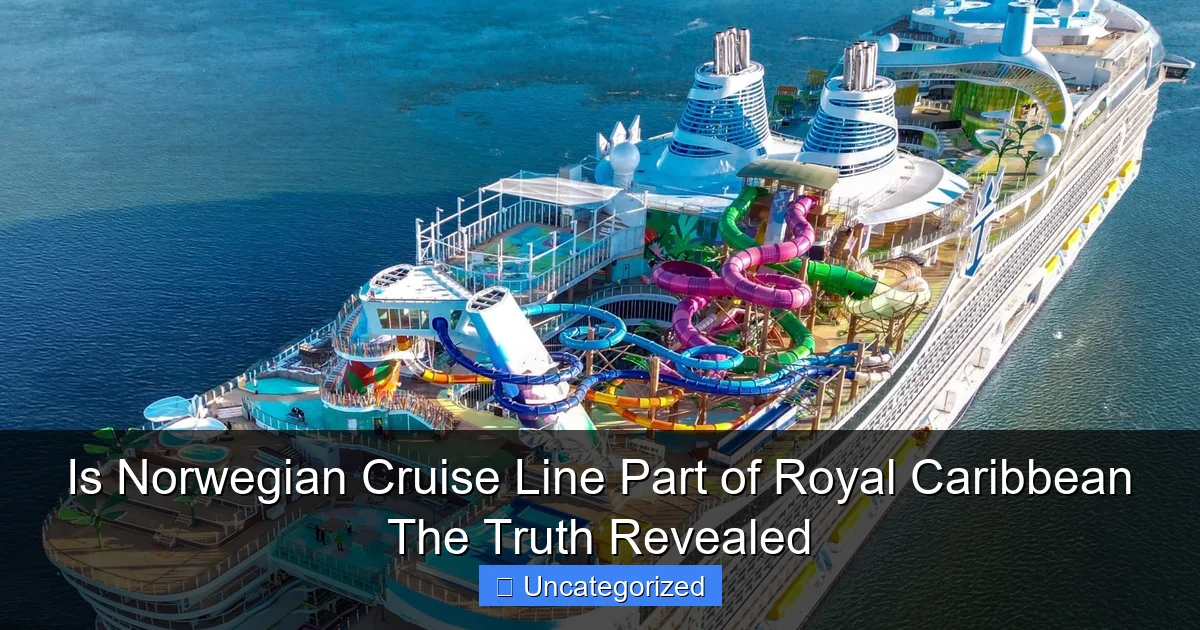
Featured image for is norwegian cruise line part of royal caribbean
Image source: cruisefever.net
No, Norwegian Cruise Line is not part of Royal Caribbean—they are direct competitors in the cruise industry, each operating as a separate, publicly traded company. Both brands maintain distinct fleets, itineraries, and loyalty programs, though they often sail similar routes and target overlapping vacation markets.
Key Takeaways
- No ownership link: Norwegian Cruise Line is not part of Royal Caribbean.
- Independent operators: Both brands operate separately with distinct management teams.
- Unique fleets: Each line maintains its own ships, itineraries, and onboard experiences.
- Competitive market: They compete directly for customers in the cruise industry.
- No shared loyalty: Rewards programs are not interchangeable between the two lines.
📑 Table of Contents
- Is Norwegian Cruise Line Part of Royal Caribbean? The Truth Revealed
- The Corporate Structure: Who Owns What?
- Historical Background: How Did the Confusion Start?
- Fleet Comparison: Ships, Sizes, and Innovations
- Marketing, Branding, and Customer Experience
- Future Outlook: Expansion and Competition
- Conclusion: The Final Verdict
Is Norwegian Cruise Line Part of Royal Caribbean? The Truth Revealed
When it comes to planning a dream vacation on the high seas, choosing the right cruise line can feel like navigating through a maze of options. With so many brands offering luxurious amenities, exotic destinations, and unique onboard experiences, it’s easy to get confused—especially when two major players, Norwegian Cruise Line (NCL) and Royal Caribbean International, seem to share similar features. Both boast massive ships, family-friendly activities, and itineraries that span the globe. But here’s the burning question on many travelers’ minds: Is Norwegian Cruise Line part of Royal Caribbean?
At first glance, the confusion is understandable. Both cruise lines are household names, often mentioned together in travel guides, vacation packages, and industry reports. They both operate large fleets, offer all-inclusive experiences, and compete for the same market segments—families, couples, and adventure-seekers. However, despite their similarities in branding and service offerings, they are far from being the same company. In fact, they belong to entirely different corporate families. This blog post dives deep into the corporate structures, history, ownership, and operational differences between Norwegian Cruise Line and Royal Caribbean to reveal the truth once and for all. Whether you’re a seasoned cruiser or a first-time traveler, understanding who owns what can help you make smarter decisions about your next vacation—and avoid costly misconceptions.
The Corporate Structure: Who Owns What?
Norwegian Cruise Line Holdings Ltd. – The Independent Powerhouse
Norwegian Cruise Line (NCL) is owned and operated by Norwegian Cruise Line Holdings Ltd. (NCLH), a publicly traded company listed on the New York Stock Exchange under the ticker symbol NCLH. Headquartered in Miami, Florida, NCLH was formed in 2013 as a holding company to consolidate three major cruise brands under one umbrella:
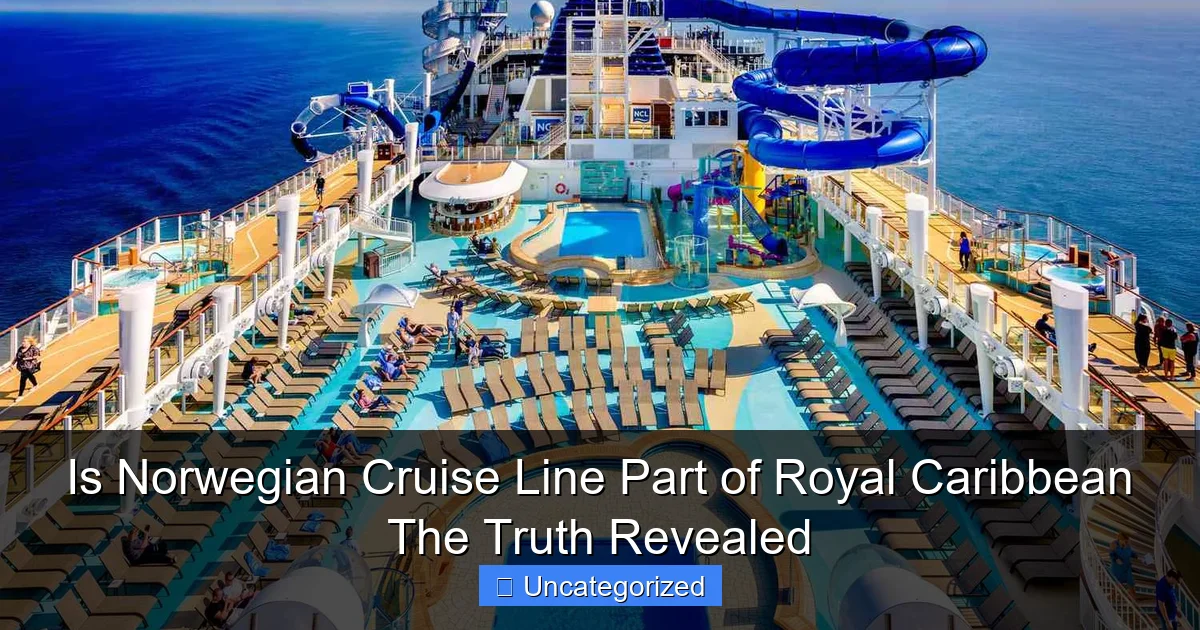
Visual guide about is norwegian cruise line part of royal caribbean
Image source: travelandleisure.com
- Norwegian Cruise Line – The original brand, known for its “Freestyle Cruising” concept.
- Oceania Cruises – A premium, mid-sized luxury brand focused on destination-rich itineraries and gourmet dining.
- Regent Seven Seas Cruises – An ultra-luxury, all-inclusive brand offering high-end amenities and personalized service.
This structure means that while NCL is a major brand within NCLH, it is not the only one. The holding company allows for shared resources in areas like finance, marketing, and fleet operations while maintaining distinct brand identities. As of 2023, NCLH operates a total of 28 ships across its three brands, with plans to expand further with new vessels like the Norwegian Prima and Norwegian Viva.
Royal Caribbean Group – The Global Giant
In contrast, Royal Caribbean International is a subsidiary of Royal Caribbean Group (RCG), another publicly traded company listed under the ticker RCL. Also based in Miami, RCG is one of the largest cruise corporations in the world and owns a diverse portfolio of brands, including:
- Royal Caribbean International – The flagship brand, known for massive, innovative ships like Symphony of the Seas and Icon of the Seas.
- Royal Caribbean Cruises Ltd. (RCCL) – The parent company before rebranding to Royal Caribbean Group in 2020.
- Silversea Cruises – Acquired in 2018, this ultra-luxury brand caters to high-end travelers with intimate ships and bespoke experiences.
- Hapag-Lloyd Cruises – A German-based luxury and expedition cruise line acquired in 2019.
- TUI Cruises – A joint venture with TUI AG, targeting the German-speaking market.
Unlike NCLH, which focuses on three core brands, RCG has a broader global reach and a more diversified portfolio. Importantly, there is no ownership or corporate relationship between Norwegian Cruise Line Holdings and Royal Caribbean Group. They are separate entities, each with its own board of directors, executive leadership, and strategic direction.
Key Takeaway: No Shared Ownership
The most critical point to remember is that NCL is not part of Royal Caribbean, nor has it ever been. While both companies are based in Miami and compete in overlapping markets, they are independent competitors. They do not share ownership, executives, or corporate strategy. In fact, they often compete for the same customers, ports, and market share—especially in popular destinations like the Caribbean, Alaska, and the Mediterranean.
Historical Background: How Did the Confusion Start?
Origins of Norwegian Cruise Line
Norwegian Cruise Line was founded in 1966 by Knut Kloster and Ted Arison (who later founded Carnival Cruise Line). The company’s first ship, the Sunward, began operations in 1966, offering cruises from Miami to the Bahamas. NCL quickly gained a reputation for innovation, particularly with its introduction of Freestyle Cruising in the early 2000s. This concept eliminated traditional dining times and formal dress codes, allowing guests to dine when, where, and with whom they pleased. It was a game-changer in the cruise industry and set NCL apart from more traditional lines.
Over the decades, NCL expanded its fleet and introduced new classes of ships, including the Breakaway, Breakaway Plus, and Prima classes. The brand also invested heavily in onboard amenities like water parks, Broadway-style shows, and specialty dining. In 2013, the formation of Norwegian Cruise Line Holdings Ltd. allowed the company to acquire Oceania and Regent, further solidifying its position as a major player in the cruise industry.
Royal Caribbean’s Rise to Prominence
Royal Caribbean International was founded in 1968 as a joint venture between three Norwegian shipping companies: Anders Wilhelmsen & Co., I.M. Skaugen & Co., and Gotaas-Larsen. The first ship, the Song of Norway, launched in 1970 and marked the beginning of a new era in cruising. Royal Caribbean quickly distinguished itself through technological innovation and ship size.
In 1988, Royal Caribbean launched the Sovereign of the Seas, the first megaship to exceed 70,000 gross tons, revolutionizing the industry. Since then, the brand has consistently pushed the boundaries of ship design, introducing features like rock climbing walls, ice skating rinks, and even robotic bartenders. The Oasis-class ships, starting with Oasis of the Seas in 2009, are among the largest passenger ships in the world, each carrying over 6,000 guests.
Royal Caribbean Cruises Ltd. (now Royal Caribbean Group) went public in 1993 and has since grown into a global powerhouse, acquiring brands like Celebrity Cruises (in 1997) and Silversea (in 2018).
Why the Confusion Persists
Despite their separate histories, the confusion between NCL and Royal Caribbean arises from several factors:
- Geographic proximity – Both companies are headquartered in Miami, often leading to assumptions of shared ownership.
- Similar branding – Both use blue-and-white color schemes and emphasize “fun” and “adventure” in their marketing.
- Overlapping itineraries – They frequently sail the same routes, especially in the Caribbean and Alaska.
- Industry consolidation trends – The cruise industry has seen numerous mergers and acquisitions (e.g., Carnival acquiring Princess, RCG acquiring Silversea), leading to the assumption that NCL and Royal Caribbean might also be linked.
However, no such merger has occurred. In fact, both companies have actively competed for market share, especially in the post-pandemic recovery phase, where they’ve invested heavily in new ships and health protocols.
Fleet Comparison: Ships, Sizes, and Innovations
NCL’s Fleet: Focus on Freestyle and Flexibility
Norwegian Cruise Line operates 18 ships across three classes, with a strong emphasis on guest freedom and customization. Here’s a breakdown of their fleet structure:
- Prima Class (2022–present) – The newest class, featuring Norwegian Prima and Norwegian Viva. These ships are smaller than Royal Caribbean’s megaships (142,500 GT) but offer a more intimate experience. Innovations include the Ocean Boulevard outdoor promenade, the Prima Speedway go-kart track, and the Infinity Beach Club.
- Breakaway Plus Class (2015–2018) – Includes Norwegian Escape, Norwegian Bliss, and Norwegian Encore. These 169,000 GT ships feature Broadway shows, water parks, and a wide range of dining options.
- Breakaway Class (2013–2015) – Ships like Norwegian Breakaway and Norwegian Getaway were the first to introduce the “Freestyle Dining” concept on a large scale.
One of NCL’s unique selling points is its no-tipping policy (though gratuities are automatically added) and its no-formal-nights policy, appealing to younger travelers and families who prefer a relaxed atmosphere.
Royal Caribbean’s Fleet: Size, Scale, and Spectacle
Royal Caribbean operates 27 ships across several classes, known for their sheer size and technological marvels:
- Icon Class (2024–present) – The newest and largest class, starting with Icon of the Seas (250,800 GT). This ship features the Surge water slide, Central Park (an open-air garden), and Adventure Ocean for kids. It’s designed for multi-generational families and offers over 40 dining options.
- Oasis Class (2009–2018) – Includes Oasis of the Seas, Allure of the Seas, and Harmony of the Seas. These 225,000–228,000 GT ships are divided into neighborhoods (e.g., Boardwalk, Central Park, Royal Promenade) and feature amenities like zip lines, surfing simulators, and aqua theaters.
- Quantum Class (2014–2016) – Ships like Anthem of the Seas introduced innovations like the North Star (a glass capsule that lifts guests 300 feet above sea level) and Robotic Bartenders.
Royal Caribbean is known for its high-energy atmosphere, with activities ranging from skydiving simulators to escape rooms. The brand also emphasizes technology, using apps for boarding, dining reservations, and onboard purchases.
Fleet Comparison Table
| Feature | Norwegian Cruise Line | Royal Caribbean |
|---|---|---|
| Number of Ships | 18 (across 3 classes) | 27 (across 6 classes) |
| Largest Ship (GT) | Norwegian Bliss (169,000 GT) | Icon of the Seas (250,800 GT) |
| Flagship Innovation | Freestyle Cruising, Go-Kart Tracks | Neighborhoods, North Star, AquaTheater |
| Dining Concept | No set dining times, 20+ specialty restaurants | Main dining room + specialty restaurants (e.g., Wonderland) |
| Family Focus | Kids’ clubs, water parks, family cabins | Adventure Ocean, Splashaway Bay, teen lounges |
| Onboard Tech | Freestyle Daily app, keyless entry | Royal app, facial recognition, virtual balconies |
Practical Tip: Choosing Based on Fleet
If you’re deciding between NCL and Royal Caribbean, consider your priorities:
- Choose NCL if you value flexibility, relaxed dining, and smaller, more intimate ships.
- Choose Royal Caribbean if you want non-stop activities, cutting-edge technology, and larger, more spectacular ships.
Marketing, Branding, and Customer Experience
Brand Positioning: Freedom vs. Adventure
NCL’s brand identity centers around freedom and choice. Their slogan, “Cruise Like a Norwegian,” emphasizes a laid-back, no-rules approach. This is reflected in:
- Freestyle Cruising – No assigned dining, no formal nights, no pressure.
- Open-air spaces – Ships like Norwegian Prima feature expansive outdoor areas.
- Casual elegance – Even on luxury ships, the atmosphere is relaxed.
Royal Caribbean, on the other hand, brands itself as the “Adventure of a Lifetime”** provider. Their marketing focuses on:
- Innovation – “World’s largest cruise ships,” “first-ever onboard experiences.”
- Family fun – Emphasis on multi-generational activities and entertainment.
- Global reach – “Explore the world” campaigns highlight exotic destinations.
Customer Experience: What Travelers Say
Reviews from platforms like Cruise Critic and TripAdvisor show distinct preferences:
- NCL fans praise the lack of structure, the variety of dining, and the friendly crew. However, some note that larger ships can feel crowded.
- Royal Caribbean fans love the non-stop activities, high-quality entertainment, and family-friendly amenities. A common critique is the “busy” atmosphere and long lines for popular attractions.
Practical Tip: Read Reviews by Ship, Not Just Brand
Since both companies operate multiple ship classes, always research the specific ship you’re booking. For example, Norwegian Bliss has a go-kart track, but older NCL ships do not. Similarly, Icon of the Seas offers unprecedented amenities, while older Royal Caribbean ships may feel dated.
Future Outlook: Expansion and Competition
NCL’s Growth Strategy
NCLH has announced plans to add four new Prima-class ships by 2027, with a focus on sustainability (LNG-powered engines) and guest experience. They’re also investing in destination experiences, such as private islands in the Bahamas and partnerships with local tour operators.
Royal Caribbean’s Ambitious Plans
Royal Caribbean Group is building three Icon-class ships by 2026, with Icon 2 and Icon 3 already in development. They’re also expanding Silversea’s expedition fleet and investing in green technology, including fuel cells and shore power connections.
The Competitive Landscape
As both companies grow, their competition will intensify—especially in emerging markets like Asia and the South Pacific. However, their independence allows each to innovate without corporate constraints. This means travelers will continue to benefit from new ships, unique experiences, and competitive pricing.
Conclusion: The Final Verdict
After a deep dive into ownership, history, fleets, branding, and future plans, the answer to the question “Is Norwegian Cruise Line part of Royal Caribbean?” is a resounding no. They are two distinct companies, each with its own corporate structure, leadership, and strategic vision. While they may share a hometown (Miami), a market (cruise vacations), and even some itineraries, they are fierce competitors—not partners.
Understanding this distinction is crucial for travelers. It helps you choose the right cruise line based on your preferences—whether that’s NCL’s freedom-focused approach or Royal Caribbean’s adventure-driven model. It also prevents confusion when booking, comparing prices, or reading reviews.
So the next time you’re planning a cruise, remember: Norwegian Cruise Line and Royal Caribbean are separate entities. They may sail the same seas, but they chart their own courses. And that’s great news for you—the traveler—because it means more choices, more innovation, and more unforgettable experiences on the open ocean.
Frequently Asked Questions
Is Norwegian Cruise Line part of Royal Caribbean?
No, Norwegian Cruise Line (NCL) is not part of Royal Caribbean. The two are separate, publicly traded companies competing in the cruise industry, each with distinct brands, fleets, and management teams.
Who owns Norwegian Cruise Line?
Norwegian Cruise Line Holdings Ltd. (NCLH) owns Norwegian Cruise Line, along with its subsidiaries Oceania Cruises and Regent Seven Seas Cruises. It operates independently from Royal Caribbean Group.
Are Norwegian and Royal Caribbean sister companies?
No, Norwegian Cruise Line and Royal Caribbean are not sister companies. They are independent competitors, though both are major players in the global cruise market with similar target audiences.
Does Royal Caribbean Group own any part of Norwegian Cruise Line?
No, Royal Caribbean Group does not own Norwegian Cruise Line or any stake in NCL Holdings. The two companies maintain separate ownership structures and stock listings.
Which cruise lines are actually part of Royal Caribbean?
Royal Caribbean Group owns Royal Caribbean International, Celebrity Cruises, Silversea Cruises, and a joint venture in TUI Cruises. Norwegian Cruise Line is not among them.
Why do people think Norwegian Cruise Line is part of Royal Caribbean?
Confusion arises because both companies offer similar itineraries, target overlapping markets, and are industry leaders. However, their branding, loyalty programs, and onboard experiences remain entirely separate.