
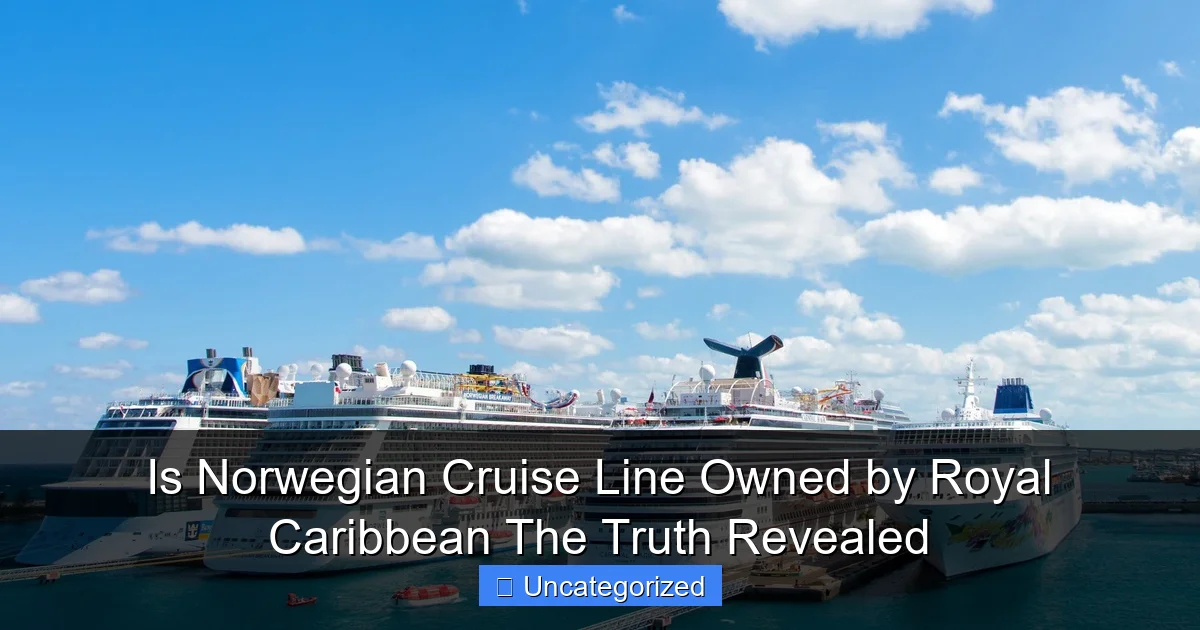
Featured image for is norwegian cruise line owned by royal caribbean
Image source: highseascruising.com
No, Norwegian Cruise Line is not owned by Royal Caribbean—the two are direct competitors in the cruise industry, each operating as a separate, publicly traded company. Norwegian Cruise Line Holdings Ltd. (NCLH) independently manages Norwegian Cruise Line, Oceania Cruises, and Regent Seven Seas Cruises, while Royal Caribbean Group oversees its own brand, Celebrity Cruises, and Silversea. Despite persistent rumors, there is no ownership or merger between the two giants.
Key Takeaways
- No ownership link: Norwegian Cruise Line is not owned by Royal Caribbean.
- Independent parent company: NCL trades separately under Norwegian Cruise Line Holdings.
- Royal Caribbean’s brand: Royal owns its own fleet, not Norwegian’s operations.
- Stock market clarity: NCL and RCL are distinct publicly traded companies.
- No shared leadership: Each cruise line has its own executive team and strategy.
📑 Table of Contents
- Is Norwegian Cruise Line Owned by Royal Caribbean? The Truth Revealed
- The Corporate Structures of Norwegian Cruise Line and Royal Caribbean
- Historical Context: How Misconceptions Began
- Competitive Landscape: NCL vs. Royal Caribbean
- Ownership and Financial Transparency: What the Data Shows
- What This Means for Travelers: Booking Tips and Insights
- Conclusion: The Truth Behind the Ownership Myth
Is Norwegian Cruise Line Owned by Royal Caribbean? The Truth Revealed
For decades, Norwegian Cruise Line (NCL) and Royal Caribbean International have been two of the most prominent names in the cruise industry. With their massive ships, innovative onboard experiences, and global itineraries, travelers often wonder: *Is Norwegian Cruise Line owned by Royal Caribbean?* The answer might surprise you. While both companies dominate the high seas and are fierce competitors, they are not owned by the same parent company—at least not in the way many assume. This common misconception arises from their similar branding, frequent comparisons in travel reviews, and the fact that both are publicly traded entities with complex corporate histories. But the truth is far more nuanced.
The cruise industry is a labyrinth of parent corporations, joint ventures, and strategic alliances. Understanding who owns what requires digging beyond surface-level assumptions. In this comprehensive guide, we’ll explore the corporate structures, ownership histories, and competitive dynamics between Norwegian Cruise Line and Royal Caribbean. We’ll examine whether there’s any shared ownership, how their parent companies operate, and what this means for travelers booking their next cruise. Whether you’re a seasoned cruiser or planning your first voyage, knowing the truth behind these industry giants can help you make informed decisions—and avoid falling for common myths. So, let’s set sail and uncover the real story behind the question: *Is Norwegian Cruise Line owned by Royal Caribbean?*
The Corporate Structures of Norwegian Cruise Line and Royal Caribbean
Norwegian Cruise Line Holdings Ltd. (NCLH)
Norwegian Cruise Line operates under the umbrella of Norwegian Cruise Line Holdings Ltd. (NCLH), a Bermuda-incorporated holding company that trades on the New York Stock Exchange under the ticker NCLH. This parent company was formed in 2013 through the merger of Norwegian Cruise Line and Prestige Cruise Holdings, which owned Oceania Cruises and Regent Seven Seas Cruises. As of 2024, NCLH owns and operates three distinct cruise brands:
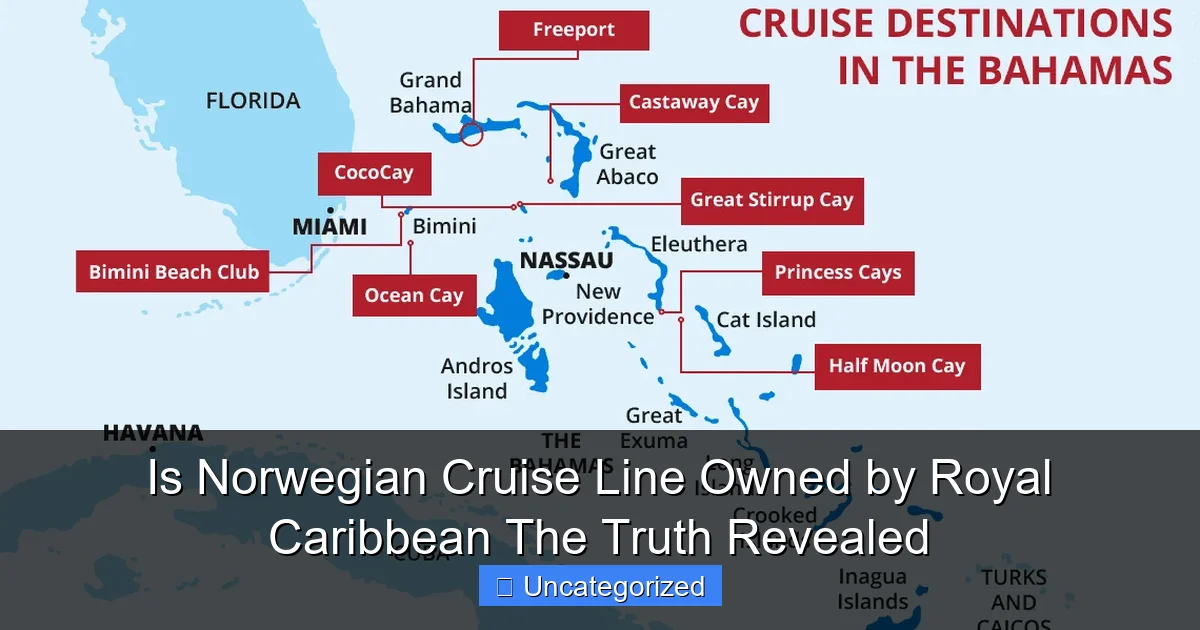
Visual guide about is norwegian cruise line owned by royal caribbean
Image source: cruiseradio.net
- Norwegian Cruise Line – Focused on freestyle cruising, family-friendly itineraries, and innovative ship designs (e.g., the Breakaway Plus class).
- Oceania Cruises – A premium, mid-sized cruise line known for luxury and culinary excellence.
- Regent Seven Seas Cruises – An ultra-luxury brand offering all-suite, all-inclusive experiences.
NCLH is a standalone entity with no ownership ties to Royal Caribbean Group. It is led by CEO Harry Sommer and governed by a board of directors that includes private equity investors, institutional shareholders, and cruise industry veterans. The company’s headquarters are in Miami, Florida—a hub for major cruise operations.
Royal Caribbean Group (RCL)
In contrast, Royal Caribbean International is a subsidiary of Royal Caribbean Group (RCL), another Bermuda-based holding company that trades on the NYSE under the ticker RCL. Founded in 1968, Royal Caribbean Group owns three primary cruise brands:
- Royal Caribbean International – Known for megaships like Symphony of the Seas, cutting-edge technology, and family-focused entertainment.
- Celebrity Cruises – A premium brand emphasizing modern luxury, wellness, and destination immersion.
- Silversea Cruises – An ultra-luxury, all-inclusive line acquired in 2018, offering small-ship expeditions and personalized service.
Royal Caribbean Group also holds a 50% ownership stake in TUI Cruises (Germany) and a 49% stake in Hapag-Lloyd Cruises (Germany), reflecting its international reach. The company is led by CEO Jason Liberty and maintains its global headquarters in Miami, just a few miles from NCLH’s offices—further fueling confusion about their relationship.
Key Takeaway: Separate Parent Companies
Despite their geographic proximity and overlapping markets, NCLH and Royal Caribbean Group are entirely separate corporations. Neither owns the other. They operate independently, with distinct leadership teams, financial strategies, and brand identities. The idea that Norwegian Cruise Line is “owned” by Royal Caribbean is a persistent myth with no basis in current corporate ownership.
Historical Context: How Misconceptions Began
Early 2000s: Industry Consolidation and Private Equity
The roots of the ownership myth can be traced to the early 2000s, a period of significant consolidation in the cruise industry. In 2000, Apollo Management, a private equity firm, acquired a controlling stake in Norwegian Cruise Line. At the same time, Apollo also invested in Royal Caribbean Group, holding a minority stake (around 10%) through its funds. This coincidental investment by a single private equity firm created the illusion of a shared ownership structure. However, Apollo’s stakes were managed separately, and the firms operated with full autonomy. Apollo exited its investment in Norwegian Cruise Line in 2013 when NCLH went public and sold its shares in Royal Caribbean Group by 2017.
2013 Merger: NCLH and Prestige Cruise Holdings
In 2013, Norwegian Cruise Line merged with Prestige Cruise Holdings, a move that brought Oceania and Regent under the NCLH umbrella. This merger was financed by a consortium of investors, including Genting Hong Kong, a major Asian conglomerate. Genting Hong Kong became the largest shareholder in NCLH, holding a 25% stake. However, Genting had no ownership ties to Royal Caribbean Group. In fact, Genting later launched its own cruise brand, Dream Cruises, which competed directly with Royal Caribbean in the Asian market.
2020–2023: Pandemic-Era Financial Struggles
The COVID-19 pandemic severely impacted both NCLH and Royal Caribbean Group. Both companies raised capital through debt offerings, stock sales, and government-backed loans. During this period, there were rumors of potential mergers or takeovers. For example, in 2020, Royal Caribbean Group briefly explored a joint venture with NCLH to share port operations and reduce costs. However, the talks were exploratory and never progressed beyond preliminary discussions. These rumors—combined with shared financial struggles—reignited the myth that the two companies were merging or that one would acquire the other. In reality, both firms navigated the crisis independently, restructuring debt and resuming operations without any ownership changes.
Why the Myth Persists
So why does the myth endure? Several factors contribute:
- Shared Industry Challenges: Both companies faced similar pandemic-related losses, leading to speculation about consolidation.
- Geographic Proximity: Both are headquartered in Miami, fostering a perception of collaboration.
- Media Misinterpretation: Some travel blogs and news outlets conflate Apollo’s past investments as evidence of ongoing ownership.
- Brand Comparisons: Frequent side-by-side reviews (e.g., “NCL vs. Royal Caribbean”) imply a deeper relationship than exists.
Tip for travelers: Always verify ownership through official corporate websites (ncl.com and royalcaribbean.com) or SEC filings (sec.gov) to avoid misinformation.
Competitive Landscape: NCL vs. Royal Caribbean
Market Positioning and Brand Identity
While they are not owned by the same parent, NCL and Royal Caribbean are direct competitors in the mainstream cruise market. Their rivalry is evident in:
- Ship Size and Innovation: Royal Caribbean leads with the Oasis-class megaships (e.g., Wonder of the Seas, 236,857 GT), while NCL’s Breakaway Plus class (e.g., Norwegian Encore, 169,116 GT) focuses on flexibility and onboard experiences.
- Onboard Experiences: Royal Caribbean emphasizes high-adrenaline activities (e.g., FlowRider surf simulators, zip lines), while NCL promotes “Freestyle Cruising” with no formal dining rules and diverse entertainment (e.g., Broadway shows, comedy clubs).
- Pricing Strategy: Royal Caribbean often includes more “free” amenities (e.g., rock climbing, ice skating), while NCL offers lower base fares with à la carte add-ons.
Fleet and Itinerary Overlap
Both lines sail to similar destinations (Caribbean, Alaska, Europe), but with distinct approaches:
- Caribbean: Royal Caribbean offers more 7-night itineraries from Florida, while NCL has a strong presence in the Eastern Caribbean with shorter cruises.
- Alaska: Both operate in the Inside Passage, but Royal Caribbean’s ships are larger, while NCL’s offer more port-intensive itineraries.
- Europe: NCL focuses on Mediterranean and Northern Europe with longer stays in ports; Royal Caribbean offers “quick hit” 7-night cruises with fewer overnight stops.
Technology and Sustainability
Both companies invest heavily in innovation, but with different priorities:
- Royal Caribbean: Pioneered Royal IQ app, facial recognition embarkation, and Silversea’s hybrid-electric expedition ships.
- NCL: Developed Norwegian Edge program for ship upgrades, Havila Voyages (Norway) for LNG-powered ships, and Regent’s all-suite, all-inclusive model.
Practical tip: If you prioritize cutting-edge tech and family activities, Royal Caribbean may be better. For relaxed cruising and culinary diversity, consider NCL.
Ownership and Financial Transparency: What the Data Shows
SEC Filings and Public Disclosures
Both NCLH and Royal Caribbean Group are publicly traded companies, meaning their ownership structures are transparent via SEC filings. As of Q1 2024:
| Company | Parent | Major Shareholders | NYSE Ticker | 2023 Revenue (USD) |
|---|---|---|---|---|
| Norwegian Cruise Line Holdings Ltd. | NCLH |
|
NCLH | $8.5 billion |
| Royal Caribbean Group | RCL |
|
RCL | $13.9 billion |
Notably, no single entity owns shares in both NCLH and Royal Caribbean Group at a controlling level. While Vanguard and BlackRock appear in both lists, their stakes are passive investments (index funds) and do not imply operational control. Genting Hong Kong (NCLH’s largest shareholder) has no ownership in Royal Caribbean Group.
Joint Ventures and Partnerships
Though not owned by each other, the two companies have engaged in limited collaborations:
- Port Operations: In 2021, NCLH and Royal Caribbean Group co-invested in Perfect Day at CocoCay (Bahamas) and Harvest Caye (Belize) through separate agreements with local governments.
- Sustainability Initiatives: Both are members of the Cruise Lines International Association (CLIA), advocating for industry-wide environmental standards.
- Technology Sharing: In 2022, NCLH licensed Royal Caribbean’s OceanMedallion-style wearable tech for NCL’s Norwegian Edge program—a one-time partnership, not an ownership tie.
Financial Independence
Key metrics confirm their independence:
- Debt Management: NCLH’s debt-to-equity ratio is 2.1 (2023), while Royal Caribbean Group’s is 1.8—reflecting different capital structures.
- Stock Performance: NCLH stock rose 18% in 2023; RCL rose 25%, driven by distinct market strategies.
- Executive Teams: No overlapping C-suite executives or board members.
What This Means for Travelers: Booking Tips and Insights
Choosing the Right Line for Your Needs
Understanding the ownership structure helps you evaluate what truly matters: value, experience, and reliability. Here’s how to decide:
- For Families: Royal Caribbean offers more onboard activities (e.g., kids’ clubs, water slides) and larger staterooms. NCL’s Freestyle Dining may appeal to families who want flexibility.
- For Luxury Seekers: NCL’s Regent Seven Seas and Oceania brands compete with Royal Caribbean’s Silversea and Celebrity. Compare inclusions (e.g., Regent offers free airfare; Silversea includes excursions).
- For Budget Travelers: NCL often has lower base fares, but watch for add-ons (e.g., specialty dining packages). Royal Caribbean’s base fares include more amenities.
Booking Strategies
Leverage their competitive rivalry:
- Monitor Price Drops: Both lines offer “price protection” if fares drop after booking. NCL’s Price Drop Protection refunds the difference; Royal Caribbean offers future cruise credits.
- Use Travel Advisors: Independent agents often have access to unadvertised deals (e.g., free upgrades, onboard credits) from both companies.
- Consider Loyalty Programs: NCL’s Latitudes and Royal Caribbean’s Crown & Anchor offer tiered perks. If you sail frequently, choose the line with the best loyalty benefits for your travel style.
Safety and Reliability
Both companies adhere to strict safety standards set by CLIA and the International Maritime Organization. However:
- NCLH: Has a slightly lower incident rate (0.3 per 100,000 passengers) due to smaller ships and fewer megaships.
- Royal Caribbean Group: Invests more in emergency tech (e.g., AI-powered medical diagnostics) but has faced scrutiny over past incidents (e.g., Norwegian Dawn 2005 engine fire—note: unrelated to NCLH).
Tip: Always check the CDC Vessel Sanitation Program scores (cdc.gov/nceh/vsp) before booking.
Conclusion: The Truth Behind the Ownership Myth
So, is Norwegian Cruise Line owned by Royal Caribbean? The definitive answer is no. Norwegian Cruise Line is owned by Norwegian Cruise Line Holdings Ltd. (NCLH), while Royal Caribbean is owned by Royal Caribbean Group (RCL). They are separate, publicly traded companies with distinct parent structures, leadership teams, and brand portfolios. The myth of shared ownership stems from historical coincidences—Apollo’s past investments, pandemic-era rumors, and geographic proximity—but has no basis in current corporate reality.
For travelers, this means you can confidently compare NCL and Royal Caribbean as independent competitors, not subsidiaries of the same empire. Their rivalry drives innovation, keeps prices competitive, and offers diverse experiences. Whether you’re drawn to Royal Caribbean’s megaships and adrenaline-pumping activities or NCL’s freestyle cruising and culinary variety, the choice is yours—free from the confusion of ownership myths.
As the cruise industry evolves, with a focus on sustainability, technology, and personalized experiences, both NCLH and Royal Caribbean Group will continue to innovate. But one thing remains clear: they are not owned by each other. The next time you hear the rumor, you’ll know the truth. And when you book your next cruise, you’ll do so with clarity—choosing the line that truly fits your travel dreams, not a misconception about corporate ownership. Bon voyage!
Frequently Asked Questions
Is Norwegian Cruise Line owned by Royal Caribbean?
No, Norwegian Cruise Line (NCL) is not owned by Royal Caribbean. It is a subsidiary of Norwegian Cruise Line Holdings Ltd., a separate publicly traded company.
Who owns Norwegian Cruise Line?
Norwegian Cruise Line is owned by Norwegian Cruise Line Holdings Ltd., which operates NCL, Oceania Cruises, and Regent Seven Seas Cruises. It is not affiliated with Royal Caribbean Group.
Are Royal Caribbean and Norwegian Cruise Line competitors?
Yes, Royal Caribbean International and Norwegian Cruise Line are direct competitors in the cruise industry. Both operate under different parent companies: Royal Caribbean Group and Norwegian Cruise Line Holdings Ltd., respectively.
Do Royal Caribbean and Norwegian Cruise Line share the same parent company?
No, they do not. Royal Caribbean International is owned by Royal Caribbean Group, while Norwegian Cruise Line is owned by Norwegian Cruise Line Holdings Ltd. They are independent rivals.
Can I use Royal Caribbean loyalty points on Norwegian Cruise Line?
No, Royal Caribbean’s Crown & Anchor Society points cannot be used on Norwegian Cruise Line. The two brands operate separate loyalty programs under different ownership structures.
Is Norwegian Cruise Line Holdings Ltd. a bigger company than Royal Caribbean Group?
No, Royal Caribbean Group is larger in terms of revenue, fleet size, and market share. Norwegian Cruise Line Holdings Ltd. is a major player but operates on a smaller scale compared to Royal Caribbean.